
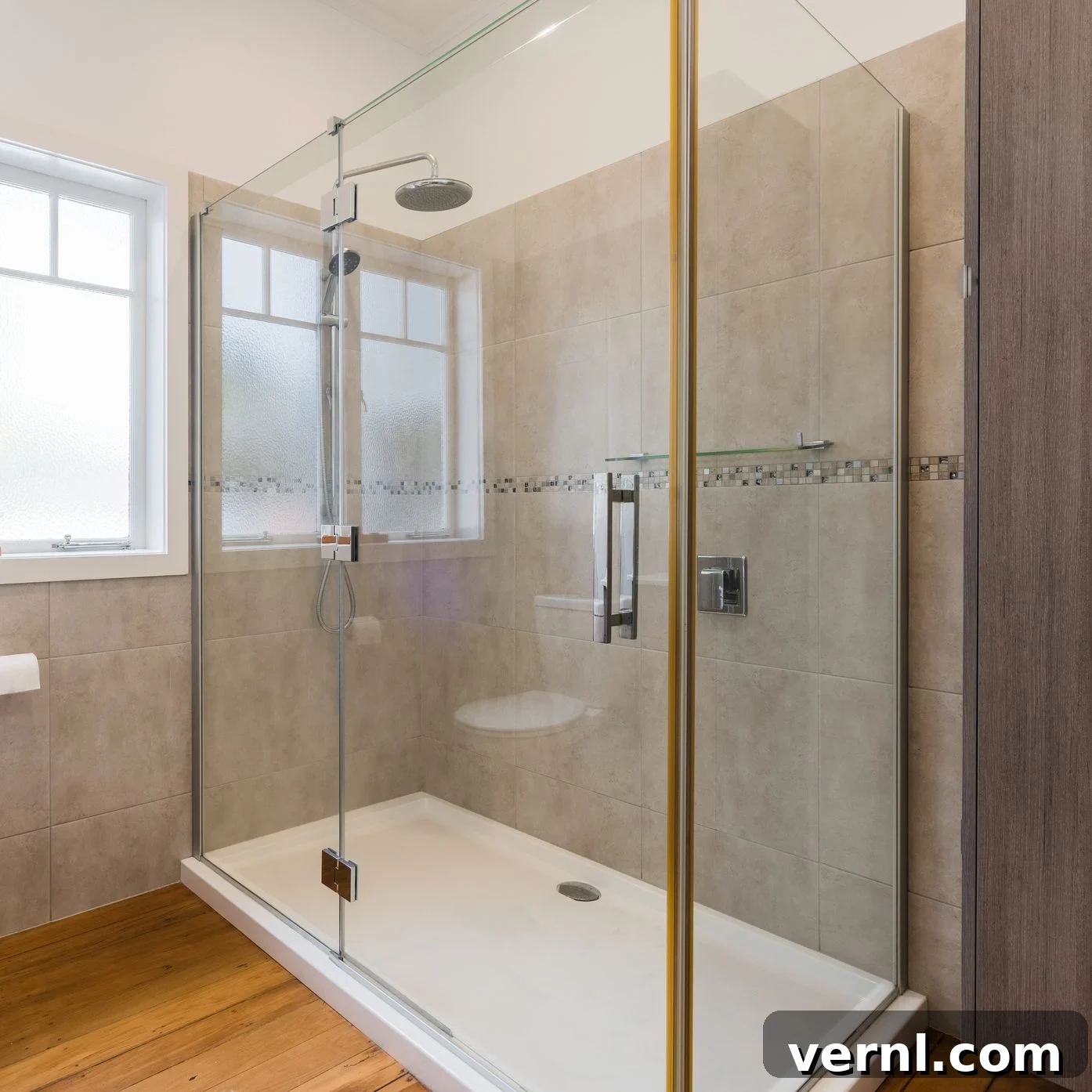
Considering a tub to shower conversion in your home? You’re joining a rapidly growing trend among homeowners looking to modernize their bathrooms, enhance accessibility, or simply upgrade to a more luxurious, spa-like experience. This popular bathroom remodeling project transforms an underutilized or outdated bathtub space into a sleek, functional, and often more accessible shower area.
Whether your motivation stems from a desire for a contemporary aesthetic, improved ease of use, or increased property value, understanding your options and their associated costs is crucial. To help navigate this significant home improvement, we’ve gathered insights from two esteemed industry professionals: Thomas Murphy, General Manager at Bath Busters, and Chris Bernacki, owner of WnC Home Improvement.
Complete Tub to Shower Conversion: Removing the Tub and Installing a Dedicated Shower
When we talk about a complete tub to shower conversion, we’re referring to a comprehensive renovation that involves the full removal of your existing bathtub and its surrounding walls. This process makes way for the installation of an entirely new, dedicated shower system within the same footprint. Homeowners typically choose between two primary approaches: installing a pre-fabricated shower kit or opting for a custom-tiled shower. Beyond this initial decision, numerous other choices regarding materials, fixtures, and design elements will arise, each playing a significant role in the project’s complexity, timeline, and ultimate cost.
How Much Does a Full Tub to Shower Conversion Cost?
According to Thomas Murphy, homeowners can expect to invest anywhere from $6,000 to $15,000 for a professional contractor to execute a complete tub to shower conversion. This range is largely influenced by the quality and type of materials selected, the size of the new shower enclosure, and the complexity of the design. High-end tile selections, specialized plumbing adjustments, or larger shower dimensions can push costs beyond this upper estimate. While experienced DIY enthusiasts might tackle certain aspects to reduce labor expenses, specific tasks are best left to licensed professionals to ensure structural integrity and prevent costly future issues. Below, we delve into the cost breakdown based on shower type, enclosure choices, and other potential expenses.
Manufactured Shower Kits: Practicality and Efficiency
Manufactured shower kits offer a streamlined and often more budget-friendly approach to tub to shower conversions. These kits typically comprise durable wall panels and a pre-formed shower pan, commonly constructed from materials like acrylic or fiberglass. Known for their ease of maintenance and quick installation, these kits range in cost from $800 to $3,500 for the materials alone. Thomas Murphy estimates that the professional installation of a standard shower kit, as part of a complete conversion, generally falls within the $6,000 to $11,500 range, inclusive of labor and materials.
For savvy DIYers aiming to reduce costs, Chris Bernacki strongly advises hiring a qualified plumber for the critical components of the installation. This includes expertly installing the shower pan, connecting the drain, and fitting the shower valve. “Leave the plumbing to plumbers,” Bernacki emphasizes, highlighting that this is where most complications, such as leaks or improper drainage, tend to arise. Once the essential plumbing infrastructure is professionally handled, a skilled DIYer can then confidently install the shower wall panels themselves. Bernacki estimates that hiring a plumber for these crucial tasks would cost approximately $2,000 to $3,500. This means that a DIYer, completing the panel installation themselves after professional plumbing work, could spend between $2,800 to $3,500 in total, covering both plumbing labor and the shower kit materials, representing significant savings on overall labor costs.
Custom Tile Showers: Elegance and Personalization
For those seeking a highly personalized and luxurious aesthetic, a custom tile shower is an unparalleled choice. Thomas Murphy indicates that a typical tub to tile shower conversion, professionally installed, can range from $10,000 to $15,000 or more. The allure of a tile shower lies in its limitless design possibilities, allowing homeowners to select from an expansive array of colors, textures, and patterns to create a truly unique bathing space. While the initial investment might be higher, a custom tile shower often delivers superior durability and a high-end finish that can significantly enhance a bathroom’s appeal and property value.
The overall cost of a tile shower is heavily influenced by the type and quality of tile chosen, with prices spanning from $3 to $35 or even more per square foot. Beyond material costs, the complexity of tile installation also impacts labor expenses. Natural stone tiles, for instance, are notoriously more time-consuming to install due to their inherent variations and density. “Natural stone takes longer to install,” Murphy explains, “Just cutting it can take hours.” Tile size also plays a role in installation efficiency; Bernacki notes, “Bigger tiles go faster, smaller tiles take longer so cost more,” as smaller tiles require more individual cuts and grout lines. Furthermore, installing a fully tiled shower floor is a highly technical task, demanding meticulous waterproofing, proper sloping for drainage, and precise tile setting. This intricate work is costly and best entrusted to a seasoned professional to prevent future water damage. A cost-saving alternative, especially popular among DIYers, is to combine custom tile walls with a pre-fabricated shower pan. This hybrid approach allows for the custom aesthetic of tile on the walls while leveraging the cost and installation efficiency of a manufactured pan. Homeowners can consider hiring a plumber to install the pan and drain correctly, then confidently undertake the tiling of the shower walls themselves, potentially saving several thousands of dollars in professional labor costs.
Shower Doors vs. Curtain Rod: Enclosure Aesthetics and Budget
The choice of how to enclose your shower entrance represents a significant aesthetic and budgetary decision that will profoundly impact the overall look and cost of your tub to shower conversion. This selection balances visual appeal, functionality, and maintenance requirements.
Glass Shower Doors
Glass shower doors offer a sleek, modern, and often more spacious feel to a bathroom, allowing light to flow freely and showcasing your beautiful new shower. Options range from framed and semi-frameless designs to luxurious frameless glass enclosures, which are popular for their minimalist look and ease of cleaning. Depending on the style, manufacturer, glass thickness, and any special coatings (like anti-spotting treatments), glass doors can cost anywhere from $200 to $1,800, with high-end, custom frameless options easily reaching several thousands of dollars. While many home centers offer DIY-friendly shower door options, professional installation is often recommended, especially for heavier glass panels, to ensure proper sealing, alignment, and safe operation. Chris Bernacki charges between $500 to $1,500 for glass door installation, noting that the price “really depends on the door” due to varying complexities.
Shower Curtain Rods
In contrast, a shower curtain rod provides a much more economical and flexible solution. Costing typically between $30 to $100, shower curtain rods are quick, easy, and inexpensive to install. They offer a vast array of design possibilities through different curtain fabrics, patterns, and colors, allowing for easy updates to your bathroom’s look. Beyond cost, shower curtains are practical for accessibility, allowing for wider entryways, and are simple to clean or replace. Bernacki even mentions, “I don’t even charge someone to install a curtain rod,” emphasizing its minimal installation time and effort, making it a perfect choice for budget-conscious homeowners or those prioritizing simplicity.
Other Significant Cost Considerations
The cost estimates provided by Murphy and Bernacki generally cover standard tub to shower conversion installations. However, bathroom remodels often present unexpected challenges or opportunities for customization that can quickly add to the final bill. “This is where pricing gets difficult because there are so many factors to consider,” Murphy wisely points out. Homeowners should always factor in a contingency budget (typically 10-20% of the project’s total cost) to cover unforeseen expenses or desired upgrades.
- Fixtures: The costs associated with showerheads and valves can vary dramatically. A basic, functional showerhead and pressure-balancing valve might cost between $180 to $500. However, opting for a luxurious rain showerhead, a multi-jet system, a thermostatic valve for precise temperature control, or designer finishes (like matte black or brushed gold) can easily push these costs upwards of $1,000 or more. The choice of fixtures impacts both the shower’s functionality and its aesthetic appeal.
- Repairs and Unforeseen Issues: One of the most common budgetbusters in any renovation is encountering hidden problems once demolition begins. After the tub is removed, it might become evident that plumbing lines need to be rerouted or updated, or that the subfloor beneath the tub requires reinforcement or repair due to water damage. “You hope there’s no mold or rot,” Bernacki cautions, “But sometimes there is.” Discovering mold, mildew, or wood rot necessitates additional remediation and repair work, adding both time and expense to the project. Electrical work for new lighting or ventilation can also add to the overall cost.
- Add-ons and Accessibility Features: Custom enhancements and accessibility modifications will also incur extra costs. These can include building recessed alcoves or shelves into a tile shower for convenient storage of toiletries, installing sturdy grab bars for enhanced safety and stability, integrating a built-in bench or corner seat for comfort or accessibility, or designing a curbless (zero-entry) shower for a modern look and ease of access for individuals with mobility challenges. Each of these features, while greatly enhancing functionality and user experience, will require additional labor and material investment.
Convert a Freestanding Tub to a Shower
If your home features a freestanding tub and you wish to add showering functionality without completely replacing the tub, a specialized conversion is possible. This approach retains the aesthetic appeal of your freestanding tub while introducing the convenience of a shower. It involves the installation of a dedicated freestanding tub shower conversion kit, transforming your existing setup into a dual-purpose bathing area.
How Much Does a Freestanding Tub to Shower Conversion Cost?
Freestanding tub conversion kits typically range in price from $250 to $1,200, with higher-end models offering superior materials and design. These kits usually come complete with a new faucet, handles, a tub spout, and a shower diverter. Extending upwards from the faucet is a shower riser, which supports a shower arm and a functional showerhead. Many kits also include a coordinating shower curtain ring, designed to be installed on the ceiling directly above the freestanding tub, providing a complete enclosure for showering. This solution is ideal for bathrooms where space or budget constraints prevent a full shower stall installation, or for those who simply wish to retain their elegant freestanding tub while adding the practicality of a shower.
Chris Bernacki offers crucial advice for this conversion: “Buy something quality,” he urges. “You’re using it every day, and you get what you pay for.” Investing in a well-made kit ensures durability, reliable performance, and a more satisfying daily experience. Installation of the shower curtain ring over a freestanding tub, while seemingly straightforward, can be more involved than it appears. Bernacki charges around $500 for this specific task, noting, “It’s a bit more involved than it looks,” due to the need for secure ceiling mounting, precise alignment, and often, considerations for structural support. While some conversion kits are designed to be DIY-friendly for those with basic plumbing knowledge, hiring a professional plumber for this installation is a sensible option, costing approximately $300 to $500. This ensures all connections are watertight and the system functions flawlessly.
About the Experts
Our invaluable insights for this guide come from two highly respected figures in the home remodeling industry:
Thomas Murphy serves as the General Manager of Bath Busters, a leading bath remodeling company based in Leominster, Massachusetts. With an impressive track record, Bath Busters has successfully completed over 32,000 bathroom remodels, demonstrating unparalleled expertise and customer satisfaction in the region.
Chris Bernacki is the proud owner of WnC Home Improvement, located in Holyoke, Massachusetts. Bringing over 30 years of extensive experience in various trades, Chris has dedicated his career to renovating and remodeling both commercial and residential properties, earning a reputation for quality craftsmanship and reliable service.