
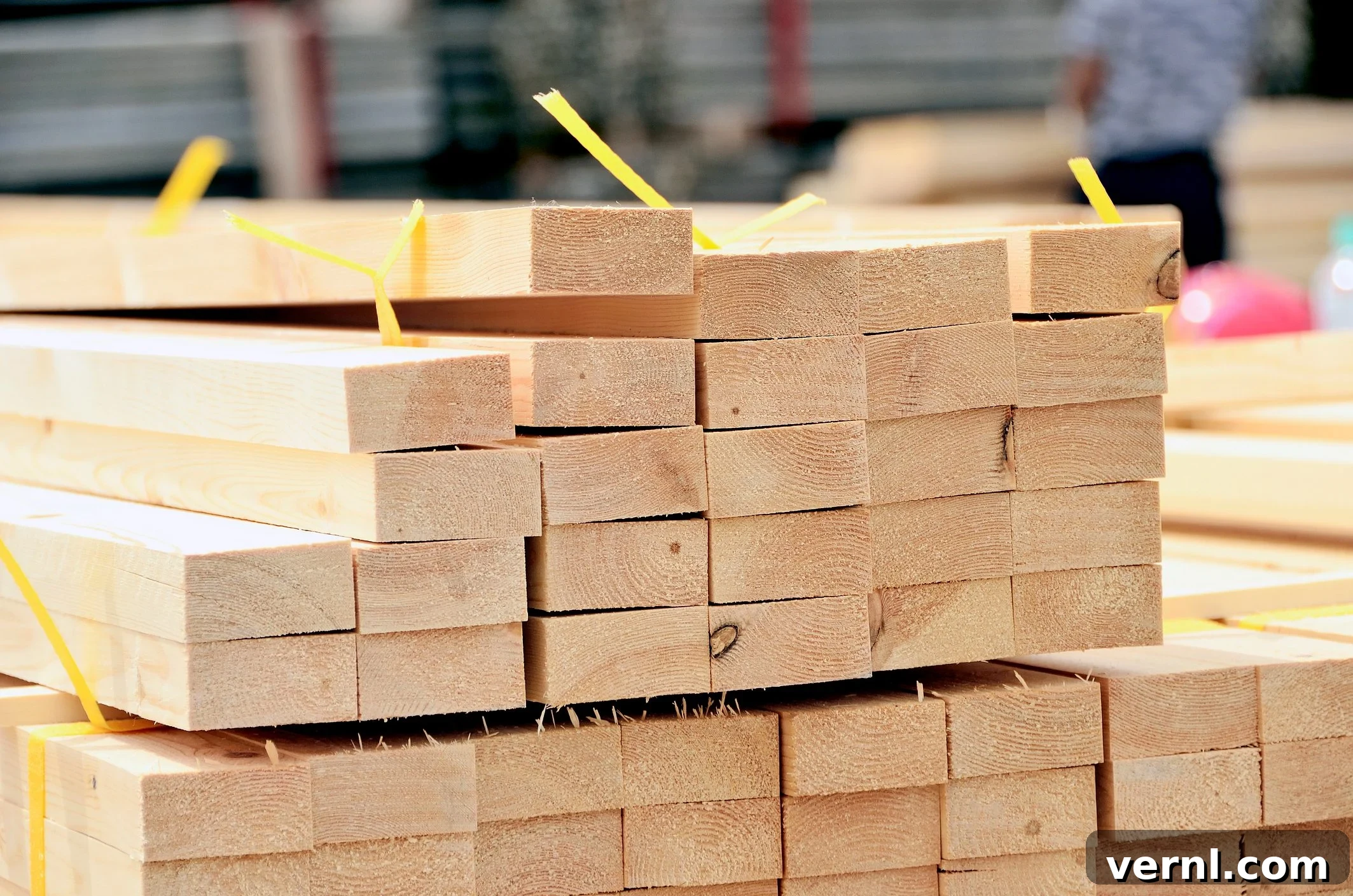
Often overlooked or unfairly categorized as merely “builder-grade,” pine wood is a remarkably versatile and rewarding material for woodworkers of all skill levels. Its widespread availability and affordability frequently lead to an undervaluation of its true potential. However, delve into the world of pine, and you’ll discover a wood that offers an exceptional user experience, from the pleasant aroma it releases in the workshop to its surprising adaptability across countless projects.
Pine wood excels with both traditional hand tools and modern machinery, allowing for smooth cuts and easy shaping. It accepts a variety of finishes beautifully, enhancing its natural warmth and inviting grain patterns. More than just a utilitarian material, pine can transform your workspace into an inviting environment, engaging your senses with its visual appeal, tactile qualities, and distinctive scent. This comprehensive guide will equip you with all the essential knowledge about pine, empowering you to confidently select and utilize it for your next woodworking endeavor, from rustic furniture to intricate carvings.
Understanding Pine Wood: A Woodworker’s Essential Guide
Pine is unequivocally a softwood, a classification that refers to wood sourced from gymnosperm trees, specifically conifers. These are the needle-leaved trees that typically produce cones and retain their foliage year-round, commonly known as “evergreens.” This botanical distinction influences pine’s characteristics, making it distinct from hardwoods, which come from deciduous trees. The cellular structure of softwoods generally means they grow faster and are less dense than hardwoods, leading to different working properties.
In terms of appearance, pine typically showcases a creamy, pale yellow hue in its sapwood – the younger, outer section of the trunk – which gradually transitions to a warmer, brownish heartwood, the older, denser core. This natural color variation can add character to finished pieces. Pine is renowned for its light weight and low density, attributes that have made it a preferred material for centuries, particularly for items requiring portability. From robust traveling trunks and collapsible camp chairs to easily movable furniture, pine’s inherent lightness ensures that projects can be transported or rearranged with minimal effort. Its straight grain, often adorned with characteristic knots, also contributes to its rustic charm and popular appeal in various design styles.
The Sustainability of Pine
Beyond its workability and aesthetic appeal, pine is also an environmentally conscious choice. Pine trees are fast-growing and are widely cultivated in managed forests, making them a highly renewable resource. This rapid growth cycle and ease of reforestation contribute to pine’s sustainability credentials, positioning it as an excellent option for eco-conscious woodworkers looking to minimize their environmental footprint. Utilizing pine supports responsible forestry practices and offers a practical alternative to slower-growing, often more expensive hardwoods.
Exploring the Diverse Types of Pine Wood
It’s crucial to understand that “pine” isn’t a singular species but a broad umbrella term encompassing a wide variety of conifers within the genus *Pinus*. Each species possesses unique characteristics that dictate its best use in woodworking. For practical purposes in the U.S., three types of pine dominate the market and are most commonly encountered by woodworkers. Understanding their distinct properties will help you make an informed choice for your specific project.
- Eastern White Pine (*Pinus strobus*): This type of wood is celebrated for its exceptionally light, creamy yellow color and remarkably soft, uniform grain lines. It is primarily sourced from the Eastern and Northern regions of the U.S., where it grows in abundance. Eastern White Pine is a true delight for hand-tool enthusiasts, offering very little resistance to chisels, planes, and saws, resulting in clean, crisp cuts and an enjoyable woodworking experience. However, its softness also means it’s more susceptible to dents and scratches. Finding clear, knot-free boards can be challenging, as knots are a prevalent feature of the species, often adding to its rustic charm but sometimes posing challenges for fine finishing. A critical consideration for Eastern White Pine is its tendency to “move” or warp when introduced to new environments, particularly those with differing humidity levels. Therefore, proper acclimation in your shop – allowing the boards ample time to adjust to local conditions with good ventilation – is paramount before beginning any work. Its softness is quantified by a Janka hardness rating of 380 lbf (pounds-force), placing it among the softer commercial woods. To provide context for the Janka rating, which measures wood density and resistance to denting, consider that Cherry (a medium hardwood) scores around 995 lbf, and White Oak (a very hard hardwood) comes in at 1,360 lbf. This significant difference highlights Eastern White Pine’s relative fragility and suitability for specific, less impact-prone applications like interior trim, paneling, and delicate furniture pieces.
- Southern Yellow Pine (SYP): Primarily referring to species like Longleaf Pine (*Pinus palustris*), Loblolly Pine (*Pinus taeda*), and Slash Pine (*Pinus elliottii*), Southern Yellow Pine is the densest and strongest of the three major commercial pines, boasting a robust Janka rating averaging around 870 lbf. This density makes it considerably harder and more durable than Eastern White Pine. Its appearance is characterized by a warmer, more pronounced yellow hue than Eastern White Pine, often featuring distinct, swirling brown grain lines that contribute to its bold aesthetic. Revered for its exceptional strength and stiffness, Southern Yellow Pine has been a cornerstone in heavy timber framing and general construction for centuries, particularly abundant in the Southeastern U.S. Its durability also makes it a popular choice for flooring, subflooring, and structural components where resilience is key. Its strength-to-weight ratio is impressive, making it suitable for applications where structural integrity is paramount, such as decking (when pressure-treated), utility poles, and robust outdoor furniture frames.
- Ponderosa Pine (*Pinus ponderosa*): Often considered the Western counterpart to Eastern White Pine, Ponderosa Pine shares many similar characteristics, including its lighter coloring, which can range from creamy white to pale yellow. It possesses a Janka rating of 460 lbf, making it slightly harder than Eastern White Pine but still considerably softer than the “hard pine” species of the Southern Yellow Pine group. Despite its technical classification as a yellow pine due to its botanical family, its working properties and softness align more closely with white pines. Ponderosa Pine is widely available throughout the Western U.S. and is highly valued for its consistent texture, straight grain, and minimal knot content compared to some other pines. These qualities make it an excellent choice for interior millwork, window and door frames, paneling, and cabinetry, where a smooth finish and ease of machining are desired. Its relatively low resin content also contributes to its good finishing characteristics.
- Other Notable Pines: While Eastern White, Southern Yellow, and Ponderosa Pines are the most common in North American woodworking, other species like Sugar Pine (*Pinus lambertiana*) are noteworthy for their exceptionally large sizes and soft, straight grain, making them valuable for pattern making and carving. Lodgepole Pine (*Pinus contorta*) is commonly used for utility purposes and structural lumber, while Radiata Pine (*Pinus radiata*), though originating from California, is widely planted in commercial forests globally for its fast growth and versatility, often found in plywood and engineered wood products.
The Advantages and Disadvantages of Working with Pine Wood
Like any woodworking material, pine comes with its own set of strengths and weaknesses. Understanding these can help you leverage its benefits while mitigating its challenges, leading to more successful and satisfying project outcomes.
Pros:
- Unmatched Availability: Pine is arguably the most accessible wood species in the U.S. It’s readily found in virtually every lumberyard, home improvement store, and even many hardware stores across the country. This ubiquitous presence means you can easily acquire pine for anything from a spontaneous weekend project to a large-scale construction. It comes in various forms, including dimensional lumber (2x4s, 2x6s), common boards, select pine boards, tongue-and-groove paneling, moulding, and even plywood. This wide availability not only makes it convenient but also contributes significantly to its affordability, making it an excellent choice for budget-conscious woodworkers and beginners.
- Exceptional Workability: For those who cherish the tactile experience of woodworking with hand tools, pine is an absolute dream. Its relatively soft nature and consistent grain allow chisels to glide through, planes to produce long, delicate shavings, and saws to make clean, effortless cuts. This ease of working translates into less physical strain and faster project completion. Even with machine tools, pine is a pleasure to mill; it cuts cleanly and quickly, requiring less power and reducing wear on equipment. Beyond its mechanical properties, the distinctive, fresh aroma released during cutting and sanding transforms the workshop atmosphere, making the entire woodworking process more enjoyable.
- Beautiful Finishing Characteristics: Pine possesses a natural warmth and light color that beautifully complements clear, film-building finishes. Shellac, polyurethane, lacquer, and varnish adhere exceptionally well, creating a crisp, clean aesthetic that enhances the wood’s inherent beauty without obscuring its grain. These finishes bring out a subtle golden glow, providing a durable and attractive surface. When finished with a clear coat, pine develops a rich patina over time, deepening its color and adding character. It’s an ideal choice for projects where you want to highlight the natural wood grain and achieve a bright, inviting look.
Cons:
- Prone to Instability and Movement: Despite its ready availability, pine requires careful handling and preparation. Its relatively high moisture content when purchased from a lumberyard makes it susceptible to significant movement – warping, cupping, and twisting – as it dries and acclimates to new environmental conditions. Failing to give pine adequate time to stabilize in your workshop can lead to frustrating project failures and wasted material. Proper storage, allowing air circulation around individual boards, and patiently waiting for the wood to reach equilibrium moisture content are crucial steps to minimize dimensional instability and prevent headaches down the line. Using a moisture meter is highly recommended for critical projects.
- Resin Buildup on Tools (Machinability): While pine machines exceptionally well in terms of ease of cutting, it is a resinous wood. Over time, the natural pitch and sap within the wood can accumulate on your cutter heads, saw blades, router bits, and sandpapers. This resin buildup, often visible as a dark, sticky residue, reduces cutting efficiency, generates more heat, and can lead to burning, tear-out, or less precise cuts. While easily cleaned off with specialized pitch removers, soap, and a stiff bristle brush, this maintenance task adds an extra layer of hassle, especially during extensive milling operations. Regular cleaning of tools is essential to maintain optimal performance and prolong their lifespan when working with pine.
- Challenges with Staining and Blotchiness: Pine is notoriously difficult to stain evenly. Its varying density – with softer earlywood and harder latewood – causes wood stain or dye to be absorbed inconsistently, often resulting in an undesirable blotchy appearance with dark spots and light patches. While pre-stain conditioners can help equalize absorption, they often provide only partial improvement. For projects requiring a uniform color change, painting pine is generally a far more reliable and recommended solution. Paint adheres beautifully to pine, providing a smooth, consistent finish that completely covers the wood’s natural color and grain, making it ideal for painted furniture or decorative elements. Alternatively, gel stains or toners can offer more controlled color application than traditional liquid stains.
Diverse Applications of Pine Wood in Construction and Craft
Pine’s unique blend of characteristics—its strength, lightness, workability, and availability—has cemented its role as a fundamental material across a vast array of applications, from the structural backbone of modern homes to intricate pieces of furniture.
-
Stick Frame Construction: Pine is the undisputed king of residential construction. From the ubiquitous 2x4s and 2x6s forming wall studs, floor joists, and roof rafters to subflooring, sheathing, and window sills, pine lumber provides the primary structural framework for countless modern homes. Its consistent strength, ease of cutting and nailing, and cost-effectiveness make it the material of choice for builders nationwide. Indeed, pine is integral to the very fabric of our built environment, often more so than many realize.
-
Timber Framing: Long before modern stick-frame construction, large pine timbers were a staple in traditional timber-framed buildings. These massive, solid wood beams and posts are used to create robust and aesthetically striking structures like homes, barns, and churches, where the joinery itself is often a key design feature. The strength of species like Southern Yellow Pine made it an ideal material for these load-bearing applications, contributing to the longevity and distinctive rustic beauty of these iconic structures.
-
Decking and Exterior Structures: For outdoor applications, pressure-treated pine is an indispensable material. This lumber undergoes a chemical treatment process, typically involving copper-based preservatives, to significantly enhance its resistance to rot, decay, and insect infestation. This makes it an economical and effective choice for decks, fences, pergolas, playground equipment, and other exterior construction projects exposed to the elements. While requiring periodic maintenance, pressure-treated pine offers a durable and cost-effective solution for creating functional and appealing outdoor living spaces.
-
Furniture Making: Pine has been a constant presence in woodworkers’ shops for centuries, valued for its exceptional availability and workability. Its light weight makes it ideal for commercially fabricated furniture, such as the frames of couches, beds, and upholstered chairs, where bulk and ease of assembly are important. In custom woodworking, pine is often chosen for rustic, farmhouse, Shaker, or country-style furniture, where its characteristic knots and warm grain add to the aesthetic. It’s also a popular choice for painted furniture due to its smooth surface and excellent paint adhesion, allowing for versatile design possibilities. Its ease of shaping makes it suitable for intricate carvings and turned components in furniture as well.
-
Interior Trim, Paneling, and Millwork: Pine’s ease of milling and consistent grain make it a top choice for interior finishing elements. It’s commonly used for baseboards, crown mouldings, door and window casings, and decorative wall paneling. Its ability to take clear finishes or paint beautifully allows it to blend seamlessly with various interior design schemes, adding a touch of classic warmth or contemporary crispness, depending on the chosen finish.
-
Shelving and Storage Solutions: Given its affordability and decent strength, pine is an excellent material for building shelves, bookcases, and other storage units. For heavy-duty shelving, denser pine species like Southern Yellow Pine provide ample support. For lighter loads or purely aesthetic shelving, Eastern White or Ponderosa pine can be finished to match any decor.
-
Crafts, Jigs, and Templates: For hobbyists and professional woodworkers alike, pine is invaluable for crafting small decorative items, children’s toys (when properly finished), and especially for making jigs, fixtures, and templates in the workshop. Its low cost means mistakes are less costly, and its ease of cutting allows for quick prototyping and customization of shop aids.
Pine Wood Cost and Strategic Purchasing Tips
One of pine’s most compelling attributes is its relative affordability, especially when compared to domestic hardwoods. However, its cost can fluctuate based on several factors, including regional availability, grade, and specific dimensions. For instance, Southern Yellow Pine, being more common in the Southeastern U.S., will naturally be more expensive to transport and purchase in the Northeast, where Eastern White Pine is more prevalent. Despite these regional variations, pine generally remains a budget-friendly option, making it an excellent choice for beginner to intermediate woodworkers eager to hone their skills without a substantial material investment.
Typically, you can expect to pay anywhere from $2.50 to $7 per board foot for pine, depending on whether you’re buying standard dimensional lumber, wider boards, select (clear) grades versus common (knotty) grades, and whether the wood is presurfaced (S4S – surfaced four sides) or in the rough. To put this in perspective, most domestic hardwoods like cherry or walnut typically range from $5 to $15 per board foot, and often considerably more for premium grades or exotic species. This significant price difference allows woodworkers to undertake larger projects or experiment with new techniques without financial apprehension.
Tips for Purchasing Pine:
- Inspect for Defects: Always visually inspect each board for excessive warping, twisting, large loose knots, or significant checks (cracks) before purchasing. While some movement is common, selecting the straightest boards available will save you time and material in the long run.
- Consider the Grade: Pine is sold in various grades, from “common” (with more knots and natural characteristics) to “select” or “clear” (with fewer, smaller, or no knots). Your project’s aesthetic and structural requirements will dictate the appropriate grade. Common grades are perfect for rustic projects or structural uses, while select grades are better for fine furniture or trim.
- Acclimation is Key: Remember to allow any pine lumber you purchase to acclimate to your workshop environment for at least a few weeks before beginning work. This critical step minimizes the risk of warping and other dimensional changes after your project is built.
- Buy a Little Extra: Due to potential defects or unexpected cuts, it’s always wise to purchase 10-15% more lumber than your project calculations suggest. Pine’s affordability makes this contingency less impactful on your budget.
Important Note on Other Conifers: It’s crucial for woodworkers to distinguish between true pine species and other conifers that are often generically lumped into the “pine” category, particularly in construction. Spruce and Douglas Fir are two such species commonly used in construction-grade timbers, often collectively referred to as “whitewood” and frequently stamped with an “SPF” designation (Spruce-Pine-Fir). While these woods are perfectly adequate for rough construction projects like framing walls, their properties make them less desirable for fine woodworking applications. They tend to have inconsistent grain, can splinter easily, are often less dimensionally stable once milled, and lack the aesthetic appeal and finishing characteristics that make true pine so enjoyable to work with in furniture or detailed joinery. Always confirm the specific species if you’re looking for genuine pine for your woodworking projects.