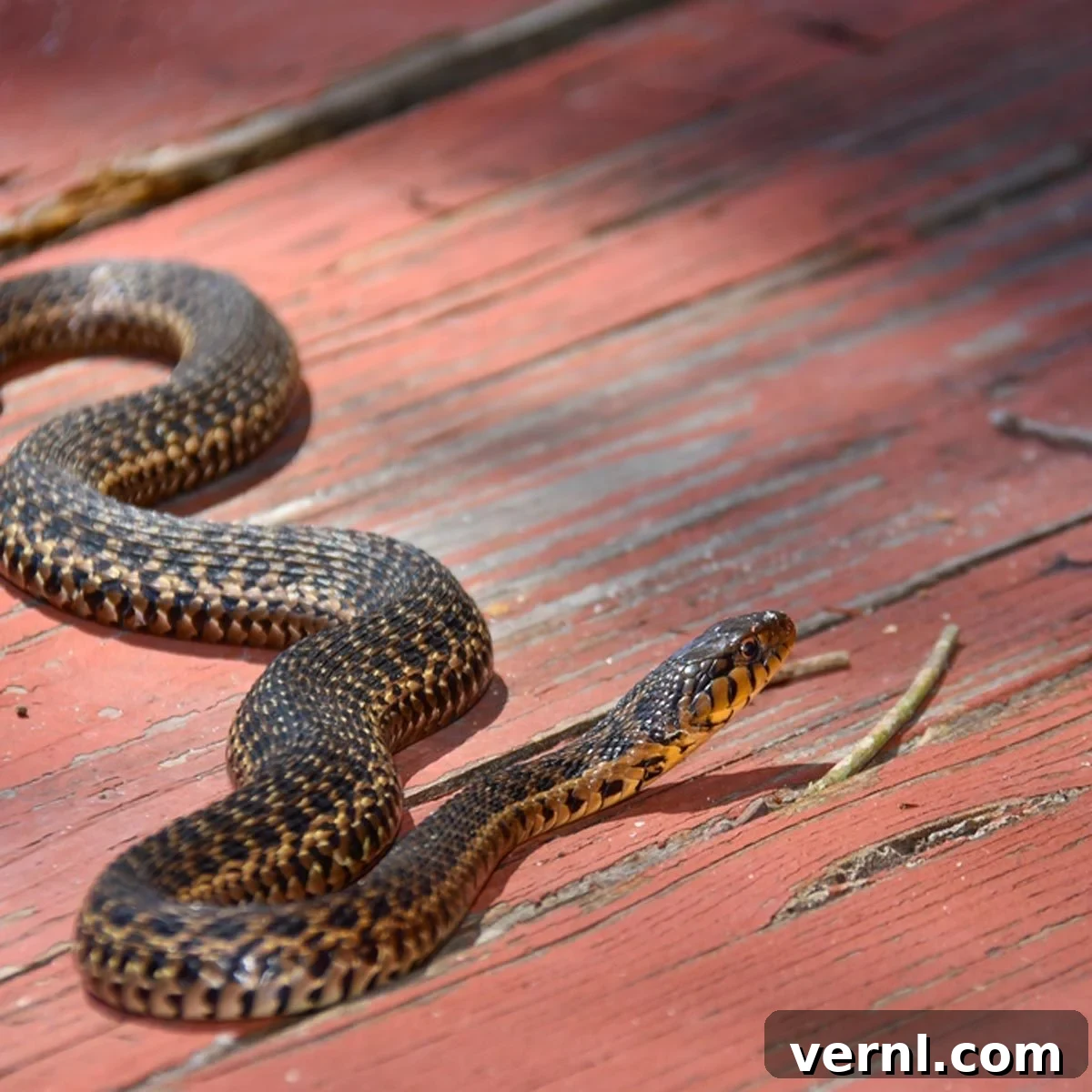
Few homeowners relish the thought of sharing their living space with a snake. While some appreciate these fascinating reptiles from a distance, the appearance of a snake inside your home or slithering through your yard can be a startling and unwelcome surprise. Understanding how to effectively prevent and, if necessary, safely remove these elusive creatures is key to maintaining a peaceful and secure environment for you and your family. This comprehensive guide provides practical, actionable tips to make your property less attractive to snakes and ensure they stay where they belong – far away from your personal space.
Understanding Why Snakes Visit Your Home and Yard
To effectively deter snakes, it’s crucial to understand what attracts them in the first place. Snakes are drawn to areas that offer three primary necessities: food, shelter, and water. Your property, especially if not properly maintained, can inadvertently provide an ideal habitat for them.
Firstly, **food sources** are a major draw. Snakes are opportunistic predators, and a yard teeming with rodents, insects, amphibians, or even small birds creates a ready-made buffet. Mice, rats, voles, frogs, crickets, and slugs are all common prey items. If you have an existing pest problem, you’re essentially laying out a welcome mat for snakes looking for their next meal. Addressing these underlying pest issues is a fundamental step in comprehensive snake prevention.
Secondly, snakes seek **shelter and hiding places**. They are cold-blooded animals that need to regulate their body temperature, often seeking cool, dark, and undisturbed spots to rest, digest, or escape predators. Piles of firewood, rockeries, dense shrubbery, tall grass, leaf litter, construction debris, and even cluttered sheds or garages offer perfect camouflage and refuge. Cracks in foundations or unsealed entry points into your home can also appear as inviting, secure havens, especially during extreme weather conditions.
Finally, **access to water** can also attract certain snake species. Ponds, bird baths, pet water bowls left outdoors, leaky outdoor faucets, or even poor drainage that creates standing puddles can be appealing, especially during dry spells. By understanding and eliminating these attractants, you can significantly reduce the likelihood of snakes making your property their home.
Fortifying Your Home: Preventing Snakes from Entering
The most effective way to deal with snakes inside your house is to prevent them from getting in at all. Snakes can squeeze through surprisingly small openings, making a thorough inspection and sealing of your home’s exterior critical.
Begin by conducting a meticulous inspection of your home’s **outer walls and foundation**. Look for any cracks, holes, or gaps, no matter how small. These can be entry points for snakes, especially younger or smaller ones. Use high-quality sealant, concrete repair kits, or expanding foam to plug these gaps securely. Pay close attention to areas where utilities enter the house, such as pipes, wires, and cables, as these often have unsealed openings around them.
**Ventilation openings and crawl spaces** are common entry points that often go overlooked. Ensure all vent holes, including those for the dryer, attic, and foundation, are covered with fine-mesh hardware cloth. This durable metal mesh has openings small enough to block even small snakes while still allowing for proper airflow. Similarly, secure all access points to crawl spaces and attics with tight-fitting doors or covers that are also sealed with hardware cloth.
**Doors and windows** are another critical area. Install sturdy door sweeps on all exterior doors, ensuring they create a tight seal with the threshold. Apply weather stripping around door and window frames to eliminate any gaps. Check that all window screens are intact and free of tears. Garage doors, in particular, often have significant gaps along the bottom and sides; invest in a robust garage door seal kit to close these potential entry points. Even basement windows that are close to the ground can offer an easy access point if not properly sealed or if screens are damaged.
Eliminating Attractants: Making Your Yard a No-Go Zone for Snakes
Transforming your yard into an inhospitable environment for snakes is crucial for long-term prevention. This involves a combination of smart landscaping, diligent maintenance, and effective pest control.
**Address underlying pest problems immediately.** As mentioned, rodents and other small animals are a primary food source for snakes. Implementing a robust pest control strategy will make your yard far less appealing. This includes storing bird seed and pet food in airtight containers, regularly clearing up fallen fruit from trees, and using humane traps for mice and rats if you detect their presence. If the rodent problem is severe, consider professional pest control services to thoroughly eliminate these prey animals.
**Maintain a tidy yard.** Snakes thrive in cluttered environments where they can easily hide and ambush prey. Begin by **clearing all clutter** from your yard. This means removing piles of wood, rock piles, discarded building materials, old equipment, and any other debris. If you must have a woodpile, stack it neatly on a raised platform, away from your house, and cover it to prevent rodents from nesting in it. Similarly, if you have a rockery, ensure it is maintained and not creating deep, dark crevices. Regularly remove leaf litter, grass clippings, and garden waste, as these provide excellent hiding spots for snakes and their prey.
**Keep your grass short.** Tall grass offers cover for snakes to move undetected and provides shelter from predators and the sun. Mowing your lawn frequently, especially around the perimeter of your house and along fences, makes snakes feel exposed and less likely to linger. Aim for a consistently short lawn, depriving them of potential cover.
**Prune trees and shrubs regularly.** Overgrown vegetation, especially bushes and shrubs that touch the ground, creates dense, shady areas that snakes find appealing. Prune your trees and shrubs so that the lowest branches are several inches off the ground, allowing sunlight to penetrate and reducing shaded hiding spots. Avoid planting dense ground cover near your home’s foundation.
**Manage water sources.** Eliminate any standing water in your yard. Fix leaky outdoor faucets, ensure good drainage to prevent puddles, and regularly empty and clean bird baths. If you have a pond, consider placing it as far away from your house as possible, as some snake species are attracted to water bodies.
**Consider snake-proof fencing.** For a more robust solution, particularly if you live in an area with a high snake population, installing a snake-proof fence can be highly effective. This fence should be made of fine metal mesh (hardware cloth) or a similar material with openings no larger than 1/4 inch. It should be at least two to three feet tall and, critically, buried several inches into the ground (typically 4-6 inches) and angled outwards at the bottom to prevent snakes from burrowing underneath. Ensure there are no gaps or tears in the fencing.
Safe and Humane Snake Removal Strategies for Indoor Incidents
Even with the best preventative measures, a snake might occasionally find its way inside your home. If you discover a snake indoors, it’s important to remain calm and approach the situation safely and humanely.
Firstly, **identify the snake if possible, but prioritize caution.** Many snakes are harmless, but some can be venomous. If you are unsure of the snake’s species, assume it is venomous and do not approach it. Keep children and pets away from the area.
For non-venomous snakes or if you prefer a humane, hands-off approach, glue-based traps can be an effective solution. These traps consist of a sticky surface designed to immobilize the snake without harming it. Place the traps along walls in areas where you’ve seen the snake or where you suspect it might be hiding. Once the snake is caught, you can humanely release it. To do this, carefully take the trap outdoors to a suitable natural area far from your home. Pour a generous amount of cooking oil (vegetable oil or olive oil works well) over the snake and the sticky surface. The oil will dissolve the adhesive, allowing the snake to slowly free itself without injury. Be patient during this process, and always wear thick gloves for your protection.
Before releasing any snake, it’s vital to **check your local state and municipal regulations** regarding wildlife release, as rules can vary. In some areas, releasing captured wildlife may be prohibited, or specific guidelines may need to be followed. Always ensure the release location is far from human habitation and offers suitable natural habitat for the snake.
After removing a snake from your home, it’s essential to revisit your prevention strategies. Review the ways snakes can enter your home and make sure all potential entry points are thoroughly sealed to prevent future incidents. A comprehensive approach to exclusion and habitat modification is the best long-term solution.
Debunking Snake Repellents: Why Most Don’t Work Effectively
Many commercial and DIY snake repellents are marketed as quick fixes, but their effectiveness is often questionable. While some products claim to deter snakes with unpleasant odors or tastes, they rarely provide a reliable, long-term solution.
**Chemical repellents**, such as those containing sulfur or naphthalene (mothballs), are sometimes used. These products are supposed to give off nasty smells that snakes find repulsive. However, their efficacy is limited for several reasons. Firstly, their effectiveness is often localized and diminishes quickly, especially outdoors where they can be washed away by rain or dissipated by wind. Secondly, snakes may simply navigate around the treated areas. More importantly, many of these harsh chemicals can pose significant risks to children, pets, and the environment. They can be toxic if ingested or inhaled, making them an undesirable option for areas frequented by family members or domestic animals. For these reasons, chemical repellents are generally best avoided.
**Natural or home-remedy repellents**, like garlic, onion, essential oils (e.g., peppermint, clove, cinnamon), or even certain plants, are also frequently suggested. While these might have strong odors that are unpleasant to some animals, there is very little scientific evidence to support their effectiveness in consistently deterring snakes. Snakes rely more on scent and vibrations for navigation and hunting, and a localized odor is unlikely to create a barrier they won’t cross if motivated by food or shelter.
Ultimately, **habitat modification and exclusion** remain the most reliable and environmentally friendly methods for snake prevention. Instead of trying to repel snakes with scents, focus on eliminating what attracts them and physically blocking their access.
When to Call the Experts: Professional Snake Removal
While many snakes are harmless and can be safely encouraged to leave or removed using humane traps, there are situations where professional help is not just advisable, but necessary. Knowing when to call in experts ensures both your safety and the humane handling of the snake.
**If you encounter a venomous snake**, it is imperative to call a professional wildlife removal service or your local animal control immediately. Attempting to handle a venomous snake yourself is extremely dangerous and can lead to serious injury or even death. Professional snake handlers have the specialized training, equipment, and expertise to identify, safely capture, and relocate venomous species without putting themselves or others at risk.
**If you are uncomfortable or fearful** of snakes, regardless of whether they are venomous or not, do not hesitate to seek professional assistance. Your peace of mind and safety are paramount. Wildlife experts can remove the snake quickly and efficiently, alleviating your stress and ensuring the creature is handled appropriately.
**For persistent snake problems** or multiple sightings, a professional can offer more than just removal. They can conduct a thorough inspection of your property to identify all potential entry points and attractants you might have missed. They can also provide expert advice on long-term prevention strategies tailored to your specific environment, helping you understand local snake species and their behaviors.
Professional snake removers have the know-how to catch and remove snakes safely and humanely, adhering to all local regulations. They can relocate the snake to a suitable natural habitat, allowing you to enjoy your home and yard in peace, confident that the problem has been expertly addressed.
By taking a proactive, multi-faceted approach to snake prevention – focusing on sealing your home, meticulously maintaining your yard, and eliminating attractants – you can significantly reduce the likelihood of encountering these slithery visitors. And if a snake does appear, remember to prioritize safety and know when to enlist the help of a professional. With these strategies, you can create a secure and serene environment for your family.