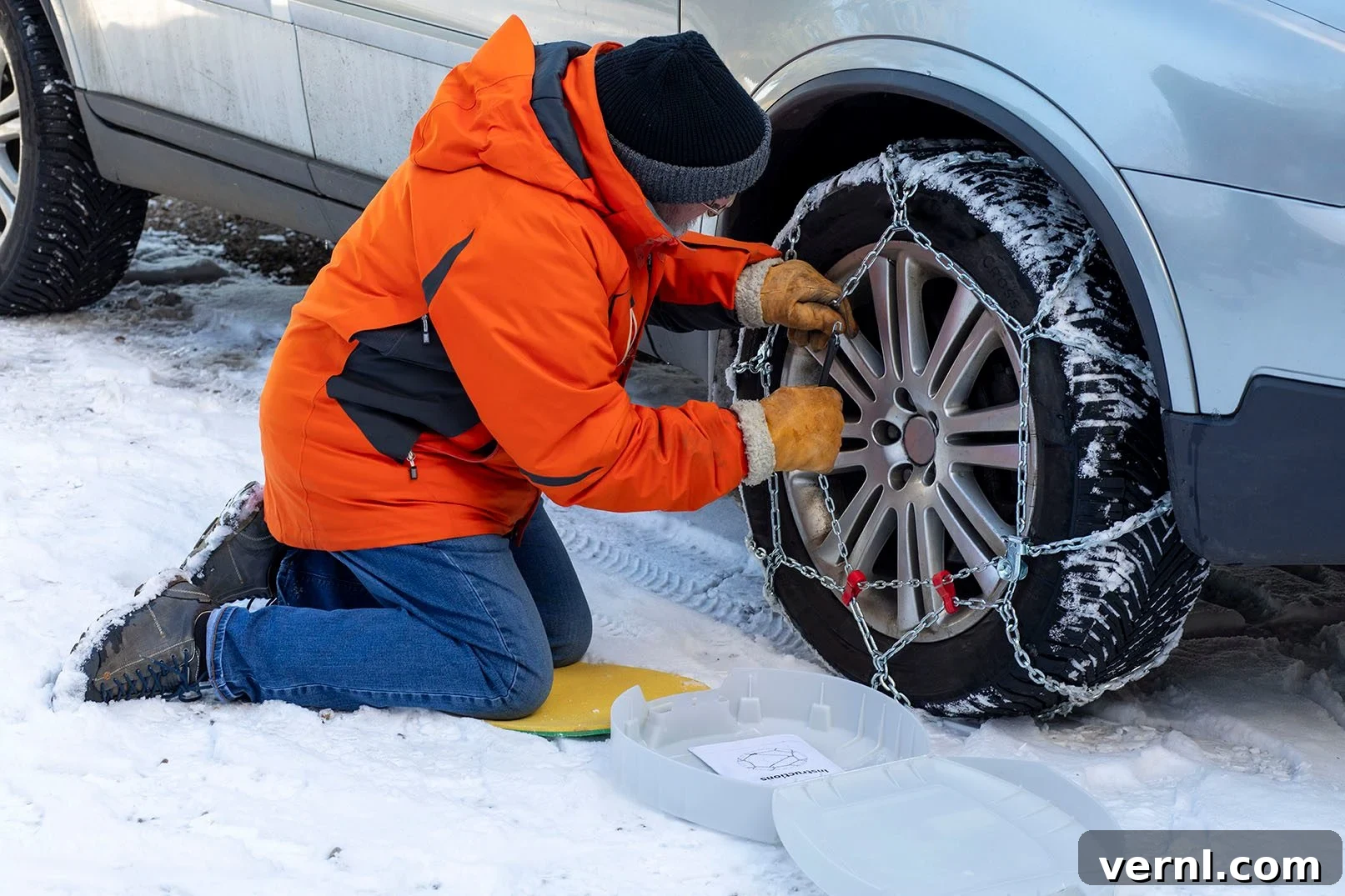
Winter driving presents unique challenges that can quickly transform a routine journey into a hazardous ordeal. Even on meticulously plowed and well-maintained roads, the combination of freezing temperatures, ice, and compacted snow can severely compromise vehicle traction. Navigating these conditions without adequate preparation makes winter driving a serious and potentially dangerous business. If your vehicle is only equipped with all-season tires, attempting to brave deep snow or smooth ice significantly increases the likelihood of getting stuck or sliding off the road.
While advancements in tire technology have led to specialized options like dedicated winter tires, their effectiveness still has limits. Snow tires, although undeniably superior to all-season ones at dealing with wintry roads due to their softer rubber compounds and aggressive tread patterns, won’t provide sufficient grip once the snow becomes more than a couple of inches deep or when black ice forms an almost invisible trap. This is precisely where the ingenious solution of snow chains comes into play, offering a critical layer of safety and control when rubber alone isn’t enough to prepare your car for winter’s harshest conditions.
The concept of enhancing vehicle traction in difficult terrain dates back over a century. It was New Yorker Harry Weed who, in 1904, patented one of the earliest practical designs for tire chains, specifically to combat the treacherous challenges of mud and snow. His invention revolutionized winter travel, providing a much-needed safety accessory that allowed drivers to maintain control in conditions that would otherwise render their vehicles immobile. The enduring presence and continued relevance of his invention on the market today stand as a testament to its fundamental effectiveness and critical importance for winter road safety.
What Are Snow Chains and How Do They Work?
Snow chains, also widely known as tire chains, are essential safety accessories engineered to dramatically enhance a vehicle’s traction in severe winter conditions. These robust devices typically consist of a network of metal links, cables, or sometimes specialized composite materials designed to fit snugly over a vehicle’s drive wheels. Their primary purpose is to provide an aggressive biting edge that traditional rubber tires simply cannot achieve on their own when confronting deep snow, ice, or slush.
The fundamental principle behind snow chains is elegantly simple yet highly effective: they introduce additional points of friction and resistance against slippery road surfaces. When correctly installed, the metal links or cross-members extend beyond the tire’s tread, physically digging into the snow, ice, or compacted slush. This action creates a significantly higher coefficient of friction between the tire and the road, preventing the tire from spinning uselessly and allowing the vehicle to move forward, turn, and brake with greater control. Imagine a professional athlete’s cleats designed to grip turf or ice, allowing for quick, decisive movements without slipping. Snow chains perform a similar function for vehicles, transforming the smooth, relatively flat surface of a rubber tire into a rugged, high-grip mechanism that can bite into challenging surfaces.
Snow chains are commonly sold in pairs and are available in two main styles: traditional link chains and lighter cable chains. Both styles are meticulously manufactured in a wide array of sizes to ensure a perfect match for various tire sizes, taking into account both tread width and tire diameter. For front-wheel drive vehicles, chains should always be installed on the front wheels only, as these are the primary wheels responsible for propulsion and steering. Conversely, for rear-wheel drive vehicles, chains must go on the back wheels. If your vehicle is four-wheel drive or all-wheel drive, you will achieve the best possible results and maximum traction by purchasing and installing chains on all four tires, provided your vehicle’s manufacturer approves this configuration and sufficient wheel well clearance exists.
The installation of snow chains typically involves carefully pulling them all the way around the bottom of the tires, then pulling them up and around the wheel to connect the ends. Once the initial connection is made, you pull out any slack to achieve a snug fit. After installing, it’s crucial to slowly drive forward a few feet (approximately 10-20 feet) to allow the chains to settle and self-tension. Then, park the vehicle safely and check the chains again, pulling out any additional slack that may have appeared. Properly sized and installed chains should fit snugly over your tires without excessive looseness, which could cause them to move excessively, become tangled, or even detach.
How to Choose the Right Snow Chains
Selecting the appropriate snow chains for your vehicle is a critical decision that directly impacts your safety and the performance of your vehicle during winter driving. This process hinges on three key factors: precise sizing for your tires and vehicle, suitability for your anticipated driving conditions (performance), and the overall ease of installation.
1. Understanding Tire Size and Vehicle Compatibility
The first and most crucial step is to accurately determine your tire size. This information is always prominently displayed on the tire’s sidewall, presented as a series of numbers and letters (e.g., P205/55R16). This code indicates the tire’s width, aspect ratio, construction type, and rim diameter. Both the diameter and tread width are vital when choosing a set of chains, as manufacturers produce their products in a wide variety of sizes to accommodate the most common tires on the road. Knowing how to read the size of your tire is indispensable.
Beyond just tire size, it is absolutely essential to consult your vehicle’s owner’s manual. Many modern vehicles, particularly those with limited wheel well clearance, low-profile tires, or certain electronic stability control systems, may have specific restrictions or even outright prohibitions against using certain types of snow chains. Installing chains on a vehicle not designed for them can lead to significant and costly damage to brake lines, suspension components, fenders, or the wheel wells themselves. Always check for manufacturer recommendations regarding “Class S,” “Class U,” or “Class W” clearance requirements, or specific chain types that are permitted. Ignoring this advice can result in severe mechanical issues and compromise vehicle safety.
2. Performance and Material Considerations
Once you’ve confirmed compatibility and precise size, it’s time to consider the performance characteristics offered by different chain designs and materials. Chain designs vary significantly by material, weight, and the pattern they create on the tire:
- Link-Style Chains: These are the classic, heavy-duty option, typically constructed from hardened steel links that form a ladder or diamond pattern across the tire tread.
- Pros: Offer superior traction and exceptional durability, making them ideal for very deep snow, thick ice, and severe off-road winter conditions. Their robust construction means they can withstand significant abuse.
- Cons: Considerably heavier and often more challenging to install and remove, especially in freezing conditions or if working alone. They can also provide a rougher, bumpier ride and may not be suitable for vehicles with limited wheel well clearance.
- Cable Chains (S-Class Chains): These utilize steel cables encased in a protective material, often with smaller, lighter cross-members or studs embedded within.
- Pros: Lighter, generally easier to install, and frequently meet the stricter clearance requirements for vehicles that cannot accommodate traditional link chains (hence often referred to as “S-Class” chains). They typically provide a smoother and quieter ride than link chains.
- Cons: Offer less aggressive traction than full link chains and may be less durable in truly extreme or prolonged severe conditions.
- Composite or Plastic Chains: These are made from high-strength plastic or composite materials, sometimes reinforced with metal studs or a rubberized grip pattern.
- Pros: Very lightweight, extremely easy and quick to install, and provide a much smoother, quieter ride. They are often an excellent choice for vehicles with very strict clearance limitations or for drivers who prioritize ease of use.
- Cons: Generally less robust and offer less aggressive traction compared to metal chains. Their durability can be a concern in very harsh conditions, and they are typically better suited for lighter snow and occasional use rather than extreme winter expeditions.
- Self-Tensioning/Automatic Chains: Some advanced designs feature integrated automatic tensioning systems. These significantly simplify installation by eliminating the need to retighten the chains after driving a short distance. While often more expensive, they offer substantial convenience.
3. Ease of Installation
While not directly related to the traction capabilities, the ease of installation is a highly practical consideration. Fumbling with cold, tangled chains in a snowstorm or sub-zero temperatures is an unwelcome challenge. Look for designs that feature color-coded components, quick-release mechanisms, or simpler attachment methods. It is highly recommended to practice installing your chosen chains in warm, dry conditions at home before you actually need them on the side of a snowy road. Always read customer reviews and seek advice from experienced individuals in your area to gauge real-world performance and ease of use under pressure.
How to Drive with Snow Chains On
Once properly installed, snow chains will dramatically improve your vehicle’s ability to move steadily through or across snow and ice, providing significantly enhanced stability and control. However, driving with chains requires a modified approach to ensure both your safety and the longevity of the chains and your vehicle.
1. Maintain a Slow and Steady Speed
The most critical rule when driving with snow chains is to maintain a slow and steady speed. Generally, you should not exceed 30 mph (approximately 50 km/h), and often even slower speeds, typically between 15-20 mph (25-30 km/h), are advisable in truly challenging conditions. Driving too fast with chains can lead to several dangerous and damaging outcomes:
- Chain Damage: Excessive speed can cause chains to break, detach from the tire, or wear out prematurely due to increased centrifugal force and impact stress.
- Vehicle Damage: A broken or detached chain can whip around violently, causing severe damage to your vehicle’s fenders, brake lines, suspension components, or even the undercarriage.
- Loss of Control: Despite improved traction, chains alter a vehicle’s handling characteristics. High speeds can lead to an unpredictable loss of control, particularly when attempting to turn or brake.
2. Appropriate Use and Timely Removal
Snow chains are specifically designed for use on snow- and ice-covered roads. It is imperative to only install them when conditions genuinely warrant their use. Driving with chains on dry pavement is highly detrimental for several significant reasons:
- Road Damage: The metal links will scrape, gouge, and significantly damage dry asphalt or concrete road surfaces.
- Chain Damage: Driving on dry pavement will rapidly wear down the chains, dulling their biting edges and potentially causing them to break or become ineffective.
- Tire Damage: Chains on dry roads create abnormal stress and friction on your tires, leading to premature wear and potentially structural damage to the tire itself.
- Reduced Handling: Chains on dry roads will also significantly degrade your vehicle’s handling, making steering less precise, causing vibrations, and substantially increasing stopping distances.
As soon as you reach cleared roads or conditions no longer necessitate chains, pull over to a safe location and promptly remove them. Do not delay removal, as driving on dry surfaces will quickly cause irreparable damage to both the chains and your vehicle. For optimal results in snowy conditions, especially when anticipating prolonged or severe weather, some drivers opt to purchase two pairs of chains, installing both when the weather demands it for maximum all-around traction and stability, particularly with four-wheel drive vehicles.
3. Smooth Driving Techniques
When driving with chains, always prioritize smooth and deliberate actions:
- Gentle Acceleration: Avoid sudden or aggressive acceleration, which can cause the wheels to spin, leading to excessive wear on the chains and potential loss of traction.
- Smooth Braking: Brake earlier and more gently than usual. Remember that even with chains, stopping distances are increased on slippery surfaces. Pump the brakes gently if your vehicle lacks ABS, or allow the ABS to work without stomping on the pedal.
- Slow Turns: Approach turns at a significantly reduced speed to maintain stability and prevent skidding. Avoid sharp or sudden steering inputs.
- Maintain Distance: Dramatically increase your following distance from other vehicles to allow ample time for braking and reaction to unexpected situations.
- Four-Wheel Drive (if applicable): If your vehicle is equipped with four-wheel drive (4WD) or all-wheel drive (AWD), engaging it in conjunction with chains (especially if chains are on all four wheels) will provide maximum traction and control in severe conditions. However, always remember that 4WD helps you go, but does not necessarily help you stop better on ice.
How to Pack and Store Snow Chains
Proper care and storage of your snow chains are essential for extending their lifespan, preventing premature wear, and ensuring they are ready for reliable use season after season. Neglecting this crucial step can lead to rusting, tangled messes, and reduced effectiveness precisely when you need them most.
1. Careful Removal and Initial Cleaning
When the time comes to remove your chains, pull over to a safe, level location away from traffic. Unhook them carefully, ensuring they do not snag on any vehicle components or tangle around themselves, and gently pull them down and out from under your tires. Avoid simply yanking them off, as this can damage the chains or your vehicle.
Once removed, it’s a good initial practice to shake off as much loose snow, ice, and larger road debris as possible. Then, lay them out flat, ideally on a tarp or a designated area in your garage or driveway, to allow them to thaw and dry thoroughly. This is a crucial step in preventing rust, as moisture is the primary catalyst for corrosion.
2. Thorough Cleaning and Inspection
After the chains have completely dried, inspect them closely for any remaining road salt, grime, or signs of wear. Use a stiff brush and water to clean off any stubborn dirt or corrosive road salt. Salt is particularly damaging to metal, significantly accelerating rust and material degradation. If necessary, a mild detergent can be used to remove greasy residue, but ensure they are thoroughly rinsed afterward to remove all soap residue.
While cleaning, take the opportunity to meticulously inspect each link and connection point. Look carefully for:
- Bent or Broken Links: Identify any individual links that are stretched, bent, cracked, or completely broken.
- Damaged Cross-Members: Check the main cross-members that sit on the tire tread for significant wear, flat spots, or any signs of impending failure.
- Loose or Worn Connectors: Ensure all hooks, clasps, tensioning devices, and closure mechanisms are intact, functioning correctly, and free from excessive wear or damage.
- Signs of Rust: Address any rust spots if possible, perhaps by cleaning the area and applying a rust-inhibiting spray or primer if appropriate for the chain material.
Addressing minor issues promptly can prevent major problems and potential chain failure down the line. If the chains are significantly damaged, show extensive wear, or have critical broken components, it is safer to replace them than to risk their failure during use.
3. Compact and Protected Storage
Once the chains are completely dry, clean, and inspected, it’s time to store them. Many snow chain sets come with a durable storage bag or a sturdy plastic case, which is the ideal solution. If not, a sturdy canvas bag, a small plastic tub with a lid, or even a heavy-duty contractor bag will work. The key is to fold or coil the chains neatly from one end, making sure they do not tangle. A tangled mess is the last thing you want to deal with when you’re cold and in a hurry to install them in freezing conditions. Aim to make them as compact as possible to conserve space in your vehicle.
Place the bagged or boxed chains in a readily accessible but secure location in your vehicle’s trunk or cargo area. Having them easily reachable means you won’t have to rummage through your entire trunk in a snowstorm. By consistently following these proper cleaning and storage tips, your snow chains will be well-maintained and ready to provide reliable traction and crucial safety whenever the winter weather demands it. They are an investment in your safety, and proper care ensures that investment pays off for many years to come.