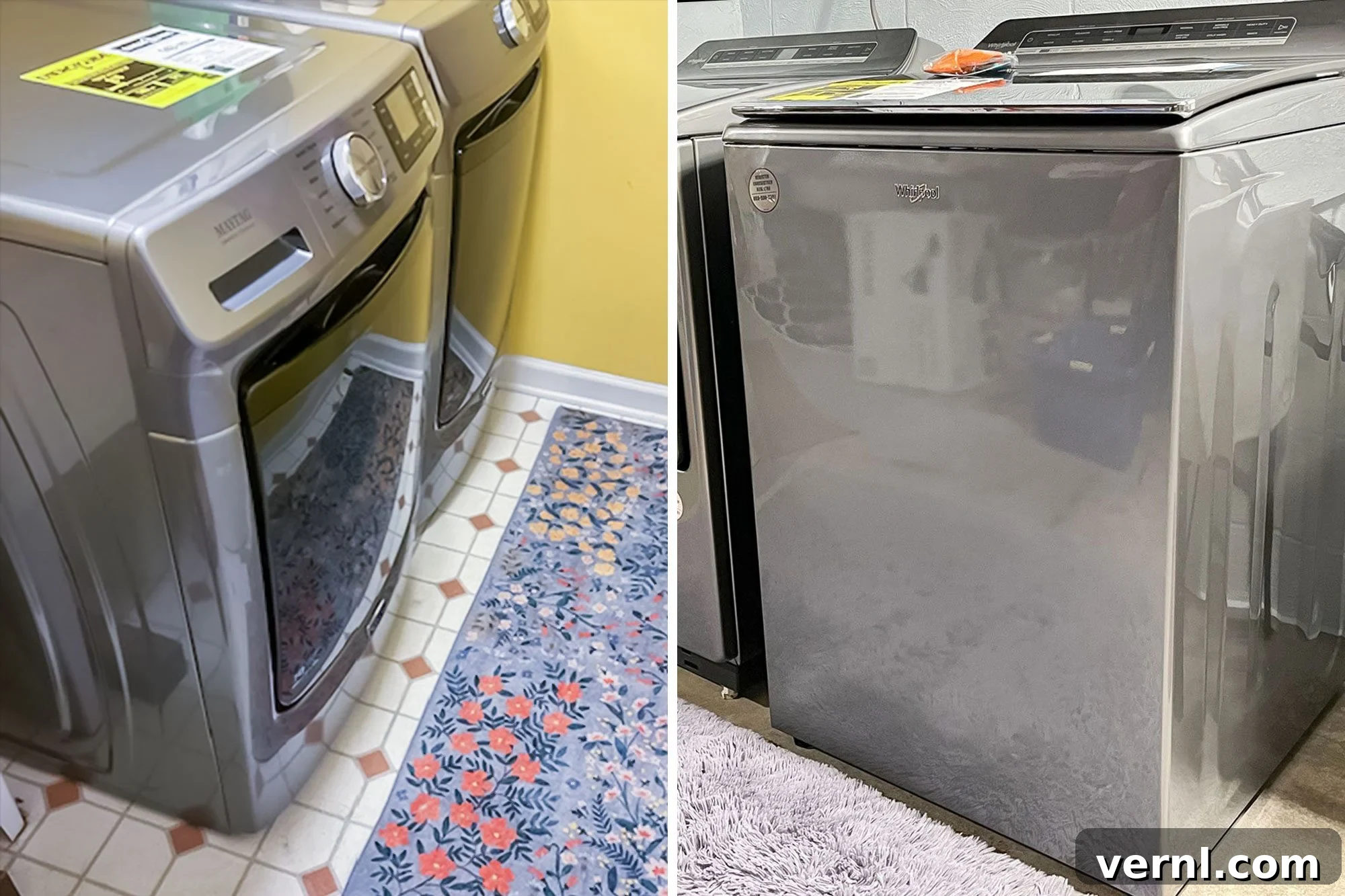
If you’re in the market for a new washing machine, you’ve likely found yourself weighing the options between two household titans: Maytag and Whirlpool. These venerable brands have been cornerstones of the appliance industry for decades, consistently delivering some of the best washing machines available. Both manufacturers offer an impressive array of models, catering to diverse needs and budgets, ensuring there’s a perfect fit for virtually every home. But which one truly stands out for your specific laundry demands?
To help you navigate this common dilemma and make an informed decision, we’ve gone beyond basic specifications. We consulted with an industry expert boasting over 15 years of hands-on experience in appliance repair and rigorously tested popular models from each brand. This comprehensive guide synthesizes their invaluable insights and our extensive testing results, providing a clear comparison of Maytag versus Whirlpool. By the end, you’ll have a solid understanding of each brand’s strengths, allowing you to confidently choose the ideal machine for achieving the cleanest laundry possible.
Get ready to uncover everything you need to know about Maytag vs. Whirlpool, and prepare for a transformative laundry experience.
Maytag and Whirlpool Washers: A Closer Look at Appliance Giants
Maytag and Whirlpool stand as two of the most recognized and trusted names in the global appliance industry, both committed to providing innovative, dependable, and high-performing laundry solutions. While they operate under the same corporate umbrella today, their individual histories and brand philosophies offer distinct propositions to consumers.
Maytag’s legacy began in 1907, when Frederick L. Maytag built his very first washing machine. This early model was a testament to rudimentary engineering, featuring a wooden tub and a hand crank designed to agitate clothes through water. From these humble beginnings, Maytag has evolved dramatically over nearly 120 years. Today, the brand is synonymous with exceptional durability and robust construction. Maytag washers are celebrated for their ability to withstand heavy use and tackle demanding laundry loads, all while remaining surprisingly affordable. Their reputation is built on providing appliances that are “built tough” and designed to last, often appealing to consumers who prioritize raw power and long-term reliability.
Whirlpool, established shortly after in 1911, pioneered electric washing machines, moving quickly from the hand-crank era to modern convenience. Their early electric wringer-washers laid the foundation for a brand that now offers an expansive range of household appliances, including refrigerators, cooktops, dishwashers, and, of course, advanced laundry systems. Whirlpool washers are widely praised for their user-friendly interfaces, intuitive controls, and a comprehensive suite of features and cycle options tailored for various fabric types and soil levels. The company has consistently embraced innovation, integrating smart technology and energy-efficient designs into its products. In 2006, the Whirlpool Corporation acquired Maytag, yet both brands continue to maintain their unique identities, distinct manufacturing processes, and specialized market focuses, offering consumers clear choices based on their specific needs and preferences.
Our Expert-Tested Top Picks
To provide you with the most practical and reliable recommendations, we put popular models from both Maytag and Whirlpool through real-world testing. Our expert product testers integrated these machines into their daily routines for extended periods, providing invaluable insights into their performance, usability, and overall value.
Maytag Front Load Washer with Extra Power and 12-Hr Fresh Spin
We Tried It
Former Senior Shopping Editor Caroline Lubinsky rigorously tested the Maytag Front Load Washer with Extra Power and 12-Hr Fresh Spin for several months, replacing her previous machine with this model. This washer, boasting a 4.5 cubic feet capacity, was initially a concern for Lubinsky, as it was smaller than her old unit. However, her skepticism quickly turned to delight as the Maytag machine proved more than capable of handling her household’s laundry needs. “I’m able to wash my king-sized comforter easily, which is all I was concerned about fitting,” she explains, highlighting its surprisingly generous capacity despite its compact footprint.
Beyond its capacity, Lubinsky was particularly impressed with the washer’s cleaning prowess. Living with three dogs, pet hair had always been a significant laundry challenge with her previous appliance. “This washing machine seems to get most of the embedded dog hairs on clothing and bedding,” she notes, a testament to its powerful cleaning cycles and ‘Extra Power’ feature. The average load takes about an hour, though this can vary depending on the selected wash cycle from the 10 available options. A standout feature for Lubinsky was the “12-Hr Fresh Spin” option, an auto-hold function that keeps clothes fresh even if you forget to transfer them to the dryer immediately. “I constantly forget to throw things in the dryer after washing them and frequently have to rewash them. Now, I don’t have to do that,” she shares, emphasizing its practical benefits for busy individuals.
Maytag washers, including this tested model, can be conveniently purchased directly from the manufacturer’s website or through a variety of reputable retailers. Major outlets such as The Home Depot, Lowe’s, and AJ Madison regularly stock a wide selection of Maytag washing machines, making them easily accessible for consumers.
Whirlpool Smart Top Load Washer with 2-in-1 Removable Agitator
We Tried It
Associate Product Tester Sheri Kaz put the Whirlpool Top-Load Washer with a 2-in-1 Removable Agitator through its paces for a full year, replacing her aging Kenmore machine. After extensive use, the removable agitator emerged as her absolute favorite feature. “The thing that I appreciate the most is how gentle it is on my clothes when I take the agitator out,” she states. This versatility allows users to switch between powerful agitation for heavily soiled items and a gentler, impeller-style wash for delicates, activewear, or bulky items like bedding that benefit from more space.
Beyond the agitator, Kaz also lauded the washer’s impressive capacity. At 5.3 cubic feet, it comfortably handles twice the volume of her previous washer, making it ideal for large families or those with substantial laundry loads. However, this deep drum, while great for capacity, did present a minor accessibility challenge for Kaz. “I curse the machine every time I have to stand on my tippy toes or grab a stool to fish my socks out of the super deep drum,” she humorously admits, a common observation for users of deep top-load washers.
For routine laundry, Kaz often opted for the machine’s “deep-fill water option” over the standard setting. “I feel that it needs more water in the tub to really clean and rinse the clothes properly,” she explains, suggesting that some users might prefer more control over water levels for optimal cleaning. She also shared her personal preference for powder detergent dissolved in hot water, rather than relying on the auto-dispense function with liquid detergent. While the auto-dispense function with liquid detergent generally cleans very well, Kaz noted a particular downside: “The rinse water doesn’t run clear – it’s always very soapy.” This led her to prefer using two rinses when utilizing the auto-dispense mode, consuming more water in the process. This insight is valuable for those who are conscious of water usage or prefer clearer rinse cycles.
Whirlpool washers are readily available directly from Whirlpool’s official website and through numerous retailers. You can typically find a broad selection of Whirlpool washing machines at local appliance stores, as well as major big-box retailers like The Home Depot and Lowe’s, ensuring wide accessibility for consumers.
Maytag vs. Whirlpool: Unpacking the Key Differences
While both Maytag and Whirlpool produce high-quality washing machines, they each carve out distinct niches in the market, appealing to different consumer priorities. Understanding these differences is crucial for making the best choice for your home.
According to Dennis G., a lead appliance expert at Comfort Appliance Repair in Tennessee, Maytag washers are fundamentally “built tough.” He emphasizes their unparalleled durability and robust construction, making them ideal for households that frequently handle heavy-duty or oversized loads. “They are known for their durability and can handle heavy-duty loads, which is great if you’re running large loads on a regular basis,” Dennis explains. This reputation for resilience stems from Maytag’s focus on commercial-grade components, powerful motors, and sturdy build materials designed to withstand years of rigorous use. Many Maytag models feature ‘PowerWash’ or ‘Extra Power’ cycles specifically engineered to tackle deeply soiled garments, demonstrating their commitment to superior cleaning power through brute strength and advanced agitation.
Whirlpool washers, conversely, prioritize versatility and smart integration, offering a more technologically advanced and convenience-driven laundry experience. Dennis points out that Whirlpool models are more versatile thanks to their array of advanced smart features. “Whirlpool focuses on making your laundry process smoother with smart features and more energy-efficient cycles,” he explains. The brand has wholeheartedly embraced smart home technology, equipping many of its washing machines with Wi-Fi connectivity, app compatibility, and intelligent sensors. These features allow users to remotely start or stop cycles, receive notifications, download specialized wash programs, and even integrate their laundry appliances into broader smart home ecosystems. Whirlpool’s innovation also extends to specialized cycles, adaptive wash technologies, and intuitive interfaces that simplify the user experience, appealing to those who value efficiency, connectivity, and a tailored approach to fabric care.
Maytag vs. Whirlpool: Highlighting the Similarities
Despite their distinct brand philosophies and target features, Maytag and Whirlpool washing machines share several foundational similarities that make both brands reliable choices for consumers. These commonalities underscore their position as leaders in the appliance market and ensure a baseline of quality and performance across their product lines.
Both Maytag and Whirlpool are renowned for offering durable and dependable washing machines. Our testing and expert consultations confirm that consumers can expect a high level of reliability from either brand. When comparing top-load washers, in particular, we observed striking similarities between Maytag and Whirlpool models in terms of load capacity, core features like multiple wash cycles, and general performance. Whether you opt for a Maytag or a Whirlpool, you are investing in an appliance designed for consistent operation and longevity.
Accessibility is another shared strength. Both brands have extensive retail networks, making their washing machines widely available across the country. You’ll find a broad selection of Maytag and Whirlpool models at most well-known hardware stores and major appliance retailers, including giants like The Home Depot and Lowe’s. This widespread availability also typically translates to good access to parts and repair services, which is a significant consideration for long-term ownership.
In terms of pricing, Maytag and Whirlpool are quite competitive and generally comparable. While specific models and features will dictate the final price, both brands offer numerous washing machines priced under $1,000, ensuring options for various budget points. You might find that Whirlpool tends to present a slightly broader range of washing machines across different price tiers, from entry-level to premium models with advanced smart features. Maytag, while also offering a range, sometimes positions itself as slightly higher in price for its heavy-duty models. However, for most consumers, the price difference between comparable models from the two brands is unlikely to be the sole determining factor in their purchase decision; feature sets and brand specific attributes often weigh more heavily.
Additionally, both brands typically provide similar limited one-year warranties covering select parts and labor, offering a standard level of consumer protection. For those seeking extra peace of mind, both Maytag and Whirlpool offer options for extended warranty coverage. Maytag allows for extensions from two to up to 10 years, reflecting confidence in their products’ long-term durability. Whirlpool provides extended warranty coverage typically ranging from two to five years. These warranty options demonstrate each brand’s commitment to customer satisfaction and the longevity of their appliances.
How We Tested Maytag and Whirlpool Washing Machines
Our commitment to providing accurate and useful consumer advice drove our rigorous testing methodology. We didn’t just review specifications; we lived with these machines. Senior Shopping Editor Caroline Lubinsky tested the Maytag Front Load Washer with Extra Power and 12-Hr Fresh Spin for several months, integrating it fully into her household’s laundry routine.
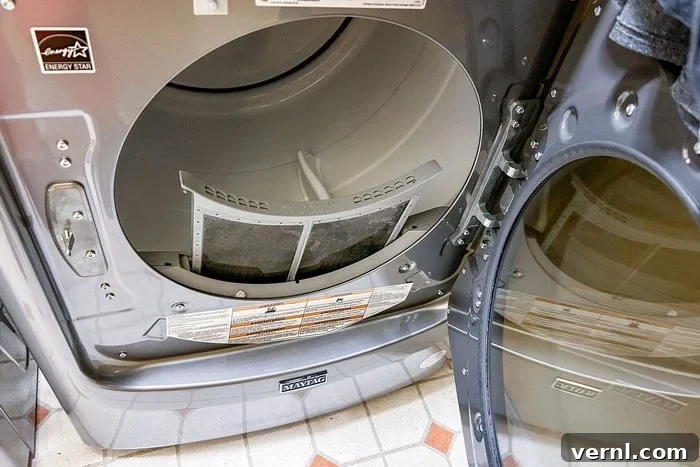
During her testing period, Caroline observed several key performance indicators. Beyond effortlessly handling large loads of clothes and bedding, a significant benefit she noted was the machine’s exceptional ability to clean deeply. “I have three dogs, and pet hair was a real issue with the old set,” she recounts. “This washing machine seems to get most of the embedded dog hairs on clothing and bedding,” highlighting the effectiveness of its specialized cycles and powerful agitation. She found the average load completion time to be around an hour, though this was flexible depending on which of the 10 available wash cycles she selected. A particularly appreciated feature was the “12-Hr Fresh Spin” auto-hold option. This innovation proved incredibly helpful for her busy schedule: “I constantly forget to throw things in the dryer after washing them and frequently have to rewash them. Now, I don’t have to do that,” she states, underscoring its practical value in preventing musty odors and saving re-wash cycles.
Associate Product Tester Sheri Kaz put the Whirlpool Top Load Washer with 2-in-1 Removable Agitator through a thorough year-long evaluation. While she was enamored with the versatility offered by the removable agitator, allowing her to easily switch between robust and gentle washing styles, she also valued the washer’s generous capacity. At 5.3 cubic feet, it provided significantly more space than her previous machine, accommodating large loads with ease. However, the depth of the drum, while beneficial for capacity, did pose a minor ergonomic challenge. “I curse the machine every time I have to stand on my tippy toes or grab a stool to fish my socks out of the super deep drum,” she lightheartedly remarks, a common experience for users with deep top-loading models.
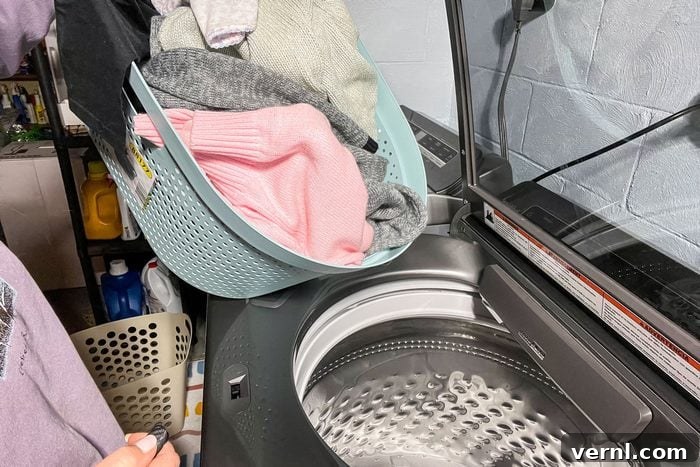
On laundry days, Kaz often preferred to utilize the machine’s deep-fill water option over the standard setting. “I feel that it needs more water in the tub to really clean and rinse the clothes properly,” she explains, indicating a preference for more saturated wash conditions, especially for heavily soiled items. Additionally, she found herself manually dissolving powder detergent in hot water before pouring it into the machine, rather than relying on the auto-detergent dispense function for liquid detergent. Despite her preference, she acknowledged that using liquid detergent with the auto-dispense function delivered very good cleaning results. However, she identified a notable drawback: “The downside is that when using this function, the rinse water doesn’t run clear – it’s always very soapy,” says Kaz. “Therefore, I prefer using two rinses when using the auto dispense mode. Either way, I’m using more water.” This observation is crucial for consumers who are particular about their rinse quality or concerned about water consumption when using automated detergent systems.
The Maytag vs. Whirlpool: Making Your Final Choice
When it comes down to Maytag vs. Whirlpool, rest assured that you’re choosing between two titans of the appliance industry. Both brands consistently deliver durable, dependable machines engineered to keep your clothes impeccably clean and fresh for years to come. Our extensive testing and expert analysis confirm that neither brand is inherently “better” than the other; rather, the optimal choice hinges on your specific household needs, laundry habits, and priorities.
Of the models we rigorously tested, the Maytag front-load washer and the Whirlpool top-load washer showcased striking similarities in crucial aspects like price point, overall size, and core feature sets. This means that for a general comparison, you’re looking at two high-performing options. Furthermore, both models typically have coordinating dryers available, making it simple to acquire a complete, aesthetically matched washer and dryer set if you’re outfitting an entire laundry room.
To help guide your decision, consider these key differentiators:
- Choose Maytag if: You frequently tackle heavy-duty laundry, such as large loads of towels, bedding, work clothes, or heavily soiled items from an active family or pet owners. Maytag’s reputation for rugged construction, powerful agitation, and robust cycles like ‘Extra Power’ makes it an ideal choice for those who prioritize raw cleaning strength and unwavering durability. Their machines are built to withstand a beating and deliver consistent, powerful performance.
- Opt for Whirlpool if: You value convenience, modern smart features, and energy efficiency. Whirlpool excels in integrating technology to streamline your laundry routine. Features like Wi-Fi connectivity, app control, specialized fabric care cycles, and adaptive wash technologies offer a more tailored and flexible experience. If you’re looking for an energy-efficient washer that adapts to your needs with smart sensors and a variety of customizable options, Whirlpool will likely be the better fit. The removable agitator on some top-load models also offers unmatched versatility for different load types.
In essence, Maytag caters to the traditionalist who values brute strength and longevity, while Whirlpool appeals to the modernist seeking smart features, versatility, and efficiency. By aligning these brand strengths with your personal laundry demands, you can confidently select the perfect washing machine to enhance your home and simplify your routine.
FAQ: Common Questions About Maytag and Whirlpool Washers
Do Maytag washers last long?
Yes, Maytag washers are highly regarded for their longevity and robust construction. Dennis G., the lead appliance repairman at Comfort Appliance Repair, estimates that a Maytag washer can reliably last between 10 to 12 years with proper care and consistent maintenance. He emphasizes that “Simple maintenance like cleaning the filters and avoiding overloading can help extend its life.” This durability is a key selling point for Maytag, as their machines are built with heavy-duty components designed for extended performance under demanding conditions.
Is a Maytag washer better than a Whirlpool?
When comparing Maytag vs. Whirlpool, it’s not a matter of one being universally “better” than the other; rather, the superior choice depends entirely on your specific household requirements. As Dennis G. advises, “It depends on your needs.” If your household frequently deals with heavy-duty loads, large volumes of laundry, or requires powerful stain removal, a Maytag washer might be the better recommendation due to its focus on durability and brute strength. Conversely, if you prioritize advanced technological features, smart home connectivity, a wider array of specialized cycles, and enhanced energy efficiency, Whirlpool could be the more suitable option for your lifestyle.
What is the difference between Whirlpool and Maytag?
The primary differences between Whirlpool and Maytag lie in their core design philosophies and target features. As Dennis pointed out, Maytag washers are distinguished by their “built tough” construction. “These washers are perfect for heavy loads and long-term use. If you’re looking for something that can take a beating, Maytag is great,” he explains. They often feature robust motors and commercial-grade components to handle strenuous laundry tasks.
On the other hand, Whirlpool focuses on providing more versatile and technologically advanced features. “Whirlpool focuses on making your laundry process smoother with smart features and more energy-efficient cycles,” says Dennis. This includes innovations like Wi-Fi connectivity, app control, adaptive wash technology, and intuitive interfaces that cater to convenience and optimized performance for various fabric types.
Should your washing machine ever encounter a malfunction, you can rest assured knowing that both brands offer good repairability. According to Dennis, Maytag and Whirlpool machines often share some common parts due to their corporate relationship, making it relatively easy to find technicians skilled in servicing both brands. While “Whirlpool parts might be a little easier to find just because it’s a more common brand, both Whirlpool and Maytag are pretty well-supported in the U.S. for parts and repairs,” he clarifies. This strong support network is a significant advantage for consumers, ensuring that expert assistance and necessary components are accessible, contributing to the long-term value of both Maytag and Whirlpool appliances.
Why You Should Trust Us
Our recommendations are built on a foundation of genuine experience and expert consultation. We tasked two of our dedicated product testers and shopping editors with a comprehensive mission: to integrate new Maytag and Whirlpool washing machines into their personal homes. For periods ranging from several months to a full year, our staff members replaced their existing laundry appliances with units from each major brand. During this extensive testing period, they meticulously documented every aspect of their experience, from the initial delivery and setup process to daily usage patterns and any operational issues encountered.
Complementing our hands-on product testing, we also sought the invaluable perspective of Dennis G., a seasoned lead appliance expert. With over 15 years of practical experience in appliance repair, Dennis provided critical insights into the real-world differences between these two prominent brands, offering a technician’s view on durability, common issues, and repairability. This dual approach of rigorous in-home testing combined with professional industry expertise ensures that our comparison of Maytag and Whirlpool washing machines is both thoroughly vetted and highly reliable.
Sources:
- Dennis G. is the lead appliance expert at Comfort Appliance Repair
- Brittanica: Frederick L. Maytag
- Whirlpool Corporation: History
- Whirlpool Corporation Completes Acquisition of Maytag Corporation (Press Release)