As the warmth of spring finally graces our landscapes, beckoning us outdoors for refreshing walks and reconnecting with nature, a silent threat might be lurking in your backyard or local park. If you’ve recently noticed unusual activity on trees or fuzzy patches on outdoor surfaces, you might be encountering an unwelcome guest: the spongy moth. This invasive insect, if left unchecked, possesses the alarming capacity to devastate trees and shrubs, turning lush greenery into barren landscapes. Understanding this pest is the first step toward effective management and preserving the health of our precious ecosystems. Join us as we delve into the world of the spongy moth, exploring its origins, its destructive potential, and the crucial steps you can take to mitigate its impact.
What is the Spongy Moth (Lymantria dispar dispar)?
The spongy moth, scientifically known as Lymantria dispar dispar, holds a significant place in the history of invasive species in North America. Originally hailing from France, this notorious forest pest made its unwelcome debut in the United States in Massachusetts in 1869. The name “spongy moth” aptly describes the distinctive, sponge-like egg masses laid by the female moths, which are often the first sign of an impending infestation.
The life cycle of the spongy moth involves four distinct stages: egg, larva (caterpillar), pupa, and adult moth. It is during the larval stage that this insect poses the most significant threat. Young caterpillars are voracious eaters, initially targeting the tender new leaves of a wide variety of trees and shrubs, including favorites like oak, aspen, birch, cedar, cottonwood, larch, poplar, and willow. As they mature, their appetite only grows, and they begin consuming older, tougher leaves. Oak trees are particularly vulnerable and are considered the preferred host species for spongy moths, though they will readily attack and damage fruit trees as well.
Identifying spongy moth egg masses is crucial for early intervention. Look for light, coffee-colored, fuzzy patches, typically about an inch and a half long and half an inch wide, often found on tree trunks, branches, and even piles of firewood. These masses are not limited to natural surfaces; they can also be spotted on patio and lawn furniture, vehicles, and other outdoor items, facilitating their spread. Each egg mass can be a ticking time bomb, containing an astounding 600 to 700 eggs, each ready to hatch into a destructive caterpillar once spring arrives.
Why Are Spongy Moths a Serious Threat?
The primary reason spongy moths are considered a significant environmental and economic threat lies in their ability to defoliate trees. Defoliation occurs when these insects consume all or nearly all the leaves of a tree. Leaves are essential for a tree’s survival as they are the primary sites for photosynthesis – the process by which trees convert sunlight into energy and nutrients. A tree stripped of its leaves loses its capacity to photosynthesize, effectively starving it of the resources it needs to survive, grow, and defend itself against other stressors.
The consequences of repeated defoliation are severe. A single year of complete defoliation can weaken a healthy tree, making it susceptible to other pests, diseases, or environmental stresses like drought. Multiple consecutive years of defoliation can lead to significant branch dieback or even the complete death of the tree. This chronic stress not only impacts individual trees but also has cascading effects on entire forest ecosystems. Forests suffering from spongy moth infestations experience reduced growth, altered species composition, and decreased biodiversity.
Furthermore, the spongy moth poses a unique challenge due to the lack of sufficient natural enemies in North America to effectively keep its populations in check. While some native predators and parasites may prey on spongy moths, they are generally not enough to control large outbreaks. This absence of natural regulatory mechanisms allows spongy moth populations to explode, leading to widespread infestations that can decimate outdoor living spaces, neighborhoods, and vast tracts of forest land. Beyond the ecological damage, severe infestations can lead to significant economic losses for timber industries, nurseries, and even impact property values due to damaged trees and the unsightly presence of caterpillars and their droppings (frass).
Recognizing the Signs of a Spongy Moth Infestation
Early detection is paramount in managing a spongy moth infestation. Knowing what to look for at each stage of their life cycle can help you take timely action. According to the United States Department of Agriculture (USDA), here are the key signs:
Egg Masses
Female moths lay distinctive dark brownish egg masses that are covered with a dense layer of yellowish-tan hairs. These masses are firm to the touch and typically oblong in shape, ranging from 1 to 2 inches long. They can be found on virtually any surface, including the bark of trees, undersides of branches, firewood stacks, shrubs, agricultural products, outdoor household furniture, vehicles, and even structures like fences and buildings. The presence of these egg masses from late summer through spring is the earliest and most critical indicator of a potential problem.
Caterpillars (Larvae)
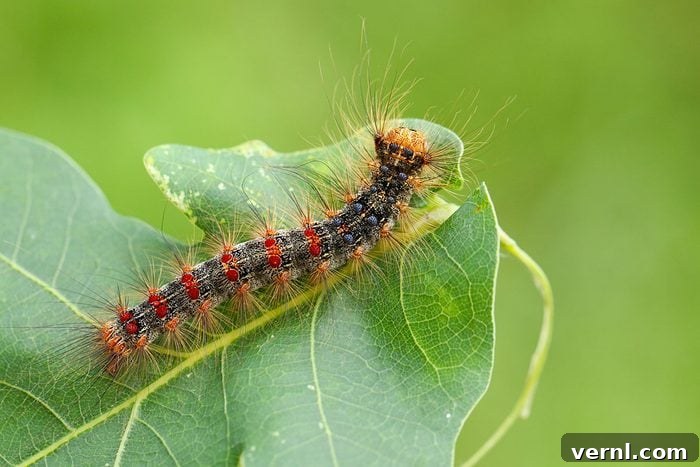
Newly hatched caterpillars are tiny, dark, and very hairy. As they grow, they develop a more mottled yellow-to-gray pattern and become covered in prominent, bristly hairs. The most distinctive feature of a spongy moth caterpillar is a unique color pattern along its back: five pairs of blue dots, followed by six pairs of red dots. These dots are very clear and run down the length of their body. Caterpillars are most active from late spring to mid-summer, feeding voraciously and causing visible defoliation. You might also notice their droppings, known as “frass,” which resemble small pellets and can accumulate beneath infested trees.
Adult Moths
Adult spongy moths emerge in mid-to-late summer. There is a noticeable difference between males and females:
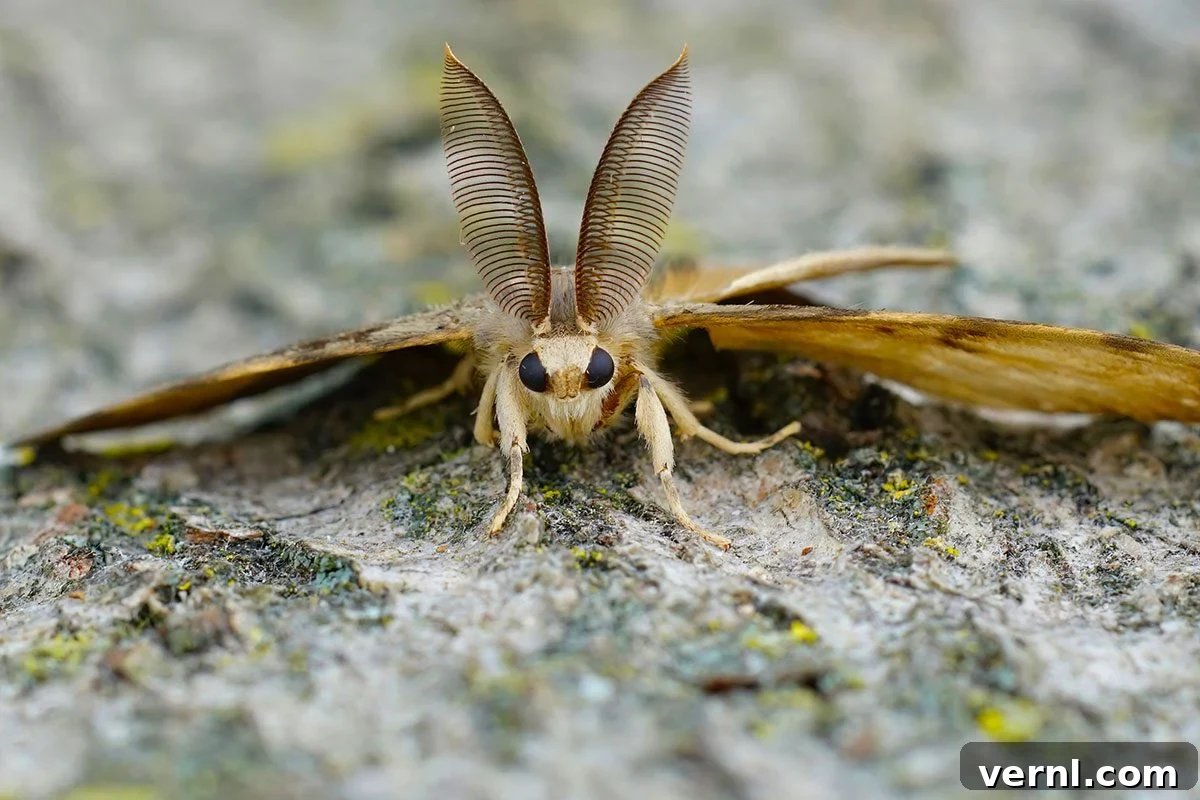
- Male Moths: Males are smaller, typically with a wingspan of 1 to 1½ inches. They are brown in color with a darker, V-shaped pattern on their wings. Importantly, only male spongy moths are capable of flight, actively seeking out females for reproduction.
- Female Moths: Females are larger, with a wingspan of up to 2½ inches. They are a faint white or off-white color, with faint dark saw-toothed patterns on their wings. Unlike the males, female spongy moths have robust bodies but cannot fly; they remain near their pupal cases, emitting pheromones to attract males and laying their egg masses shortly after mating.
Observing any of these signs warrants immediate attention and appropriate action to prevent the spread and minimize damage.
Effective Strategies for Spongy Moth Management and Control
If you encounter spongy moths at any stage of their life cycle, taking prompt and decisive action is crucial to protect your trees and property. An integrated pest management (IPM) approach, combining various control methods, is generally the most effective strategy. Here are several things you can do:
1. Mechanical and Manual Control Methods
These methods are highly effective for small-scale infestations or when populations are still manageable, especially in the early season.
- Squishing and Scraping Egg Masses: This simple yet powerful method works wonders, particularly from late summer through early spring before eggs hatch. Use a stiff, blunt object like a credit card, dull knife, or paint scraper to carefully scrape off egg masses from tree trunks, branches, firewood, or any other surface. Do not just drop them on the ground; instead, collect them in a zip-close bag or a container filled with a solution of soapy water, rubbing alcohol, or bleach. This ensures the eggs are killed on contact. Dispose of the sealed bag in the trash.
- Squishing Caterpillars: When caterpillars are young and few in number, hand-picking and squishing them can be effective. Wear gloves for protection against their irritating hairs. Larger caterpillars can also be squished. This method is similar to how you would manage other invasive insects like the spotted lanternfly.
2. Trapping Techniques
Traps leverage the natural behaviors of caterpillars to capture them, reducing their numbers significantly.
- Sticky Bands (Barrier Bands): These bands, typically made of paper or fabric coated with a sticky substance, are wrapped around tree trunks in early spring (April-May). They create a barrier that traps newly hatched caterpillars as they crawl up the trunk to feed on leaves. You can purchase them at local hardware stores or garden centers. It’s vital to check these bands regularly (daily or every other day) to remove trapped caterpillars and ensure no unintended wildlife (like beneficial insects or small lizards) gets stuck. Replace them as they fill up or lose their stickiness.
- Burlap Traps (Folded Bands): As caterpillars grow larger (around 1 inch long) in mid-to-late June, they develop a habit of crawling down the tree trunk during the day to hide from predators and the sun. This behavior can be exploited with burlap traps. Wrap a strip of burlap (about 12-18 inches wide) around the tree trunk at chest height. Tie it securely with twine in the middle, then fold the top half down over the string, creating a skirt-like hiding place. Check these traps daily, from early afternoon until early evening, to collect the hiding caterpillars. Remove them and drop them into a container of soapy water to kill them.
3. Pheromone Traps
These specialized traps are designed to target adult male moths.
- Delta or Triangle Traps: Available in orange or green colors, these traps are triangular or “delta” shaped. They contain a synthetic pheromone lure that mimics the scent of a female spongy moth, attracting male moths. Males get trapped on a sticky surface inside. These traps can be stapled or zip-tied to trees. While they are excellent for monitoring the presence and population levels of spongy moths, they are generally less effective at significantly reducing a large, established population on their own, as they only target males and do not prevent females from laying eggs if mating has already occurred.
4. Biological and Chemical Control Options
For more widespread or severe infestations, other treatments may be necessary. Always consider the environmental impact.
- Horticultural Oils (Dormant Oils): These solutions, derived from petroleum or plants, are applied to egg masses during the dormant season (fall through early spring). Horticultural oils work by smothering the eggs or disrupting their protective coating, preventing them from hatching. They are relatively safe for humans and animals when used correctly and are a good option for reducing egg hatch in specific areas. Ensure proper coverage for effectiveness.
- Bacillus thuringiensis kurstaki (Btk): Btk is a naturally occurring bacterium that is highly effective against young caterpillars, including the spongy moth. When caterpillars ingest Btk-treated leaves, the bacteria produce a toxin that paralyzes their digestive system, leading to their death. Btk is considered a “biological insecticide” because it is very specific to caterpillars and generally does not harm other insects, animals, or humans. It’s often applied as a spray by professionals for larger areas and is most effective when caterpillars are small.
- Avoiding Chemical Insecticides: While chemical insecticides are available, broad-spectrum contact poisons should be avoided whenever possible. These chemicals can have a detrimental impact on a wide variety of beneficial native insects, including vital pollinators like bees, as well as nesting birds, aquatic life, and other wildlife. If chemical intervention is deemed absolutely necessary for severe infestations, always consult with a certified arborist or pest control professional who can recommend targeted, less harmful options and ensure their safe and effective application.
5. Community Vigilance and Professional Help
Stay informed about spongy moth activity in your area by checking with local extension offices or forestry departments. Report significant infestations to local authorities, as coordinated community efforts are often required for large outbreaks. For severe or persistent infestations, especially on large or valuable trees, consider hiring a certified arborist or a professional pest control service. They can assess the situation, recommend the most appropriate treatments, and apply them safely and effectively, including methods like tree injections for targeted control.
By understanding the spongy moth and implementing these varied control strategies, we can collectively protect our forests and urban trees from the destructive potential of this invasive pest, ensuring their health and vitality for generations to come.