
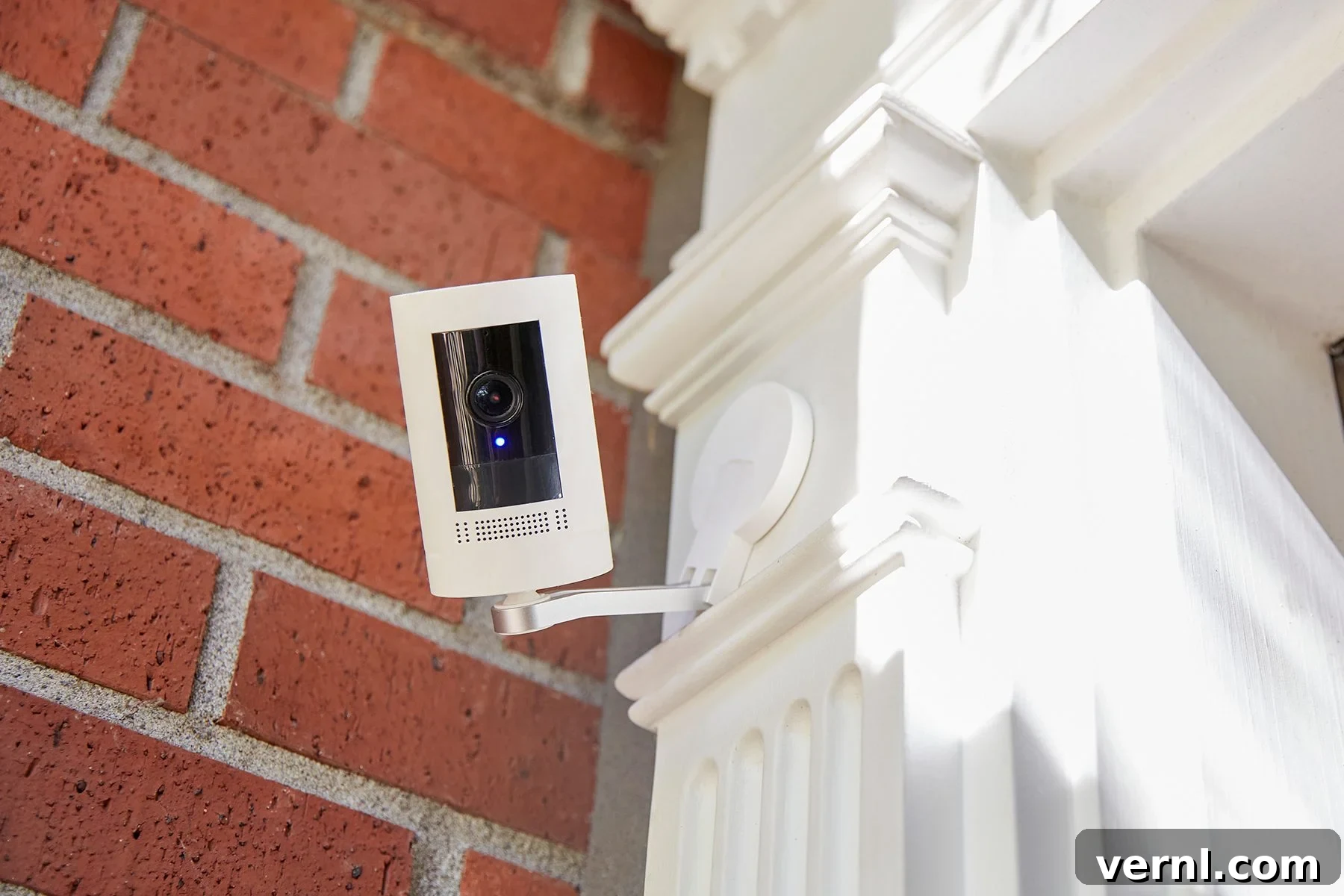
Navigating the Legal Landscape of Home Security Systems: What Every Homeowner Needs to Know
In an age where personal safety and property protection are paramount, equipping your home with a robust security system has become a common practice. With the proliferation of user-friendly cameras, sophisticated sensors, and smart doorbells, homeowners are increasingly opting for do-it-yourself installations, bypassing professional setups. While a well-implemented home security system undoubtedly offers immense peace of mind, it also introduces a complex web of legal considerations. Unwittingly, you could find yourself at odds with privacy laws and local ordinances if you fail to understand the regulations governing surveillance technology.
Protecting your home, often considered your personal castle, extends beyond physical barriers to include legal compliance. This comprehensive guide delves into the nuances of security system legality, addressing common questions and potential pitfalls. To provide you with the most accurate and actionable advice, we consulted three esteemed home safety and security experts: K. Campbell, Rob Gabriele, and Timothy A. Dimoff CPP. Their insights will help you ensure your home security measures are not only effective but also fully compliant with the law.
Are Home Security Cameras Legal on Your Property?
The straightforward answer to whether security cameras are legal is yes, but this comes with significant stipulations and important caveats. While you generally have the right to monitor your own property, the specifics can vary widely based on location and the nature of your system.
One of the primary considerations, particularly if your system is designed to directly alert law enforcement or emergency services in the event of a break-in or other incident, is the necessity of obtaining a permit. Rob Gabriele explains, “Typically, you install the system first, then your home security company issues you a certificate you can use to obtain the permit. You can be fined should your alarm go off before you’ve filed the necessary paperwork.” These permits are often a requirement to ensure that alarm systems are registered and properly maintained, reducing the burden of false alarms on emergency services. Failure to secure the necessary permits can lead to substantial fines and even render your alarm system ineffective in eliciting a timely police response.
Understanding Privacy Expectations Indoors
When it comes to indoor surveillance, homeowners are generally permitted to record video and audio within their own living spaces. However, this right is not absolute and is significantly curtailed by the “reasonable expectation of privacy” doctrine. Gabriele advises, “you are barred from recording in areas where guests should have a reasonable expectation of privacy.” This critical distinction means that while you can monitor common areas like living rooms, kitchens, or entryways, placing cameras in private spaces such as bathrooms, bedrooms, or changing rooms, especially when guests are present, is strictly prohibited. Violating this can lead to severe legal repercussions, including criminal charges related to invasion of privacy. The intent behind the recording also plays a significant role; surveillance for security is distinct from surreptitious monitoring of individuals.
Navigating Outdoor Surveillance and Neighborly Relations
Outdoor camera placement introduces another layer of complexity. K. Campbell points out that “there’s no reasonable expectation of privacy in some exterior areas of most properties, such as the front yard.” However, this doesn’t grant unfettered permission to record anything and everything visible from your property. The key is to focus your cameras on your own property. “There’s a difference between pointing a zoom lens camera specifically at a neighbor’s bedroom window, and simply pointing your camera at your front yard which might also capture your neighbor’s yard across the street,” Campbell clarifies. The distinction lies in intent and the area being surveilled. While incidental capture of a neighbor’s property from a camera genuinely aimed at securing your own driveway or front door is generally acceptable, intentionally aiming cameras to peer into private areas of a neighbor’s property can constitute harassment or invasion of privacy. Always aim cameras to maximize coverage of your property while minimizing intrusion into neighboring spaces.
State, Local, and HOA Regulations
The legal landscape for security cameras is not uniform across the United States. While federal laws provide a baseline, fifteen states have specific statutes that emphasize privacy issues, and numerous municipalities and Homeowners’ Associations (HOAs) have their own bylaws and ordinances. These local regulations can impose additional restrictions on camera placement, types of recording permitted, and even requirements for signage indicating surveillance. For instance, some local laws might restrict cameras that capture public sidewalks or streets beyond a certain extent, or require visible notification that recording is taking place. Therefore, before setting up security cameras on your property, it is absolutely crucial to consult with local authorities, your HOA, and review state-specific privacy laws to ensure full compliance. This proactive approach can save you from potential legal disputes and fines.
- Pro Tip: If you operate an Airbnb or other rental property on your premises, it is imperative to check the specific regulations governing security devices issued by that company. These platforms often have strict rules requiring disclosure of all security cameras, working or not, and outright prohibiting cameras in private spaces like bedrooms or bathrooms.
Are Hidden Security Cameras Legal?
The legality of hidden security cameras, often referred to as “nanny cams,” largely aligns with the general privacy laws discussed above, but with increased scrutiny. Yes, they can be legal, but only under circumstances where there is absolutely no reasonable expectation of privacy for the individuals being recorded. For instance, a hidden camera in your own living room, monitoring your child or a pet, might be permissible. However, using a hidden camera in areas where individuals expect privacy, such as a guest bedroom, bathroom, or even an employee changing room, is highly illegal and can lead to severe criminal charges. The key takeaway is that the “hidden” aspect does not change the underlying privacy rights of others. Transparency, whenever possible, is always the safest legal and ethical approach, especially when dealing with individuals who are not family members.
Are Security Cameras That Record Audio Legal?
The legal framework surrounding audio recording is significantly more stringent and complex than that for video recording. This distinction arises because audio can capture more intimate and revealing details of a conversation, which are afforded a higher degree of privacy protection under the law.
Federal law (18 U.S.C. 2511(2)(d)) generally follows a “one-party consent” rule for recording in-person conversations. This means that if at least one person involved in the conversation consents to the recording, it is considered legal under federal statutes. However, this federal standard does not override stricter state laws. Many states, including California, Delaware, Florida, Illinois, Maryland, Massachusetts, Montana, Nevada, New Hampshire, Oregon, Pennsylvania, and Washington, have “all-party consent” laws. In these states, every single individual participating in a conversation must give their explicit consent for the recording to be legal. Failure to obtain consent from all parties in these states can result in serious legal penalties, including felony charges and substantial fines.
Beyond these two primary categories, other states may have unique statutes regulating audio recording, or specific rules regarding recordings in workplaces or public spaces. Given the severe consequences of violating audio recording laws – which can include both civil lawsuits for damages and criminal prosecution – it is imperative for homeowners to be intimately familiar with the specific laws in their state and even local municipality before installing any homemade security system that includes audio recording capabilities. When in doubt, it is always safest to either disable audio recording features or assume an all-party consent rule applies, especially in areas where guests or service providers might be present. Transparency about audio recording, through clear signage, can also help mitigate legal risks by implying consent.
Are Home Security Alarms Legal?
Home security alarms are a foundational component of many security systems and are indeed legal. However, similar to cameras, their operation is subject to a variety of state and local regulations. Generally, the information you need to understand these rules will be provided or explained during the application process for a permit for your homemade security system.
The primary concern for municipalities regarding security alarms is the issue of false alarms. Frequent false alarms can unnecessarily strain police and fire department resources, diverting them from genuine emergencies. Consequently, many communities implement regulations designed to minimize false alarms. These often include requiring permits, levying fines for repeat false alarms, and mandating that alarm systems automatically shut off after a specified duration, such as 15 or 30 minutes. This auto-shutoff feature prevents prolonged noise disturbance and continued resource drain.
Furthermore, there are typically restrictions on the type and sound of an audible alarm. Generally, an alarm that is audible outdoors cannot sound like an emergency vehicle siren (e.g., police, fire, ambulance) or a civil defense warning system. This is to prevent public confusion and ensure that genuine emergency signals are not diluted or misinterpreted. Checking with your local police department or municipal government is the best way to understand the specific requirements for alarm permits, noise ordinances, and false alarm policies in your area.
Can Law Enforcement Demand My Security Camera Footage?
The question of whether law enforcement can access your private security camera footage touches upon fundamental constitutional rights, particularly the Fourth Amendment, which protects against unreasonable searches and seizures. Timothy A. Dimoff clarifies, “In most cases, this happens only with a subpoena.” A subpoena is a legal order requiring an individual to provide specific evidence, such as video footage, to a court or grand jury. Without a subpoena, law enforcement generally cannot compel you to hand over your recordings.
However, Dimoff adds, “most people are very cooperative and will voluntarily turn over security footage to help police solve crimes. It is also to their advantage to turn it over as the issue is in their neighborhood, and it will help law enforcement to keep it safe.” While you are not legally obligated to provide footage without a warrant or subpoena, many individuals choose to cooperate voluntarily, recognizing the public safety benefits and the potential for their community to become safer.
Rob Gabriele further emphasizes the legal boundaries: “Law enforcement cannot show up at your front door and demand you hand over footage. This is a violation of the Fourth Amendment and your right to freedom from unreasonable search and seizure.” Understanding this right is crucial for homeowners. You have the right to politely decline an officer’s request for footage unless they present a valid subpoena or search warrant. However, Gabriele also issues an important caution: “you’ll waive that right by posting footage online or otherwise making it public.” Once footage is voluntarily made public, it generally loses its Fourth Amendment protection, as there’s no longer a reasonable expectation of privacy for that content.
Are Fake Security Cameras Legal?
The use of fake or dummy security cameras as a deterrent is a common and generally legal practice. There are no specific laws that prevent a homeowner from installing non-functional cameras on their own property to create the impression of surveillance and thereby discourage potential intruders. These devices can be a cost-effective way to enhance perceived security without the expense of a full system.
However, an important legal caveat arises if you have tenants or other individuals who might reasonably expect actual protection from these devices. If your tenants are under the impression that the cameras are real and functional, and they have a “reasonable expectation of protection” from them, you could incur liability if an incident occurs that a functional camera might have prevented or recorded. For example, if a tenant is robbed and believed working cameras were providing security, they might argue that the fake cameras created a false sense of security, leading to negligence on your part. To avoid potential legal issues, it is generally advisable to disclose the nature of any non-functional security devices to tenants. For your own property and family, however, deploying fake cameras solely as a visual deterrent is typically permissible and poses no legal risk.
About the Experts
- K. Campbell is a distinguished security and intelligence professional with a background as a former U.S. military intelligence officer. He currently serves as the Principal at Blue Glacier Security & Intelligence LLC, where he provides expert guidance on security strategies.
- Rob Gabriele is the in-house home security and safety expert for SafeHome.org, a leading resource for consumer information on home safety solutions and technology.
- Timothy A. Dimoff CPP is a highly respected high-risk security expert, recognized for his extensive experience, including service on an FBI task force dedicated to security matters. He is a former police detective and the President of SACS Consulting, Inc., specializing in security consulting and training.
Sources
- Airbnb: Informing guests about security devices; 2024.