
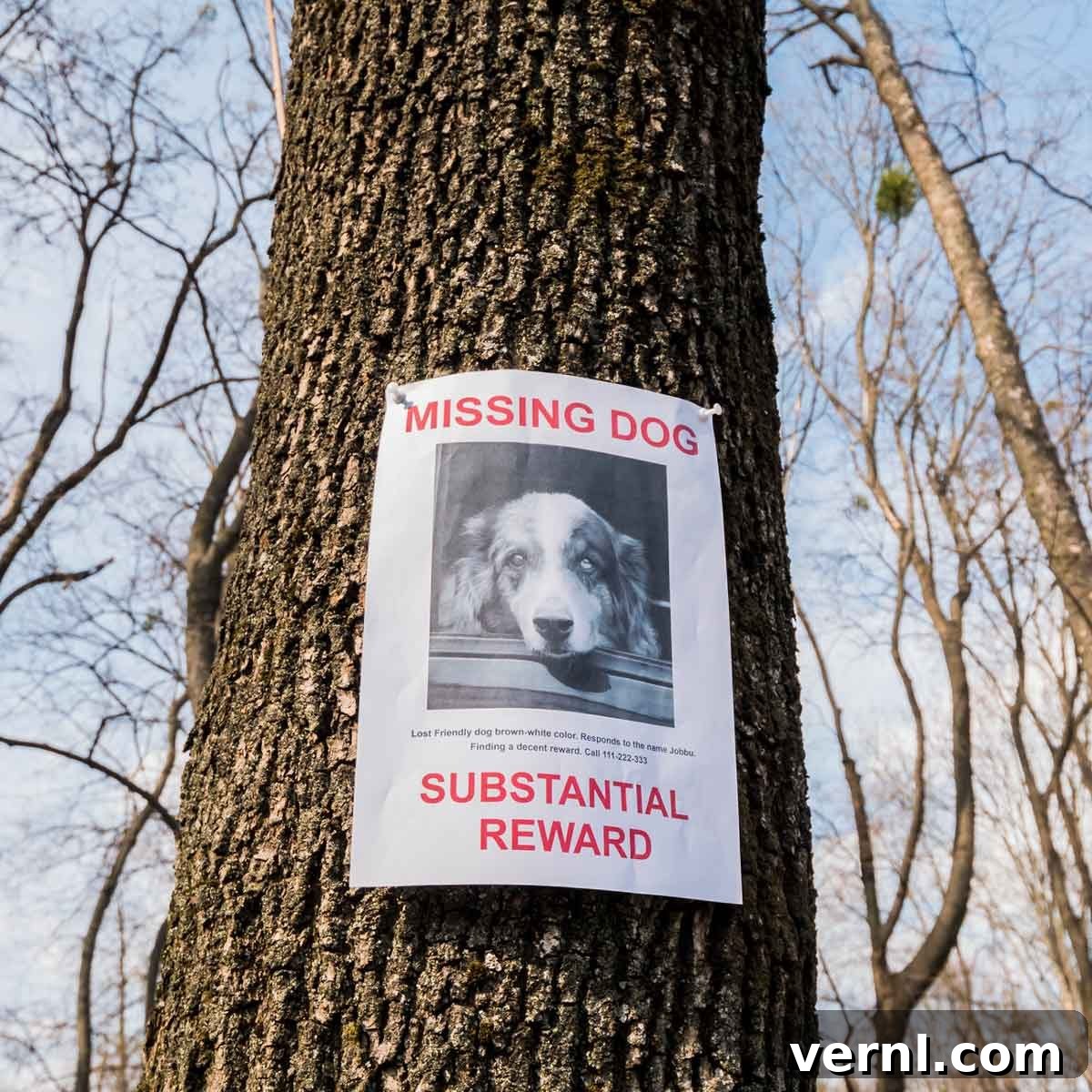
For any dog owner, the thought of their beloved furry friend going missing is a truly heartbreaking nightmare. It’s a universal fear that sends shivers down the spine of every pet parent: seeing an empty leash, an open gate, or realizing your canine companion isn’t where they should be. Dogs, with all their curiosity and sometimes boundless energy, can find countless ways to slip away. They might bolt out an accidentally open front door, ingeniously dig their way under a seemingly secure dog fence, or even break free from a sturdy dog leash. Regardless of how your dog gets loose, the moments following their disappearance are critical. Your swift, organized response significantly increases the chances of a happy reunion. This comprehensive guide will walk you through every crucial step, offering practical advice and leveraging modern resources to bring your dog safely back home.
Act Immediately: The First Steps When Your Dog Goes Missing
The very first and most crucial action you can take when you discover your dog is missing is to start searching without a moment’s delay. Time is absolutely of the essence. Do not waste precious minutes hoping they’ll simply return on their own, or waiting for a more convenient time. Every second counts in the initial stages of a lost pet situation.
Begin your search immediately in the immediate surrounding area of where your dog was last seen. Lost dogs, especially those with a strong bond to their home, tend to stick to familiar territories. If your dog has only been gone for a few minutes, there’s a very high probability they are still very close by, perhaps exploring a new scent or chasing a squirrel just around the corner.
- Call Their Name: Walk around your property and neighborhood, repeatedly calling your dog’s name in a clear, calm, and encouraging voice. Avoid sounding panicked, as this might frighten them further.
- Familiar Sounds & Scents: Bring along a favorite squeaky toy, a bag of their most irresistible treats, or even an item of your clothing with your scent on it. These familiar cues can help guide them back.
- Open Pathways: If possible, leave yard gates open (ensuring your property is otherwise secure) and place some of their favorite food or a well-loved blanket near the entrance of your home. The familiar scent of home and the promise of a meal can be powerful lures.
- Positive Recall Words: Use specific, positive recall words or phrases that you’ve always used during training or playtime, like “peanut butter!” or “come home!” These words should evoke happy associations.
- Car Trick: If your dog loves car rides, try starting your car and lightly gunning the engine for a few moments. The distinctive sound of your vehicle can be a powerful signal, especially if they associate it with exciting outings.
Expand your search perimeter gradually. Drive or walk slowly, continuously calling your dog’s name. Check common hiding spots like under bushes, in sheds, or behind parked cars. Enlist immediate family members or housemates to search different directions simultaneously, but ensure they know your strategy to avoid confusing your dog.
Alert Local Authorities and Animal Welfare Organizations
If your initial, immediate search yields no results after about an hour, it’s time to escalate your efforts and contact a wider network. This step is crucial because many lost dogs are quickly picked up by concerned citizens and taken to local shelters, veterinary clinics, or animal control facilities.
- Animal Control and Police: Immediately call your local animal control department. They are often the first point of contact for stray animals. Also, notify your local police department. While they may not actively search, they can alert patrolling officers to keep an eye out for your specific dog. Provide them with a detailed description and a recent photograph.
- Shelters and Rescues: Get on the phone and alert every shelter, humane society, and animal rescue organization within at least a 60-mile radius of your home. Dogs can travel surprisingly far, especially if they are frightened or disoriented. Maintain a comprehensive list of all organizations contacted, including the date and time of your call, and the name of the person you spoke with.
- Veterinary Clinics: Call all veterinary clinics in your area. People often take lost animals to a vet to check for microchips or injuries.
- Provide Detailed Information: When contacting these agencies, be prepared to provide an accurate, detailed description of your lost dog, including their breed, size, color, distinguishing marks, collar details (color, tags), and their temperament. Always provide a recent, clear photograph of your dog. Ask about their intake procedures and how often you should follow up.
It’s important to follow up regularly with these organizations. Shelters can be incredibly busy, and new animals arrive daily. A phone call every day or two, or even better, a personal visit, will keep your dog’s case fresh in their minds and ensure you don’t miss a potential match.
Leverage Technology: Registering and Updating Your Dog’s Microchip
If your dog is microchipped, this is one of your most powerful tools for reunion and should be prioritized immediately after initial searches and calls. A microchip is a tiny, rice-sized transponder implanted just under your dog’s skin, usually between the shoulder blades. It contains a unique identification number that can be read by a special scanner.
- Register the Microchip: The moment you realize your dog is missing, immediately register its unique microchip number into the pet chip registry associated with your microchip brand. If you’re unsure which registry, there are universal look-up tools online where you can enter the chip number to find out.
- Update Contact Information: This step is absolutely critical. Ensure all your contact information (phone numbers, email addresses, current address) linked to your dog’s microchip is up-to-date and accurate. An outdated phone number can be the difference between a quick reunion and a prolonged search.
- How Microchips Work: When a lost dog is found and taken to an animal shelter, a veterinary clinic, or an animal control facility, one of the very first things they do is scan the animal for a microchip. If a chip is found, the facility will then check its unique ID number against the pet chip registries. If your information is correct, they can quickly contact you, often through dedicated recovery services like AKC Reunite, which specialize in facilitating these reunions.
- Benefits of Microchipping: Microchips are permanent and can’t fall off like a collar tag. They provide a reliable, lifelong form of identification, vastly increasing the chances of your pet being returned to you even years after being lost. As an added benefit, some advanced pet technologies, like certain smart pet doors, can even recognize your dog’s microchip to grant them access, adding another layer of security and convenience.
If your dog isn’t microchipped yet, consider getting it done as soon as they are safely home. It’s a simple, inexpensive procedure that provides invaluable peace of mind.
Mobilize Your Network: Create a Small Search Party
While you continue your immediate localized search, it’s time to expand your efforts by enlisting the help of your personal network. Time remains critical, and a concentrated search effort by multiple people is far more effective than a single individual trying to cover vast areas.
- Recruit Your Team: Reach out to neighbors, family, and friends. Explain your urgent situation and ask if they can dedicate some time to help search. Even a few hours from several individuals can make a significant impact.
- Equip Your Searchers: Arm your search team with essential tools. Provide them with high-quality, recent photographs of your dog. Give them a supply of your dog’s favorite, high-value treats to use as an enticement. Share your contact information and any specific instructions.
- Divide and Conquer: Assign specific search zones to different members of your party. This prevents overlapping and ensures more ground is covered efficiently. Decide whether they should search on foot, by bicycle, or by car, depending on the area.
- Crucial Advice: Don’t Chase! Emphasize to everyone on your search team the absolute importance of *not* chasing your dog if they spot them. A frightened or disoriented dog, even one that knows and loves you, might perceive chasing as a threat and run further away. Instead, they should calmly call your dog’s name, offer treats, and then immediately contact you with the dog’s exact location.
- Leverage Scent: Consider placing an unwashed blanket or an item of your clothing with a strong scent of your dog’s home and family near the spot where they were last seen or at a common crossing point. This can sometimes help a lost dog find its way back.
- Professional Assistance: For particularly challenging cases or shy dogs, consider organizations like Dogs Finding Dogs. These specialized services utilize trained canine search teams to help find missing pets by following their scent, offering an incredible resource when human search efforts are limited.
Maintain clear communication with your search party, establishing a central point of contact for any sightings or updates. This coordinated effort can significantly increase your chances of locating your beloved pet.
Amplify Your Message: Post On Social Media and Neighborhood Networking Services
In today’s interconnected world, social media and neighborhood platforms are incredibly powerful tools for spreading the word about a lost pet quickly and efficiently. Their ability to reach a large, localized audience in a short amount of time is unparalleled.
- Craft an Effective Post: Your social media post should be clear, concise, and compelling. Include:
- A recent, high-quality photograph of your dog.
- Your dog’s name, breed, size, color, and any unique markings or characteristics.
- Where and when your dog was last seen.
- Your contact information (phone number and/or email).
- A clear call to action: “Please share!” or “If seen, please call [Your Number] immediately and do not chase.”
- Consider offering a reward (optional, but can increase engagement).
- Share Widely: Post your message on your personal social media pages (Facebook, Instagram, X/Twitter, etc.). Encourage all your friends and family to share it with their networks. The more shares, the greater the reach.
- Local Community Groups: Beyond your personal page, target local community groups. Search for “Lost Pets [Your City/Town]” or “Community [Your City/Town]” on Facebook. Many towns have dedicated lost and found pet groups with highly engaged members. Post there, and ask administrators if they can pin your post for visibility.
- Nextdoor: Nextdoor is an invaluable platform specifically designed for neighborhood communication. It allows you to quickly spread the word to residents in your immediate vicinity and surrounding neighborhoods. Post your lost dog alert there, including all the critical details.
- Nextdoor’s Pet Directory: Nextdoor also features a convenient Pet Directory where area residents can scroll through listings of lost and found pets. Ensure your dog’s details are entered here. If someone finds a lost dog, they can easily check this directory to see if it matches your pet.
- Other Platforms: Don’t overlook other platforms like Craigslist (in the “Community” and “Pets” sections) or local online forums.
Regularly update your social media posts with any new information or sightings. This keeps your message active and ensures everyone has the latest details.
Traditional Methods Still Work: Flyers and Posters
Despite the prevalence of digital communication, physical flyers and posters remain incredibly effective tools for getting the word out about a lost pet, especially to individuals who might not be active online or those who simply notice a physical sign while going about their day. A well-placed flyer can catch the eye of someone who has seen your dog or even has them in their care.
- Design for Impact: Your lost dog flyer should be designed for maximum impact and readability at a glance.
- Large Photo: The most crucial element is a large, clear, and recent picture of your missing dog. It should be the dominant feature of the flyer.
- Bold Text: Use a large, bold, easy-to-read font for key information.
- Essential Information: Include your dog’s name, your name, and your primary phone number. You might also add a brief description (e.g., “Friendly Golden Retriever, last seen near Oak Street”).
- Call to Action: Clearly state “LOST DOG” at the top and advise people *not to chase* if sighted, but to call you immediately.
- Reward: Consider mentioning “Reward Offered” to incentivize people to look closely and contact you. Some people prefer “No Questions Asked” if they suspect someone might be hesitant to come forward.
- Strategic Placement: Think about where people in your community spend time and where your flyer will get the most visibility.
- High-Traffic Areas: Post near busy intersections, walking trails, dog parks, and bus stops.
- Local Businesses: Ask local businesses such as pet supply stores, veterinary clinics, groomers, coffee shops, grocery stores, and community centers if they are willing to let you put a flyer in their window or on a public bulletin board.
- Community Boards: Public bulletin boards at libraries, schools, and community centers are usually safe and effective places.
- Street Poles and Lamp Posts: Check local municipal rules regarding posting flyers on street poles or lamp posts to avoid them being removed.
- Weather Protection: Print your flyers on sturdy paper and place them inside clear plastic sheet protectors or laminate them to make them weatherproof. This ensures they remain legible even in rain or humidity.
- Expand Your Reach: Don’t just stick to your immediate neighborhood. Place flyers in surrounding areas, as dogs can travel far, especially if picked up and dropped off elsewhere.
Consistently check your posted flyers to ensure they haven’t been removed or damaged. Replace them as needed to maintain visibility.
Persistent Efforts: Regularly Check Local Shelters and Animal Control Facilities
While contacting shelters by phone is a vital first step, a personal, proactive approach is often more effective. Shelters and animal control facilities can be incredibly busy and understaffed. They process many animals daily, and even with the best intentions, it may take them some time to contact you if your pet has been dropped off.
- Visit in Person: Make it a priority to visit all local animal shelters and animal control facilities yourself. Do this every day, or at least every other day, if possible. Don’t rely solely on their staff to recognize your dog from a description over the phone.
- Ask to See Recent Intakes: When you visit, specifically ask to see their recent intakes. Walk through the kennels yourself. You know your dog best, and seeing them with your own eyes is the most reliable way to identify them. Dogs can look different when stressed or dirty, so be prepared to look closely at every animal that matches your dog’s general description.
- Bring Documentation: Carry multiple copies of your dog’s photograph, their microchip number, and any other identifying documents (vaccination records, adoption papers). This can help prove ownership if you find your dog.
- Expand Your Search Radius: Remember to check shelters in neighboring towns and counties. It’s not uncommon for a dog to cross municipal borders, or for someone to pick up a lost dog and drop them off at a shelter in a different jurisdiction.
- Leave Information: Even if your dog isn’t there during your visit, leave a detailed “Lost Pet” report with them, complete with a current photo and all your contact information. Reiterate your situation and the unique characteristics of your dog.
This persistent, hands-on approach is crucial. Your consistent presence and active participation in checking facilities will greatly enhance the likelihood of a reunion.
Maintain Hope and Persistence: Don’t Give Up on Finding Your Dog
Finding a lost pet can be an emotionally exhausting journey, filled with highs and lows. It’s easy to feel discouraged, especially as days turn into weeks. However, it is absolutely vital to maintain hope and persistence throughout the search. Stories of incredible reunions, even after months or years apart, are not uncommon.
- Success Stories: The ASPCA reports encouraging statistics: a significant 49 percent of dog owners found their dog simply by searching their neighborhood. This highlights the power of consistent, active searching.
- Long-Term Search Strategy: If your initial intensive search doesn’t yield results, don’t stop. Continue to update social media posts, refresh flyers, and regularly check shelters. Lost dogs can sometimes survive for extended periods on their own, or they may be taken in by someone who doesn’t immediately report them.
- Sustained Effort: Re-visit areas where your dog was last seen, or where you’ve had sightings. Dogs are creatures of habit and scent, and they might return to familiar spots.
- Emotional Support: Lean on your support system – friends, family, and online lost pet communities. Sharing your feelings and receiving encouragement can help you stay motivated.
- Professional Help: If weeks pass without success, consider contacting professional lost pet services or pet detectives. They use specialized techniques, including scent dogs, cameras, and behavioral analysis, to track and recover missing animals.
Every day that your dog is missing is tough, but countless stories prove that vigilance and unwavering hope can ultimately lead to the joyous moment of reunion. Keep searching, keep sharing, and never give up on your beloved companion.
Proactive Measures: Ways to Significantly Increase the Chances of a Safe Return
While the focus is often on what to do *after* a dog goes missing, the most effective strategy includes proactive steps to prevent escapes and maximize the chances of a swift return if an escape does occur. Prevention and preparation are truly your best allies.
Essential Identification Methods:
- ID Tags on Collars: This is the simplest and often quickest way for your dog to be identified. Make sure the tag on your dog’s collar includes their name, your primary phone number, and your city. Consider including a secondary number or even “REWARD IF FOUND” for added incentive. Choose a tag that is durable, legible, and won’t rust or fade, such as the Providence Engraving Pet ID Tags, which are known for their resilience. Always ensure the collar itself fits snugly but comfortably, preventing them from slipping out.
- Custom Collars with Engraving: An excellent alternative or addition to traditional hanging tags are custom engraved collars. With options like the Custom Catch Personalized Dog Collar, your dog’s name, your phone number, or any other crucial text you choose can be directly engraved onto the collar material itself. This eliminates the jingle of tags and the risk of a tag breaking off or becoming illegible. Prices for these customizable collars vary depending on color, material, and size, offering a tailored and secure identification solution.
- Microchips for Permanent ID: As discussed earlier, a microchip is a tiny, passive identification device implanted beneath your dog’s skin. It’s a permanent form of ID that cannot be lost or removed. Many veterinarians and some animal shelters offer microchipping services for a small, often one-time fee. The procedure is quick and relatively painless, similar to a routine vaccination. Once chipped, the most vital step is to register your dog’s unique ID number with a reputable microchip registry and keep your contact information updated. A microchip provides peace of mind, knowing your pet has a lifelong identifier, even if their collar comes off.
Advanced Tracking and Safety Gear:
- Smart Collars with GPS Tracking: For an extra layer of security and real-time tracking capabilities, consider investing in a smart dog collar. These innovative devices can help you keep track of your furry friend’s location if they get lost or wander too far.
- GPS Functionality: Look for collars equipped with GPS tracking, which allows you to pinpoint your dog’s exact location from your smartphone or computer. A popular and reliable option is the Whistle GO.
- Real-Time Alerts: Many smart collars offer features like “escape alerts,” which send an immediate notification to your phone if your dog leaves a predefined safe zone (like your backyard).
- Additional Features: Beyond GPS, some smart collars also monitor activity levels, sleep patterns, and provide health insights, giving you a holistic view of your dog’s well-being.
- Cost Considerations: Smart collars often involve an upfront cost (e.g., around $100 for a device like Whistle GO) and typically require a monthly subscription fee for cellular service to enable GPS tracking (e.g., $10/month). However, for many pet owners, the peace of mind offered by real-time tracking is well worth the investment.
Home Security and Training:
- Secure Your Home Environment: Regularly inspect your yard for weak spots in fences where your dog could dig under or squeeze through. Ensure gates are always securely latched and consider double-locking mechanisms. Be mindful of open doors and windows, especially near the front entrance.
- Leash Training and Supervision: Always use a strong, appropriate leash when walking your dog and practice good leash manners. Avoid retractable leashes in high-traffic areas, as they can sometimes lead to escapes if the mechanism fails or the dog pulls too hard. Never leave your dog unattended, even in a fenced yard, for extended periods.
- Reliable Recall Training: Invest time in teaching your dog a rock-solid “come” or “recall” command. Practice this in various environments, using high-value treats as rewards. A strong recall can be a lifesaver if your dog accidentally gets loose and you need them to return immediately.
Emergency Preparedness:
- Create a “Lost Pet” Emergency Kit: Prepare a folder or digital file containing high-resolution, recent photos of your dog from different angles. Include their microchip number, vaccination records, and a list of contact numbers for local animal control, shelters, and veterinary clinics. Having this information readily accessible will save crucial time if your dog goes missing.
- Inform Your Network: Make sure trusted friends, family, and pet sitters know what to do if your dog gets lost while under their care. Share your emergency plan and contact information with them.
By implementing these proactive measures, you can significantly reduce the risk of your dog going missing and empower yourself with the best tools and knowledge for a successful reunion if the unforeseen happens. Your dog is a cherished member of your family, and taking these steps ensures their safety and your peace of mind.