
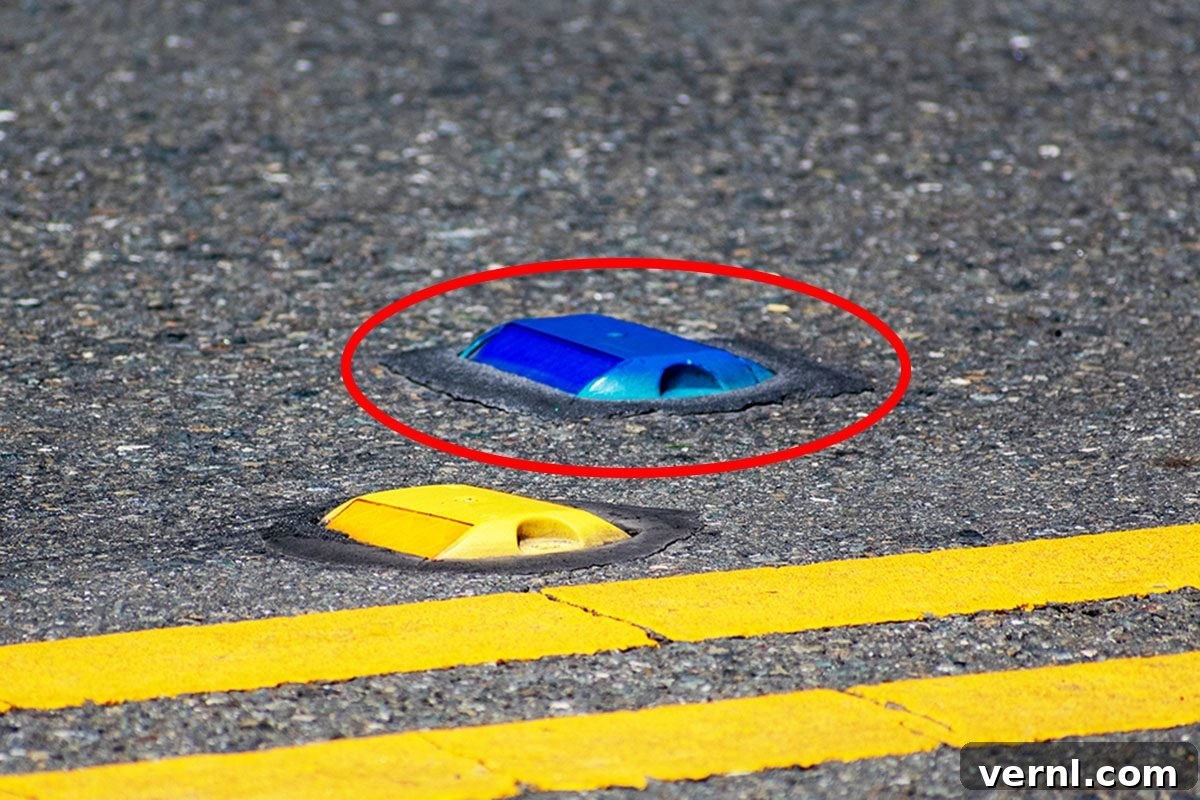
The Critical Role of Blue Reflectors on Roads: What They Mean for Safety and Homeowners
If you’ve spent any time driving on American roads, you’ve likely encountered small, raised blue reflectors embedded in the pavement. For many, these unassuming markers are simply another piece of road infrastructure, often noticed but rarely understood. You’re certainly not alone if you’ve wondered about their purpose or whether they serve any real function. The truth is, these blue reflectors are far from random; they are a vital component of public safety and emergency preparedness, playing a crucial role in protecting communities.
These specialized markers provide essential information to emergency crews, guiding them to critical water sources when every second counts. Understanding their meaning is not just for firefighters or city planners; it’s also important for drivers, pedestrians, and especially homeowners, who might be unaware of their proximity to vital underground utilities. Let’s delve into what blue reflectors on the ground truly signify, where you’re most likely to encounter them, and why their presence holds significant implications for anyone living in or passing through a community.
What Blue Reflectors On The Ground Mean: More Than Just a Marker
The blue reflectors you observe on the road surface are formally known as “raised pavement markers” (RPMs), although they are more commonly referred to as “fire hydrant markers” or “blue road reflectors.” These seemingly simple devices are engineered with a singular, critical purpose: to mark underground water systems, specifically identifying the location of nearby fire hydrants for emergency responders. In situations where a fire hydrant might be obscured or difficult to spot from a moving vehicle, these small blue markers become invaluable beacons.
The Standardized Language of Utility Markers
The use of specific colors for utility markers follows a widely recognized and standardized system, crucial for rapid identification by various service providers. According to the guidance established by the American Public Works Association (APWA), the color blue is designated to indicate potable water systems. This comprehensive category encompasses a range of infrastructure components, including, but not limited to, vital water mains, individual service lines connecting to properties, and, most importantly in this context, fire hydrants. This standardized color coding ensures that whether it’s a utility worker or a firefighter, the blue marker immediately communicates the presence of critical drinking water infrastructure beneath the surface.
Why Fire Hydrant Markers Are Essential
While fire hydrants are designed to be visible, they can, surprisingly, blend into their surroundings more easily than one might anticipate. Local municipalities install these blue reflectors precisely when conditions or environmental factors might hinder a firefighter’s ability to quickly locate a hydrant. A myriad of factors can limit visibility:
- Weather Conditions: Heavy snowfall can completely bury hydrants for extended periods, making a ground-level marker essential. Dense fog or heavy rain can also reduce visibility significantly.
- Parked Vehicles: Cars parked legally or illegally can frequently obstruct the view of a hydrant from the road.
- Landscaping and Vegetation: Overgrown bushes, hedges, tall grass, or even strategically placed decorative landscaping can unintentionally hide a hydrant.
- Architectural Elements: Fences, walls, or other structural elements near the curb can also contribute to visual obstruction.
- Lighting: During nighttime emergencies, especially in poorly lit areas, a reflective marker is far easier to spot than a camouflaged hydrant.
In the high-stakes environment of an emergency response, every single second is precious. Firefighters rely on these markers to locate hydrants rapidly, without the critical delay of searching block by block. A swift connection to a water source can be the difference between containing a small fire and battling a blaze that consumes an entire structure, potentially saving lives and significantly reducing property damage.
Where Drivers Typically See Blue Road Reflectors and Why
Blue reflectors, while standardized in their meaning, are not universally installed across every city or municipality in the United States. Their presence tends to be more concentrated in specific areas where environmental factors or urban planning considerations necessitate their use. While they can be found in just about any region with fire hydrants, certain conditions make them more common.
Municipal Discretion and Environmental Factors
The decision to install blue reflectors often rests with individual municipalities, guided by local conditions, historical practices, and budget considerations. Some communities may rely solely on the visible presence of hydrants, assuming they are sufficiently conspicuous. Others might employ alternative markers or signage to alert fire crews to available water sources. However, the most common influence on their widespread use is indeed weather and geographical challenges.
- Heavy Snowfall Areas: Regions that experience significant annual snowfall are prime candidates for blue reflector installation. When hydrants are buried under several feet of snow for weeks or months, a ground-level marker that pokes through or sits atop the snow becomes an indispensable guide. Snowplows can also make it difficult to locate hydrants, as they often create large snow banks.
- Dense Vegetation: Areas prone to rapid or dense vegetation growth, particularly in warmer climates or where landscaping is extensive, also benefit greatly from these markers. Overgrown bushes, tall grasses, or hedges can quickly obscure hydrants, making a clear ground marker invaluable.
Placement and Common Locations
Blue reflectors appear most frequently on residential roads, particularly within neighborhoods characterized by standard curbside hydrants. In these areas, parked cars, varied landscaping, and the general layout of suburban streets often create visual impediments. They are also common in locations where changes in elevation or intricate landscaping make hydrants harder to spot. Think of winding roads, properties situated on large hills, or areas lined with dense hedgerows – all scenarios where a clear line of sight to a hydrant might be compromised.
The frequency of their use can also vary significantly even between similarly sized cities within the same county, state, or region. This discrepancy often stems from differing local standards or interpretations of what constitutes a “visually impaired area” for emergency access. One town might have a strict policy for every hydrant in a residential zone, while another might only install them in very specific, high-risk locations.
Typically, blue reflectors are strategically placed in the center of the traffic lane, or slightly offset from it, directly aligned with the precise location of the fire hydrant. This placement is maintained even if the hydrant itself sits several feet away from the curb. The logic behind this placement is to provide a clear, easily identifiable point of reference for drivers approaching the area, guiding them directly to the water source with minimal delay.
What Homeowners Should Know About Blue Reflectors: Your Role in Public Safety
While the primary beneficiaries of blue reflectors are first responders, understanding their significance extends to homeowners as well. These markers serve as critical cues for property owners, particularly when considering changes to their yard or driveway. Recognizing the presence of a blue reflector can save homeowners from costly mistakes, potential hazards, and even contribute to broader community safety.
The “Call Before You Dig” Imperative
A blue reflector often signals the immediate vicinity of a fire hydrant or a crucial underground water line connection. This visual cue should act as an instant reminder that any planned digging project, no matter how small, requires proper utility checks beforehand. The importance of utilizing the “Call Before You Dig” service, commonly accessed by dialing 811 in the United States, cannot be overstated.
Before you break ground for anything from planting a new tree to installing a fence or building a deck, contacting 811 is a legal requirement in most areas and a crucial safety measure. This free service helps locate and mark underground utility lines, which can include not only water mains but also gas lines, electrical cables, sewer lines, and telecommunication infrastructure. Striking an underground utility line can lead to severe consequences:
- Personal Injury or Fatality: Damaging a gas line can cause explosions, and hitting electrical lines can lead to electrocution.
- Extensive Property Damage: Burst water mains can flood property, and damaged gas lines can cause fires.
- Service Disruptions: Cutting a line can interrupt essential services for your home and entire neighborhoods.
- Expensive Fines and Repair Costs: Homeowners can face substantial fines and be held financially responsible for the repair of damaged utility lines.
The blue reflector serves as a tangible warning: there’s important infrastructure nearby. Treat it as a flag demanding caution and professional utility line identification before any excavation begins.
Maintaining Clear Access to Hydrants
Beyond indicating underground utilities, blue reflectors also serve as a constant reminder of the homeowner’s responsibility to keep the area around hydrants clear and accessible. Even if the reflectors perfectly guide fire crews to a hydrant’s location, physical access is still paramount for them to connect their hoses and begin operations quickly. Local ordinances typically stipulate that an area of at least three feet in all directions around a fire hydrant must remain clear of obstructions.
This means homeowners should actively ensure that:
- Vegetation is Trimmed: Keep bushes, trees, and tall grass cut back so they don’t impede access.
- Objects are Removed: Avoid placing trash bins, recycling containers, decorative lawn ornaments, construction materials, or parked vehicles too close to the hydrant.
- Snow and Ice are Cleared: In winter, homeowners are often responsible for shoveling snow and clearing ice from around hydrants on their property or adjacent to it. Many communities even encourage residents to “adopt a hydrant” during snowy months.
Obstructing a fire hydrant is not only a public safety hazard but can also lead to fines. By keeping the area around a hydrant clear, homeowners directly contribute to the efficiency and effectiveness of emergency services, ultimately protecting their property and their community.
In conclusion, those seemingly insignificant blue reflectors on the ground are much more than mere road markings. They are critical tools for public safety, silent sentinels that guide emergency responders to vital water sources, thereby potentially saving lives and property. For drivers, they’re a subtle indication of nearby infrastructure. For homeowners, they serve as a crucial reminder for safe digging practices and the ongoing responsibility of maintaining clear access to fire hydrants. Recognizing and respecting these small blue beacons empowers every citizen to play a part in enhancing community safety and preparedness.
Sources
- American Public Works Association, “Uniform Color Code for Marking Underground Utility Lines”
- Call Before You Dig, “811 Process and Utility Safety Information”
RELATED ARTICLES:
- Do You Know What That Little Button on Your Seat Belt Is For?
- What Those Lines on Your Backup Camera Really Tell You
- Here’s What The Small Panel On Your Car’s Front Bumper Is For