
The Christmas Pickle Tradition: Origins, Myths, and Festive Fun
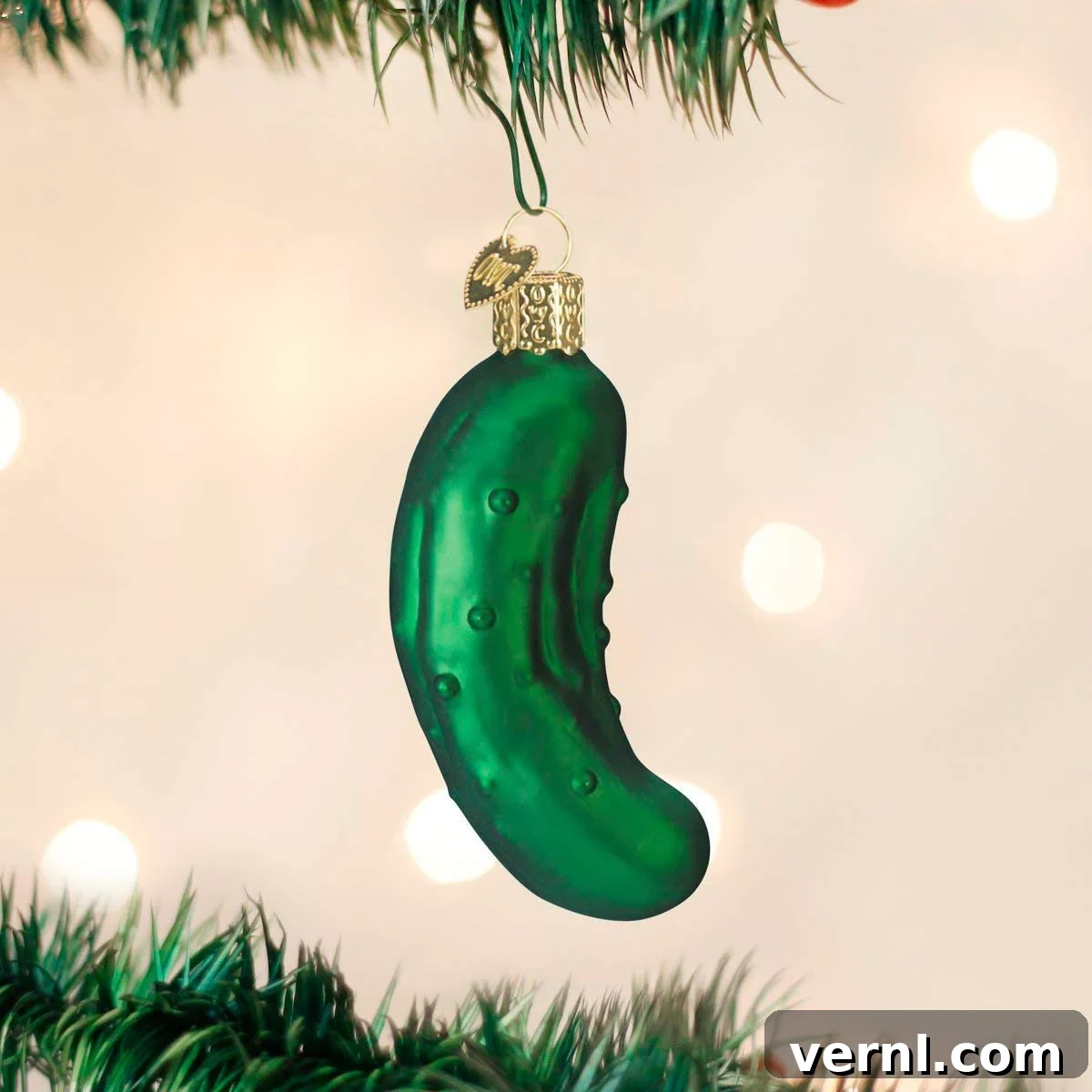
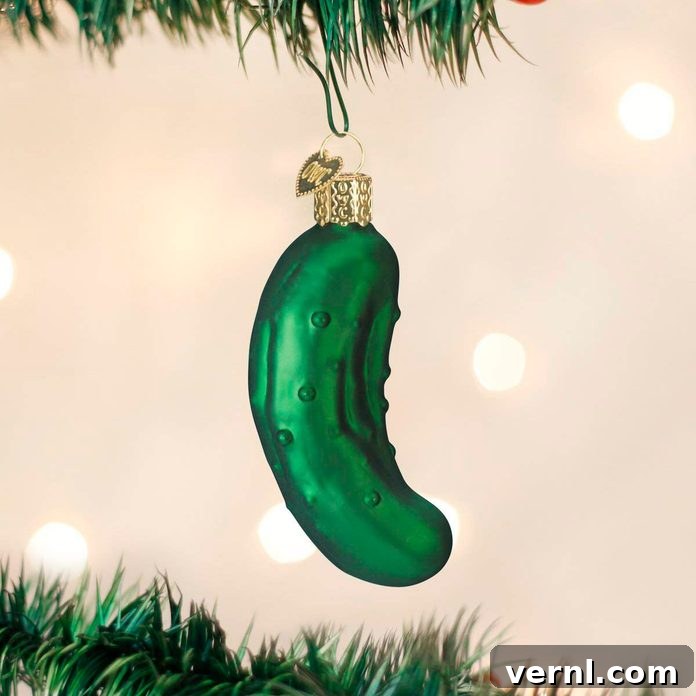
Christmas is a season steeped in rich traditions, a mosaic of customs passed down through generations. From hanging stockings by the chimney with care to caroling through snowy streets, these rituals weave the fabric of our holiday memories. Yet, amidst the familiar festive practices, there exists a curious and often bewildering custom that might just be new to you: the Christmas pickle. This intriguing tradition involves hiding a pickle-shaped ornament deep within the branches of a Christmas tree, sparking a delightful hunt that brings an extra touch of magic to the holiday season. It’s a whimsical practice that has captured the imagination of many, even as its true origins remain shrouded in mystery.
Unraveling the Mystery: Why Hide a Pickle on the Christmas Tree?
The core of the Christmas pickle tradition is surprisingly simple yet profoundly engaging. Families carefully conceal a pickle ornament among the verdant needles and sparkling lights of their Christmas tree. On Christmas morning, or sometimes on Christmas Eve, the hunt begins. The person, often a child, who first discovers the elusive green bauble is typically rewarded with an extra present, a small token of good fortune, or the privilege of opening the first gift. Others believe that the finder will be blessed with good luck, prosperity, or even an extra year of health in the coming year, making the discovery a highly anticipated moment.
This playful hide-and-seek game adds an exciting layer of anticipation and joy to the holiday festivities. It encourages families to slow down, examine their tree with renewed wonder, and engage in a shared activity that builds lasting memories. While the tradition itself is widely enjoyed across various households, particularly in the United States, the question of “why a pickle?” and “where did this come from?” often leads to a fascinating journey through a collection of compelling, yet largely unsubstantiated, theories.
Tracing the Roots: Popular Theories Behind the Christmas Pickle
Despite its enduring charm, pinpointing the exact origin of the Christmas pickle tradition is remarkably difficult. No single, definitive historical account confirms its beginnings. Instead, a handful of intriguing theories have emerged over time, each offering a plausible, albeit unverified, explanation for this quirky custom. These stories range from the practical to the miraculous, painting a vivid picture of how such a unique tradition might have taken hold.
Theory 1: The German Glassblowing Connection and Woolworth’s Influence
One of the most widely circulated theories links the Christmas pickle to 19th-century Germany and the burgeoning popularity of glass ornaments. According to several sources, in the late 1880s, American retail giant Woolworth stores began importing a wide array of glass ornaments from Germany, particularly from the region of Lauscha, renowned for its exquisite glassblowing artistry. These ornaments were crafted in an astonishing variety of shapes, depicting everything from whimsical animals to realistic fruits and vegetables. Among these unique designs, pickle-shaped ornaments were indeed present.
The theory suggests that these German glass pickles, with their distinctive green hue, were particularly challenging to spot amidst the green boughs of a fir tree. This natural camouflage could have inspired the game of hiding the ornament, adding an element of fun and challenge to the tree decoration process. However, a significant caveat exists: historical research indicates that while German glassblowers certainly produced fruit and vegetable ornaments, there is little to no evidence of a widespread or even recognized “pickle tradition” in Germany itself. Many Germans are often surprised to learn that Americans associate this custom with their heritage. It seems the “German tradition” aspect might be more of an American interpretation or marketing narrative that developed over time, perhaps to lend an air of old-world charm to a new, evolving custom.
Theory 2: The American Civil War Soldier’s Tale of Survival
Another poignant theory transports us to the grim realities of the American Civil War, specifically to a Christmas Eve spent under dire circumstances. This story recounts the ordeal of a Bavarian-born soldier fighting for the Union Army. Captured by Confederate forces, he found himself imprisoned and facing an agonizing Christmas Eve, weak, starving, and on the brink of death. In a desperate plea, he begged a guard for just one last pickle before he succumbed to his fate.
Moved by the soldier’s desperate request, the guard surprisingly granted him a pickle. This simple act of kindness, and the sustenance provided by the pickle, gave the soldier the unexpected strength and will to survive. After regaining his health and eventually returning home to his family, he allegedly began the tradition of hiding a pickle ornament on his Christmas tree each year. This ritual served as a profound reminder of his miraculous survival, the unexpected kindness he received, and the importance of hope even in the darkest of times. While a touching and compelling narrative, this theory, much like the German origin story, lacks concrete historical documentation to substantiate it, existing primarily as a cherished piece of American folklore.
Theory 3: St. Nicholas and the Miraculous Pickle Barrel
The third theory delves into a much darker, yet ultimately miraculous, narrative involving St. Nicholas, the beloved patron saint of children. This tale, which resonates with other medieval legends associated with St. Nicholas, describes two young Spanish boys who were traveling home for the holidays from their boarding school. Seeking shelter for the night, they stopped at an inn, only to be cruelly murdered by the innkeeper, who then hid their bodies in a large pickle barrel.
That very evening, St. Nicholas happened to stop at the same inn. Through divine intuition or miraculous perception, he discovered the boys in the pickle barrel. With his benevolent powers, St. Nicholas brought the innocent children back to life, restoring them to their joyous journey home. This gruesome yet ultimately triumphant story highlights St. Nicholas’s role as a protector of children and a bringer of miracles. While powerful, it’s important to note that most traditional St. Nicholas legends involving barrels speak of children being dismembered and preserved in brine (or a similar concoction), but rarely explicitly refer to a “pickle barrel” in the context of the Christmas ornament. The connection to the ornament tradition is tenuous, often sounding more like an attempt to find a historical link to the pickle’s presence in a Christmas narrative rather than a direct origin for the decorative custom.
The Enduring Popularity: Berrien Springs, The Christmas Pickle Capital
Regardless of its enigmatic origins, the Christmas pickle tradition has found a dedicated following and a unique place in contemporary holiday celebrations. One town, in particular, has enthusiastically embraced the pickle as its emblem: Berrien Springs, Michigan. This charming community proudly proclaims itself the “Christmas Pickle Capital of the World,” a title they celebrate with considerable fanfare every December.
The annual Berrien Springs Christmas Pickle Festival is a highlight of the local calendar, attracting visitors from far and wide. The festivities culminate in a lively parade led by the esteemed “Grand Dillmeister,” a jovial figure who presides over the event with pickle-themed regalia. As the parade winds its way through the streets, the Grand Dillmeister delightedly tosses fresh pickles to the enthusiastic crowds, adding a wonderfully tangy and unique flavor to the holiday cheer. This vibrant celebration in Berrien Springs demonstrates how a quirky, perhaps historically unconfirmed, tradition can become a significant part of a community’s identity and a beloved local event, proving that the joy and fellowship derived from a tradition often outweigh the need for strict historical accuracy.
Embracing the Tradition: How to Add a Pickle to Your Christmas Tree
If the mystery and charm of the Christmas pickle have piqued your interest, incorporating this delightful tradition into your own holiday celebrations is incredibly simple and rewarding. It’s an easy way to add an element of fun, surprise, and unique character to your family’s annual tree decorating ritual.
The first step is to acquire your very own pickle ornament. You can purchase pickle ornaments at many Christmas gift stores, specialty ornament shops, or through various online retailers like Amazon. They come in a variety of styles, from classic glass-blown designs (often resembling the German imports of old) to more modern plastic or even handcrafted versions. Once you have your pickle, the fun truly begins.
On Christmas Eve, or whenever you typically decorate your tree, subtly hide the pickle ornament deep within the branches of your Christmas tree. The key is to make it challenging enough to require a bit of searching, but not so impossible that it causes frustration. The green color of the pickle naturally blends with the evergreen, making it a perfect camouflage. On Christmas morning, gather your family and let the hunt commence! The joy of discovery, whether it’s a child’s triumphant shout or an adult’s chuckle, is truly what makes this tradition special. You can decide on the reward beforehand: perhaps the finder gets to open the first present, receives a small, extra gift, or is simply designated as the lucky one for the upcoming year. Whatever the prize, the shared experience and the laughter it brings are the true gifts of the Christmas pickle.
A Timeless Tradition for Modern Families
The Christmas pickle, with its mysterious origins and playful spirit, stands as a testament to the enduring power of holiday traditions, regardless of their historical certainty. It reminds us that sometimes, the magic lies not in tracing a custom back to its precise inception, but in the joy it brings, the memories it creates, and the way it unites families during the festive season. Whether it’s a nod to an imagined German past, a tribute to a soldier’s resilience, or simply a fun game adopted from a quaint Michigan town, the Christmas pickle offers a unique and heartwarming way to celebrate the spirit of Christmas.
As you gather around your Christmas tree this year, consider adding a little green pickle to its boughs. It’s a charming way to introduce a new layer of excitement and a touch of quirky history into your holiday celebrations, promising smiles, laughter, and perhaps a dash of good fortune for the year ahead. Embrace the mystery, cherish the fun, and let the hunt for the Christmas pickle become a beloved part of your family’s holiday story.