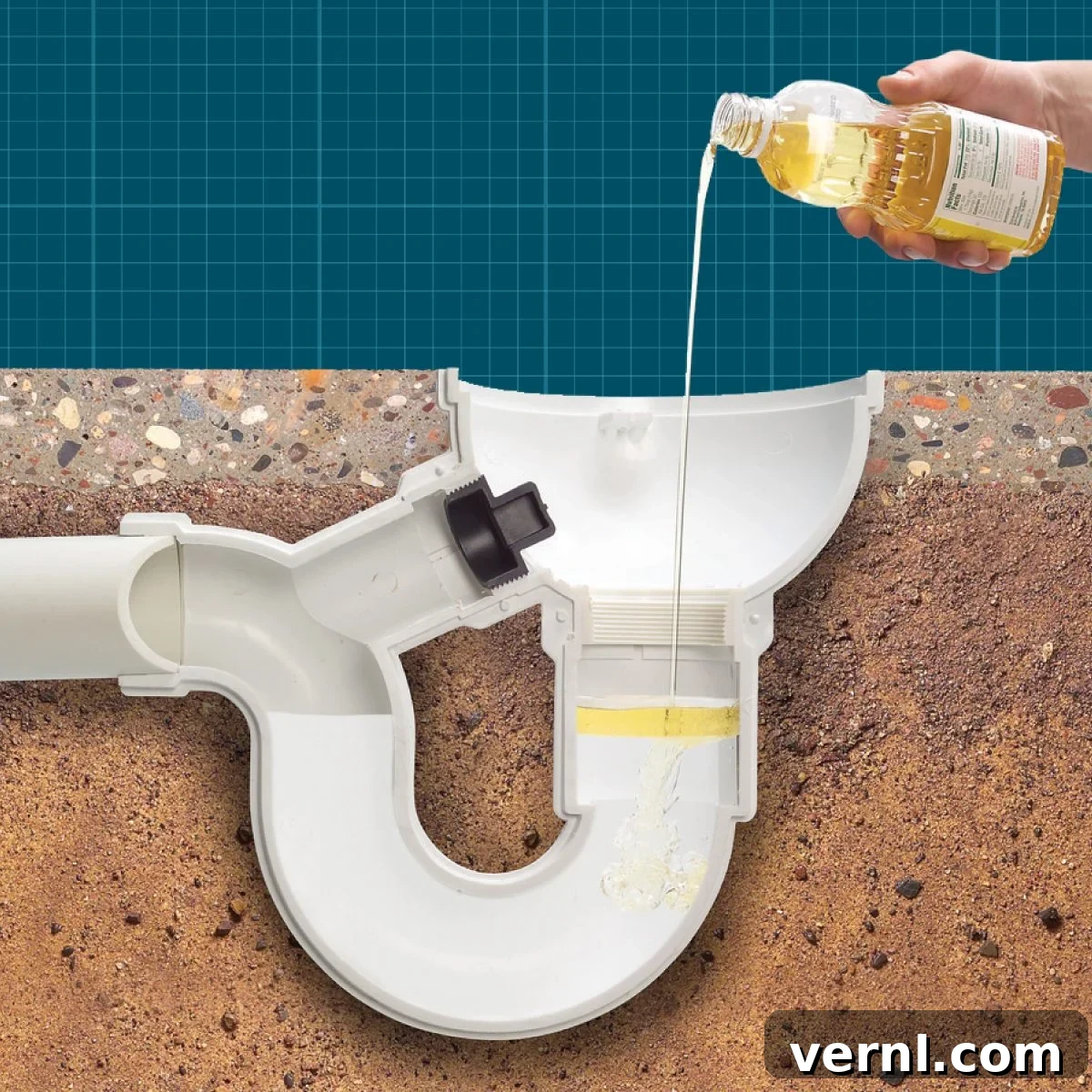
The Simple Secret to Banishing Sewer Gas: How to Keep Unused Drains Fresh with Cooking Oil
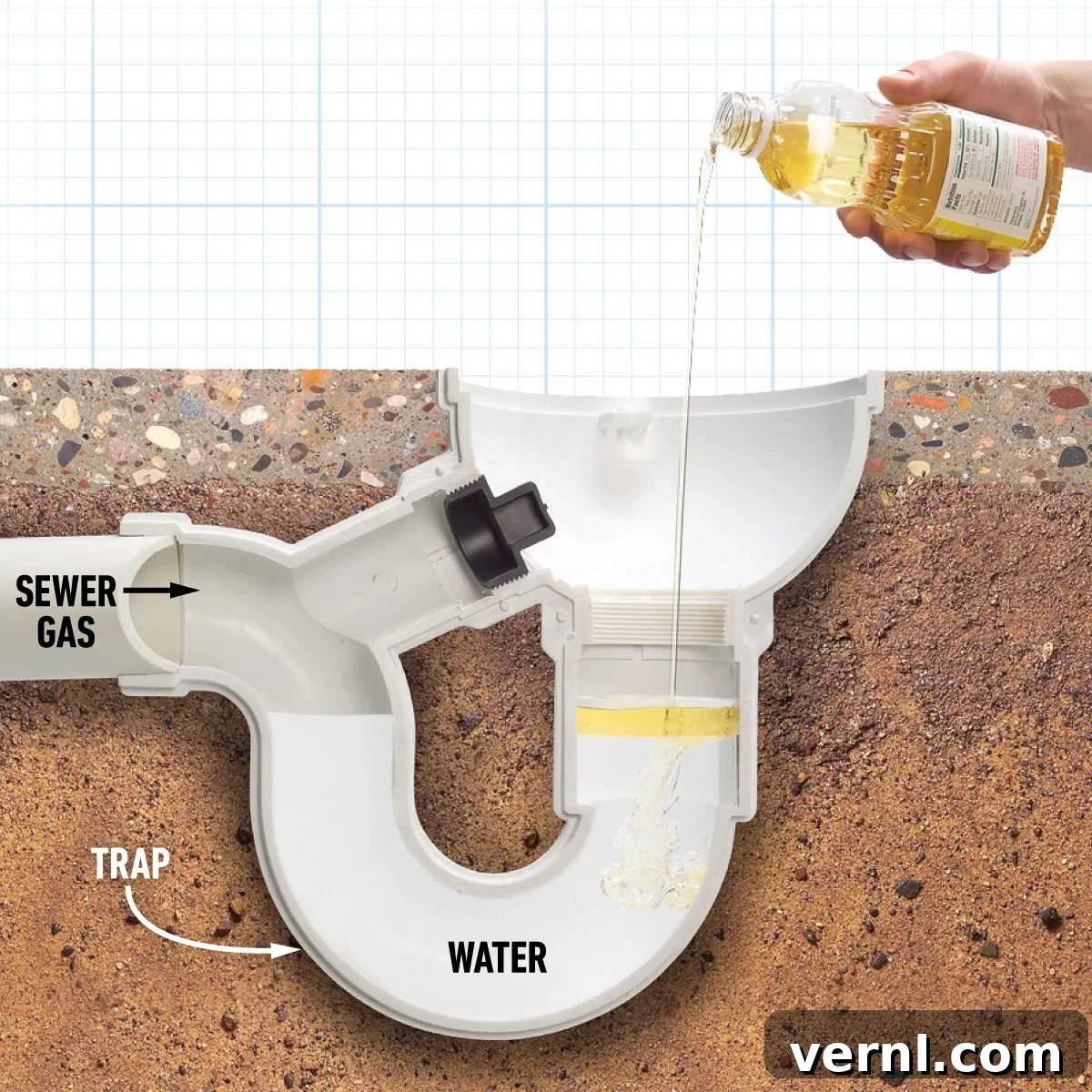
Every home is equipped with a crucial, yet often overlooked, plumbing component: the P-trap. Located directly beneath every drain in your house, this ingenious U-shaped pipe serves a vital function. It holds a small amount of water, creating a barrier that prevents unpleasant—and potentially hazardous—sewer gases from entering your living spaces. Without this water seal, the air in your home could fill with foul odors and harmful airborne contaminants originating from your sewer system.
However, what happens when a drain goes unused for an extended period? Think of that spare bathroom shower, the seldom-used utility sink, or the floor drain in your basement. Over time, the water in these P-traps can naturally evaporate, breaking the protective seal. This allows those undesirable sewer gases to waft freely into your home, creating a persistent and unwelcome stench. Beyond the offensive smell, prolonged exposure to sewer gas can pose health risks, including headaches, nausea, and in rare severe cases, even more serious issues due to the presence of methane, hydrogen sulfide, and other byproducts.
So, the critical question arises: how can you maintain this essential water seal in drains that are rarely used, thereby preventing the water in the P-trap from evaporating and keeping your home air clean and odor-free?
The answer, surprisingly simple and incredibly effective, is a common household item you likely already have in your pantry: cooking oil. This clever trick, shared among experienced plumbers and homeowners alike, offers a practical and inexpensive solution to a common household problem.
Understanding the Crucial Role of Your P-Trap
Before diving into the solution, it’s worth reiterating the importance of the P-trap. This curved piece of pipe is not just an arbitrary part of your plumbing; it’s a fundamental safety and hygiene component. The P-trap works on a simple principle: gravity holds a small amount of water in the lowest curve of the pipe. This water forms a physical barrier against gases and, to a lesser extent, insects and rodents from the sewer system.
Why P-Traps are Indispensable:
- Barrier Against Sewer Gas: This is its primary function. Sewer gas is a complex mixture that includes methane, ammonia, hydrogen sulfide, and other compounds, many of which are toxic and flammable in high concentrations. Even in low concentrations, the smell is highly offensive and can cause discomfort.
- Prevents Unpleasant Odors: Beyond the health implications, the sheer unpleasantness of sewer gas lingering in your home is reason enough to ensure your P-traps are functioning correctly. No one wants their home to smell like a sewer.
- Traps Debris: While not its main purpose, P-traps also help catch small items that accidentally fall down the drain, sometimes preventing them from reaching the main sewer line where they could cause larger, more disruptive clogs.
The Problem: Evaporation in Seldom-Used Drains
The efficacy of a P-trap hinges entirely on the continuous presence of water. When a drain is used regularly—say, your kitchen sink or your main bathroom shower—fresh water constantly replenishes the trap, ensuring the seal remains intact. The problem arises with drains that see infrequent use. Common culprits include:
- Guest Bathrooms: Showers and sinks in guest bathrooms are often only used a few times a year, leaving ample time for the P-trap water to evaporate.
- Basement Floor Drains: Frequently found in utility areas, laundry rooms, or unfinished basements, these drains might only be needed in case of a flood or overflow, meaning they sit dry for extended periods.
- Utility Sinks: Located in garages, workshops, or mudrooms, these sinks are not typically used daily, leading to the same evaporation issue.
- Vacation Homes or Rental Properties: When properties are vacant for weeks or months, all the P-traps within become highly susceptible to drying out, leading to unpleasant surprises upon return.
In these scenarios, the water in the P-trap, exposed to the ambient air, will gradually evaporate. The rate of evaporation depends on factors like humidity levels, temperature, and airflow within the plumbing system. Once the water level drops below the trap’s lowest point, the crucial barrier is broken, and sewer gases have a direct, unobstructed path into your home, filling the air with their noxious fumes.
The Ingenious Solution: Cooking Oil – A Simple Plumbing Trick
This is where our simple, yet brilliant, solution comes into play. The idea of using cooking oil might sound unconventional at first, perhaps even counterintuitive when thinking about plumbing, but its effectiveness is firmly rooted in basic physics and chemistry. It’s a testament to the practical wisdom gathered over years by plumbing professionals and savvy homeowners.
The primary principle at work here is twofold: the immiscibility of oil and water, combined with oil’s lower density. When a small amount of cooking oil is carefully poured into a drain that already has a full P-trap, the oil, being lighter than water, floats on top. Because oil does not readily evaporate at room temperature, especially when compared to water, and forms a continuous, unbroken layer, it creates a protective seal on the water’s surface. This barrier significantly slows down or virtually stops the natural evaporation process, keeping the water in the trap intact for much longer.
How to Apply the Oil Trick: A Step-by-Step Guide
Implementing this trick is remarkably straightforward and requires no special tools or expertise. Follow these steps to effectively seal your unused drains and banish those pesky sewer gas odors:
- Refill the P-Trap (If Needed): If you’re already noticing a distinct sewer gas smell, it’s a clear indication that the water in your P-trap has evaporated. Before adding any oil, you must replenish the water seal. Slowly pour at least a gallon (approximately 3.8 liters, or a bucketful) of fresh water down the drain. Wait a few minutes to ensure the trap is completely filled and the water has settled. If the smell disappears after refilling, you know the trap is now working again as intended.
- Choose Your Oil Wisely: Most common household cooking oils will work effectively. Vegetable oil, canola oil, sunflower oil, or even olive oil are suitable choices. These oils are readily available, inexpensive, and generally safe for your plumbing system in the small quantities used. As a better, longer-lasting alternative, consider using mineral oil (discussed in more detail below). Crucially, avoid motor oils, lubricants, or any other industrial oils, as these are not designed for plumbing, can be toxic, harmful to pipes, or difficult to clean.
- Add the Appropriate Amount of Oil: The amount of oil needed is relatively small, as you only need to create a thin, consistent layer on the water surface. A good rule of thumb is approximately one teaspoon of oil for every inch of the pipe’s diameter. For a standard 1.5-inch sink drain, one or two teaspoons should suffice. For larger floor drains (e.g., 2-inch or 3-inch), you might use a tablespoon or two. The goal is simply to create that thin, floating barrier. Pour it slowly and directly down the drain.
- Observe and Repeat (If Necessary): The oil will naturally float on the water, forming an effective barrier against evaporation. Depending on environmental factors such as ambient temperature, humidity, and how frequently the drain is (even minimally) used, this protective oil layer can last for several months, sometimes even up to a year or more. It’s a good practice to periodically check these unused drains every few months or before extended periods of vacancy. If you start to detect a faint odor again, simply repeat the process from step 1 (refilling the trap if necessary, then adding oil).
Benefits of the Cooking Oil Method for Drain Maintenance
This simple, low-tech trick offers numerous compelling advantages for homeowners dealing with the problem of evaporating P-trap water:
- Cost-Effective: Cooking oil is one of the cheapest household items, making this an incredibly economical solution compared to professional plumbing services or specialized devices.
- Easy to Implement: No special tools, complex instructions, or plumbing expertise are required. Anyone can perform this maintenance task in just a few minutes.
- Environmentally Friendly: Using common cooking oils or mineral oil is generally safe for your septic system or municipal wastewater treatment facilities, especially in the small, recommended quantities.
- Long-Lasting Protection: A single application can effectively prevent evaporation for many months, offering significant peace of mind without constant monitoring.
- Non-Toxic: Unlike some harsh chemical solutions sometimes used for drain odors, cooking oil is non-toxic and poses no risk to household members, children, or pets.
- Prevents Health Hazards: Most importantly, it effectively prevents the influx of potentially harmful and certainly unpleasant sewer gases into your living environment, safeguarding your indoor air quality.
Addressing Specific Drain Scenarios Where Oil is Useful
While the principle of the oil trick remains constant, understanding which specific drains are most prone to evaporation can help you target your efforts:
- Basement Floor Drains: These are arguably the prime candidates for evaporation issues. Often tucked away in corners and rarely used, they are frequently the source of persistent basement odors. Ensure the drain is clean of any visible debris before adding water and oil.
- Seldom-Used Shower Drains: In guest bathrooms, vacation homes, or an extra shower that sees minimal use, a quick pour of water and oil after its last use can proactively prevent future issues.
- Utility Sinks in Garages/Workshops: These sinks are often forgotten and, if left dry, can be a major source of unpleasant odors emanating from the plumbing system.
- Vacation Home Drains: Before leaving a vacation home or a rental property vacant for an extended period, it’s highly recommended to treat all unused drains. This includes sink drains, shower drains, and even a small amount of oil in toilet bowls (though the trap in the toilet itself is larger and less prone to rapid evaporation, it can still benefit).
What Kind of Oil Should You Use for Optimal Results?
While most kitchen cooking oils (vegetable, canola, olive, sunflower, etc.) are suitable and effective, mineral oil is often considered the ideal choice for this specific purpose. Here’s a brief comparison:
- Vegetable Oils: They work well and are highly inexpensive. However, over a very long time (many months to a year or more), some vegetable oils can potentially go rancid or break down, leading to a different, albeit usually less offensive, odor than sewer gas. This is a rare occurrence and typically only a concern for drains left untouched for extremely long durations in warm, humid conditions.
- Mineral Oil: This is a non-food-grade, petroleum-based oil, meaning it won’t go rancid or spoil. It’s also chemically stable and inert, making it an excellent long-term solution that won’t degrade. Mineral oil is often found in pharmacies (as a laxative or skin moisturizer) or hardware stores and is very affordable. If you’re looking for the absolute longest-lasting, most stable, and inert solution to prevent evaporation, mineral oil is your best bet.
Regardless of the type, the key is to use a light-viscosity oil that floats easily and creates a stable, consistent barrier on the water’s surface. Avoid heavy greases or oils that could solidify at room temperature or potentially contribute to clogs in the drain over time.
Alternatives and When to Call a Professional Plumber
While the cooking oil trick is a highly effective, DIY solution for preventing P-trap evaporation, it’s important to understand its limitations. It specifically addresses *that particular problem*. Other drain issues exist that require different approaches:
- Regular Flushing: For drains that are used only occasionally (e.g., once a month), simply running water down them for a minute or two can be enough to replenish the P-trap and maintain the water seal. This is the simplest preventative measure for lightly used drains.
- Automatic Trap Primers: In larger commercial buildings, industrial settings, or homes with extensive unused plumbing systems, an automatic trap primer can be installed. This device is connected to a water supply line and periodically releases a small, controlled amount of fresh water into the P-trap to ensure it remains full. This is a more complex and expensive solution, typically requiring professional plumbing installation.
- Persistent Smells: If you’ve refilled the P-trap, added oil, and the sewer smell stubbornly persists, it might indicate a more serious underlying plumbing issue. This could include a cracked or improperly vented drain pipe, a compromised main sewer line, or even a dry P-trap in an unseen or inaccessible location within your plumbing system. In such cases, it’s crucial to stop attempting DIY fixes and consult a qualified plumber immediately. They possess the expertise and tools to accurately diagnose and fix the root cause of the problem, which the oil trick cannot remedy.
- Clogs: It’s important to note that the oil trick will not help with drain clogs. If your drain is slow, backed up, or completely blocked, you’ll need to address the clog directly using appropriate methods like plungers, drain snakes, or professional drain cleaning services.
Maintaining a Fresh and Healthy Home Environment
Ensuring your home is free from unpleasant odors and potential health hazards is a top priority for any conscientious homeowner. The P-trap, while often hidden and unassuming, plays a surprisingly significant role in achieving this goal. By understanding its fundamental function and knowing how to effectively prevent water evaporation in unused drains, you empower yourself with a simple, highly effective, and budget-friendly solution to a common household problem.
The next time you’re preparing to leave for an extended trip, or simply noticing a faint, unwelcome odor emanating from that seldom-used basement drain or guest bathroom, remember this valuable and easy-to-implement tip. A small amount of cooking oil can make a world of difference, keeping your home smelling fresh, preserving your peace of mind, and protecting your indoor air quality from the intrusion of sewer gases. It’s a small effort with a significant, long-lasting impact.