Mastering the Art of Lawn Edging: Achieve a Pristine, Professional-Looking Yard
A beautifully maintained lawn is often considered the crowning jewel of any home, significantly enhancing curb appeal and creating a welcoming outdoor space. However, achieving that picture-perfect green carpet is no small feat. From routine mowing and reseeding efforts to strategic irrigation and fertilization, lawn care demands consistent attention. While some homeowners might consider the significant undertaking of replacing traditional grass with eco-friendly alternatives, others seek more manageable solutions to elevate their existing landscapes.
Amidst the myriad of lawn care tasks, one element often overlooked but crucial for a truly polished look is lawn edging. Crisp, clean edges provide a distinct separation between your lawn and garden beds, pathways, or driveways, transforming a good yard into a great one. The good news is that achieving this level of precision doesn’t have to be complicated or expensive. Thanks to the power of social media, countless enthusiasts and experts share innovative tips for accessible lawn care. One particularly brilliant and straightforward technique recently gained traction, demonstrating how a simple tool can deliver professional results.
The Unsung Hero of Curb Appeal: Why Lawn Edging Matters
Lawn edging is more than just an aesthetic flourish; it’s a fundamental practice that contributes to the overall health and neatness of your outdoor space. A well-defined edge acts as a clear boundary, preventing grass from creeping into flower beds, vegetable gardens, or onto paved surfaces. This not only maintains a tidy appearance but also reduces the effort required for weeding and keeps your garden beds looking intentionally designed rather than overgrown.
Without proper edging, the lines between different landscape elements can blur, leading to a messy and unkempt appearance. Grass can quickly invade areas where it doesn’t belong, competing with other plants for nutrients and water, and making maintenance a constant battle. By establishing a clean edge, you create a visual structure that guides the eye and adds a sense of order and sophistication to your entire property. It’s the detail that makes a significant difference, much like the frame around a masterpiece painting – it highlights and enhances the main subject. Ultimately, investing a little time in good edging can dramatically improve the visual impact and perceived value of your home.
Discovering Easy Edging: The TikTok-Inspired String Line Method
In the vast landscape of DIY tips and tricks shared online, one particular method for achieving perfectly straight lawn edges recently caught our attention, thanks to content creator DadAdviceFromBo (@dadadvicefrombo). His short, insightful video resonated with countless homeowners seeking practical, no-nonsense solutions for common lawn care challenges. Bo’s approach simplifies a task that often seems intimidating, proving that you don’t need specialized, expensive equipment to achieve results that rival professional landscaping.
@dadadvicefromboDads 🤝 lawns. Even if you don’t have a yard yet, save this for when you do because it’s a quick and easy project to start off spring. Love, Dad♬ original sound – DadAdviceFromBo
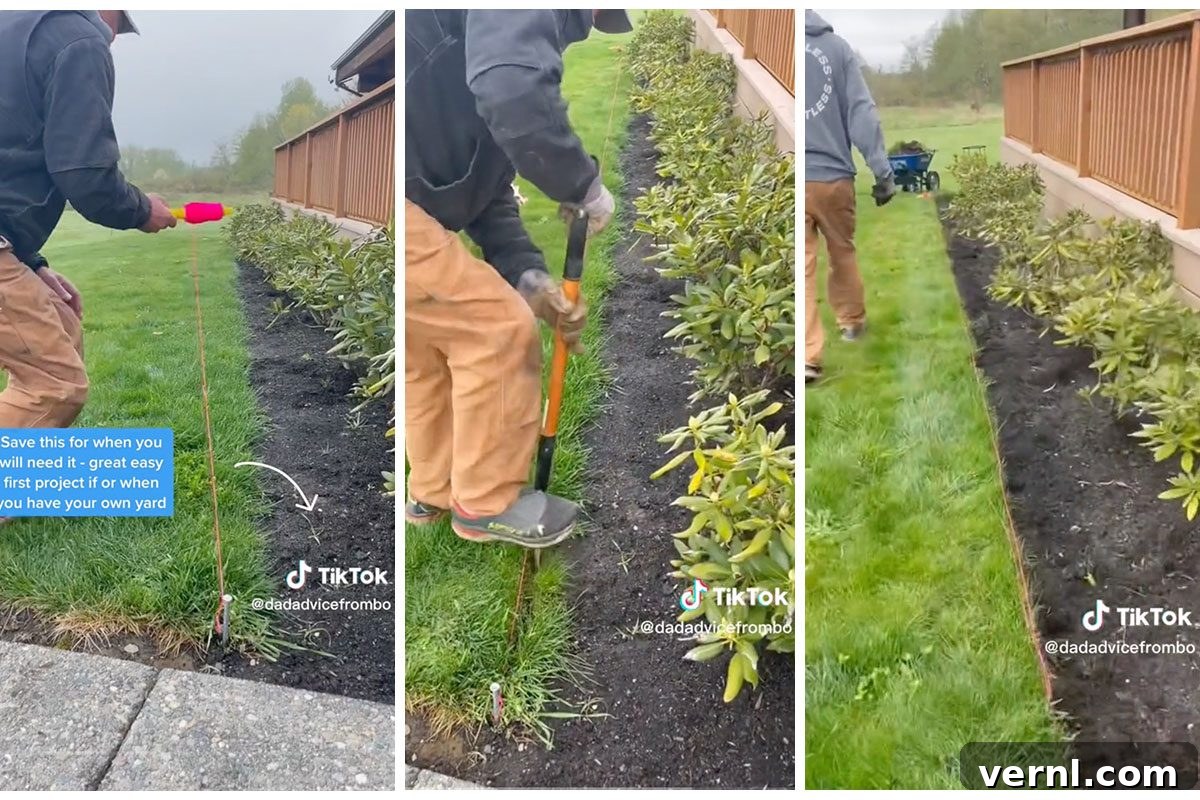
In his concise yet highly informative video, Bo demonstrates how to effectively “straighten out the line between the lawn and his wife’s flower bed.” This technique is a game-changer for anyone struggling with uneven or encroaching grass lines. The beauty of Bo’s method lies in its simplicity and the use of readily available tools, making it accessible to virtually anyone, regardless of their prior landscaping experience. He empowers viewers to take control of their lawn’s appearance, turning a potentially arduous task into a quick and satisfying project. This method is especially appealing for those new to yard work or homeowners looking for efficient ways to maintain their property without investing heavily in complex machinery. It’s a testament to the idea that sometimes the most effective solutions are the simplest ones.
Step-by-Step Guide: How to Edge Your Lawn with a String Line
Bo’s string line method is remarkably effective for creating impeccably straight and clean lawn edges, a technique favored by professionals for its precision. Here’s a detailed breakdown of how you can replicate this method to transform your own lawn.
Essential Tools for Precision Edging
- A Spool of String: Often referred to as masonry string line or builder’s string. Its strength and minimal stretch are ideal for creating a taut, straight guide. You can find high-quality masonry string line on Amazon, designed to withstand outdoor conditions.
- Two Spike Nails or Stakes: These are used to anchor the string line firmly at either end of your desired edge. They need to be robust enough to be driven into the ground without bending.
- Measuring Tape: Crucial for ensuring consistent width and precise alignment, especially when edging along a flower bed or pathway.
- Flathead Shovel: A sharp, flat-bladed shovel is the primary cutting tool. Its straight edge allows for clean, vertical cuts along the string line.
Preparing Your Edging Line
- Measure and Mark: Begin by using your measuring tape to determine the desired distance of your new edge from an existing feature, such as a flower bed or driveway. Consistency is key here. Mark these points clearly on either end of the section you plan to edge.
- Drive the Spike Nails: At your marked points, firmly drive one spike nail into the lawn at each end. Ensure they are secure and upright, as they will bear the tension of the string.
- Set Up the String Line: Attach one end of your string to the first spike nail. Unspool the string across the entire length of the lawn edge you wish to create, extending it to the second spike nail.
- Pull Taut and Secure: This is a critical step. Pull the string as taut as possible. A perfectly taut string ensures a perfectly straight line. Secure the string firmly to the second spike nail. Double-check that there is no slack or bowing in the string line; it should be as straight as a ruler. This taut line will serve as your absolute guide for cutting.
Executing the Cut: Achieving a Razor-Sharp Edge
- Position Your Shovel: With the string line in place, position your flathead shovel just outside the string, ensuring the blade is parallel to it. You want to cut the sod that is *inside* the marked area (i.e., the lawn side of the string).
- Make the Initial Cut: Drive the shovel blade vertically down along the string line. Apply firm pressure with your foot to push the shovel deep into the sod, aiming for a consistent depth throughout the entire length.
- Segment and Remove Sod: After making a series of vertical cuts along the entire string line, you can then make perpendicular cuts at intervals (e.g., every 1-2 feet) to create manageable chunks of sod. Carefully pry up and remove these sections of sod.
- Refine and Clean Up: Once all the sod chunks are removed, step back and admire your perfectly straight edge. You may need to use the shovel to scrape away any remaining loose soil or small grass bits to achieve a super clean finish.
Tips for Success
- Soil Moisture: Edging is easiest when the soil is slightly damp, not waterlogged or bone dry. Damp soil allows the shovel to cut through more easily.
- Consistent Depth: Strive for a uniform depth for your edge. This creates a more professional and consistent look.
- Sharp Shovel: A sharp shovel makes the job significantly easier and results in cleaner cuts. Keep your tools well-maintained.
- Safety First: Always wear sturdy gloves and appropriate footwear. Be mindful of hidden obstacles in the ground, like sprinkler lines or underground cables.
Beyond the String: Exploring Other Effective Lawn Edging Techniques
While the string line method offers unparalleled precision, it’s just one of many techniques available for achieving crisp lawn edges. Depending on the scale of your project, the type of soil, and your personal preference, other tools and methods might be more suitable or complement your string-line work. Understanding these alternatives can help you choose the best approach for your specific lawn care needs.
Manual Edgers: Classic and Controlled
Manual edgers are timeless tools that offer excellent control for detailed work. The most common types include:
- Half-Moon Edgers: These resemble a half-moon shaped spade on a long handle. They are pushed into the ground along the desired edge, creating a clean, crisp cut. They are fantastic for shaping curves and maintaining existing edges. The effort is manual, but the precision is high.
- Stick Edgers (Rotary Edgers): Featuring a wheel with a cutting blade that rotates as you push it, these edgers are good for lighter edging tasks and maintaining previously cut lines. They require less brute force than a half-moon edger but are less effective for creating new, deep edges in tough sod.
Both manual options are quiet, eco-friendly, and perfect for smaller yards or detailed work around delicate plantings.
Power Edgers: Efficiency and Speed
For larger properties or those who prefer motorized assistance, power edgers offer significant advantages in terms of speed and ease of use. They come in various forms:
- Gas-Powered Edgers: These are robust machines, ideal for heavy-duty edging and tackling tough, overgrown areas. They offer excellent power and can make quick work of long stretches of lawn. However, they are louder, require fuel, and need more maintenance.
- Electric Edgers (Corded and Cordless): Electric models are quieter, lighter, and easier to start than their gas counterparts. Corded versions offer continuous power but limit your reach, while cordless battery-powered models provide freedom of movement but have limited runtimes. They are well-suited for medium-sized yards and regular maintenance.
Power edgers deliver consistent results with less physical effort, making them a popular choice for efficiency-minded homeowners.
String Trimmers with Edging Attachments: Versatility for Smaller Yards
Many modern string trimmers (also known as weed whackers) come with a rotating head that can be adjusted to a vertical position for edging. Some even have wheels or guide attachments to help maintain a steady depth and straight line.
- Advantages: This method offers excellent versatility, as you can use one tool for both trimming and edging. It’s particularly useful for smaller yards, around obstacles, or for quickly cleaning up existing edges.
- Considerations: Achieving a perfectly straight and deep edge with a string trimmer can be challenging, requiring a steady hand and practice. It’s often best for maintenance rather than establishing a brand-new, deep edge.
The 2×6 Method: A Simple Alternative
As an alternative to using string, some homeowners opt for a rigid guide like a 2-by-6 piece of lumber. This technique, similar in principle to the string line, involves laying the straight edge of the lumber along your desired path. You can then use your flathead shovel or a specialized lawn edger to cut directly along the side of the board. This method is especially effective for creating long, straight lines quickly. While less flexible for intricate curves than a string line, it provides a solid, immovable guide, which can be advantageous for ensuring unwavering straightness. It’s an excellent option if you’d rather not purchase more specialized lawn equipment like spike nails and masonry string, leveraging readily available construction materials instead. Learn more about this practical guide for edging your lawn here.
Elevating Your Landscape: Choosing and Installing Decorative Edging Borders
Once you’ve established those perfectly crisp lawn edges, taking the next step to install decorative edging borders can truly transform your landscape. These borders not only enhance aesthetics but also serve practical purposes, creating a more defined and easily maintainable garden. They act as a more permanent barrier than a simple cut edge, preventing grass encroachment and containing mulch or gravel within garden beds. We love these attractive lawn edging borders that delineate your lawn and garden using materials like stone, brick, or metal.
Stone and Brick Edging: Rustic Charm and Durability
Stone and brick offer a classic, timeless look that integrates beautifully into various garden styles. Their natural textures and earthy tones provide a warm, inviting feel. Installation involves digging a shallow trench, leveling the base with sand or gravel, and then carefully laying the stones or bricks. Mortar can be used for a more permanent installation, especially for taller borders or areas prone to shifting. These materials are incredibly durable and can last for decades with minimal maintenance, although weeds can sometimes grow between the individual pieces if not properly installed.
Metal Edging: Sleek, Modern, and Long-Lasting
Metal edging, typically made from steel (including corrugated options) or aluminum, provides a sleek, contemporary look. It’s highly durable, resistant to rust (especially aluminum and galvanized steel), and virtually invisible once installed, allowing your plants and lawn to be the focal point. Metal edging is excellent for creating clean, straight lines or gentle curves. Installation usually involves hammering the flexible strips into the ground, ensuring the top edge is flush with the lawn or slightly above it. It’s particularly effective at preventing grass roots from spreading into garden beds.
Plastic and Rubber Edging: Economical and Flexible
For those seeking a more budget-friendly and easy-to-install option, plastic and rubber edgings are excellent choices. They are highly flexible, making them ideal for winding pathways and intricate garden shapes. These materials are lightweight, often come in rolls, and can be cut to size with ease. Installation typically involves simply unrolling them into a shallow trench and securing them with stakes. While they may not offer the same high-end aesthetic or durability as stone or metal, they are effective at defining boundaries and containing mulch, and they are a great starting point for DIY landscapers.
Edging for Purpose: Beyond Aesthetics
Decorative edging borders serve multiple functional roles:
- Weed Control: They create a physical barrier that helps prevent weeds and grass from migrating into your garden beds.
- Material Containment: Borders keep mulch, gravel, or decorative stones neatly within their designated areas, preventing them from spilling onto your lawn or pathways.
- Root Barriers: Deeper borders can act as root barriers, controlling the spread of aggressive plants or tree roots.
- Defined Pathways: They clearly delineate walkways and driveways, guiding foot traffic and enhancing safety.
Maintaining Your Pristine Edges: A Schedule for Lasting Beauty
Establishing clean lawn edges is the first step, but maintaining them is key to ensuring your yard always looks its best. The frequency of re-edging largely depends on the growth rate of your grass and the type of border you have. For a consistently sharp look, a light re-edge every 4-6 weeks during the growing season is often sufficient. If you have permanent decorative borders like stone or metal, maintenance primarily involves keeping them free of debris and ensuring grass doesn’t grow over them. For natural cut edges, a quick pass with a manual edger or even your flathead shovel can redefine the line with minimal effort.
Tools for maintenance can include a half-moon edger for quick touch-ups, a string trimmer with an edging function, or simply reapplying the string line method for a complete refresh. Regular maintenance prevents edges from becoming overgrown, which can make the task of re-establishing them much more laborious. By incorporating edging into your routine lawn care schedule, you’ll find that the effort required is minimal, yet the impact on your home’s aesthetic appeal is profound and long-lasting.
Conclusion: Your Path to a Picture-Perfect Lawn
Transforming your lawn from ordinary to extraordinary doesn’t require a complete overhaul or a team of professional landscapers. Often, it’s the attention to simple yet impactful details, like precise lawn edging, that makes all the difference. Techniques like the ingenious string line method shared by DadAdviceFromBo demystify what might seem like a complex task, making a professional-looking finish accessible to every homeowner. Whether you opt for the DIY precision of a string and shovel, the efficiency of power edgers, or the lasting elegance of decorative borders, the benefits of well-defined edges are undeniable: enhanced curb appeal, easier maintenance, and a distinct, organized garden space.
We encourage you to experiment with these methods, find what works best for your yard, and discover the satisfaction of creating a truly picture-perfect landscape. A meticulously edged lawn not only elevates the beauty of your home but also reflects the care and pride you take in your outdoor environment. So, grab your tools, embrace the simple elegance of a straight line, and embark on your journey to a beautifully defined yard that will be the envy of the neighborhood.