Unlock Your Bedroom’s Potential: The Ultimate Guide to Dressers and Smart Storage Solutions
Did you know that the humble dresser, a ubiquitous staple in bedrooms worldwide, boasts a rich and surprising history? Far from its current role as a repository for folded garments, these versatile pieces of furniture originated in 16th-century England, serving a much different purpose. Back then, what we now call dressers were sturdy wooden sideboards, often equipped with practical drawers. Their primary function was not for linens or loungewear, but for the meticulous preparation, or “dressing,” of meats before they graced the dining table. It wasn’t until dressers became common in American households that some began to migrate from the bustling kitchen to the quiet sanctuary of the bedroom, where they gradually evolved into their current form, primarily used to store clothes.
Today, the dresser remains an indispensable piece of bedroom furniture, offering both functional storage and an opportunity to enhance your room’s aesthetic. However, with countless styles, sizes, and materials available, choosing the right one can feel daunting. This comprehensive guide will walk you through everything you need to know about dressers, from their defining characteristics to innovative alternatives, ensuring you make an informed decision for your home.
What Exactly is a Dresser? Defining Your Bedroom’s Core Storage Unit
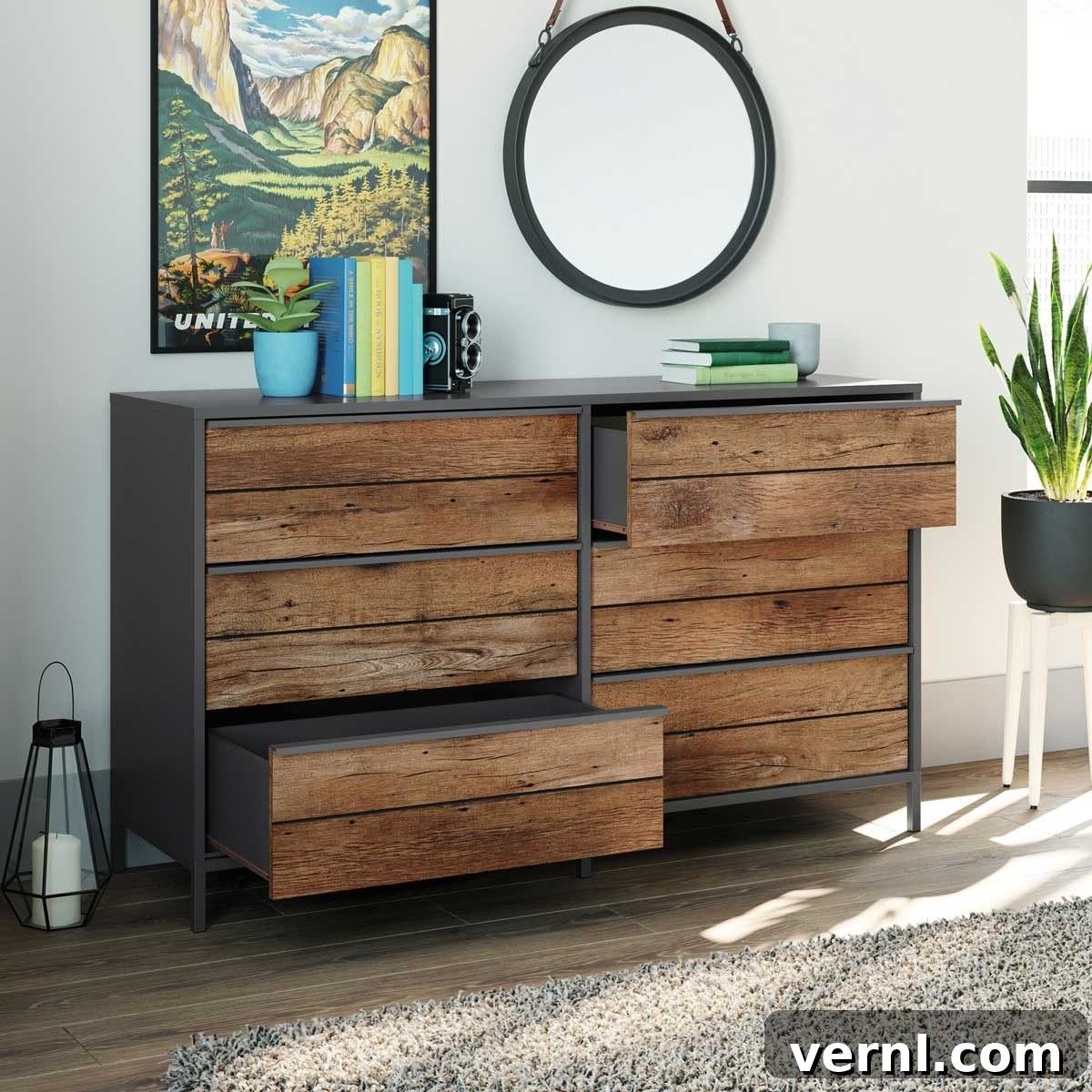
At its heart, a dresser—sometimes referred to as a vanity or a dressing table when paired with a mirror—is a low, wide piece of furniture specifically designed with drawers for storing clothing and personal items. Its defining characteristics set it apart from other bedroom furnishings. Typically, a dresser will feature a series of drawers that span its entire width, varying in configuration to suit different storage needs. You might find models with two to four large drawers, perfect for bulky items, or those with two or three rows of smaller drawers for categorized storage. Some popular designs combine these, offering smaller drawers across the top for accessories and larger ones below for apparel.
Beyond its drawers, the flat top surface of a dresser serves as a versatile display area. This coveted space is ideal for showcasing decorative elements such as scented candles, cherished framed photos, or other sentimental keepsakes. It’s also a convenient spot for frequently used personal items like jewelry, perfume, and various accessories, keeping them within easy reach. Many dressers feature an attached mirror, which not only aids in the process of getting dressed but also gives the piece its more modern interpretation as a “dressing table” or “vanity.” This combination of storage and reflective surface makes the dresser a highly functional centerpiece in any bedroom.
Dresser vs. Chest of Drawers: Understanding the Distinction
It’s common to confuse a dresser with a chest of drawers, also known as a bureau. While both offer drawer storage, they differ significantly in their dimensions and typical placement. A chest of drawers is characteristically tall—often chest-height or higher—and narrow. Its vertical orientation means it takes up less floor space, making it an excellent choice for smaller bedrooms. Unlike a traditional dresser, a chest of drawers typically does not feature an attached mirror. An antiques dealer might even refer to an older, taller chest of drawers as a chiffonier, especially if it’s a slender, elegant piece often used for storing linens or delicate items. Understanding this distinction is crucial when planning your bedroom layout and considering your specific storage requirements.
The Unique Charm of the Chifferobe and Armoire
Adding another layer to bedroom storage solutions is the chifferobe, a fascinating hybrid piece that combines the best aspects of a wardrobe (or armoire) and a chest of drawers. This tall furnishing is ingeniously divided: one half contains a series of drawers for folded items, while the other half offers dedicated space for hanging clothes. The chifferobe is an exceptional choice for those who need a comprehensive storage solution but might not have room for both a standalone dresser and a separate closet or wardrobe. Similarly, an armoire, while typically focusing more on hanging space, often includes integrated drawers or shelving, acting as a complete wardrobe system, particularly useful in bedrooms lacking built-in closets. These specialized pieces cater to diverse storage preferences, ensuring every garment has its designated spot.
The Indispensable Role of Dressers in Modern Bedrooms
With their characteristically wide and deep drawers—typically ranging from 16 to 22 inches in depth—dressers are optimally designed for the efficient storage of folded clothing. This makes them ideal for a variety of garments that don’t require hanging and are less prone to wrinkling. Think casual wear like jeans, sweatpants, t-shirts, and sweatshirts, as well as pajamas, athletic wear, and bulkier knitwear. The expansive nature of dresser drawers allows for organized stacking, making it easy to see and access your entire wardrobe.
Many modern dressers feature a thoughtful design that includes smaller drawers on top and progressively larger ones towards the bottom. This tiered approach lends itself perfectly to systematic organization. Smaller items such as underwear, socks, hosiery, and delicate accessories can be neatly housed in the top drawers, ensuring they are easily accessible and don’t get lost amidst larger garments. Conversely, the larger, deeper drawers at the bottom are perfect for bulkier clothing like sweaters, blankets, or even seasonal items that are rotated throughout the year.
The emphasis on organization in bedrooms has grown significantly, particularly with the widespread popularity of Marie Kondo’s acclaimed tips for organizing and decluttering. More and more people are adopting meticulous folding techniques and storage strategies, transforming their dressers into paragons of neatness and order. Clothes are often folded vertically and stacked with military precision, maximizing space and allowing for a clear visual inventory of contents. This systematic approach not only keeps the bedroom tidy but also simplifies the daily routine of choosing outfits, demonstrating the dresser’s pivotal role in creating a harmonious and functional living space. Beyond clothing, dressers can also store linens, towels, documents, or even children’s toys, highlighting their incredible versatility.
Exploring Dresser Styles and Materials: A Blend of Form and Function
The evolution of dresser styles and materials reflects centuries of changing tastes and technological advancements. The earliest dressers, as we’ve noted, were predominantly crafted from solid wood. Their design and embellishments—ranging from plain and purely functional to intricately decorative and elaborate—were often a direct reflection of the owner’s economic status and social standing. In contemporary homes, while the core emphasis remains on maximizing storage space and ensuring optimal functionality, the aesthetic range of dressers has broadened dramatically. Today, you can find a dresser to complement virtually any interior design scheme, from the ornate charm of traditional Colonial-style pieces to the minimalist elegance of sleek and modern designs.
A Spectrum of Dresser Styles
The diversity in dresser styles ensures there’s a perfect match for every bedroom’s personality.
- Traditional Styles: These often draw inspiration from historical periods, featuring intricate carvings, ornate hardware, and classic silhouettes. Examples include Colonial, French Country, Victorian, and Mission styles, typically crafted from rich, solid woods with elegant finishes. They impart a sense of timeless sophistication and warmth.
- Modern Styles: Embracing clean lines, geometric shapes, and a focus on functionality, modern dressers are characterized by their simplicity and often feature smooth, unadorned surfaces. Mid-century modern, minimalist, and Scandinavian designs fall into this category, frequently incorporating elements like tapered legs and subtle hardware.
- Contemporary Styles: Constantly evolving, contemporary dressers reflect current trends in interior design. They might combine elements from various styles, often featuring mixed materials, bold colors, or unique textural elements, offering a fresh and current aesthetic.
- Rustic and Farmhouse Styles: Characterized by distressed finishes, natural wood grains, and sturdy construction, these dressers evoke a sense of warmth, comfort, and country charm. They often feature simple, robust hardware and a handcrafted feel.
- Industrial Styles: With a focus on raw materials and utilitarian design, industrial dressers often incorporate elements of metal alongside wood, featuring exposed hardware, rugged textures, and a no-nonsense aesthetic that adds an edgy, urban feel to a space.
Common Materials and Finishes for Dressers
While solid wood remains a primary and highly coveted material for dressers, the range of options has expanded significantly to cater to different budgets and aesthetic preferences.
- Solid Wood: Prized for its durability, natural beauty, and potential for heirloom quality, solid wood dressers are a timeless investment. Common types include oak, maple, cherry, pine, and mahogany, each offering distinct grain patterns and color variations. Solid wood can be left in its natural state, simply stained and sealed to enhance its inherent beauty, or painted in a myriad of colors to match the specific decor of the room, allowing for extensive customization.
- Engineered Wood: In the 1950s and ’60s, a new wave of furniture, including bedroom dressers, began appearing on the market made from particleboard. Today, materials like laminated particleboard, MDF (Medium-Density Fiberboard), and plywood are common for dressers and other bedroom furnishings. These engineered woods are popular for several compelling reasons: they are generally more inexpensive than solid wood, easily assembled by the consumer, and available in a vast array of colors, finishes, and veneers. Advancements in manufacturing mean that many engineered wood dressers can closely mimic the look and feel of solid wood, offering a cost-effective yet stylish solution.
- Other Materials: Beyond wood, dressers may incorporate other materials like metal accents for an industrial or contemporary look, glass tops for a touch of elegance and protection, or even upholstered fronts for a luxurious feel. The choice of hardware—from polished brass knobs to sleek, brushed nickel pulls—also plays a significant role in defining a dresser’s overall style and can be easily updated to refresh its appearance.
Choosing the Right Size: A Guide to Dresser Dimensions
Selecting the appropriate size for your new bedroom dresser is paramount for both functionality and maintaining the aesthetic balance of your room. The first and most crucial step is to precisely measure the space where the dresser will be placed. This isn’t just about width and height; it’s equally important to consider the dresser’s depth. A dresser that protrudes too far into the room can disrupt the bedroom’s traffic flow, making it difficult to move around comfortably or to open closet doors or other furniture. Always ensure there’s ample clearance not only in front of the dresser for opening drawers but also around it for ease of movement.
If you are fortunate enough not to be constrained by space, your next consideration should be the volume of items—whether clothing, accessories, or other personal belongings—that needs to be accommodated within the dresser. Take an honest inventory of your current wardrobe and storage needs. Do you have many bulky sweaters, or primarily lighter garments? Do you need space for bed linens, towels, or even off-season clothing? It’s always a wise strategy to add a little extra room for potential wardrobe growth. Anticipating future needs ensures that your dresser remains a functional and sufficient storage solution for years to come, preventing clutter before it even begins. Remember to consider not just the physical dimensions, but also how the dresser’s scale will interact with other furniture pieces in the room, creating a cohesive and harmonious bedroom environment.
Innovative Alternatives to Traditional Bedroom Dressers
While a traditional dresser is an excellent storage solution, sometimes style preferences, unique room layouts, or limited floor space might prohibit its inclusion. Fortunately, there are many clever and aesthetically pleasing alternatives that can provide similar storage capabilities without compromising on design or functionality.
- A Closet Organizer: Maximizing Vertical Space
Even a small closet can be transformed into a highly efficient storage hub, performing double-duty as a dresser with the right organizational system. Instead of simply hanging clothes, integrate shelves and other components tailored to your needs. You can install custom shelving units for folded items, add pull-out baskets for smaller garments, or stack clear containers. For a quicker solution, consider buying readymade closet organizer systems that are often adjustable and easy to assemble. For the DIY enthusiast, converting a closet into a personalized dresser and wardrobe system can be a rewarding project, allowing for bespoke storage that perfectly fits your space and lifestyle. This approach effectively frees up floor space in the bedroom, making the room feel larger and less cluttered. - A Storage Bed: Under-the-Bed Solutions
Harnessing the often-underutilized space beneath your bed is an ingenious way to create significant storage in a small room. A storage bed integrates drawers or compartments directly into its frame, offering discreet and accessible storage without consuming additional floor space. You can choose to buy a bed specifically designed with integrated drawers or, for a more custom solution, build a bed with storage drawers or bins underneath. These drawers are perfect for storing seasonal clothing, extra linens, shoes, or even books and magazines, keeping them neatly tucked away yet easily retrievable. Platform beds with lift-up mechanisms that reveal a large storage cavity are another popular option for maximizing under-bed capacity. - Over-Bed Storage: Utilizing Wall Space
When floor space is at a premium, looking upwards is key. Maximizing your bedroom’s vertical wall space can dramatically increase storage capacity. Swapping out a bulky dresser for an elegant and practical shelf unit installed directly above the bed is a smart design choice. These over-bed shelving units can range from simple open shelves for display and light storage to more elaborate built-in cabinetry that provides enclosed compartments for clothes and other items. This strategy not only offers significant storage but also creates a striking focal point in the room, often enhancing the architectural interest. It’s an ideal solution for those who want to keep the floor clear for a more open and expansive feel in their bedroom. - Standalone Wardrobes or Armoires: Complete Garment Care
For bedrooms that lack adequate closet space, a standalone wardrobe or armoire serves as an exceptional alternative to a dresser. These tall, enclosed units typically offer a combination of hanging space, shelves, and often integrated drawers, providing a complete solution for both hanging and folded garments. Modern armoires come in a vast array of styles, from traditional wooden pieces to sleek, contemporary designs with mirrored fronts. They are particularly beneficial for storing delicate items that need to be hung, such as dresses, suits, and jackets, while still providing ample room for folded clothing in their interior compartments. A well-chosen armoire can be a significant design statement as well as a practical storage solution.
In conclusion, the dresser has evolved significantly from its 16th-century kitchen origins to become an indispensable component of modern bedroom furnishing. Whether you opt for a classic wide dresser, a space-saving chest of drawers, or an innovative alternative like a storage bed or closet organizer, understanding your needs and available space is key. By making thoughtful choices regarding style, material, and size, you can transform your bedroom into a highly organized, functional, and aesthetically pleasing sanctuary, perfectly tailored to your lifestyle.