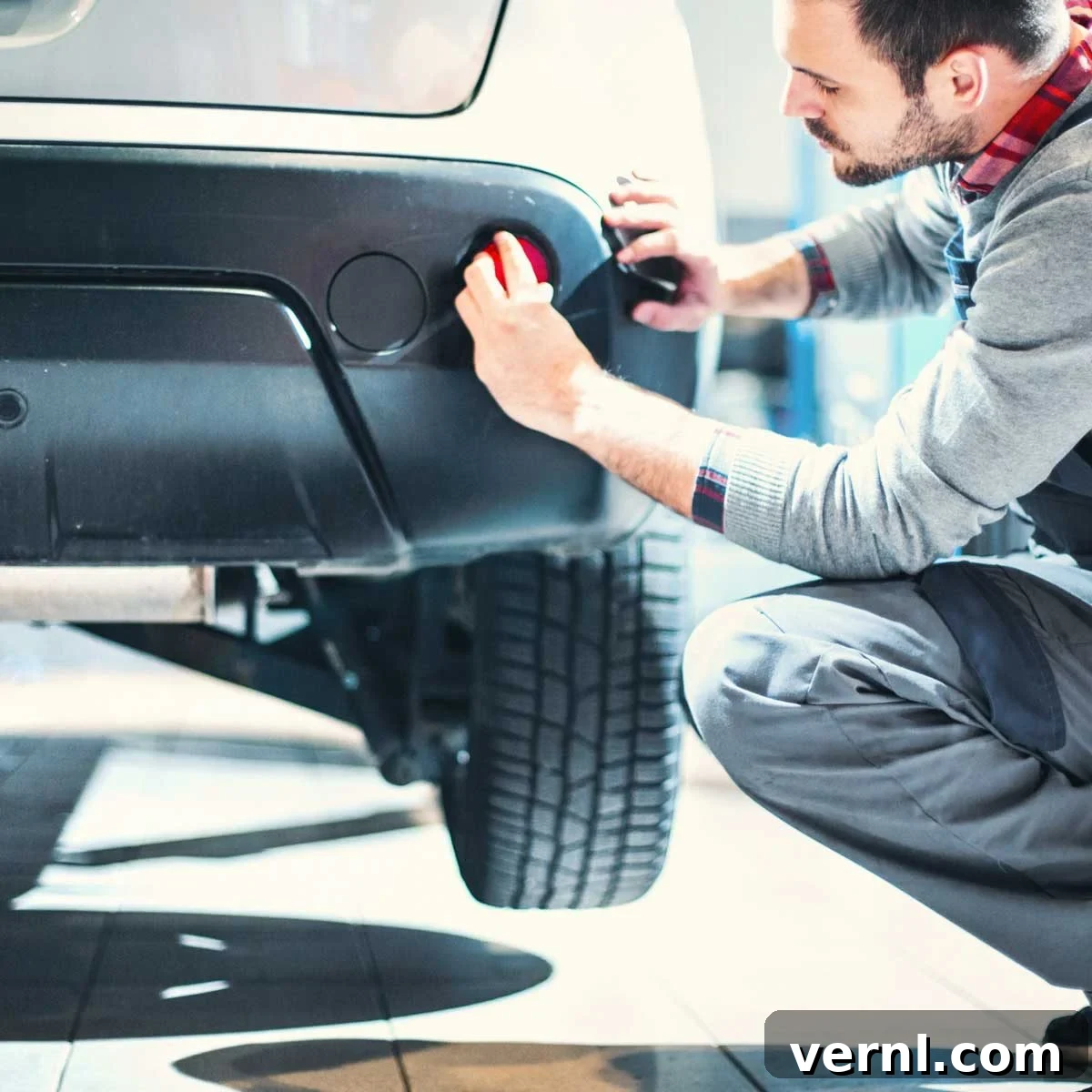
If you’ve owned or driven a car, you’re undoubtedly familiar with the basic concept of a bumper and its location on a vehicle. However, what appears to be a simple protective strip on the front and rear of your car is, in fact, a complex system engineered for safety and impact absorption. Modern car bumpers are sophisticated components designed to significantly mitigate damage during low-speed collisions and play a crucial role in overall vehicle safety.
Car bumpers made their initial appearance consistently on vehicles in the 1910s, primarily as decorative elements. It wasn’t until 1972 that they were officially mandated on cars in the United States, specifically to protect passengers and reduce repair costs from minor impacts. This legislative move marked a pivotal shift in how bumpers were perceived and designed, transitioning them from mere styling features to vital safety mechanisms.
“One interesting fact about bumpers is that they are only required on sedans and coupes,” highlights John Goreham, an automotive expert at Car Talk. “The Insurance Institute for Highway Safety (IIHS) has been advocating for years to NHTSA (National Highway Traffic Safety Administration) to implement a sensible change to this regulation, but without success. SUVs and trucks are currently exempt due to their classification for off-road usage and higher ground clearance. The bumper-like structures they do have are often primarily decorative and designed to enhance aerodynamics, rather than for robust impact protection.” This exemption often leads to higher repair costs for these vehicle types in low-speed accidents.
To gain a deeper understanding of how car bumpers function, their historical evolution, various types, and the essential processes of repair or replacement, continue reading.
What Is a Car Bumper and How Does It Work?
At its core, a car bumper consists of protruding shrouds, often made of plastic or metal, known as bumper covers, which encase energy-absorbing materials. Their primary objective is to absorb kinetic energy from impacts to the front and rear of vehicles, thereby minimizing structural damage during low-speed collisions. This protective system is strategically positioned to be the first point of contact in a minor accident, safeguarding more critical and costly components of the vehicle.
“The original design philosophy behind bumpers was that they should be capable of handling low-speed parking bumps without incurring any damage,” explains Goreham. “However, early regulatory standards allowed for considerable variation in bumper height across different vehicle models. This mismatch often rendered them largely ineffective for their intended purpose of preventing damage in minor fender-benders, as bumpers would frequently override or under-ride each other.”
Today, the standard passenger vehicle bumper is a sophisticated assembly. Beneath its outer plastic cover, you’ll find a rigid reinforcing bar, typically made of steel, aluminum, or composite materials. This bar is backed by sections of compressible foam or plastic, such as expanded polypropylene (EPP) or polypropylene honeycomb structures. In the United States, passenger car bumpers are legally mandated to absorb a five mph impact from another vehicle with no damage to the car body itself. The carefully engineered foam or plastic components are crucial to achieving this standard. Upon impact, this material compresses between the reinforcing bar and the vehicle’s underlying frame, dissipating energy and preventing it from reaching the more vulnerable parts of the car.
Beyond this initial layer of protection, bumpers are integral to a vehicle’s broader passive safety systems. “Modern cars are meticulously designed with a crumple zone, which refers to specific areas in the front and back of your car engineered to deform and crumple in collisions,” states Duane “Doc” Watson, a technical trainer at Bosch Mobility Aftermarket. “This controlled crumpling effectively absorbs and redirects energy from impacts, significantly enhancing passenger safety within the cabin. Your front and rear bumpers are fundamental components of this crumple zone, working in concert with other structural elements to soften impacts and protect occupants.”
Furthermore, contemporary bumpers are not merely passive safety devices. Many now house advanced driver-assistance system (ADAS) sensors, including radar for adaptive cruise control, ultrasonic sensors for parking assistance, and cameras for blind-spot monitoring or frontal collision warning systems. This integration makes them even more crucial and complex, with any damage potentially impacting not just physical safety but also the functionality of these high-tech systems.
Bumper History and Evolution: From Decoration to High-Tech Safety
The journey of the car bumper has been extensive and transformative. From their earliest rudimentary appearances as mere decorations on the earliest automobiles in the late 1800s, car bumpers have undergone profound changes, primarily driven by advancements in technology, evolving safety standards, and shifts in vehicle design philosophy. Initially, they were often little more than metal strips, offering minimal real protection.
The 1970s marked a significant turning point with the implementation of federal mandates for bumper standards, largely in response to consumer demand for increased safety and reduced repair costs for minor accidents. These regulations, particularly in the U.S., stipulated that bumpers must withstand impacts up to 5 mph without damage to safety-related components. This era saw bumpers becoming larger and more robust, often featuring prominent, energy-absorbing hydraulic or spring-loaded mounts, which significantly protruded from the vehicle body.
However, despite the increased protection offered by these ‘5-mph bumpers’, their reign was relatively short-lived. By the 1980s, bumper protection standards began to decrease. Vehicle manufacturers successfully lobbied for lighter-weight designs, citing the need to improve fuel efficiency in response to rising oil prices and tightening emissions regulations. Aesthetical considerations also played a role; many consumers and designers perceived the large, protruding bumpers as clumsy and detracted from the sleek lines of contemporary vehicles. This led to a rollback of some stringent bumper requirements, resulting in bumpers that were more integrated into the vehicle’s bodywork but often offered less physical protection against low-speed impacts than their 1970s predecessors.
Today’s vehicles are not legally required to have bumpers that protrude as prominently as they once did. Instead, modern bumper design prioritizes seamless integration with the vehicle’s overall aesthetic and aerodynamic profile, while simultaneously incorporating sophisticated internal structures and materials for energy absorption. While the visible bumper might appear less robust, the internal engineering, combined with advanced crumple zones and integrated sensor technology, makes today’s vehicles, and their bumpers, significantly safer in a broader range of collision scenarios than ever before.
Diverse Types of Car Bumpers
While U.S. law dictates general bumper height and impact resistance guidelines for passenger cars, the automotive market features a wide variety of bumper designs, each tailored to specific vehicle types, functionalities, and aesthetic preferences. The diversity goes far beyond a single standard. Here are some of the basic and more specialized types of car bumpers you might encounter:
- Standard Bumper: This is the most common type found on the vast majority of passenger vehicles, including sedans, hatchbacks, and many crossovers. A standard bumper typically features a paint-matched plastic cover that seamlessly integrates with the vehicle’s bodywork. Beneath this cover lies the crucial energy-absorbing mechanisms, including a reinforcing bar and compressible foam or plastic. These bumpers are designed for aesthetic appeal and to meet federal safety standards for low-speed impacts, minimizing damage during everyday driving scenarios.
- Step Bumper: Predominantly seen on SUVs, pickup trucks, and some utility-focused vehicles, a step bumper is characterized by a step-shaped cutout or indentation in its center, usually positioned just below the license plate. This design provides a convenient, sturdy step for accessing the truck bed or roof rack. These bumpers are often constructed from steel with a chrome or painted finish and are built to be more robust than standard passenger car bumpers. They frequently include integrated holes or mounting points for the installation of trailer hitches, enhancing their utility for towing and hauling.
- Cowboy Bumper (or Chrome Bumper): Often referred to as a “cowboy bumper” due to its association with classic, rugged utility vehicles, these are typically tall, heavy-duty bumpers. They are most frequently observed on older model trucks and SUVs. Made from heavy-gauge steel and almost always finished with bright chrome plating, these bumpers are designed for maximum durability and visual prominence. They often feature larger dimensions and a more industrial look, emphasizing strength and the capability to tow heavy trailers or withstand minor impacts with minimal deformation. Their aesthetic is one of robust utility and classic style.
- Tube Bumper: Commonly installed on off-road vehicles like Jeeps, custom trucks, and lifted 4x4s, tube bumpers represent a departure from the traditional plastic-shroud design. Instead, they rely on an exposed frame of heavy-duty steel tubing (often DOM or “drawn over mandrel” tubing for superior strength) to lessen collision damage. This design provides superior approach and departure angles for off-road obstacles, as well as robust protection against impacts with rocks, trees, and other challenging terrain features. While offering excellent off-road performance, their exposed metal design can be less forgiving in pedestrian collisions and may require specific modifications to accommodate integrated lighting or winch mounts.
- Bull Bars/Grille Guards: While not a full bumper replacement, these accessories attach to the front of a vehicle (often trucks and SUVs) to provide additional protection to the grille, headlights, and front fascia. They consist of a series of metal tubes and bars and are popular for off-road use or for those seeking extra front-end protection from animal strikes or minor impacts.
Repairing and Replacing Car Bumpers: Safety and Value Considerations
When your vehicle is involved in a collision, even a seemingly minor one, the integrity of your bumper can be compromised. Understanding when to seek professional repair versus attempting a DIY fix is crucial for both safety and the long-term value of your vehicle. If the collision has resulted in damage to the inner structure of your bumper—such as the reinforcing bar, energy-absorbing foam, or underlying mounts—it is imperative to get it replaced by a professional. While full bumper replacements are not inexpensive, ranging from hundreds to thousands of dollars depending on the vehicle and extent of damage, neglecting such repairs poses significant risks. Without the bumper’s full capacity for energy absorption, your vehicle becomes vulnerable to much greater damage and your occupants to more severe injury in the event of a subsequent impact, as the critical crumple zone effectiveness is diminished.
“Damage to your bumper is far more than just a cosmetic issue; it represents a serious structural integrity and safety problem,” cautions Watson. “Moreover, if you choose to neglect repairing a damaged bumper and are involved in another accident, there’s a high probability you will encounter significant insurance complications when attempting to file a claim. Insurers may argue that the pre-existing damage contributed to the extent of the new damage or that the vehicle was not maintained to safe operating standards.”
Beyond safety and insurance implications, a damaged bumper will invariably reduce your vehicle’s resale value by an amount that often exceeds the cost of having it professionally fixed, as Goreham points out. “If you ever anticipate trading in or selling your vehicle, it’s a wise investment to address any bumper damage promptly by heading to a reputable body shop,” he advises. A vehicle with visible damage immediately signals neglect to potential buyers and dealerships, leading to significant deductions in its appraised value.
However, if the damage is confined solely to your bumper cover—such as superficial scratches, minor scuffs, or small punctures that don’t affect the underlying structure or sensors—there are often a few viable DIY options. You can effectively repair your bumper cover’s paint if it’s merely scratched, using touch-up paint kits. For small punctures or dents, you might be able to patch and repaint it using body filler and appropriate automotive paints. If the damage to the cover is too severe to fix cosmetically, such as large cracks or missing pieces, installing a replacement cover is an option. When undertaking DIY repairs, ensure you use materials compatible with your bumper’s plastic type and understand that modern bumpers with integrated sensors (parking sensors, blind-spot monitors, radar) often require professional calibration after any significant repair or replacement to ensure proper functionality.
Frequently Asked Questions About Car Bumpers
Is a bumper the same as a fender?
No, a bumper and a fender are distinct components, though in many modern vehicle designs, they appear to blend seamlessly. Bumpers are located at the direct front and rear extremities of a vehicle, primarily designed to absorb impacts. Fenders, on the other hand, comprise the front and rear side panels that sit over and around your vehicle’s wheels. “Both components are protective, but they serve different functions,” explains Watson. “The fender’s main role is to protect your car’s bodywork from the rocks, gravel, mud, and road debris that your tires kick up while driving, preventing paint chips and corrosion. While a minor side impact might damage a fender, it’s not designed for the same direct impact absorption as a bumper.”
How much does it cost to fix or replace a bumper?
The cost to fix or replace a bumper can vary significantly, depending on several factors, including your car’s make and model, the severity and type of damage, the materials involved (e.g., standard plastic vs. chrome, presence of sensors), and whether you opt for OEM (Original Equipment Manufacturer) or aftermarket parts. Typically, costs can range between $1,000 and $2,000, including parts, labor, and paint matching. “However, it’s important to remember that you may not need a full replacement if the damage is minimal or strictly limited to paint damage,” notes Goreham. Minor repairs like paint touch-ups or small dent removal can be significantly less expensive, often a few hundred dollars. If your bumper integrates complex ADAS sensors, the repair cost can escalate further due to the need for specialized calibration after reinstallation.
Can I drive with a damaged bumper?
While it might seem tempting to delay repairs, driving with a damaged bumper is generally not recommended and can even be illegal in some jurisdictions. Minor cosmetic damage might not impede driving, but if the bumper is cracked, hanging loose, or has sharp edges, it can pose a safety hazard to pedestrians and other vehicles. More importantly, if the internal energy-absorbing structure or critical sensors are damaged, the vehicle’s safety features are compromised. This means the car might not protect you as intended in another collision, and ADAS features like parking assist or adaptive cruise control might malfunction, leading to dangerous situations. It’s always best to have it inspected by a professional as soon as possible.
What are bumper guards?
Bumper guards are protective accessories designed to shield your car’s bumper from minor dings, scratches, and scrapes, often incurred during parking. They typically attach to the outer surface of the bumper and can be made from rubber, plastic, or foam. Some are small, discreet strips, while others are larger, more prominent pads designed to absorb impact. They are particularly popular in urban environments where parking can be tight and low-speed bumps are common. While they offer an extra layer of cosmetic protection, they are not designed to protect against significant collision forces.
About the Automotive Experts
- John Goreham is a distinguished automotive expert affiliated with Car Talk. His extensive background includes hands-on experience within the automotive component industry, providing him with a deep understanding of vehicle mechanics and parts. John is also a graduate of multiple performance driving programs and is an active member of the Society of Automotive Engineers (SAE), reinforcing his profound expertise in the automotive field.
- Duane “Doc” Watson serves as a highly respected technical trainer at Bosch Mobility Aftermarket. With an impressive career spanning over 45 years in automotive repair, Doc has dedicated himself to educating and mentoring thousands of technicians. His outstanding contributions to the industry have been recognized with numerous accolades, including the prestigious Chevrolet Technician of the Year and Buick Service Master of the Year awards, solidifying his reputation as a leading authority in automotive diagnostics and repair.