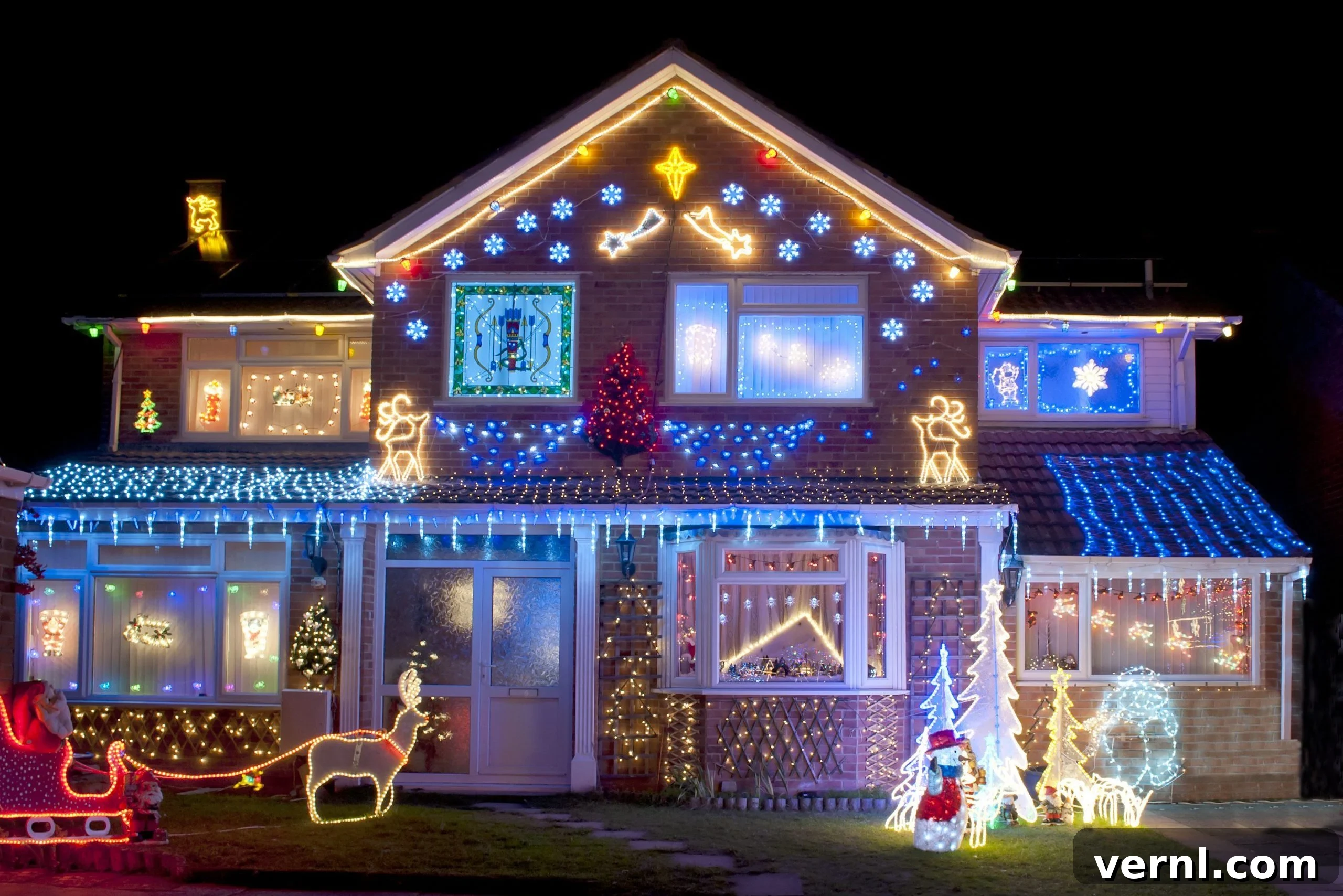
As the vibrant hues of autumn fade, they gracefully usher in a season brimming with festive celebrations. The whimsical charm of jack-o’-lanterns and spooky skeletons gives way to the rustic appeal of corn stalks and hay bales. And then, as the last delicious remnants of Thanksgiving pie are savored, a spectacular transformation begins across neighborhoods: the grand unveiling of Christmas lights. While waiting until after Thanksgiving used to signify major restraint, these days, many homeowners embrace the holiday spirit earlier, eager to illuminate their homes with a dazzling glow.
Whether your approach is a subtle string draped over a potted evergreen or an elaborate, Clark Griswold-esque display that captures the attention of the entire street, the act of putting up Christmas lights is undeniably a cornerstone of holiday tradition. It’s a joyful ritual that instantly immerses us in the festive spirit of the season. However, the thrill of installation often contrasts sharply with the less-than-enthusiastic task of taking them down. This post-holiday chore can feel like a deflating experience, which might explain why so many people procrastinate, leaving their festive glow up long after the season has officially passed—sometimes until they (and their neighbors) can no longer bear the sight.
Most of us can relate to this dilemma, having either been guilty of delaying the takedown ourselves or having observed it in others. I recall a neighbor who famously left their Christmas lights strung up year-round, and I myself once extended the festive period until well into February (a decision that eventually led to a lingering sense of guilt). But beyond personal feelings and anecdotal experiences, what do the experts say? How long is it truly appropriate—and, more importantly, safe—to keep your Christmas lights illuminated?
When Is The Right Time To Take Down Christmas Lights?
While the urge to prolong the holiday cheer is strong, and you’re technically free to leave your lights up as long as you wish (barring any specific city ordinances or HOA rules), etiquette expert and founder of the renowned Protocol School of Texas, Diane Gottsman, offers a more defined and culturally sensitive guideline. Her advice seeks to strike a harmonious balance between embracing the prolonged holiday spirit and maintaining good neighborly relations.
“Lights can come down anytime after Christmas and preferably before Three Kings Day,” Gottsman advises. This significant date, January 6th, marks the Feast of the Epiphany in Christian tradition, symbolizing the official end of the Twelve Days of Christmas. Culturally, this date often serves as a natural and widely accepted transition point, signaling the close of the festive period and the gradual return to everyday routines. Adhering to this timeframe not only respects long-standing traditions but also demonstrates thoughtful consideration for community aesthetics and the collective desire for a fresh start in the new year.
Beyond traditional etiquette, there are also crucial safety regulations that homeowners must consider. The National Fire Protection Association’s (NFPA) National Electric Code (NEC) sets a practical and legally recognized limit for temporary decorative lighting installations. According to the NEC, holiday lights are specifically designed and approved for temporary use and should not remain installed for more than 90 days. This regulation is far from arbitrary; it is firmly rooted in preventing potential hazards that arise from prolonged outdoor exposure and the inherent temporary nature of these electrical installations. The continuous exposure to varying weather conditions, from harsh sun to freezing rain and strong winds, can compromise the integrity of light strands not built for permanent outdoor use.
Understanding these comprehensive guidelines empowers homeowners to make informed and responsible decisions regarding their festive displays. It ensures their holiday decor is not only beautiful and enjoyable but also safe and respectful of community standards. And while we’re discussing unique lighting installations, have you ever wondered if it’s truly safe to hang Christmas lights on palm trees? The principles of safe installation, material suitability, and timely removal apply universally across all types of decorative lighting scenarios.
Why Taking Down Christmas Lights Promptly Is Crucial
While the initial joy and enchantment of holiday lights are universally appreciated, extending their display indefinitely can lead to a cascade of undesirable outcomes. These range from diminished aesthetic appeal and strained neighborly relations to, most critically, serious safety concerns. It’s not merely about adhering to arbitrary rules; it’s about fostering community harmony, maintaining property value, and, above all, safeguarding the well-being of your home and family.
Curb Appeal and Neighborly Relations: Beyond the Festive Glow
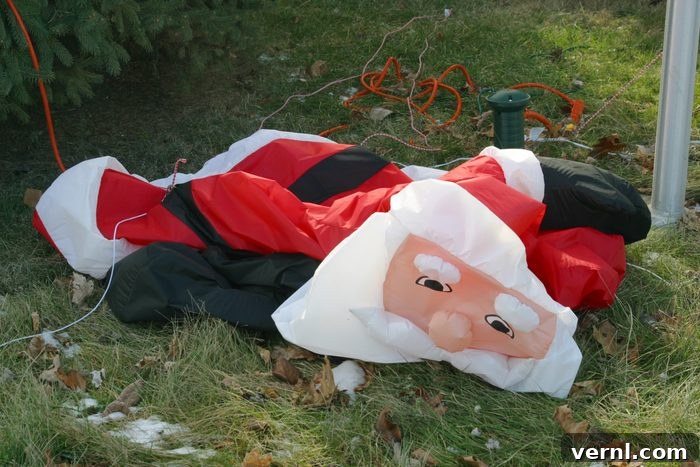
“People who leave their lights up for too long often irritate neighbors who want their neighborhood to look fresh and well-maintained,” Diane Gottsman states with clear conviction. This sentiment resonates deeply within residential communities. A neighborhood dotted with lingering, wilting, or even damaged decorations can quickly lose its inviting appeal, projecting an unfortunate sense of neglect rather than sustained festive cheer. (I can personally attest to having witnessed neighbors whose once-grand inflatable Santas and snowmen remained as sad, deflated puddles on their lawns well into June – a truly disheartening sight that undoubtedly detracts from everyone’s curb appeal and can quietly lower the perceived value of surrounding homes!)
Gottsman further emphasizes that protracted displays can significantly diminish your home’s curb appeal. “Holiday lights are welcome during the season,” she says. “But when you wait too long to take them down, it appears as if you’ve overlooked an important part of the tradition.” This seemingly minor oversight can inadvertently signal a lack of attention to property upkeep, which, over time, can subtly impact property values and the overall perception of care within the community. A well-maintained home, including its seasonal decor, reflects positively on its occupants and the entire neighborhood.
Safety First: The Hidden Dangers of Lingering Lights
Beyond the aesthetic and social considerations, the most compelling and urgent reason to take down your Christmas lights in a timely manner is paramount safety. The NEC’s 90-day rule isn’t concerned with neighborly judgments; its primary purpose is to rigorously prevent fires and mitigate electrical hazards. When people hang Christmas lights, they often employ temporary methods that would be deemed unacceptable for permanent wiring installations – such as stringing them through trees, connecting multiple extension cords in series, and exposing them directly to the unpredictable outdoor elements. These temporary setups are unequivocally not designed for long-term use and, consequently, present escalating risks as time progresses.
- Electrical Degradation and Exposed Wires: Outdoor environments are inherently harsh and unforgiving. Prolonged exposure to relentless sun (UV radiation), rain, snow, ice, and strong winds constantly batters your light strands. This relentless exposure can cause the protective insulation to crack, wires to fray, and critical electrical connections to loosen. Damaged insulation can expose live wires, creating severe shock hazards or leading to dangerous short circuits that are a primary cause of electrical fires.
- Overloaded Circuits: Many elaborate holiday displays rely heavily on a network of extension cords and power strips. If these remain connected and powered for extended periods, they can continuously strain and potentially overload household circuits. This sustained electrical strain significantly increases the risk of overheating within the wiring and outlets, which is a common precursor to electrical fires.
- Increased Fire Risks: The National Fire Protection Association (NFPA) starkly reports that holiday decorations are involved in an estimated 790 home fires per year. While a significant portion of these relates to dry indoor Christmas trees, faulty or degraded outdoor lighting can also be a substantial contributor. Older lights, especially the heat-generating incandescent types, can overheat, and if their compromised wiring comes into contact with dry foliage, wooden structures, or other flammable materials, the risk of ignition rises dramatically.
- Damage from Vegetation Growth: As seasons change, trees and shrubs continue their natural growth cycles. Wires wrapped tightly around branches or embedded within dense foliage can experience immense strain, leading to chafing, tearing, and eventually, the dangerous exposure of electrical components. This also impedes the natural growth and health of the vegetation itself.
- Vulnerability to Animal Damage: Common backyard wildlife such as squirrels, birds, and even rodents are known to chew on electrical wires, particularly those left exposed or accessible. This further compromises the integrity of the light strands, significantly increasing both electrical and fire safety risks.
- Designed for Temporary Use Only: It is crucial to remember that Christmas lights, by their very nature and design, are temporary decorative items. They are not constructed with the same robust, weather-resistant materials, nor do they carry the same rigorous UL listings and longevity expectations as permanent outdoor lighting fixtures. Their components are engineered for a limited, seasonal operational lifespan in outdoor conditions, making long-term exposure ill-advised.
Understanding these critical and often overlooked safety aspects profoundly underscores the importance of adhering to the NEC deadline and the etiquette expert’s advice. Taking down your lights in a timely manner is not merely about aesthetics or tradition; it is a fundamental, proactive step in protecting your home, property, and, most importantly, the loved ones within it. And just as vital as the timely removal of your outdoor lights is knowing when to safely take down your Christmas tree indoors.
How To Take Down Christmas Lights Efficiently and Safely
“There’s always someone who leaves them up too long,” Diane Gottsman perceptively reminds us, and it’s a sentiment we can all relate to, whether we’ve been the culprit or the observer. This year, make a conscious commitment to yourself that you will not be that person. Approaching the task of taking down Christmas lights with a well-thought-out plan not only ensures immediate safety but also strategically sets you up for an effortless, frustration-free re-installation when the next holiday season rolls around. Here are comprehensive, expert-backed ideas for removing and storing your Christmas lights, ensuring you’ll be perfectly prepared when next Thanksgiving (or even Halloween, for those who truly embrace the early festive spirit) arrives.
1. Prioritize Safety Above All Else
Before you even contemplate touching a single strand of lights, remember that electrical decorations, even when unplugged, can pose significant hazards if mishandled. Do not simply start yanking lights off the house or aggressively pulling them from trees. Such rough treatment can easily break fragile glass bulbs, stress the delicate internal wiring, and compromise the structural integrity of the entire string, potentially creating a dangerous fire hazard for future use. The National Fire Protection Association (NFPA) soberly reports that an estimated 790 house fires per year originate from holiday decorations. To meticulously mitigate these risks:
- Unplug Everything: This is the cardinal rule of electrical safety. Absolutely, positively ensure all Christmas lights, extension cords, inflatable decorations, and any associated electrical components are completely disconnected and unplugged from their power sources before you commence any removal activity. Never work with live circuits.
- Practice Impeccable Ladder Safety: If your lights are positioned high up on eaves, roofs, or tall trees, utilizing a sturdy, properly rated ladder is essential. Always practice impeccable ladder safety: ensure the ladder is placed on stable, level ground, fully extended and locked into position, and always maintain three points of contact (two hands and one foot, or one hand and two feet) while ascending, descending, or working from it. Avoid dangerous overreaching, which is a common cause of severe falls. Whenever possible, work with a trusted spotter to stabilize the ladder and provide assistance.
- Wear Appropriate Protective Gear: Donning sturdy work gloves can effectively protect your hands from potential hazards such as sharp wire ends, broken glass shards from damaged bulbs, and general grime or debris.
- Work During Daylight Hours: Optimal visibility is a critical factor for safe and efficient light removal. Working in clear daylight prevents missteps, reduces the chance of accidental damage to the lights or your property, and allows for easier identification of potential hazards.
2. Test All Lights Before Storage
Imagine the immense excitement of the next holiday season, only to discover a frustrating string of dead Christmas lights just as you’re poised to decorate. Avoid this mood-dampening scenario by proactively testing every single light set and all other electric decorations now, *before* meticulously stashing them away for the year. This crucial proactive step saves immense frustration, precious time, and potential repair costs when the holidays inevitably return.
- The Simple Plug-In Test: The most straightforward test is to simply plug in each individual strand to ascertain if it illuminates fully and correctly. Look for any sections that remain dark or appear dim.
- Utilize a Dedicated Light Tester: For more precise and efficient diagnostics, a specialized Christmas light tester is an invaluable tool. These testers can help you quickly find and repair common problems such as individual burnt-out bulbs (which can disable an entire section of older lights), faulty shunts, or frustrating half-illuminated strings. Identify and resolve issues now, so your lights are perfectly ready for the following year.
- Conduct a Visual Inspection for Damage: While testing, meticulously visually inspect the entire length of the wires for any signs of fraying, cracking in the insulation, or dangerously exposed copper. Immediately discard or seek professional repair for any damaged strands, as these compromise safety and pose significant fire and electrical shock risks.
3. Store Neatly and Tangle-Free
Once you’re absolutely certain that your Christmas lights are in impeccably good working order, resist the compelling urge to simply wad them up into a messy ball and haphazardly jam them into a box. That approach is a guaranteed recipe for frustration, hours of untangling knots, and potentially irreparable damage to the lights themselves next year. Strategic, organized storage is paramount for ensuring both the longevity of your decorations and the ease of their future use.
- Wind Around a Spool or Reel:
- DIY Cardboard Spools: Create simple, effective spools from sturdy pieces of cardboard. Cut small notches on the ends to securely anchor and hold the light wires in place as you wind.
- Commercial Light Reels: For a more durable and convenient solution, invest in dedicated plastic light reels. These are specifically designed for efficient light storage and are highly effective at preventing tangles.
- Larger DIY Spools: For very long strands or larger quantities of lights, you can even construct robust spools using dowels, sturdy cardboard tubes, or even pieces of 2×4 lumber.
- Spool Backward for Optimal Convenience: For maximum convenience and efficiency during next year’s installation, begin winding the lights at the non-plug end of the strand. This thoughtful method ensures that when you unspool them next year, the plug end will be immediately accessible and ready to connect to your power source, making the decorating process significantly smoother and faster.
- Protect from Environmental Elements and Pests: Store all spooled and organized lights in airtight plastic containers or robust storage bins. This critical step protects them from accumulating dust, moisture (which can corrode wiring), and pests (such as rodents that are notorious for chewing on electrical wires) which can inflict considerable damage during their off-season storage.
- Choose a Cool, Dry, Climate-Controlled Location: Avoid storing lights in extreme environments such as attics or garages that experience wide temperature fluctuations, excessive heat, or high humidity. These conditions can accelerate the degradation of wiring insulation and plastic components over time. A climate-controlled basement, a dry closet, or an indoor storage unit is an ideal location.
4. Label for Easy Identification
While some decorators revel in the spontaneous creativity of winging their lighting displays each year, for many others, a structured and organized approach saves invaluable time and ensures consistency. If you have specific plans for certain light strands – perhaps a set designated for Santa’s sleigh, a particular tree, a roofline section requiring a specific wattage or length, or a unique flashing pattern – meticulous labeling is your absolute best friend.
- Categorize by Location and Type: Label individual spools, bundles, or smaller containers with their intended placement (e.g., “Front Eaves – Cool White LED,” “Shrubbery – Warm White Incandescent,” “Porch Railing – Multicolor C9”). Also note the type of light (e.g., mini lights, C7, C9, icicle, net lights) and length if relevant.
- Group Themed Displays: If you have cohesive, themed displays or sets of lights that consistently go together (e.g., “Nativity Scene Lights,” “Garage Archway Lights”), group them within a single container to streamline setup.
- Clearly Label the Outside of Bins: Clearly and prominently label the outside of your larger storage bins with a general yet descriptive overview of their contents (e.g., “Outdoor Christmas Lights – Main House Sections,” “Yard Inflatables & Accessory Lights,” “Tree Lights – Front Yard”). Utilize permanent markers and durable, waterproof labels to ensure readability year after year.
5. Responsible Recycling and Disposal
Inevitably, some light strands will reach the end of their functional lifespan, proving irreparable or simply too old to be reliable and energy-efficient. If you discover lights that no longer work and are not worth the effort or cost of fixing, or if you’re upgrading to newer, more energy-efficient LED options, it is absolutely crucial to dispose of them responsibly and environmentally consciously. Simply throwing old lights into the regular household trash contributes to landfill waste and prevents the recovery of valuable materials like copper, plastic, and glass.
- Utilize Specialized Recycling Programs: Many hardware stores, major home improvement centers, and even some charitable organizations organize seasonal recycling programs specifically for old Christmas lights. These programs ensure that the various components are properly sorted, processed, and recycled, minimizing environmental impact.
- Check Local Municipalities for Options: Always make it a priority to check your city and county websites. Local waste management departments are excellent, up-to-date resources for specific recycling options available in your immediate area. Even if your city doesn’t operate a direct recycling program, they should provide comprehensive disposal and recycling information, including designated drop-off locations or special collection events for hazardous or unique waste items.
- Explore Mail-Back Recycling Programs: Some specialized recycling companies offer convenient mail-back programs for holiday lights, often for a minimal fee or even free during specific promotional periods. Researching these options online can provide a hassle-free way to recycle from home.
By diligently following these comprehensive steps, you not only ensure the safe and proper takedown of your Christmas lights but also transform a potentially tedious chore into an organized, efficient, and even satisfying process. This proactive approach preserves the magic of your decorations and sets the stage for future holiday decorating to be a joyous, tangle-free, and truly effortless experience.
Preserving the Magic Until Next Year
The enchanting glow of Christmas lights is a cherished and universal symbol of the holiday season, capable of bringing warmth, joy, and a profound sense of wonder to our homes and communities. While the temptation to extend that festive sparkle far beyond the traditional season is entirely understandable, comprehending and adhering to both expert advice and critical safety guidelines is absolutely paramount. By committing to take down your lights promptly—ideally by Three Kings Day (January 6th), or at the very least, within the 90-day temporary installation limit stipulated by the National Electric Code—you make a significant contribution to the aesthetic appeal of your neighborhood, proactively protect your property from potential electrical and fire hazards, and impressively extend the functional lifespan of your cherished decorations.
Embracing a systematic and thoughtful approach to the removal, meticulous testing, and organized storage of your lights ensures that when the next eagerly anticipated holiday season arrives, your decorations will be ready to shine brightly once more, perfectly preserved, tangle-free, and safely stored. This proactive effort not only simplifies and streamlines future decorating endeavors but also reinforces the special, temporary nature of holiday lights, making their annual reappearance all the more anticipated and truly magical. So, this year, let’s collectively make the post-holiday cleanup a joyful, efficient, and responsible process, preserving the true spirit of the season until it’s time to light up the world with cheer again.