Gutter Guards: A Homeowner’s Guide to Protecting Your Gutters and Home
Moving to a new home is always an adventure, and sometimes, the smallest details make the biggest difference. When I moved from Minnesota to Texas, one of the unexpected joys was the presence of gutter guards. My old home had gutters that were, to put it mildly, a constant source of worry, especially during the spring melt and fall leaf drop. So, finding new gutters with matching gutter guards was a welcome surprise.
Now, after a few years, my appreciation for these seemingly simple additions has only grown. They’re incredibly effective! I’ve never had to worry about them, and they consistently keep my gutters clear, even during the frequent, intense Texas thunderstorms. This experience sparked my interest in learning more, so I consulted with Chris Counahan, a LeafFilter expert, to provide you with a comprehensive guide to gutter guards.
What Are Gutter Guards, and Why Do You Need Them?
Gutter guards, also known as gutter protection systems, are designed to prevent leaves, twigs, and other debris from clogging your gutters. They work by allowing rainwater and snowmelt to flow freely into the gutter while keeping solid materials out. This simple concept delivers significant benefits.
According to Chris Counahan, keeping your gutters clear is essential to prevent water damage. “Clogged gutters are a primary cause of water damage, and with gutter guards, water can’t sit in gutters or overflow,” he explains. Keeping your gutters clear means you’re “less likely to have water seeping into the roof, walls, and foundation of your home,” which can lead to costly repairs.
Types of Gutter Guards: Finding the Right Fit for Your Home
Gutter guards come in a variety of styles and materials, each with its own pros and cons. Understanding these differences is key to choosing the best option for your home.
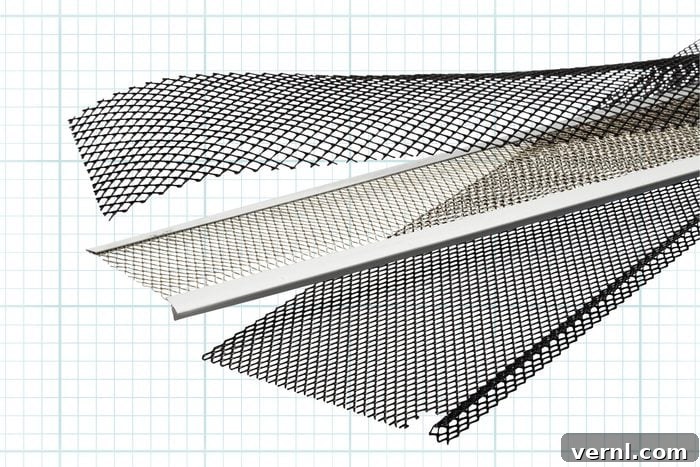
Common materials include vinyl, aluminum, and steel. Some guards sit on top of the gutter, while others slide under your shingles. You can also find foam gutter guards that fit inside your gutter.
Counahan notes, “While vinyl and sponge gutter guards are the most affordable, they do deteriorate quickly and often are not very durable, costing the homeowner more money in the long run.” He continues, “Aluminum and steel gutter guards have a higher price tag up-front but are more resistant to rust and often need less maintenance over time.”
Screen Gutter Guards
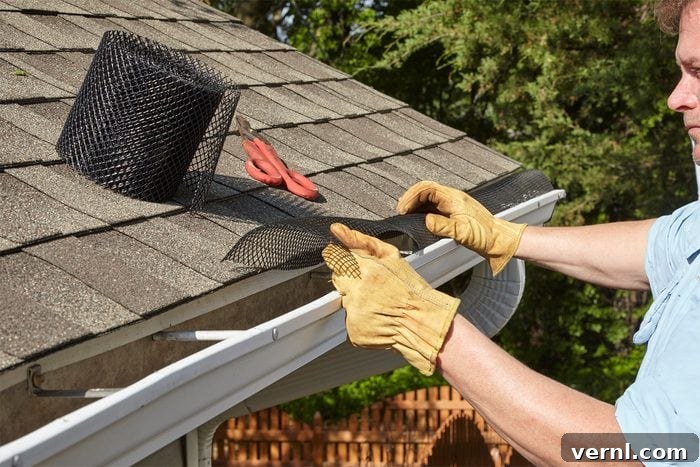
Screen gutter guards feature a metal mesh or vinyl screen that sits on top of the gutter, acting as a barrier against debris. They function similarly to a horizontal screen door, allowing water to pass through while blocking leaves and other materials. Installation methods vary; they may be attached with rivets, screws, hangers, or by being nestled under the shingles.
Personally, I have screen gutter guards, and every time I’m up on my ladder (like when putting up Christmas lights), I’m amazed at how clean my gutters are. They genuinely look brand new.
Foam Gutter Guards
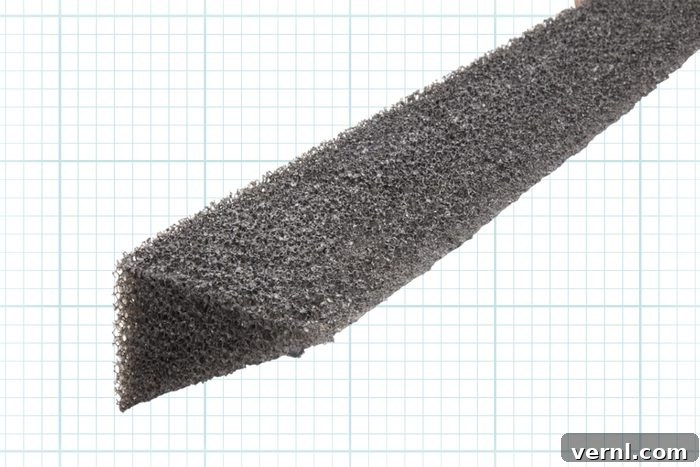
Foam gutter guards are wedge-shaped foam pieces that fit inside your gutters. They create a flat-topped barrier that lets water through while keeping out leaves and pine needles. This style is often the most affordable, but as Counahan says, it’s less durable. Sunlight and harsh weather can break down the foam, and debris may accumulate on top or become trapped within the foam’s cells.
Reverse Curve/Surface Tension Gutter Guards
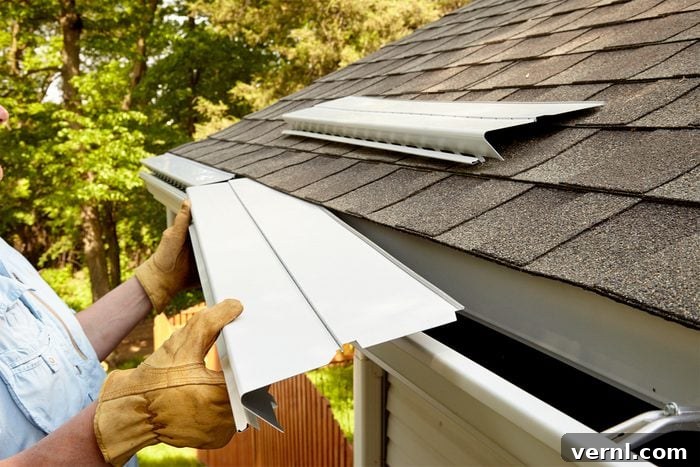
These solid-surface gutter guards use surface tension to function. Water clings to the curved nose of the guard and flows into the gutter, while debris slides off the top. This design eliminates the need for mesh or holes, preventing seeds and needles from getting stuck. The downside? During heavy downpours, the water’s force might overcome the surface tension, causing water and debris to flow over the gutter guard.
Surface tension gutter guards are usually made of vinyl or metal. They’re more visible than other styles because they’re solid and angled to match your roof and gutters. A significant advantage is that they are easy to clean using a garden hose.
Choosing the Right Gutter Guards for Your Home
The ideal gutter guard solution depends on your home’s unique characteristics. “Every home and situation is different and has unique needs, from the type of gutter debris to the amount of water flow to the style of each individual roof,” Counahan explains. “Gutter guards are rarely one size fits all.” Thorough research and careful consideration of your home’s specific conditions are essential.
Here are some factors to consider:
- Tree Cover: Homes with dense tree cover, especially from pine trees, maples, or sycamores, need robust protection compared to homes in treeless areas.
- Severe Weather: Counahan advises that “if not made with the right materials, gutter guards can be prone to collapsing in extreme weather conditions, like under heavy snow and ice.” Choose guards made from durable, weather-resistant materials if you live in an area prone to harsh weather.
- Roof Type and Water Flow: Some gutter guard styles require the correct pitch for optimal performance.
- Gutter Size: Measure your gutters to ensure a proper fit before purchasing gutter guards. Counahan notes that while most come in 5- or 6-inch sizes, “it’s important to measure your gutters to get a proper fit before purchasing gutter guards, to reduce frustration.”
- Existing Installations: You may need to repair, replace, or even remove your old gutters, which will add to your costs.
- Fire Risk: For homeowners in areas with a high risk of wildfires, it’s essential to select noncombustible gutter guards to prevent embers from entering the gutters and potentially igniting.
Gutter Guard Maintenance: Keeping Your System in Top Condition
Gutter guards require minimal maintenance, but periodic checks are still recommended. “To best maintain gutter guards, check them after heavy storms and severe weather, just as you would with your roof,” Counahan suggests.
Also, remember that working on ladders and roofs can be dangerous. Always practice ladder safety, and hire a professional if you’re uncomfortable. Counahan recommends professional installation for the best fit and performance.
Frequently Asked Questions (FAQs)
Which Gutter Guard is Best for DIY Installation?
Sponge or foam gutter guards are the easiest to install because you just cut them to the correct length and insert them into the gutter. However, these often have a shorter lifespan, so you might need to replace them more frequently.
Do Gutter Guards Require Cleaning?
It depends. “Overall, gutter guards should eliminate the need for gutter cleaning,” Counahan says. You might still need to sweep off the guard itself, though. “If you’re looking for an extremely low-maintenance gutter guard, purchase one with a slanted design feature to reduce the need to clean them off,” Counahan suggests.
About the Expert
Chris Counahan is the president of LeafFilter, a leading gutter guard manufacturer. He oversees hundreds of field managers and has 27 years of experience in construction and remodeling, including time at Owens Corning and Erie Construction.