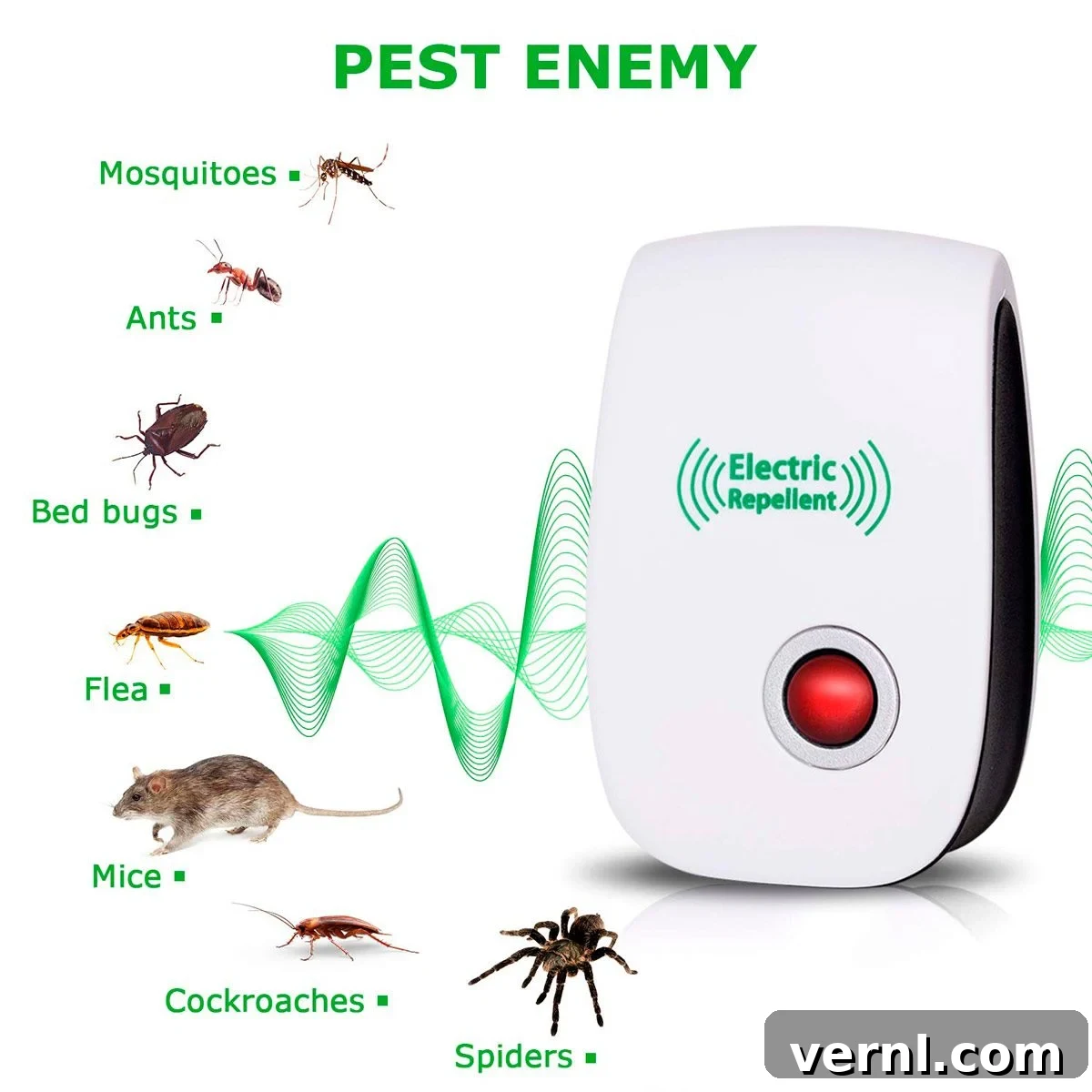
For homeowners seeking an innovative, non-toxic approach to managing unwelcome guests, ultrasonic pest control devices often emerge as a compelling option. Particularly for those with pets, young children, or concerns about exposure to harsh chemicals, these devices promise a clean, discreet method of deterring pests. From rodents like mice and rats to various insects such as mosquitoes, spiders, and ants, a wide array of devices claims to offer solutions. But how exactly do these high-tech gadgets operate, and more importantly, do they truly live up to their promises? This comprehensive guide delves into the science, application, and effectiveness of ultrasonic pest repellers, helping you make an informed decision for your home.
Understanding Ultrasonic Pest Control: The Basics
At their core, ultrasonic pest repellers function by emitting short-wavelength, high-frequency sound waves. These sound waves are beyond the range of human hearing, making them virtually silent to us. The average young person can typically perceive sounds between 20 and 20,000 Hertz (Hz), a range that narrows considerably with age, with middle-aged individuals often only hearing up to 12,000-14,000 Hz. In contrast, many animals and insects possess a much broader hearing range, extending into higher frequencies. Ultrasonic devices are designed to exploit this difference, typically emitting sounds at around 65,000 Hz, a frequency believed by manufacturers to create an unbearable, disorienting environment for pests, ultimately driving them away.
The Theory Behind the Waves
The fundamental principle is that pests, particularly rodents and certain insects, find these high-frequency sounds intensely irritating. The constant, inaudible (to humans) barrage of sound waves is thought to disrupt their communication, feeding patterns, and reproductive cycles, essentially making the area uninhabitable. This constant discomfort is intended to compel them to seek quieter, more hospitable environments away from your home. Proponents highlight this as a humane and environmentally friendly alternative to traps, baits, and chemical sprays, which can be messy, hazardous, or lethal.
While considering advanced solutions like ultrasonic repellers, it’s crucial to remember that a multi-faceted approach to pest control is often the most effective. Simple home maintenance can significantly reduce pest vulnerabilities. This includes diligently sealing gaps and cracks in foundations, walls, and around utility lines, repairing damaged window and door screens, and removing potential attractants like standing water or accessible food sources. Even relocating a firewood pile away from your home can deter various pests. Complementing these preventive measures with DIY pest control methods, such as natural repellents or diligent cleaning, can create a less inviting environment for pests, potentially minimizing the need for more intensive interventions.
Maximizing Effectiveness: How to Properly Use Ultrasonic Pest Control Devices
Utilizing ultrasonic pest repellers is remarkably straightforward. The primary step involves simply plugging them into an electrical outlet within your home. However, to achieve the best possible results and ensure comprehensive coverage, strategic placement is key. Manufacturers typically recommend positioning these devices in outlets that are 10-30 inches off the floor. This elevation helps the sound waves travel more effectively, as they are easily absorbed by soft surfaces like carpets and furniture when placed too low.
Furthermore, effective coverage requires thoughtful spacing. Instead of grouping multiple units together in a single room, distribute them strategically throughout your house, especially in areas where pest activity has been observed or where entry points are suspected. Remember, ultrasonic waves do not penetrate solid objects like walls, ceilings, or large pieces of furniture. Therefore, each room or distinct area you wish to protect may require its own device to create an uninterrupted sonic barrier. For larger homes or properties with multiple levels, consider a multi-pack of devices to ensure adequate coverage in all vulnerable zones.
Once plugged in and properly positioned, the devices begin their work immediately. It’s common for homeowners to notice an initial increase in pest activity during the first few days or even a week after installation. This is a normal reaction, as pests are being disturbed and driven out of their hiding spots by the unfamiliar sonic environment. Typically, this heightened activity subsides within a couple of weeks. By the third or fourth week, your home should show a noticeable reduction in pest presence, ideally becoming pest-free as the unwelcome visitors seek refuge elsewhere. Patience and consistent operation are crucial for these devices to achieve their intended long-term effect.
The Scientific Debate: Do Ultrasonic Pest Repellers Truly Work?
The effectiveness of ultrasonic pest control devices is a topic of considerable debate, with scientific research often presenting a less optimistic picture than marketing claims. One of the primary reasons for skepticism stems from the fact that the U.S. Environmental Protection Agency (EPA) does not regulate these devices, meaning they are not subjected to rigorous efficacy testing by a federal body before being sold to consumers. This lack of oversight allows for a wide range of product quality and unsubstantiated claims.
Numerous scientific studies have been conducted to assess the efficacy of ultrasonic repellers against various pests, yielding mixed and often inconclusive results. For instance, a notable BBC article highlighted entomologist Bart Knols’ assertion that there is “no scientific evidence whatsoever” that ultrasound repels mosquitoes. Similarly, an analysis of various scientific studies reveals a spectrum of outcomes: some indicate a degree of effectiveness against certain pests under specific laboratory conditions, while others demonstrate little to no impact in real-world scenarios. Factors such as the pest species, the specific frequency and intensity of the ultrasound emitted, and environmental variables (e.g., presence of obstructions, background noise) can all influence results.
Adaptation and Limitations
One critical challenge for ultrasonic devices is the phenomenon of pest adaptation. Even if a particular frequency initially startles or deters a pest, there’s evidence that over time, pests can become habituated to the sound, learning to tolerate it and thus rendering the device ineffective. Moreover, the inherent limitation of sound waves – their inability to penetrate solid surfaces like walls, floors, and furniture – means that their protective range is confined to a single, open space. This necessitates the use of multiple units to cover different rooms or levels, increasing cost and potentially leaving areas vulnerable.
The Discrepancy Between Science and User Reviews
Despite the scientific skepticism, many ultrasonic pest repellers on online retail sites, such as Amazon, boast thousands of five-star reviews. Verified Amazon buyer L. Colburn, for example, awarded these pest repellers a five-star rating, noting, “I have noticed a very definite reduction in insects in our house. Living in the country, it is a common problem. These are a very good product.” Another Amazon Verified customer, Chelsea, also gave a five-star review, stating, “Works very well on my farmstead, with it being an older home there are always bugs in the books and crannys and cracks but with the peat repellent plug in I have noticed that the bugs have begun to disappear!” This divergence highlights the complexity of assessing effectiveness, where anecdotal success stories often contrast with scientific findings. It suggests that while ultrasonic devices may not be a universal panacea, some users undoubtedly experience positive results, perhaps due to specific pest types, environmental factors, or a placebo effect.
Where to Purchase Effective Ultrasonic Pest Control Solutions
For those interested in trying ultrasonic pest control, a wide range of devices are available through major online retailers like Amazon. When considering a purchase, look for reputable brands and products with clear specifications. For instance, a popular choice like the WahooArt Ultrasonic Pest Repeller 6-Pack is described as using the latest ultrasonic chip technology to repel various pests including mice, rats, spiders, fleas, cockroaches, ants, flies, and mosquitoes. These devices are generally designed for ease of use – simply plug them in – and aim to drive pests from your home and property without chemicals.
Another iteration of a similar product, also available as a 6-pack, emphasizes its broad coverage, often up to 1200 square feet per device. Such products frequently highlight their human- and pet-friendly nature, asserting that they produce no audible noises, smells, or radiation. The cost-effectiveness of these devices is a significant draw; while an initial investment is required, they eliminate the recurring costs associated with chemical sprays that need constant reapplication or traps that require frequent replacement. A typical ultrasonic pest repeller is built to last between three to five years. An illuminated LED light on the device usually serves as a simple visual indicator that the unit is powered on and actively emitting ultrasonic waves. A six-pack of effective devices can often be found on Amazon for around $20, making them an affordable long-term pest management option.
Frequently Asked Questions About Ultrasonic Pest Control
Does ultrasonic pest control really work?
The effectiveness of ultrasonic pest control is a subject of ongoing debate. While many users report positive results, particularly on online retail platforms, scientific studies have yielded mixed and often inconclusive findings. The U.S. EPA does not regulate these devices, leading to varying claims from manufacturers. Some entomologists assert there’s no scientific evidence for their efficacy against certain pests like mosquitoes. However, for some specific pests and environments, users do report success. It’s often best considered as part of an integrated pest management strategy, alongside traditional methods like sealing entry points and maintaining cleanliness.
How long has ultrasonic pest control been around?
The concept of using electronic sound to control pests is not entirely new. Experimentation with this technology dates back as early as 1948. However, the use of electronic sound gained significant momentum in the 1950s and 1960s, leading to the issuance of the first patent for an ultrasonic pest device in the 1960s. Since then, numerous patents have been granted, reflecting continuous development and commercial interest in this technology.
What are the side effects of ultrasonic pest repellers? Are they safe for humans and pets?
For humans, ultrasonic pest repellers are generally considered safe. While the National Institutes of Health (NIH) acknowledges that prolonged exposure to high-intensity ultrasonic noise *in industrial settings* can lead to symptoms such as nausea, headaches, migraines, tinnitus (ringing in the ears), and fatigue, the NIH has also conducted extensive research indicating that “ultrasonic noise has little effect on general health unless there is direct body contact with a radiating ultrasonic source.” The low power and specific frequencies used in home pest repellers mean they typically pose minimal risk to humans.
However, the situation can be different for pets. Animals possess a much wider hearing range than humans. If a pest like a mouse can hear the ultrasonic frequencies, it’s highly probable that many common household pets, such as dogs and cats, can hear them too. For these animals, the constant high-frequency sound could be unpleasant, irritating, or even distressing, similar to how it’s intended to affect pests. Owners of pets, especially those with sensitive hearing or anxiety issues, should monitor their animals’ behavior closely after installing these devices. Pets like hamsters, guinea pigs, and other small rodents, being direct targets of some of these devices, may experience significant distress and should ideally be housed far away from the repellers or in a different area of the home.
How long does ultrasonic pest control last?
An ultrasonic pest repeller typically has an operational lifespan of three to five years. As long as the device is plugged in and receiving power, and its LED indicator light is on (signifying it’s functioning), it should continue to emit the ultrasonic frequencies effectively. The lifespan can vary based on the quality of the device and continuous usage. While most units are designed for continuous operation, some might benefit from periodic checks. Once a device reaches the end of its effective life, or if the LED light fails to illuminate, it should be replaced to ensure ongoing protection. Devices with replaceable batteries may extend their lifespan, though most plug-in models are designed as sealed units.
Does ultrasonic sound go through walls or furniture?
No, ultrasonic sound waves do not effectively penetrate solid surfaces like walls, floors, ceilings, or large pieces of furniture. You can visualize an ultrasonic pest repeller much like a light source: just as light cannot pass through a solid wall, neither can these high-frequency sound waves. Any sound that might manage to penetrate such surfaces would be significantly muffled and rendered ineffective. This limitation means that each enclosed room or distinct area you wish to protect typically requires its own ultrasonic device to establish an effective sonic barrier.
Should I be able to hear my ultrasonic pest repeller?
No, under normal circumstances, you should not be able to hear your ultrasonic pest repeller. These devices are specifically designed to emit frequencies well above the range of human hearing. If you can hear a high-pitched squealing, buzzing, or any other noise coming from the device, it likely indicates a malfunction or that it is a lower-quality unit emitting audible frequencies. In such cases, the device may be broken, less effective, or potentially irritating to pets, and it should be replaced as soon as possible.