
Achieving a lush, vibrant lawn is a goal for many homeowners, and effective lawn care often hinges on one crucial practice: core aeration. This essential technique involves extracting small plugs of soil from your lawn, creating vital pathways for water, oxygen, and nutrients to penetrate deeper into the root zone. The result? A stronger, healthier lawn that requires less frequent watering and fertilizing.
Core aeration is a game-changer for overall lawn resilience. By creating space, it allows grassroots to grow deeper and more robustly, making your lawn far more resistant to environmental stressors such as drought, extreme temperatures, or heavy foot traffic. As Matt Cameron from CMS Landscaping emphasizes, “Aerating provides many benefits, including alleviating compaction, managing thatch, and improving water, oxygen, and nutrient uptake to the rootzone.”
Despite its significant benefits, many DIY enthusiasts face a common hurdle: lawn aerators can be expensive to purchase, challenging to store, and are typically only used once or twice a year. While smaller yards might benefit from an affordable, easy-to-store hand aerator, for the vast majority of homeowners with medium to large lawns, the most practical and cost-effective solution is to rent a quality lawn aerator instead of buying one.
Understanding the Unrivaled Benefits of Lawn Aeration
Delving deeper into why lawn aeration is so vital reveals a host of advantages that contribute to a superior lawn:
- Alleviates Soil Compaction: Over time, soil can become compacted due to foot traffic, heavy machinery, and even rainfall. This dense soil chokes grass roots by limiting oxygen flow and preventing water and nutrients from reaching them. Aeration breaks up this compaction, allowing roots to breathe and thrive.
- Improves Water Penetration: Compacted soil leads to excessive water runoff, meaning your lawn isn’t absorbing the moisture it needs. Aeration creates channels that guide water directly to the root system, significantly improving absorption and reducing water waste. This leads to deeper root growth and increased drought tolerance.
- Enhances Nutrient Uptake: Just like water, fertilizers and soil amendments struggle to reach grassroots in compacted soil. Aeration ensures that these vital nutrients penetrate effectively, maximizing the impact of your fertilization efforts and minimizing nutrient loss.
- Manages Thatch Buildup: Thatch is a layer of dead and living organic matter (stems, roots, leaves) that accumulates between the soil surface and the green grass blades. A thick thatch layer can harbor pests and diseases, block water and air, and hinder new growth. Aeration helps break down thatch by introducing soil microorganisms that decompose it naturally.
- Promotes Stronger Root Development: With improved access to air, water, and nutrients, grass roots can grow deeper and spread wider. A deep, robust root system is the foundation of a healthy lawn, making it more resilient to environmental stresses and giving it that desired lush, green appearance.
Optimal Timing: When to Rent a Lawn Aerator
Timing is critical for successful lawn aeration. Generally, you should aerate your lawn during or just before its peak growing season. This ensures the grass can quickly recover and fill in the holes, taking full advantage of the improved conditions.
- Cool-Season Grasses: Varieties like Kentucky bluegrass, fescue, and perennial ryegrass thrive in cooler temperatures. For these lawns, the best times for aeration are late fall (after the summer heat breaks but before the first hard freeze) or early spring (as the grass begins to green up, typically March or April). Aerating during these periods minimizes stress and encourages rapid recovery.
- Warm-Season Grasses: Grasses such as Bermuda grass, Zoysia grass, and St. Augustine grass flourish in warmer climates. For these lawns, aeration is most effective in late spring or early summer, once the grass is actively growing and the danger of frost has passed (typically May or June).
If you’re unsure about your specific grass type’s growing season, erring on the side of early spring is generally a safe bet for most regions, as it allows plenty of time for recovery before the summer heat.
Achieving Ideal Soil Moisture for Aeration
The condition of your soil on aeration day is paramount. Aim to use your lawn aerator the day after a moderate rainfall, when the ground is damp but not saturated. This optimal moisture level allows the aerator tines to penetrate the soil smoothly and extract plugs efficiently.
- Too Dry: Attempting to aerate overly dry, hard soil will make for an extremely difficult and frustrating experience. The aerator machine will bounce, jolt, and struggle to penetrate, potentially damaging the equipment and leaving you with minimal results.
- Too Wet: Conversely, aerating waterlogged soil can create a muddy mess. The machine may spray dirty water, and the extracted soil plugs can turn into unsightly mud puddles, compacting the soil even further around the holes.
If you find yourself renting during a dry spell, make sure to water your lawn thoroughly the day before aeration. Apply about an inch of water to ensure the ground is sufficiently damp for ideal conditions.
Choosing the Right Tool: What Type of Lawn Aerator to Rent
When it comes to selecting a lawn aerator, the type that extracts soil plugs, known as a **core aerator** or **plug aerator**, is by far the most effective. These machines physically remove small cylinders of soil, creating lasting channels for air, water, and nutrients.
It’s crucial to avoid spike aerators for serious compaction issues. While spike aerators do punch holes in the ground, they don’t remove soil. Instead, they push the soil aside, often increasing compaction immediately around the holes, which can be counterproductive to your aeration goals.
When renting, you’ll primarily encounter three main types of mechanical core aerators:
1. Pull-Behind Aerators
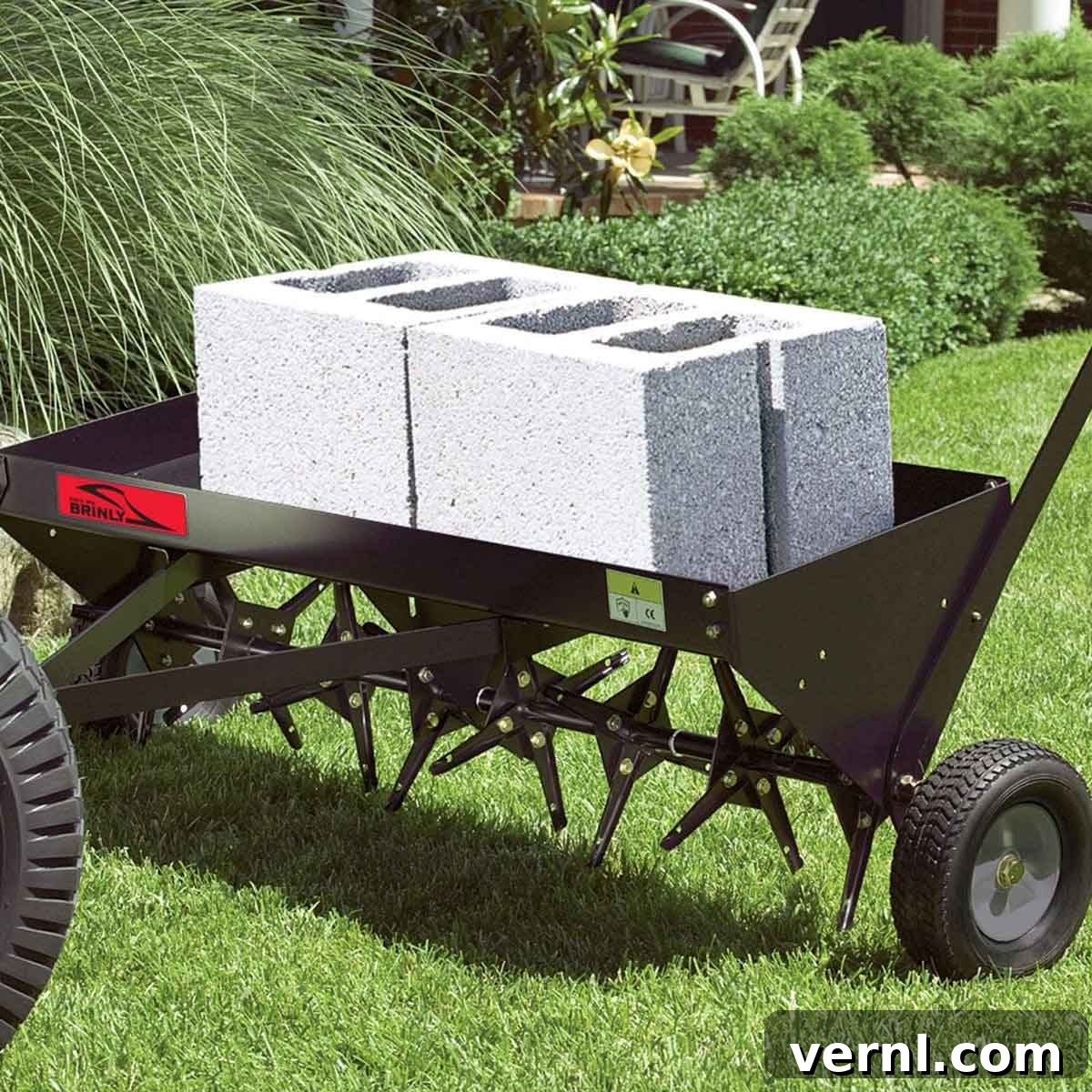
Pull-behind aerators are an excellent, more affordable choice if you already own a riding lawn mower or lawn tractor. These models, such as those offered by Brinly, hitch easily to the rear of your mower. They can be dragged around your lawn as you cut the grass or on a dedicated aeration tour. They are incredibly efficient for larger lawns that would be impractical to aerate by hand.
When renting a pull-behind model, look for features like trays where you can add extra weight (e.g., concrete blocks) to ensure deeper soil penetration, especially in tougher soil. Also, seek out models with at least two height settings – one for aeration and another for transport – so you can easily raise the tines to prevent leaving unsightly pockmarks when crossing driveways, sidewalks, or other paved surfaces.
2. Gas-Powered Walk-Behind Aerators
These powerful machines resemble a push mower or a snow blower in appearance but are significantly more challenging to maneuver due to their aggressive penetration into the ground. Gas-powered aerators are designed to penetrate dense soil with considerable force, meaning they can buck and kick when encountering rocks, tree roots, or particularly compacted patches. They are heavy, noisy, and can be cumbersome to transport, often requiring a truck or trailer.
Despite these challenges, gas-powered walk-behind aerators are often the best and most effective option for DIYers who don’t own a riding lawnmower. “These are the type of aerators we recommend to homeowners for thorough aeration,” explains Stever Mercer, manager of Northampton Rental Center. “Just make sure you have a helper to assist with unloading it from your vehicle and loading it back up when you’re finished.” Safety is paramount; always read the operator’s manual and wear appropriate protective gear.
3. Electric Walk-Behind Aerators
Electric lawn aerators operate either on a battery or via a power cable. While they offer benefits such as quieter operation, easier starting, and less maintenance compared to their gas-powered counterparts, they often lack the sheer power and substantial weight required for truly effective deep coring, especially in heavily compacted soil. Many electric models are primarily spike aerators or are designed for lighter-duty work on already well-maintained lawns.
However, electric aerators are much easier to transport and typically simpler to operate. They also tend to be less expensive to rent than gas aerator models, making them a viable option for smaller lawns with minimal compaction or for homeowners preferring an eco-friendlier choice. Always check if an electric model is a true core aerator before renting.
Where to Rent a Lawn Aerator: Your Options
Finding a reliable source for your lawn aerator rental is key to a smooth and successful project. Here are the primary locations:
- Dedicated Tool Rental Shops: These specialized businesses often boast the widest selection of high-quality equipment, including various sizes and types of core aerators. Their staff are typically highly knowledgeable about each machine, offering valuable guidance on operation, safety, and choosing the right aerator for your lawn’s specific needs. They also tend to maintain their equipment meticulously.
- Home Improvement Centers: Large retail chains like Lowe’s and The Home Depot often feature dedicated tool rental centers. The convenience of picking up your aerator where you purchase your other home improvement supplies is a major advantage, and their numerous locations make them accessible. However, their selection of aerator models might be more limited, and the expertise of staff can vary significantly between different locations or even different shifts.
- Nurseries and Garden Centers: While staff at nurseries and garden centers are usually very knowledgeable about general lawn care, soil health, and plant biology, their inventory of heavy equipment like aerators might be smaller. They may have fewer options or fewer machines available, making it harder to rent during peak demand times. However, their advice on specific turf issues can be invaluable.
No matter where you choose to rent, it is always wise to call ahead to verify availability. During peak springtime aeration season, demand for these machines can be very high, so consider reserving your aerator in advance to guarantee it’s available when you need it.
Preparing Your Lawn for Aeration
A little preparation goes a long way in ensuring your aeration project is safe and effective:
- Mow Your Lawn: Cut your grass shorter than usual a day or two before aerating. Shorter grass makes it easier for the aerator tines to penetrate the soil without getting tangled, and it allows you to see the plugs more clearly.
- Mark Obstacles: Crucially, mark any sprinkler heads, shallow utility lines, buried dog fences, or other obstacles that could be damaged by the aerator’s tines. Use flags or bright spray paint for easy visibility.
- Clear Debris: Remove any rocks, branches, toys, or other debris from your lawn that could interfere with the aerator or pose a safety hazard.
Effective and Safe Aerator Operation
Once you have your aerator, proper operation is key:
- Read the Manual: Always start by thoroughly reading the operator’s manual for the specific machine you’ve rented. This will provide critical information on starting, stopping, operating, and safety.
- Wear PPE: Wear sturdy closed-toe shoes or boots, long pants, safety glasses, and hearing protection, especially when operating gas-powered machines.
- Overlap Passes: For thorough coverage, make sure to overlap each pass by a few inches, similar to how you would mow. For very compacted areas or heavy thatch, you might consider making two passes in perpendicular directions.
- Handle Turns Carefully: When turning the aerator, lift the tines slightly off the ground to prevent unnecessary wear on the machine and damage to your lawn.
- What About the Plugs? After aeration, your lawn will be covered with small soil plugs. There’s no need to remove them! These plugs contain beneficial microorganisms that will help break down thatch and return valuable nutrients to the soil as they decompose, usually within a few weeks.
Post-Aeration Lawn Care: Maximizing the Benefits
Aeration creates an ideal environment for further lawn improvements. Take advantage of this window:
- Water Your Lawn: Immediately after aeration, give your lawn a good watering. This helps settle the soil around the newly exposed roots and pushes nutrients deeper.
- Fertilize: Aeration is the perfect time to fertilize. The open channels allow fertilizers to reach the root zone directly, maximizing their effectiveness.
- Overseed: If you plan to overseed your lawn to thicken it or introduce new grass varieties, doing so immediately after aeration is highly recommended. The seeds will have excellent seed-to-soil contact in the aeration holes, dramatically improving germination rates.
[dam-video dam-id=”34564″ type_of_player=”jw” /]
[cf]skyword_tracking_tag[/cf]
Frequently Asked Questions (FAQ) About Renting a Lawn Aerator
How much does it cost to rent a lawn aerator?
The cost to rent a lawn aerator typically ranges from $35 to $65 for a half-day rental (usually four hours) and $65 to $100 for a 24-hour period. Prices can vary depending on the model of the aerator, the rental location, and your geographic region. Gas-powered models generally cost more to rent than pull-behind or electric options.
How long will I need to rent an aerator?
Most rental centers offer aerators for four-hour or 24-hour periods. The duration you’ll need depends primarily on the size of your lawn. As Mercer advises, “I tell people that aerating your lawn will go a bit faster than mowing. So if it takes you two hours to mow your lawn, that gives you an idea of how long to rent an aerator.” For larger properties or heavily compacted lawns, opting for the 24-hour rental often provides better value and less rushing.
How often should I aerate my lawn?
For most established lawns, annual aeration is sufficient to maintain good soil health. However, lawns that experience heavy foot traffic, have very dense clay soil, or accumulate a thick thatch layer quickly might benefit from aeration twice a year (once in the spring and once in the fall).
What should I do with the soil plugs after aeration?
You don’t need to do anything with them! The soil plugs left on your lawn are a beneficial part of the aeration process. They will naturally break down and decompose over a few weeks, returning valuable nutrients and microorganisms to the soil. Mowing over them can help speed up their disintegration.
Can I aerate a newly seeded or sodded lawn?
It’s generally not recommended to aerate a newly seeded or sodded lawn until it is well-established, typically after its first full growing season. Aerating too early can disturb the delicate new root system and hinder establishment. Once established, aeration can promote deeper root growth for the new grass.
About Our Expert Contributors
- Stever Mercer has been the dedicated manager of Northampton Rental Center, a leading tool rental business in Northampton, Massachusetts, for an impressive 41 years. His extensive experience provides invaluable insights into equipment rental and proper usage.
- Matt Cameron is the owner of CMS Landscaping, a comprehensive full-service lawn care and irrigation company based in Holyoke, Massachusetts. With 15 years of hands-on landscaping experience, Matt offers a wealth of practical knowledge on maintaining healthy, resilient lawns.