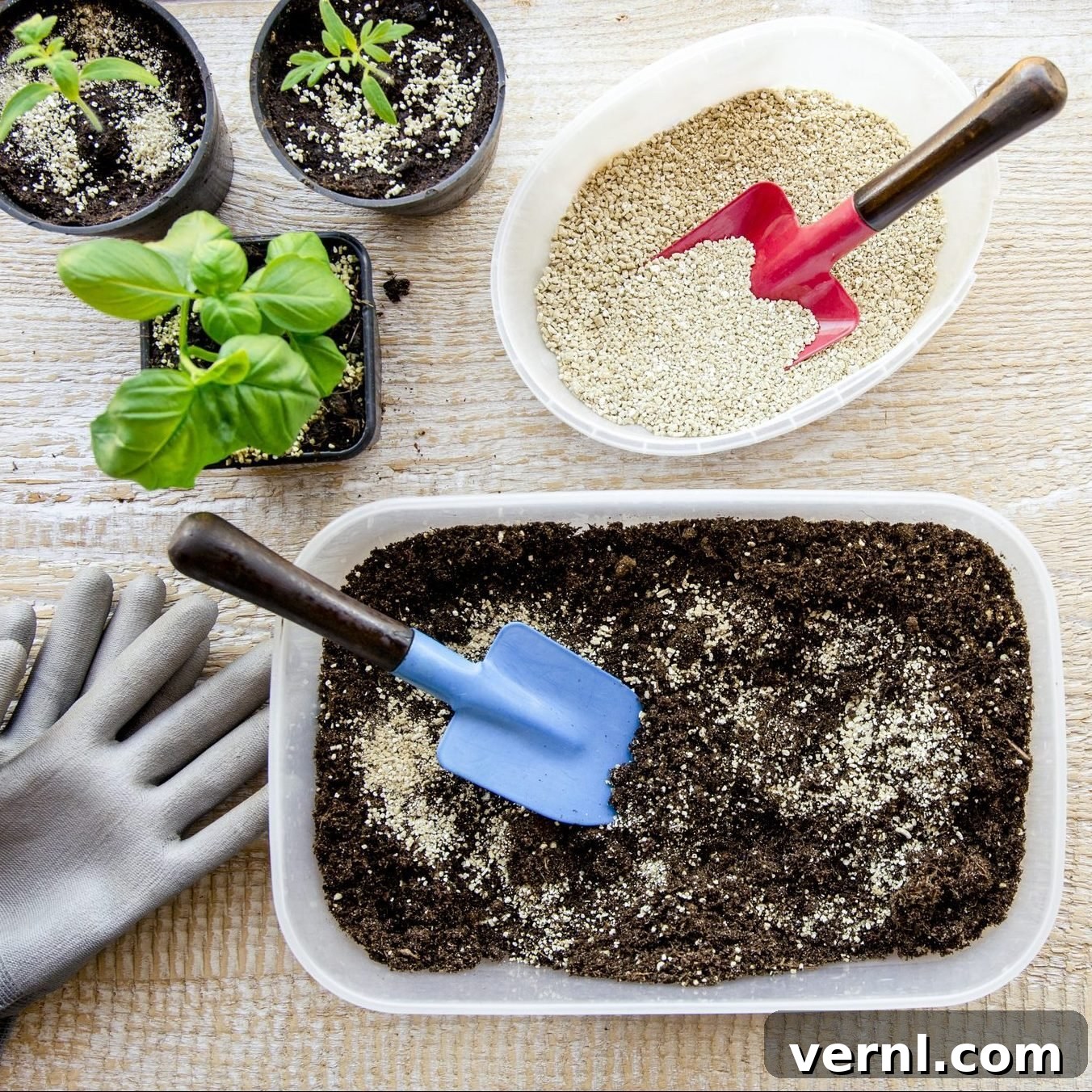
In the vast world of gardening, countless tools and amendments promise to revolutionize your green thumb. Among these, vermiculite stands out as a true game-changer, a versatile mineral compound that consistently delivers tangible benefits to plants and soil alike. Its journey from a scientific curiosity to a garden staple began in 1824 when scientist Thomas H. Webb coined the term “vermiculite,” a blend of Latin and English that aptly describes its most striking characteristic: its ability to expand into “a rock that looks like a mass of small worms” when subjected to heat. This unique property—transforming into low-density, worm-like strands—is what makes vermiculite an invaluable resource across various industries, from filler for paints and plastics to a highly effective insulator. However, it’s in the garden where its true magic unfolds, enhancing soil structure, optimizing moisture levels, and boosting nutrient uptake, paving the way for thriving, vigorous plants.
“Vermiculite can also increase nutrient retention and soil aeration, resulting in healthier, more robust plants,” emphasizes Kelly Funk, president and expert gardener at Park Seed. Her insights underscore the multifaceted role this mineral plays in creating an optimal growing environment for almost any plant.
What Is Vermiculite? A Deep Dive into this Remarkable Mineral
At its core, vermiculite is a naturally occurring silicate mineral, celebrated by gardeners for its ability to significantly improve soil quality and support the healthy development of seedlings. Chemically, it’s primarily composed of hydrated magnesium iron aluminum silicate. In its natural, unexpanded state, vermiculite bears a striking resemblance to mica, presenting with a distinctive golden to dark brown hue. It forms as a result of the weathering or hydrothermal alteration of biotite and phlogopite micas.
The beauty of vermiculite lies in its unique lamellar structure—a series of thin, flat layers—that traps water and nutrients. Unlike other soil amendments, vermiculite doesn’t just sit in the soil; its expanded form actively interacts with the soil environment to create a more hospitable home for roots. This distinct appearance and structural integrity are crucial for its function.
“Unlike perlite, which is bright white, vermiculite can be hard to identify in the potting soil it’s mixed with,” notes Funk. This subtle difference in appearance often leads to confusion, yet it highlights a fundamental distinction in their properties and ideal applications. While both are used to amend soil, perlite is known more for its superior aeration and drainage, while vermiculite excels in moisture and nutrient retention, making them complementary rather than interchangeable for specific gardening needs.
How Is Vermiculite Made? The Exfoliation Process Explained
The journey of vermiculite from an inert rock to a gardening powerhouse involves a fascinating transformation. Vermiculite is first extracted through open-pit mining operations, primarily in countries such as Russia, Brazil, Uganda, Australia, and the U.S. Once mined, the raw vermiculite ore is crushed and screened to separate it from other minerals and graded by size.
The magic happens during a process known as exfoliation. The graded vermiculite concentrate is subjected to intense heat, typically between 600°C and 1000°C (1112°F to 1832°F). This rapid heating causes the water molecules trapped within the mineral’s layered structure to flash into steam, forcing the layers to separate and expand. The result is a dramatic increase in volume—up to 8 to 20 times its original size—creating accordion-shaped granules that are lightweight, porous, and highly absorbent. This expanded form is what gardeners recognize and utilize.
Following exfoliation, the material is cooled and then sorted into four different grain sizes, ranging from very fine to coarse. Each size is suited for specific applications: finer grades are often used for seed starting and rooting delicate cuttings, while coarser grades are ideal for improving heavy soils, mulching, or storing bulbs.
Unlocking the Potential: What are the Benefits of Vermiculite for Gardeners?
Vermiculite offers a comprehensive suite of benefits that address common gardening challenges and promote robust plant growth. Its unique physical and chemical properties make it an indispensable asset for both novice and experienced gardeners.
“Vermiculite is best used for plants that require soil to stay damp,” explains Funk. “It can absorb water three to four times its volume. It holds it like a sponge until the soil begins to dry out, and then it acts as a slow-release watering system.” This exceptional water retention capacity is due to its expanded, porous structure, which creates numerous microscopic air pockets capable of holding significant amounts of moisture without waterlogging the roots. This effectively reduces the frequency of watering, especially beneficial for container plants and during dry spells.
Beyond its unparalleled ability to manage moisture, vermiculite’s other significant advantages for gardeners include:
- Accelerated Germination and Growth: Its warm, moist, and stable environment provides ideal conditions for seeds to sprout quickly and for young seedlings to establish strong root systems, leading to faster overall plant development.
- Superior Root Anchoring: The irregular, yet soft, structure of exfoliated vermiculite granules provides an excellent medium for delicate roots to grip and expand, offering stable support for plants as they grow.
- Prevention of Root Rot: While it retains water, vermiculite also ensures adequate drainage and aeration, preventing the stagnant, waterlogged conditions that can lead to fungal diseases and root rot, particularly when used correctly with appropriate plant species.
- Enhanced Soil Aeration: By loosening compacted soil, vermiculite creates vital air pockets that allow oxygen to reach plant roots more easily. This improved air circulation is critical for root respiration and nutrient uptake.
- Lightweight Nature: Its low density makes potting mixes and container gardens significantly lighter, simplifying transportation and rearrangement of plants.
- Nontoxic and Odorless: Vermiculite is a natural, inert mineral, meaning it won’t introduce harmful chemicals into your soil or emit unpleasant smells, ensuring a safe and pleasant gardening experience.
- Sterile Environment: When purchased in its processed form, vermiculite is sterile, which is crucial for starting seeds and rooting cuttings, as it minimizes the risk of fungal growth and disease transmission.
- Boosts Nutrient Retention: Vermiculite possesses a cation exchange capacity (CEC), meaning it can naturally react with soil compounds to hold onto essential plant nutrients like calcium, potassium, and magnesium. It then slowly releases these nutrients back to the plant roots as needed, making them more available for uptake and reducing nutrient leaching.
- Neutral pH: While it has a neutral pH itself, the presence of certain compounds within vermiculite can slightly raise the pH of acidic soils, helping to create a more balanced environment for many plants.
- Permanent Soil Improvement: Unlike organic materials that break down over time, vermiculite is a stable mineral that provides lasting improvements to soil drainage and structure, requiring less frequent reapplication.
Understanding the Trade-offs: What are the Downsides of Vermiculite?
While vermiculite is lauded for its numerous benefits, it’s essential for gardeners to be aware of its limitations and potential drawbacks to ensure its effective and appropriate use.
- Higher Cost: Compared to more common soil amendments like compost or perlite, vermiculite can be more expensive. This cost can be a consideration, especially for large-scale gardening projects.
- Susceptibility to Wind: Its lightweight nature, while beneficial for handling, can be a disadvantage in outdoor settings. Fine grades of vermiculite, when used as a top dressing, can easily blow away in windy conditions before it has a chance to integrate into the soil.
- Increased Weight When Saturated: While it makes dry potting mix lighter, its exceptional water retention means that pots and containers can become significantly heavier once watered. This can make moving large containers challenging for some gardeners.
- Non-Renewable Resource: As a mined mineral, vermiculite is a finite, non-renewable resource. This raises environmental considerations regarding its extraction and long-term sustainability, prompting some gardeners to seek more renewable alternatives where possible.
- Risk of Root Rot for Specific Plants: While beneficial for moisture-loving plants, vermiculite’s high water retention can be detrimental to plants that prefer drier conditions or are susceptible to root rot in consistently damp soil. “It doesn’t aerate soil as well as perlite,” Funk advises. “This means less oxygen for plant roots for certain species.” This distinction highlights the importance of matching the soil amendment to the specific needs of your plants. For instance, succulents, cacti, and other drought-tolerant plants generally do not thrive in vermiculite-heavy mixes.
Is Vermiculite Safe to Use in Your Garden? Addressing Past Concerns
The safety of vermiculite has, in the past, been a significant concern due to historical contamination. Yes, modern vermiculite is safe to use in your garden, but it comes with an important caveat: avoid using very old bags of it that might predate modern safety regulations.
Years ago, some vermiculite deposits were found to be naturally contaminated with asbestos, a group of silicate minerals known for causing serious health problems when inhaled. One of the most prominent vermiculite mines in the world, located in Libby, Montana, was a stark example of this issue. This mine, which operated for decades, produced a significant portion of the world’s vermiculite, but tragically, it was heavily contaminated with asbestos. Miners, their families, and residents of Libby developed severe and often fatal health problems from asbestos exposure. The mine was eventually closed in 1990, leaving behind a legacy of environmental and health challenges.
However, the landscape of vermiculite production has drastically changed. Today, strict regulations and rigorous testing protocols are in place for horticultural vermiculite. All gardening vermiculite currently sold in reputable stores is guaranteed to be asbestos-free and safe for use. Manufacturers and distributors adhere to stringent quality controls to ensure the purity of their products.
Despite its current safety, it’s always good practice to handle any particulate material with care. When working with vermiculite, especially in large quantities, consider these precautions:
- Work Outdoors or in a Well-Ventilated Area: This helps dissipate any dust particles that may become airborne during mixing.
- Wear a Mask: A simple dust mask can prevent inhalation of fine particles, which can irritate the respiratory system, similar to working with potting soil or compost.
- Handle and Store with Care: Keep vermiculite in its sealed bag or an airtight container in a cool, dry place. Ensure it’s stored safely away from curious pets and young children to prevent accidental ingestion or inhalation of dust.
By following these simple guidelines, you can confidently integrate vermiculite into your gardening routine without health concerns.
How to Use Vermiculite in Your Garden: Practical Applications for Every Gardener
Vermiculite’s versatility makes it a valuable addition to nearly every aspect of gardening. From improving existing soil to nurturing delicate seedlings, here’s how you can effectively incorporate this mineral into your garden practices:
General Mixing Guidelines for Soil Improvement
When integrating vermiculite into your soil, a common ratio is one part vermiculite to three parts soil (1:3). For situations requiring greater moisture retention or aeration, a 1:2 or even 1:1 ratio can be used. Always mix thoroughly to ensure even distribution throughout the soil profile. This even mixing is key to maximizing its benefits.
Raised Beds and Lawns: Enhancing Large-Scale Growth
For raised beds, you can either purchase pre-mixed soils that already contain vermiculite or amend your own. In the spring, when preparing your beds for planting, work vermiculite deep into the soil along with other amendments like compost. If your garden is plagued by particularly clay or sandy soil, vermiculite offers specific advantages. For heavy clay soils, it helps to loosen the structure, dramatically improving aeration and drainage. For sandy soils, it boosts moisture and nutrient retention, compensating for their rapid draining nature. Aim to work it into the top 6-12 inches of soil for optimal effect.
To give your lawn a head start, especially during reseeding, vermiculite can be a game-changer. After preparing a freshly seeded lawn, sprinkle a quarter-inch layer of fine or medium-grade vermiculite over the seed. This protective layer helps to retain moisture around the seeds, insulate them from temperature fluctuations, and prevent them from blowing away, thereby increasing germination rates and promoting quicker establishment of new grass.
Pots and Container Gardening: The Secret to Thriving Potted Plants
Container gardening demands a growing medium that can efficiently manage both moisture and aeration. Vermiculite excels in this environment. You can opt for a premixed potting soil that already contains vermiculite, or create your own custom blend. A popular ratio involves mixing vermiculite with potting soil at a one-to-three (1:3) or even a half-and-half (1:1) ratio, depending on the plant’s specific needs. “For those plants that need to be in damp soil, vermiculite will be effective,” says Funk, highlighting its role for moisture-loving plants like ferns, impatiens, and many tropical varieties. However, she cautions, “But if you use it when growing plants that don’t need damp soil, you might find your plants suffering from root rot.” For plants that prefer drier conditions, such as succulents, cacti, or rosemary, use a much smaller proportion of vermiculite or opt for perlite to ensure adequate drainage.
Starting Seeds: Giving Seedlings the Best Possible Start
Vermiculite is particularly advantageous for seed starting due to its sterile nature, consistent moisture, and excellent aeration. These properties create an ideal microclimate for germination and early root development. You can start seeds in pure vermiculite for delicate varieties or use a potting soil mix with a high vermiculite content (e.g., 2:1 vermiculite to potting mix). If using just vermiculite, add a small amount of water to moisten it, being careful not to overwater and drown the seeds. Once they sprout and develop their first true leaves, add a diluted liquid fertilizer as pure vermiculite provides no inherent nutrients. Its soft structure also makes it incredibly easy to remove tender seedlings for transplanting without causing damage to their fragile roots.
Root Cuttings: Propagating Plants with Ease
For propagating plants from cuttings, vermiculite provides a sterile, moisture-retentive, and well-aerated medium that encourages rapid root development. Simply fill a small pot or propagation tray with fine or medium-grade vermiculite, insert your prepared cuttings, and then thoroughly water. The vermiculite cradles the cutting, keeping it moist and providing a stable environment for new roots to emerge. For some types of cuttings, particularly those prone to rot, you may want to mix vermiculite with an equal part of sand or perlite to enhance drainage further.
Flower Arrangements: Extending the Life of Cut Flowers
Vermiculite isn’t just for growing; it can also help preserve cut flowers. To reduce the frequency with which you need to change or refill the water in your vase, fill the vase with about one-third vermiculite. Then, pour water over it before arranging your flowers. The vermiculite absorbs the water and slowly releases it, keeping the flower stems consistently hydrated, which can significantly extend the freshness and lifespan of your floral displays.
Storing Bulbs and Roots: Overwintering for Future Blooms
For delicate bulbs and roots that won’t survive freezing temperatures, vermiculite offers an ideal overwintering solution. After carefully digging them up from the ground, allow them to dry out for a few hours in a shaded, well-ventilated area to prevent fungal growth. Once dry, place them in a container (like a cardboard box or plastic bin) filled with dry vermiculite, ensuring they are not touching each other. The vermiculite acts as an insulator, maintaining a consistent temperature, and its absorbent properties help to prevent excess moisture, which is the primary cause of rot during storage. This method is particularly effective for storing dahlias, gladiolus, and canna lilies, allowing you to enjoy them year after year. For example, to overwinter geraniums, a vermiculite layer is a great option for their bare roots.
Frequently Asked Questions About Vermiculite
How should I store vermiculite to maintain its quality?
Proper storage is key to preserving the effectiveness of vermiculite. An ideal storage environment is a cool, dry, and dark place. To prevent it from absorbing unwanted moisture or contaminants, always keep vermiculite in its original sealed bag or transfer it to an airtight container. This protects its expanded structure and ensures it remains sterile and ready for use when you need it.
Is vermiculite always considered organic for gardening purposes?
No, not all vermiculite is considered organic, despite its natural mineral origin. While vermiculite itself is a naturally occurring mineral, some commercial processing methods may involve treatments with chemicals or additives that would disqualify it from organic certification. If you are committed to organic gardening, always look for vermiculite products specifically labeled “organic” or “OMRI Listed” (Organic Materials Review Institute) to ensure it meets organic standards.
What’s the difference between vermiculite and perlite, and which should I choose?
Vermiculite and perlite are both popular soil amendments, but they serve different primary functions due to their distinct properties. Vermiculite excels at water and nutrient retention, thanks to its layered, sponge-like structure. It also tends to be softer and slightly alkaline. Perlite, on the other hand, is a volcanic glass that, when heated, expands into lightweight, porous, popcorn-like particles. It’s primarily used for aeration and drainage, creating air pockets in the soil and preventing compaction, but it holds less water than vermiculite. The choice depends on your plant’s needs: use vermiculite for plants that prefer consistent moisture (e.g., ferns, seedlings) and for improving nutrient retention. Choose perlite for plants that require excellent drainage and aeration, like succulents, cacti, or plants prone to root rot.
How often should I replenish or add vermiculite to my garden soil?
One of the advantages of vermiculite is its permanence. Unlike organic matter that breaks down over time, vermiculite is a stable mineral that retains its structure and benefits for many years. Once mixed into garden beds, it generally does not need to be replenished annually. However, for container plants, where soil is more frequently disturbed or refreshed, you might consider adding a small amount of fresh vermiculite every 2-3 years, especially when repotting or revitalizing old potting mixes. For seed starting and rooting cuttings, it’s best to use fresh vermiculite for each new batch to ensure sterility and optimal performance.
About the Expert
- Kelly Funk is the esteemed president and an expert gardener at Park Seed, a well-respected name in the gardening community. Her extensive knowledge and practical experience provide valuable insights into optimizing plant health and gardening success.