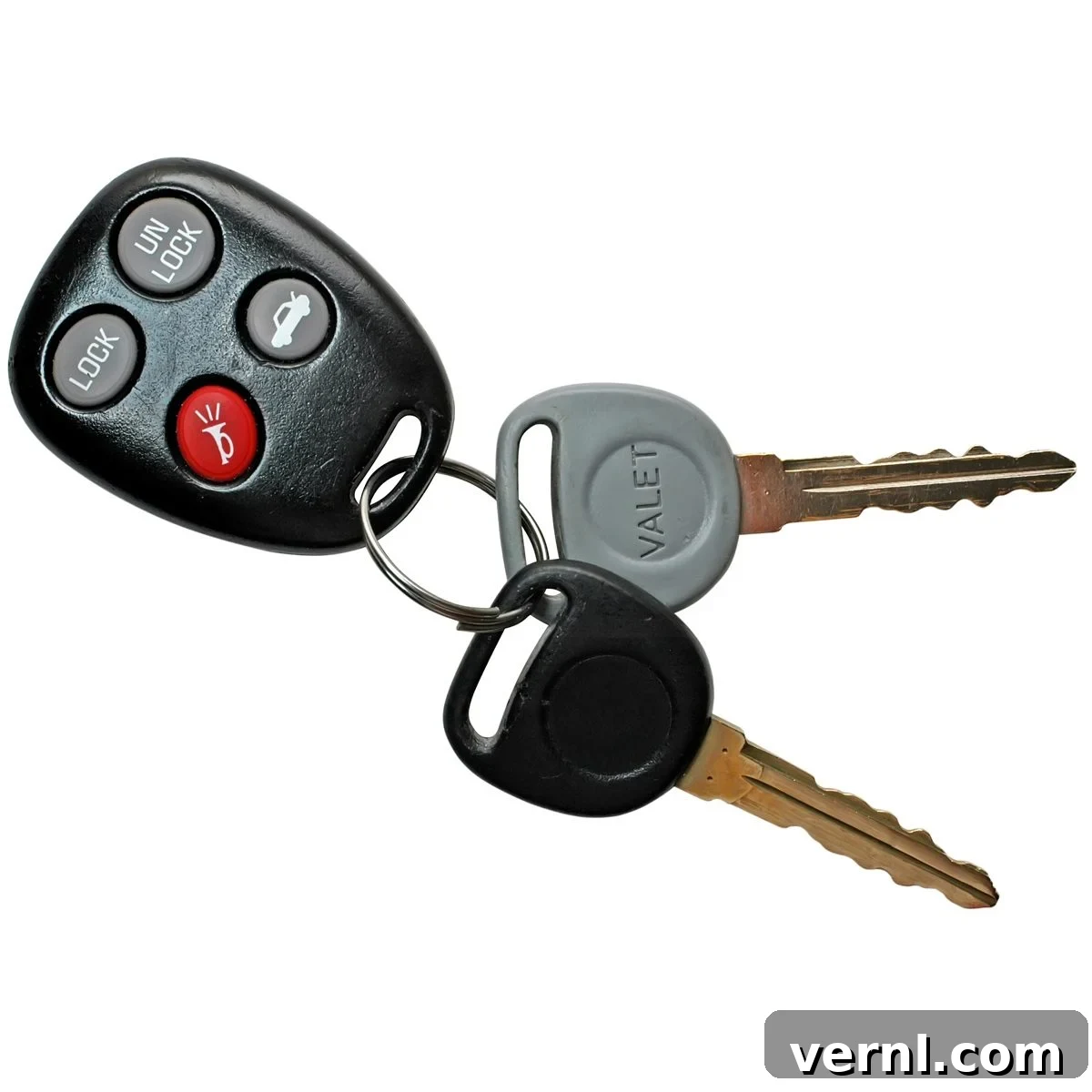
For many car owners, the term “valet key” might sound unfamiliar, or perhaps even a relic of a bygone era. Yet, for those whose vehicles are equipped with one, this often-overlooked automotive accessory holds a dual nature: a convenient feature designed to enhance privacy and security, and simultaneously, a potential vulnerability if mishandled. Understanding what a valet key is, how it functions, and the best practices for its management is crucial for every car owner. This comprehensive guide will illuminate the world of valet keys, helping you identify if your car has one, grasp its purpose, and learn how to secure it effectively to prevent potential security risks.
Unveiling the Valet Key: A Smart Security Feature
At its core, a valet key is a specialized secondary key that accompanies your primary vehicle key or key fob. It’s not just a simple spare; rather, it’s engineered with specific limitations to grant restricted access to your vehicle. As Sara Sam, an auto expert at Way.com, explains, “Most of us are probably not familiar with the concept of valet keys, but they are a blessing in disguise; a smart security feature that limits access to certain parts of your car while still allowing someone to drive it.”
The primary function of a valet key is to allow someone—such as a valet attendant, car wash employee, or mechanic—to start and drive your car, but critically, to prevent them from accessing your private belongings stored in specific compartments. This typically means the valet key will unlock the car doors and start the ignition, but it will not unlock the glove compartment or the trunk. This design ensures that while your vehicle can be moved or serviced, your valuables and personal documents remain secure and out of reach.
Evolution and Types of Valet Keys
While the concept remains consistent, valet keys have evolved with automotive technology. Historically, these were distinct, physical metal keys, often smaller than the primary key and sometimes explicitly labeled. Today, you might encounter a valet key in several forms:
- Traditional Physical Key: Still common in older models or as a standalone option, this is a distinct metal key designed solely for valet purposes.
- Integrated within Key Fobs: Many modern vehicles feature key fobs that house a hidden, physical “emergency” or “mechanical” key. This removable key often functions as a valet key, providing limited access when extracted from the fob.
- Digital Valet Mode: The most advanced iteration, often found in luxury and high-tech vehicles, is a digital “valet mode” or “guest mode” activated through the vehicle’s infotainment system or a dedicated smartphone app. This mode goes beyond physical access, allowing owners to set speed limits, geofence the vehicle, disable certain functions, restrict access to personal data (like navigation history or phone contacts), and, of course, lock the trunk and glove box digitally. Brands like BMW, Audi, and various sports cars are known for incorporating these smart technology valet keys or digital modes.
The presence of a valet key or mode is particularly common in luxury vehicles and cars whose owners frequently utilize services like professional valeting, detailed car washes, or lengthy repair appointments, where the convenience of delegating driving tasks without compromising privacy is highly valued.
The Hidden Risk: Why Unaccounted Valet Keys Are a Security Concern
Despite their intended purpose as a security feature, unaccounted for valet keys can inadvertently transform into a significant security risk. As useful as they are, their very nature makes them a target for thieves. Many car owners, unaware of the potential danger, often store these keys in easily accessible locations within their vehicles.
A common mistake is leaving the valet key inside the glove compartment, often alongside the owner’s manual. Thieves are well aware of this habit and will specifically target glove boxes, knowing that finding a valet key can make stealing the car remarkably easy. If a thief breaks into your car and finds the valet key, they effectively have the means to start and drive away with your vehicle, bypassing many conventional security measures.
This isn’t just a theoretical concern; it’s a documented vulnerability. Audi, for instance, has previously issued warnings to its drivers to remove valet keys from the glove box due to an uptick in thefts facilitated by keys left inside. The ease with which a car can be stolen using its own key, even a restricted one, complicates matters, potentially affecting insurance claims and certainly causing immense distress for the owner.
Beyond the Car Itself: What Else Is At Risk?
The threat extends beyond just the vehicle itself. If a thief gains access to your car using a valet key, they also gain time and privacy. This means:
- Valuables in the Trunk/Glove Box: While the valet key is designed to prevent access, if a thief manages to locate your main key or takes the car to a location where they can force entry into the compartments, any valuables left inside are at risk.
- Personal Documents: Vehicle registration, insurance papers, or other personal documents often kept in the glove box can fall into the wrong hands, leading to identity theft or other serious issues.
- Garage Door Openers: A stolen car with a garage door opener provides thieves direct access to your home, escalating the security breach significantly.
- “Joyriding” or Criminal Activities: A car stolen with its own key is less likely to trigger immediate suspicion if pulled over, potentially being used for other criminal activities before being abandoned.
Even the physical key hidden within modern key fobs poses a similar risk. If your primary key fob is lost or stolen, the physical key housed within it can also serve as a valet key, allowing unauthorized access to your vehicle and its operational functions.
How to Identify and Locate Your Car’s Valet Key
Given the dual nature of valet keys – their convenience and their potential risk – knowing whether your car has one, and where it is, is paramount. Here’s a step-by-step guide to help you identify and locate your valet key:
- Check Your Owner’s Manual: This is arguably the most reliable resource. Your vehicle’s owner’s manual will detail all the keys that came with your car, including any valet keys, their specific functions, and recommended storage. Look under sections related to “Keys,” “Security,” or “Valet Mode.”
- Inspect Your Key Fob: For most modern vehicles, especially those with push-button start, your primary key fob often contains a hidden physical key. Look for a small release button or switch on the side or back of the fob. Pressing or sliding it will typically release a small metal key. This key often functions as an emergency key (to open the door if the fob battery dies) and sometimes also as a valet key, restricting access to the trunk and glove box.
- Examine Your Car’s Documentation and Key Set: When you purchased your car, it likely came with a set of keys. Go through all the keys provided. A valet key might be distinctively colored, smaller, or lack certain remote functions compared to your main key.
- Look in Common Storage Areas: Many car owners, often mistakenly, leave valet keys in the car. Check the glove compartment, center console, and any storage pockets. If you acquired your car used, an previous owner might have left it behind.
- Test the Key: If you find a potential valet key, you can test its functionality. Use the key to unlock your car door and start the engine. Then, try to unlock the trunk and the glove compartment. If it fails to open these specific compartments, you’ve likely identified your valet key.
- Consult Your Dealership or an Automotive Locksmith: If you’re still unsure after checking the manual and your key set, contact your car’s dealership or a reputable automotive locksmith. They can tell you definitively if your model came with a valet key and can even help you identify or create one.
Best Practices for Valet Key Management and Security
Once you’ve identified your valet key, the next crucial step is to manage it responsibly. Proactive management can significantly mitigate the security risks associated with this useful yet vulnerable item.
- Never Leave Your Valet Key in the Car: This is the golden rule. The glove box, center console, or any other compartment within the vehicle are not secure places for your valet key. Treat it with the same caution as your primary key.
- Store It Securely at Home: Keep your valet key in a safe, secure location at home, separate from your main set of car keys. A home safe, a locked drawer, or another private spot is ideal. This ensures that if your primary keys are lost or stolen, the valet key isn’t compromised alongside them.
- Only Use It When Absolutely Necessary: Reserve the valet key strictly for its intended purpose: when entrusting your car to a valet, a mechanic, or a car wash service. For everyday driving, stick to your primary key.
- Utilize Digital Valet Mode (If Applicable): If your car features a digital valet mode, learn how to activate and deactivate it. Always set a unique PIN or password for this mode and share it only with trusted individuals for specific, limited periods. Remember to deactivate it and change the PIN regularly.
- Educate Household Members: Ensure that anyone else who drives your car or has access to your keys understands the purpose and risks associated with the valet key and knows where it is securely stored.
- Label Your Keys Clearly (Discreetly): If you have multiple keys and want to easily differentiate them, consider discreet labeling. However, avoid explicit labels like “Valet Key” that could inform a thief. Instead, use a color code or a unique tag that only you understand.
- Regularly Check Its Location: Periodically confirm that your valet key is still in its designated secure storage location. This helps prevent accidental loss or misplacement.
FAQ
What should I do if I lose my valet key?
The course of action if you lose your valet key depends heavily on the circumstances of its loss. Sara Sam advises, “If you think someone will find it and know whose car it goes to, then you might want to contact your manufacturer to have your locks changed, to prevent possible theft.” This scenario is particularly concerning if the key was lost in a public place near your vehicle or if it had identifying information attached. In such cases, the potential for a sophisticated thief to link the key to your car and exploit its functionality is high. You might need to consider rekeying your vehicle’s locks and reprogramming all your remaining keys, which can be a costly but necessary security measure.
However, Chris “Moose” Pyle, an automotive expert with JustAnswer, offers a more relaxed perspective for certain situations: “But if you lose it and don’t typically use valet service, or don’t keep valuables in the glove box or trunk, then you probably don’t need to worry about it. Just keep driving using your primary or spare key.” This advice applies when the key is lost in an unidentifiable way (e.g., dropped somewhere random with no car information) and your risk profile is low. In such instances, the likelihood of the lost key being directly linked to your specific vehicle and used for theft is minimal. Nevertheless, it’s always wise to remain vigilant and consider your personal risk tolerance. If any doubt remains, consulting with your dealership or an automotive locksmith for advice specific to your situation is recommended.
Can I get a valet key for my car if it doesn’t have one?
Yes, in many cases, you can get a valet key made for your car even if it didn’t originally come with one or if you wish to replace an existing one. Your local dealership is typically the best starting point; they can often order and program a new key specific to your vehicle’s make and model. Alternatively, a certified automotive locksmith possesses the tools and expertise to cut and program a new valet key for you. However, there’s a crucial caveat: a physical valet key will only be functionally useful in limiting access if your trunk and glove box are already equipped with physical lock cylinders. If your vehicle relies solely on electronic releases for these compartments without corresponding physical keyholes, a traditional valet key may not offer the intended restricted access. In such modern vehicles, inquiring about activating or setting up a digital valet mode (if available) would be the more appropriate solution.
About the Experts
- Chris “Moose” Pyle is a master-certified technician with 20-plus years of automotive experience. He has also worked as an expert for JustAnswer since 2006, where he answers hundreds of car maintenance and repair questions a day, offering invaluable insights into vehicle mechanics and security.
- Sara Sam is a senior writer and auto expert with the Way.com auto app. Her extensive knowledge of automotive trends and security features makes her a trusted voice in helping car owners navigate complex vehicle functionalities.