
If you’ve ever paused to examine your smartphone closely, you might have noticed a series of small, often unassuming holes along its sides and bottom. In an era where mobile phone designs are constantly evolving, these tiny apertures can spark curiosity: what exactly are their functions? These aren’t random aesthetic choices; each serves a vital purpose, contributing to the sophisticated operation of your device. Understanding these design elements not only satisfies your curiosity but also empowers you to better utilize and care for your phone. We’ve delved into the inner workings of three of the most popular smartphone brands – iPhone, Samsung, and Pixel – to demystify these common yet often overlooked features. By the end of this comprehensive guide, you’ll be able to confidently articulate how these essential components contribute to your device’s overall functionality, from staying connected to capturing crystal-clear audio.
The Indispensable SIM Card Slot: Your Gateway to Connectivity
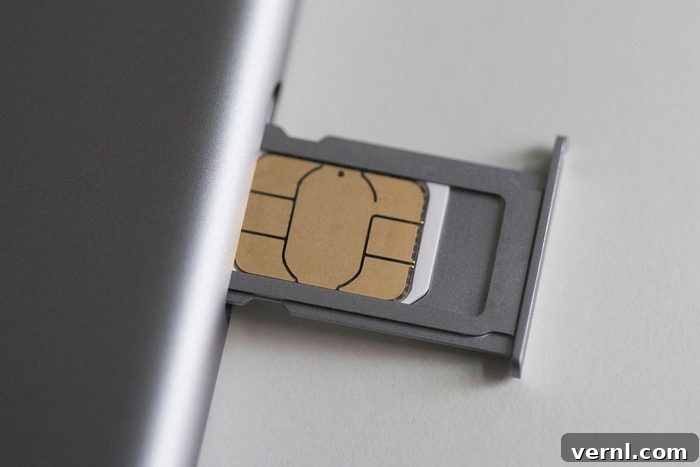
Among the most frequently wondered-about openings on any smartphone is the SIM card slot. The term “SIM” stands for Subscriber Identity Module, and it’s a small, embedded chip that essentially acts as your phone’s digital passport, securely storing information vital for identifying you to your mobile network. This tiny card links your unique phone number to your specific device, enabling you to make calls, send texts, and access mobile data. While the mobile industry is gradually transitioning towards electronic SIMs (eSIMs) for their convenience and environmental benefits, a significant number of smartphones currently on the market, including many popular models, still rely on a physical SIM card.
The physical SIM card offers immense flexibility, particularly for international travelers. For instance, if you’re planning an overseas trip and wish to avoid exorbitant roaming charges, swapping out your domestic SIM card for a local one upon arrival is a common and highly recommended practice. This allows you to tap into local network rates, making communication and data usage far more affordable. The SIM card slot, therefore, isn’t just a place to insert a chip; it’s a critical component that dictates your network access and often your financial outlay when abroad.
Locating and Accessing Your SIM Card Slot
Accessing the SIM card slot typically requires a small tool, often called a SIM ejector tool, which usually comes in your phone’s original packaging. A straightened paperclip can also serve as an effective substitute in a pinch. The process of removing and inserting a SIM card is generally straightforward, but it’s crucial to be aware of the specific location and any potential pitfalls, which can vary significantly between brands and even models.
iPhone SIM Card Slot
On iPhones that still utilize a physical SIM card, the slot is invariably located along one of the sides of the device. You’ll recognize it by a small, slim panel with a tiny, almost pinprick-sized hole next to it. To open the tray, gently but firmly insert the SIM ejector tool or a fine pin into this small hole. You’ll feel a slight click, and the SIM tray will partially eject, allowing you to pull it out completely. Once open, you can remove or replace the SIM card, ensuring it’s correctly oriented within the tray before pushing it back into the device until it sits flush.
Samsung Galaxy SIM Card Slot
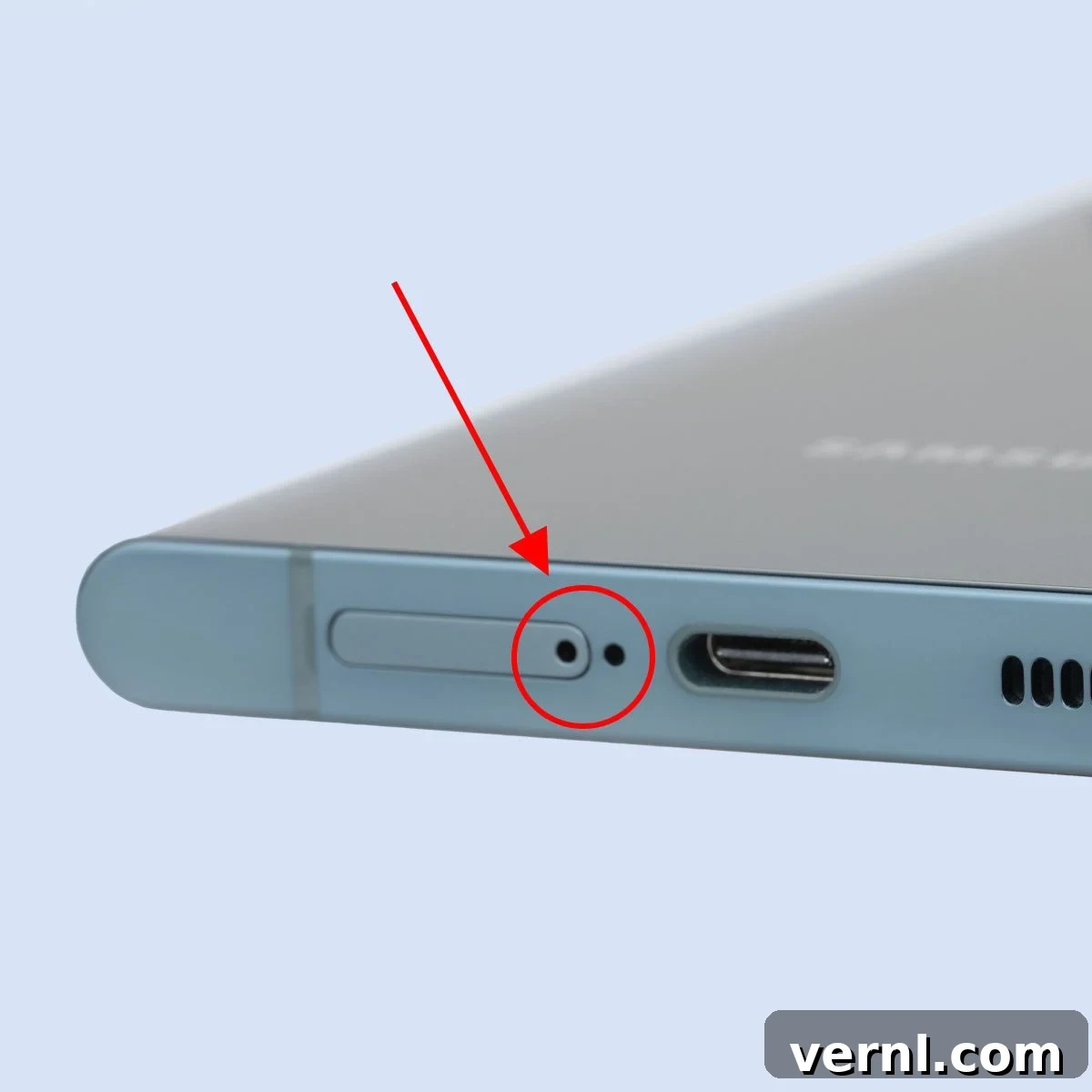
Samsung devices have seen more variation in the placement of their SIM card slots over the years. Earlier models often featured the slot at the top edge of the phone. However, as designs evolved and internal components became more sophisticated, many of these top-mounted holes were repurposed for other functions, such as additional microphones dedicated to ambient noise cancellation. On more recent models, like the Galaxy S21 series, the SIM card slot has migrated to the bottom edge. This shift, however, comes with a cautionary note: the SIM slot on these models is frequently situated in close proximity to other tiny holes that house noise-canceling microphones. Extreme caution is advised when attempting to open the SIM tray on a Samsung device, as mistakenly poking a microphone hole can lead to permanent damage and impair your phone’s audio capabilities. Always double-check the exact location in your user manual or a reliable diagram before inserting any tool.
Google Pixel SIM Card Slot
For Google Pixel phones, the SIM card slot’s location has also seen some evolution. Prior to the release of the Pixel 9 in mid-2024, the SIM slot was typically found along the side of the device, similar to iPhones. However, with the Pixel 9 and subsequent models, Google moved the SIM card slot to the bottom of the phone. This consolidation of ports and openings at the bottom is a common trend in modern smartphone design, aiming for a cleaner aesthetic and more efficient internal layout. Regardless of its position, the method of ejecting the SIM tray remains consistent across Pixel models: locate the small pinhole and use the ejector tool to release the tray.
The Rise of eSIM Technology
As mentioned, the future of mobile connectivity is increasingly leaning towards eSIM technology. An eSIM is a digital SIM that allows you to activate a cellular plan from your carrier without needing a physical nano-SIM card. This brings several advantages, including faster activation, the ability to switch carriers more easily, and the capacity to store multiple cellular profiles on a single device, perfect for those who manage both personal and business lines or frequently travel internationally. While physical SIM slots are still prevalent, many high-end smartphones now offer dual SIM capabilities, combining a physical SIM slot with an eSIM, or even moving to eSIM-only configurations. This evolution streamlines phone design, potentially enhancing waterproofing and freeing up valuable internal space for other components.
Speakers and Microphones: Your Device’s Voice and Ears
Beyond the SIM card slot, many of the other small holes you observe lining the perimeter of your smartphone are dedicated to its auditory functions: speakers and microphones. These tiny apertures are crucial for nearly all forms of communication and media consumption on your device, working in tandem to provide a rich and immersive audio experience. Modern smartphones are equipped with multiple speakers and microphones, each strategically placed to optimize performance for different scenarios.
The Intricate Network of Microphones
Your smartphone typically houses more than one microphone. The primary microphone, usually located at the bottom of the device near the charging port, is what picks up your voice during regular phone calls. However, additional microphones are often found at the top and sometimes on the back or sides of the phone. These secondary microphones serve several advanced functions:
- Noise Cancellation: One of their most important roles is ambient noise cancellation. During a call, these microphones detect background sounds and use sophisticated algorithms to filter them out, ensuring your voice comes through clearly to the person on the other end, even in noisy environments.
- Stereo Audio Recording: When you record videos, multiple microphones work together to capture audio in stereo, providing a more spatial and lifelike sound experience.
- Voice Assistants: Dedicated microphones or optimized algorithms help your device accurately pick up voice commands for digital assistants like Siri, Google Assistant, or Bixby, even from a distance.
- Speakerphone Mode: When you engage speakerphone, a different array of microphones might be activated to ensure your voice is still clearly audible despite the increased distance from your mouth.
The precise arrangement and number of microphones vary by manufacturer and model, but the general principle is to ensure high-quality audio input regardless of how the phone is held or used.
The Dynamic Role of Speakers
Similarly, modern smartphones boast multiple speakers. On newer iPhones, Pixels, and Samsung Galaxies, particularly those that have done away with the dedicated headphone jack, the primary speaker grilles are typically located along the bottom edge, often surrounding the USB-C (or Lightning for older iPhones) charging port. These powerful speakers are responsible for playing music, videos, speakerphone audio, and ringtones. Additionally, the earpiece speaker, located at the top of the display, doubles as a secondary speaker, often creating a stereo effect with the bottom speaker when playing media. This arrangement enhances the auditory experience, making everything from streaming movies to video calls more immersive and enjoyable. Whether you’re making a crucial call or unwinding with your favorite playlist, these strategically placed speakers and microphones are constantly working to deliver superior sound quality.
The Ubiquitous Charging Port and Data Transfer
While often perceived as a single, larger opening rather than a “hole” in the traditional sense, the charging port is undeniably one of the most vital apertures on your smartphone. Located almost universally at the bottom edge of the device, this port serves a dual purpose: it’s the gateway for replenishing your phone’s battery and the primary conduit for wired data transfer. Its design and capabilities have evolved significantly over the years, from bulky proprietary connectors to the widely adopted, reversible USB-C standard.
Historically, phones featured various charging ports, including Micro-USB, which was common for Android devices, and Apple’s proprietary Lightning port for iPhones. The industry has largely standardized on USB-C, praised for its universality, faster charging speeds, and higher data transfer rates. This shift means a single cable can often charge multiple devices, reducing cable clutter and enhancing convenience. Beyond power delivery, the charging port enables quick and reliable transfer of files – photos, videos, documents – between your phone and a computer or other peripherals. It also supports accessories like external drives, USB audio interfaces, and display adapters, extending your phone’s functionality significantly. Keeping this port clean and free of debris is paramount to ensure consistent charging and data integrity.
The Vanishing Act: The Headphone Jack
For many years, the 3.5mm headphone jack was a standard feature on virtually every smartphone, a familiar small circular hole that allowed users to connect wired headphones or external speakers. However, in a concerted effort to push wireless audio technology, enhance water resistance, and free up precious internal space for other components (like larger batteries or improved cameras), many manufacturers, led by Apple, began removing the dedicated headphone jack from their flagship devices. This decision, while initially met with mixed reactions, has become a widespread trend across the industry.
The absence of the headphone jack necessitates the use of wireless Bluetooth headphones, USB-C (or Lightning) headphones, or a dongle adapter that converts the charging port into a headphone jack. While it simplifies phone design and potentially improves durability by eliminating an opening, it also means users often need to carry adapters or invest in new audio accessories. This evolution reflects the industry’s continuous drive towards thinner, more robust, and increasingly wireless devices, where every millimeter of internal space and every external aperture is carefully considered for maximum utility and innovation.
Beyond the Obvious: Barometers and Other Subtle Vents
While SIM card slots, speakers, microphones, and charging ports are the most prominent openings, some smartphones feature even more subtle, often overlooked holes that serve highly specialized functions. One such example is the tiny vent for a barometer. A barometer measures atmospheric pressure, and in a smartphone, this data can be used to determine altitude with greater accuracy than GPS alone. This is particularly useful for fitness tracking apps that count stairs climbed or for navigation in mountainous terrain, allowing your phone to differentiate between changes in elevation versus horizontal movement.
These minuscule holes are meticulously designed to allow air pressure to be sensed without compromising the phone’s water resistance. In some instances, similar tiny vents might also function as pressure equalization ports, especially in waterproof devices. As you descend into water or rise in altitude, the internal and external pressures need to equalize to prevent stress on the device’s seals and internal components. These ingenious, almost invisible openings demonstrate the incredible complexity and precision involved in modern smartphone engineering, where even the smallest detail serves a critical purpose in enhancing performance and user experience.
Conclusion: The Art of Tiny Engineering
The seemingly insignificant holes on your smartphone are, in fact, marvels of miniaturized engineering, each serving a crucial role in the device’s overall functionality. From the indispensable SIM card slot that connects you to the world to the intricate array of speakers and microphones that bring your conversations and media to life, and the versatile charging port that powers your daily interactions, every aperture is precisely designed and strategically placed. As smartphone technology continues to advance, we see a constant evolution in these features, with innovations like eSIMs and the removal of the headphone jack shaping future designs.
Understanding the purpose of these small openings not only satisfies a natural curiosity but also provides valuable insight into how your device operates. It underscores the incredible complexity packed into a sleek, handheld gadget and highlights the continuous efforts of manufacturers to balance aesthetics, durability, and cutting-edge functionality. So, the next time you glance at your iPhone, Samsung, or Pixel, you can appreciate the thoughtful design behind every tiny hole, knowing that each one contributes to the seamless and sophisticated mobile experience you enjoy every day.
Sources
- Pixel Phone Hardware Diagram, Pixel Phone Help.
- Big mistake. What are the holes?, Samsung Community, 2021.
- Galaxy S21 series design flaw leaves room for user error, Sam Mobile, 2021.
- Physical holes on the bottom of my iPhone, Apple Community, 2025.
- Hole bottom, Samsung Community, 2022.