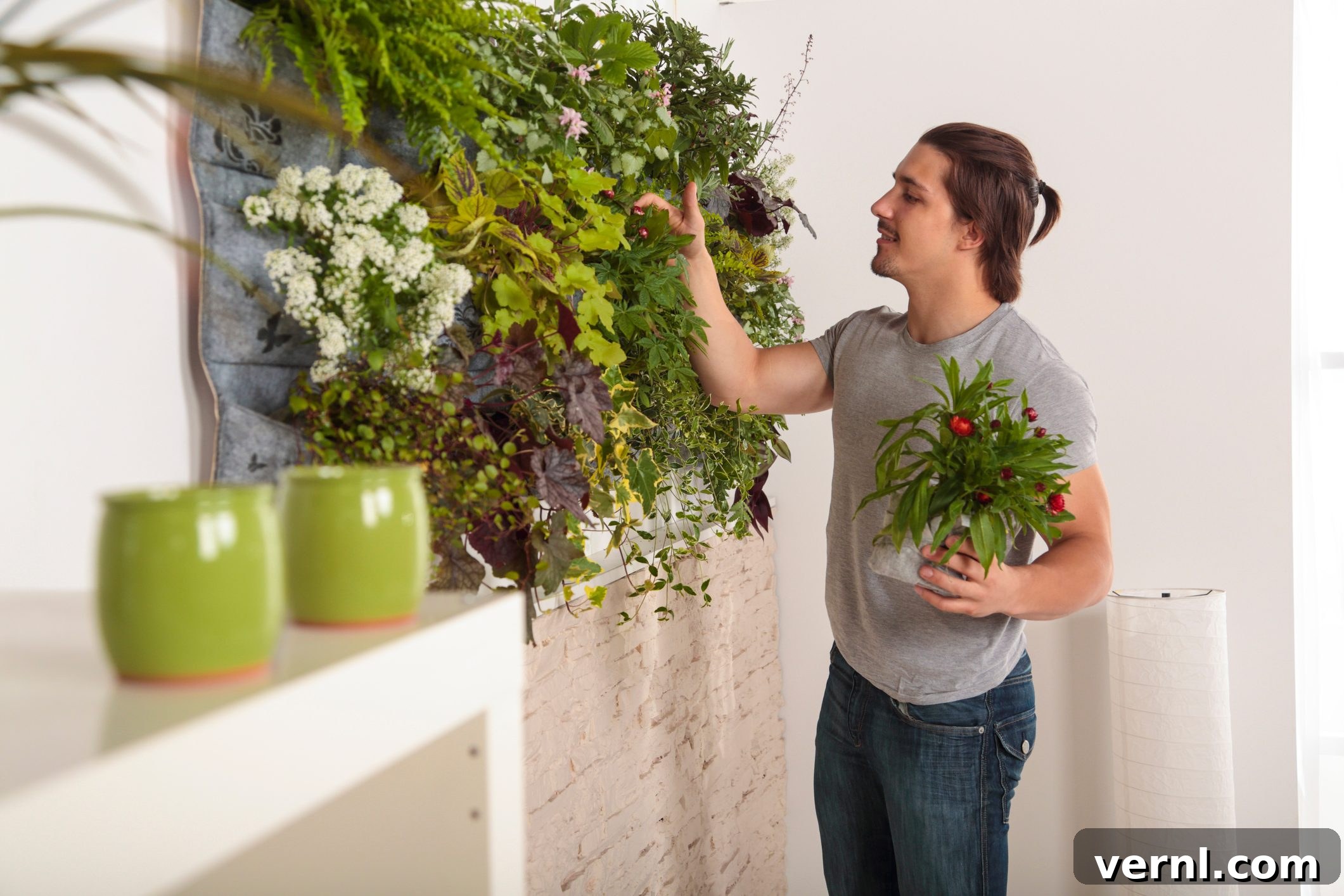
The timeless appeal of walls adorned with lush greenery traces its origins back to antiquity, famously epitomized by the Hanging Gardens of Babylon, one of the Seven Wonders of the Ancient World around 600 B.C. These historical marvels demonstrated humanity's enduring desire to integrate nature into architectural spaces. Millennia later, in the 1980s, this ancient concept was revitalized and propelled into modern consciousness, largely credited to the visionary French botanist Patrick Blanc. Blanc's groundbreaking work with vertical gardens not only refined the technique but also popularized the very idea of living walls, sparking a global surge in interest that continues to grow exponentially.
Over the past decade, the concept of living walls has truly blossomed, driven by an increasing demand for sustainable, space-saving, and aesthetically pleasing ways to infuse natural elements into both indoor and urban environments. Beyond their undeniable visual charm, living walls are celebrated for their significant environmental and wellness benefits. They are recognized for their ability to improve indoor air quality, mitigate the urban heat island effect, and create tranquil green havens amidst bustling cityscapes. This comprehensive guide, enriched with insights from leading gardening experts, explores everything you need to know about creating and maintaining both interior and exterior living walls.
What Exactly Is a Living Wall?
A living wall, often interchangeably referred to as a vertical garden, green wall, plant wall, edible wall, or ecowall, is essentially an intricate collection of plants cultivated vertically on a wall surface, whether indoors or outdoors. These botanical installations range dramatically in complexity and scale. They can be as understated as a few strategically placed potted plants on a shelving unit or a graceful ivy vine ascending the side of a building. On the other end of the spectrum, they can manifest as elaborate tapestries woven from diverse plant species, meticulously arranged to form a dynamic, living work of art. Typically, these sophisticated systems are constructed using modular panels or pockets, within which plants are housed, and are often sustained by automated drip irrigation lines that utilize gravity to efficiently distribute water.
"A living wall offers an extraordinarily unique and impactful method to introduce lush greenery and captivating visual interest into any home or commercial space," explains Erin Marino, Lifecycle Marketing Director at The Sill plant company in New York City. "The possibilities for imaginative designs are vast, allowing individuals to craft a vertical garden that perfectly complements their unique space, aesthetic preferences, and lifestyle." These systems often integrate advanced hydroponic or aeroponic techniques, minimizing soil usage and optimizing nutrient delivery directly to the plant roots, further enhancing their efficiency and appeal.
Transformative Benefits of Incorporating a Living Wall
The primary allure for many individuals investing in living walls stems from their striking aesthetic appeal and their ability to transform mundane spaces into vibrant natural masterpieces.
"They are simply gorgeous," enthuses Jim Mumford, president and resident horticulturist at Good Earth Plant Company in San Diego. "Imagine having a dynamic, living painting of plants on your wall. Unlike a flat canvas, a living wall boasts incredible three-dimensionality, offering rich textures, captivating depth, and ever-shifting shadows that create a truly immersive visual experience. It's a constant source of natural beauty and wonder."
Beyond their beauty, the presence of living walls and nature, in general, has profound positive impacts on human well-being. Extensive scientific studies consistently demonstrate the numerous psychological and physiological benefits of biophilic design elements. Plants have been shown to:
- Significantly enhance mood and promote feelings of happiness;
- Effectively reduce stress levels and alleviate anxiety;
- Boost creativity, improve cognitive function, and elevate overall morale;
- Accelerate healing and recovery processes. Research indicates that hospital patients with views of natural green spaces from their beds often require less pain medication and experience faster recovery times.
"There's a substantial body of research underscoring how deeply plants contribute to our happiness and overall sense of well-being," Mumford adds. "Furthermore, the design potential is limitless. It's akin to painting, but instead of pigments, you're using a diverse palette of living plants as your brushstrokes to create stunning, evolving art."
Additional compelling advantages of integrating living walls include:
- Enhanced Acoustics: Living walls possess remarkable sound-dampening properties, capable of reducing background noise by up to 15 decibels. Mallory Micetich, a home care expert at Angi (formerly Angie's List), elaborates, "Living walls act as natural sound barriers. If your home is situated on a busy street or you contend with noisy neighbors, a strategically placed vertical garden can significantly diminish the amount of intrusive noise penetrating your indoor spaces, creating a more peaceful environment."
- Optimized Space Utilization: They offer an ingenious solution for cultivating a multitude of plants in areas where horizontal space is at a premium, making them ideal for urban dwellings and compact interiors.
- Superior Air Quality Improvement: By actively photosynthesizing, plants in living walls release oxygen, increase indoor humidity to comfortable levels, and efficiently filter out harmful carbon dioxide and a range of airborne pollutants, creating a healthier living environment. This contributes to better respiratory health and overall comfort.
- Natural Privacy Screens: When utilized as a room divider or exterior screen, living walls offer an organic, beautiful, and dynamic solution for enhanced privacy.
- Improved Energy Efficiency: Living walls act as natural insulation layers for buildings. Exterior green walls can significantly reduce solar heat gain in warmer months, leading to lower air conditioning costs. Indoor walls can also contribute to stable indoor temperatures, leading to less energy consumption for heating and cooling.
- Increased Property Value: The inclusion of a well-maintained and aesthetically pleasing living wall is a unique feature that can notably enhance a property's curb appeal and overall market value, appealing to environmentally conscious buyers.
- Educational Opportunities: They provide an engaging and tangible learning platform for children, fostering an understanding of botany, ecosystems, and environmental stewardship right within their immediate surroundings.
"Beyond these functional benefits, they're inherently distinctive, unusual, and undeniably cool," Mumford concludes. "They also infuse a space with a subtle, natural aroma, replacing the often sterile smell of a cold, dry room with the fresh scent of living plants."
Potential Challenges and Downsides of Living Walls
While the benefits are compelling, it's crucial to acknowledge that living walls demand a considerable commitment to maintenance. Experts often advise beginners to start with a smaller, more manageable panel to gauge the level of care required before committing to a larger installation. "It's imperative to be honest with yourself about the time and effort you are realistically able to dedicate to the ongoing care of your living wall," advises Marino.
Key disadvantages and challenges associated with living walls include:
- Intensive Maintenance Requirements: Unlike a traditional potted plant, a living wall requires consistent and often specialized care. This includes regular watering (which can be more complex due to vertical orientation), diligent trimming and pruning to maintain shape and health, and the inevitable replacement of plants that succumb to disease or stress.
- High Initial Setup Costs: The upfront investment for a living wall can be substantial, particularly for complex, automated systems. Costs encompass the structural framework, specialized planting modules, an efficient irrigation system, appropriate lighting (for indoor walls), and the plants themselves. Professional installation can further double these expenses.
- Potential for Messiness: If not meticulously designed and installed, living walls can lead to mess. This includes water drips, soil spillage (especially with certain systems), and fallen leaves or plant debris, which require regular cleaning.
- Lack of Portability: Once a living wall system is securely installed and established, it is notoriously difficult, if not impossible, to relocate without significant effort and potential damage to the structure or plants. This immobility requires careful planning of its permanent placement.
- Increased Energy Consumption for Indoor Walls: Indoor living walls, especially those not exposed to ample natural light, necessitate supplementary grow lights to thrive. This translates to higher electricity usage and consequently, a noticeable increase in your energy bill.
- Pest Attraction: Like any large collection of plants, living walls can become an attractive habitat for various pests if not regularly inspected and properly maintained. Consistent vigilance and timely intervention are crucial to prevent infestations.
- Material Deterioration Over Time: The structural backing and planting modules of living walls, especially those exposed to the elements outdoors or constant moisture indoors, are susceptible to deterioration over time. The lifespan depends heavily on the quality of materials used and environmental conditions.
"Everyone starts with the best intentions, thinking, 'Oh yes, I'll diligently care for that every single week,' " Mumford observes wryly. "It's much like maintaining a swimming pool; you promise yourself weekly chemical treatments, but then a few months pass, and it's neglected and turns green."
Mumford estimates that a typical DIY living wall project might cost around $100 per square foot for materials and plants. This cost can double, or even more, if you opt to hire a professional company for design and installation. However, he notes, "If you're an enthusiastic gardener who enjoys taking cuttings, propagating plants yourself, or growing them from seed, then these costs can be drastically reduced, making it a much more economical endeavor."
Fundamental Requirements for an Indoor Living Wall
Wall Types and Anchoring Solutions
Whether you envision a minimalist arrangement of potted plants on a simple shelving unit or an elaborate, multi-species botanical artwork, an indoor living wall can be securely attached to almost any vertical surface, provided it is properly anchored to support its considerable weight. When fully saturated with water, a living wall can weigh anywhere from five to twenty pounds per square foot, necessitating robust structural support.
Mumford cautions against relying on simple expanding drywall anchors, as these can easily pull out under sustained load. He strongly recommends using sturdier fasteners such as toggle bolts (often referred to as butterfly screws) or specialized wall anchors designed for heavy loads. Once properly installed, living walls are inherently stable because their weight primarily hangs directly downwards, exerting minimal outward pull on the wall structure.
Efficient Irrigation Systems
Effective watering is paramount for the health and longevity of indoor living walls. The most prevalent irrigation systems for these vertical gardens include:
- Manual Hand Watering: This method involves individually watering each plant pocket. While simple for small installations, it can become incredibly time-consuming, physically demanding, and potentially messy for larger walls. It also poses a significant challenge if you travel frequently, as consistent hydration is crucial.
- Automated Drip Irrigation: This is the gold standard for most indoor living walls. A drip irrigation system precisely delivers water directly to the root zone of each plant through a network of small tubes and emitters. These systems are typically automated with timers, ensuring consistent watering schedules. They can also be adapted with a standalone pump for spaces without direct plumbing connections, offering efficiency and water conservation.
"For anyone contemplating a more elaborate or expansive living wall, we unequivocally recommend integrating an automated irrigation system," advises Marino. "Attempting to water plants vertically by hand is exceptionally challenging and often leads to uneven hydration. A well-designed irrigation system guarantees that every plant receives the precise amount of water it needs to thrive, reducing maintenance effort and promoting healthier growth." Proper drainage is also essential to prevent waterlogging and root rot, often achieved through collection trays at the base of the wall.
Optimal Sunlight and Supplemental Grow Lights
Adequate lighting is a critical factor for the success of any indoor living wall. It's imperative to meticulously assess the natural lighting conditions of your chosen space and select plants that align with that environment. Plants requiring high light, such as succulents and many flowering species, will necessitate abundant natural light supplemented with dedicated grow lights to truly flourish. "In truth, plants can be successfully hung almost anywhere, provided they consistently receive the specific light spectrum and intensity essential for their survival," Marino explains. "This adaptability is very much a part of the creative freedom offered by living walls."
For most common houseplants used in indoor living walls, Mumford suggests utilizing full-spectrum LED grow lights. He recommends a minimum intensity of 150-foot candles (or approximately 2,000-3,000 lux) at a color temperature of around 4300 Kelvin, consistently provided across the entire wall for a duration of about 10 hours per day.
"Always connect your grow lights to an automatic timer," he stresses. "Never rely on your memory or personal diligence for consistent lighting. Another crucial observation is that if a prominent window is situated to the right of your living wall, you'll invariably notice the plants collectively leaning towards that natural light source. However, by strategically positioning high-quality grow lights directly above the wall, you can effectively train the plants to grow upwards, maintaining their natural vertical orientation and aesthetic appeal."
Essential Considerations for an Outdoor Living Wall
Compatible Wall Structures
Outdoors, living walls offer even greater versatility in terms of placement, as they can be installed on virtually any robust vertical surface. However, it is crucial to avoid mounting them on fences, which are generally not engineered to withstand the considerable weight of a saturated living wall system, especially when subjected to additional environmental stressors like wind.
Climate Adaptability and Plant Selection
Climate is perhaps the most significant factor dictating the success and design of an outdoor living wall. Thoughtful planning based on your local climate zone is paramount:
- Hot Climates: In regions characterized by high temperatures, living walls are most effective when positioned on the south side of a building. Here, they act as a natural cooling mechanism, reducing the amount of solar radiation absorbed by the wall and consequently lowering indoor temperatures, which contributes to energy savings. Plant selection should focus on drought-tolerant and heat-resistant species.
- Colder Climates: Creating and maintaining an outdoor living wall in colder climates presents unique challenges. Protecting irrigation systems from freezing is critical, often requiring insulation or winterization procedures. Furthermore, finding plants that can tolerate harsh, cold winters and periods of dormancy without perishing is a key consideration.
Always consult with your local nursery or horticultural expert to identify plant species that are proven to thrive outdoors within your specific USDA plant hardiness zone. For perennial plants that go dormant in winter, plan to cut them back in the fall. Critically, ensure that all irrigation lines are thoroughly drained and winterized before the first anticipated freeze to prevent costly damage.
Mumford also highlights an aesthetic aspect during winter months: "You might look at a living wall and perceive it as dead. While it's simply dormant, its barren appearance can be quite striking and sometimes a bit visually jarring for some."
Outdoor Irrigation Principles
Outdoor living walls generally utilize the same fundamental types of irrigation systems as their indoor counterparts, with drip irrigation being the most efficient. However, Mumford strongly cautions against relying solely on rainfall for irrigation. "Rainfall typically does not penetrate deeply or consistently enough into a vertical wall system unless it's a driving, sideways rain event. Supplemental irrigation is almost always necessary to ensure adequate and even hydration for all plants, particularly during dry spells or periods of high evaporation." Considerations for outdoor systems also include incorporating rain sensors to optimize water usage and exploring rainwater harvesting systems for a more sustainable approach.
DIY Living Wall System Recommendations
For those inclined towards a do-it-yourself approach, creating a living wall can be as straightforward as stapling some fabric pockets to a repurposed pallet. However, for a system built to last and provide long-term success, Mumford advises investing in a more robust and flexible system. He recommends options that allow for customization of plant pocket sizes and offer adaptable irrigation methods to suit specific plant needs and wall dimensions.
He has observed excellent results with modular systems from reputable brands like Wally Grow, which provide versatile and aesthetically pleasing solutions. For even simpler, all-in-one setups ideal for beginners or smaller spaces, Marino suggests exploring products like the Smart Landscape Grow Frame, which integrates planters and grow lights into a single unit, simplifying the initial setup process.
Key Strategies for a Flourishing Living Wall
Selecting the Ideal Plant Species
Choosing the right plants is paramount to the long-term success and aesthetic appeal of your living wall. This decision must be carefully aligned with the specific environmental conditions of your wall (light, temperature, humidity) and your capacity for maintenance.
For Indoor Living Walls: Mumford strongly advocates for the almost exclusive use of houseplants. "I might regret saying we're largely confined to houseplants indoors, but the reality is, we pretty much are," he states. "Designers and clients often desire more exotic or unusual species indoors, but unfortunately, the practical truth is that certain plants are classified as 'houseplants' precisely because they are adapted to and thrive in typical indoor environments."
Popular and resilient indoor plant choices include various types of ivies (such as English Ivy or Devil's Ivy/Pothos), spider plants, and philodendrons. Marino adds, "If you tend to be an enthusiastic waterer, ferns are an excellent choice, as they appreciate consistent moisture. Conversely, if you're fortunate enough to have a space bathed in bright, consistent sunlight throughout the day, succulents offer a delightful and low-maintenance option." Marino also highlights the aesthetic value of trailing plants like pothos and philodendrons. Their cascading foliage not only adds visual drama but also effectively fills in any blank spaces on vertical walls, creating a lush, cohesive look.
For Outdoor Living Walls: The primary consideration outdoors is matching plant choices to your local climate zone and the specific sun exposure of your wall. Consider incorporating blooming plants to support pollinators like bees and butterflies, and species that produce seeds or berries to attract local birdlife, thereby enhancing biodiversity. If cultivating an edible living wall is your goal, many herbs (like basil, mint, rosemary), leafy greens (lettuces, spinach), cherry tomatoes, and various pepper varieties can thrive. However, not all edibles are suitable. Mumford shares some humorous failures: "Corn simply does not grow well out of a wall; I've experimented with them all. Pumpkins likewise struggle to flourish vertically on a wall system." Careful research into plant growth habits and root systems is essential for edible walls.
Cultivating Realistic Expectations
Embarking on a living wall project is a commitment. If you are uncertain about the level of dedication required, it is always wise to begin with a small-scale, manageable installation and gradually expand as you gain experience and confidence.
"As an avid plant lover living in a New York City rental with a modest budget, an elaborate green wall complete with a sophisticated irrigation system simply wasn't a feasible option for me," shares Marino. "Instead, I opted for a more accessible and affordable solution using floating shelves from IKEA. On these, I arranged various potted plants, specifically choosing trailing varieties. Their beautiful cascading foliage effectively drapes over and conceals the shelves and pots, creating the illusion of a more complex vertical garden without the extensive commitment or cost." This approach demonstrates that creative, budget-friendly solutions can still achieve a stunning green wall effect.
Frequently Asked Questions About Living Walls
Can I successfully grow edible plants in a living wall?
Absolutely, edible plants can be a highly practical and remarkably productive addition to a living wall, provided the installation receives adequate sunlight throughout the day. Popular choices include various herbs (basil, mint, oregano, thyme), leafy greens (lettuces, spinach, kale), small fruiting plants like strawberries, and compact vegetables such as cherry tomatoes and smaller pepper varieties. Ensure proper nutrient delivery and consistent watering for optimal yield.
How do I effectively manage pests on my indoor living wall?
Preventative measures are by far the most effective strategy for controlling pests on indoor living walls. Implement several key practices: consistently monitor your plants for any early signs of infestation; ensure good air circulation around and through the wall to deter humidity-loving pests; and employ natural pest deterrents such as neem oil sprays or introducing beneficial predatory insects (like ladybugs or lacewings in a controlled environment). Regular inspection and prompt action are crucial to maintaining a healthy, pest-free living wall.
About Our Esteemed Experts
- Erin Marino is the dedicated Lifecycle Marketing Director at The Sill plant company, based in the vibrant horticultural scene of New York City.
- Jim Mumford serves as the knowledgeable president and distinguished resident horticulturist at Good Earth Plant Company, a leading green infrastructure firm located in San Diego.
- Mallory Micetich is a respected home care expert at Angi, a renowned platform formerly recognized as Angie's List, providing invaluable insights into home maintenance and improvement.
[cf]skyword_tracking_tag[/cf]