
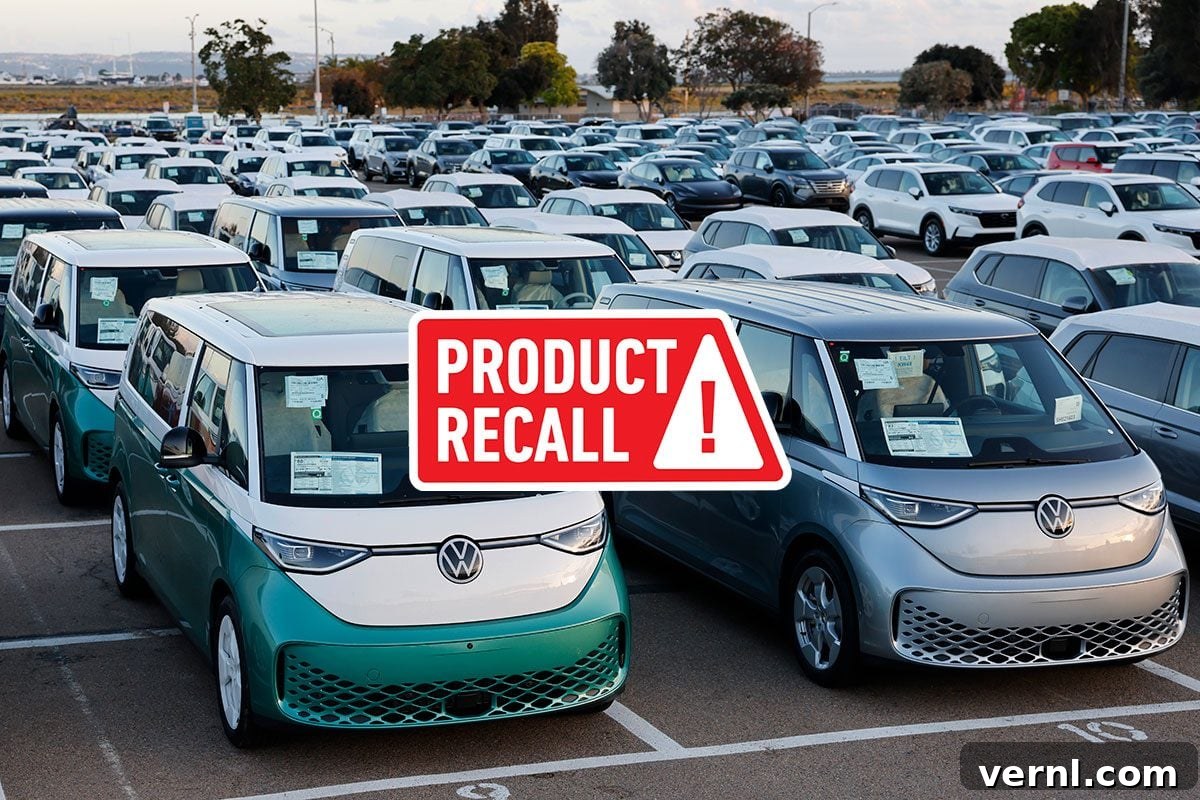
Vehicle safety is paramount, and few features are as critical as seat belts in protecting occupants during a crash. Seat belt laws have been a cornerstone of road safety regulations in the United States for decades, significantly reducing injuries and fatalities. It can therefore be quite alarming when a major automotive manufacturer identifies a lapse in this fundamental safety area. Such is the case with a recent Volkswagen recall, affecting nearly 6,000 vehicles due to a significant seat belt inadequacy in its third-row seating. According to the National Highway Traffic Safety Administration (NHTSA), this design flaw renders the affected vehicles unsafe, failing to meet crucial federal safety standards. This article delves into the specifics of this recall, explaining the exact nature of the error, its potential dangers, and the steps owners of affected vehicles must take to remedy the problem and ensure the safety of their passengers.
The Critical Role of Seat Belts in Vehicle Safety
Seat belts are arguably the most vital safety feature in any vehicle, designed to restrain occupants and prevent them from being thrown forward, backward, or sideways during a collision or sudden stop. Their effectiveness is backed by decades of research and countless lives saved. In a crash, a vehicle rapidly decelerates, but an unrestrained occupant continues to move at the vehicle’s original speed until hitting something – often the dashboard, windshield, or other passengers. Seat belts, by distributing the force of impact across the strongest parts of the body (shoulders, chest, and pelvis), slow down the occupant’s deceleration more gradually, significantly reducing the severity of injuries.
Federal Motor Vehicle Safety Standard (FMVSS) No. 208, titled “Occupant Crash Protection,” is a comprehensive regulation established by the NHTSA to ensure that vehicles provide adequate protection to occupants in the event of a crash. This standard sets specific requirements for seat belts, airbags, and other restraint systems, dictating their design, testing, and performance. Compliance with FMVSS 208 is not just a legal obligation for manufacturers; it is a fundamental commitment to public safety. A failure to comply, particularly concerning seat belt availability, directly compromises occupant protection and elevates the risk of severe injury or fatality in an accident. This foundational standard underpins the entire automotive safety framework in the United States, making any deviation a serious matter.
Beyond personal safety, there are significant legal implications for both drivers and manufacturers related to seat belt use and availability. State laws mandate seat belt use for all occupants in most jurisdictions, and non-compliance can result in fines and penalties. For manufacturers, a recall initiated by a safety standard violation carries substantial costs, reputational damage, and the imperative to correct the defect promptly to prevent harm to consumers. This underscores why recalls, though inconvenient, are a vital component of the vehicle safety ecosystem.
Why Volkswagen is Recalling Nearly 6,000 ID. BUZZ Vehicles
The core issue behind this particular Volkswagen recall stems from a perplexing design oversight in the 2025 ID. BUZZ model. According to the NHTSA’s official brief, the third-row rear bench in the affected vehicles presents a dangerous contradiction: while it is physically wide enough to comfortably accommodate three passengers, it is explicitly designed and equipped with only two seat belts. This discrepancy is not merely an inconvenience; it represents a critical safety hazard and a direct violation of federal safety regulations.
Specifically, this design flaw causes the vehicles to “fail to comply with the requirements of Federal Motor Vehicle Safety Standard number 208, ‘Occupant Crash Protection.'” FMVSS 208 mandates that every designated seating position must be equipped with an adequate occupant restraint system. By providing a seating area that visually suggests capacity for three but only offers two seat belts, Volkswagen has inadvertently created a scenario where a third passenger in that row would be completely unrestrained, or one of the three passengers would be forced to share a seat belt, which is also extremely dangerous and ineffective in a crash.
The NHTSA explicitly highlights the severe danger this poses: “in the event that more than two passengers sit in the rear bench seat, there would not be enough seat belts, increasing the risk of injury during a crash.” This means that if three individuals occupy that third-row bench, at least one person would not have proper restraint. In a collision, an unbelted occupant becomes a projectile, not only endangering themselves but also posing a significant risk to other belted occupants within the vehicle. The forces involved in a crash can be immense, and even at low speeds, the consequences for an unrestrained individual can be catastrophic, leading to severe injuries such as head trauma, internal organ damage, or even death. This situation underscores the fact that while a seat may appear to fit multiple people, true safety and legal compliance hinge on the availability of a dedicated, functional seat belt for every occupant.
Which Volkswagen Vehicles Are Affected by This Seat Size Issue?
The safety concern specifically pertains to nearly 6,000 units of the 2025 Volkswagen ID. BUZZ. This is the new, highly anticipated electric microbus that aims to bring a nostalgic yet futuristic driving experience to the market. Given the vehicle’s design and its appeal to families, the third-row seating capacity is a significant feature, making this recall particularly critical for potential owners who plan to utilize its full passenger capacity.
Volkswagen has committed to notifying all affected owners directly. Owners can expect to receive official recall letters via mail, which Volkswagen anticipates mailing out in late June 2025. It is absolutely crucial for owners of a 2025 ID. BUZZ to be vigilant and keep a close eye on their mailboxes for this important communication. This letter will contain detailed instructions on how to proceed with the recall repair.
In the interim period, before the necessary repair is completed, Volkswagen and the NHTSA strongly advise all owners of the affected 2025 ID. BUZZ vehicles to exercise extreme caution. It is imperative to refrain from seating more than two people on the third-row rear bench seat. Driving with an unbelted passenger is not only highly unsafe due to the increased risk of severe injury in a crash, but it is also illegal in all U.S. states. Prioritizing safety by limiting the third-row occupancy to two individuals until the recall fix is implemented is a critical step to protect yourself and your passengers.
The Solution: Ensuring Compliance and Passenger Safety
To rectify this significant safety defect, Volkswagen has outlined a clear and actionable solution for affected ID. BUZZ owners. Volkswagen dealers will undertake the necessary modification by installing a specialized trim component designed to adjust the width of the third-row rear seats. This modification will effectively ensure that the seat width accurately reflects the available number of seat belts, thereby preventing the possibility of a third passenger attempting to sit in an unequipped position. Critically, this repair will be performed free of charge to all affected vehicle owners.
Owners are strongly encouraged to schedule an appointment with their authorized Volkswagen dealership as soon as they receive their official recall notification letter. Prompt action is vital not only for the safety of your passengers but also to ensure that your vehicle is fully compliant with Federal Motor Vehicle Safety Standard number 208, an essential regulation governing occupant crash protection. Driving a vehicle that fails to meet these federal standards can have serious implications in the event of an accident.
For any further questions or to seek clarification regarding this recall, owners have several avenues for direct assistance. You can contact Volkswagen customer service directly at 1-800-893-5298. When calling, it is important to clarify that you are inquiring about recall number 72LC to ensure you receive the most accurate and specific information. Additionally, the NHTSA Vehicle Safety Hotline is available at 1-888-327-4236. For this specific recall, the NHTSA’s identification number is 25V269000. These resources are invaluable for obtaining official information and guidance throughout the recall process.
The Broader Impact of Automotive Recalls and Regulatory Oversight
Automotive recalls, while sometimes inconvenient, are a crucial mechanism for ensuring vehicle safety and protecting the public. They underscore the rigorous oversight exercised by regulatory bodies like the National Highway Traffic Safety Administration (NHTSA). The NHTSA’s mission is to save lives, prevent injuries, and reduce vehicle-related crashes. They achieve this through comprehensive research, setting safety standards, and investigating potential safety defects in vehicles and automotive equipment. When a defect like the one in the Volkswagen ID. BUZZ is identified, the NHTSA plays a pivotal role in ensuring manufacturers take swift and effective corrective action.
The recall process typically involves several stages: initial identification of a potential defect, investigation by the manufacturer and often the NHTSA, a determination that a safety-related defect exists, notification of vehicle owners, and finally, the implementation of a free remedy. This structured approach helps ensure that all safety concerns are addressed systematically and that consumers are empowered with the information and means to rectify potential hazards in their vehicles. Recalls are not just about fixing a problem; they also feed back into the design and manufacturing process, leading to continuous improvements in vehicle safety standards across the industry.
For consumers, understanding the recall process and staying informed about potential recalls affecting their vehicles is a vital responsibility. Websites like the NHTSA’s offer VIN lookup tools that allow owners to quickly check if their specific vehicle has any open recalls. Proactive engagement with recall notices and timely completion of repairs are essential steps in maintaining vehicle safety and contributing to safer roads for everyone.
Ensuring Your Vehicle’s Safety: Beyond the Recall
While responding promptly to recalls is crucial, vehicle safety is an ongoing commitment that extends beyond addressing specific defects. Regular vehicle maintenance plays a foundational role in ensuring all components, including critical safety systems, are in optimal working condition. This includes routine checks of brakes, tires, lights, and fluid levels. Properly inflated tires, for example, are essential for handling and braking, while functioning lights ensure visibility and communication on the road.
Drivers should also take the time to fully understand all the safety features and limitations of their specific vehicle model. Modern cars come equipped with an array of advanced safety technologies, from electronic stability control to sophisticated airbag systems. Knowing how these systems operate and their capabilities can enhance your ability to drive safely and react appropriately in emergencies. Always ensure that all occupants, regardless of seating position, are properly restrained with their seat belts securely fastened. Children should always be in age and size-appropriate car seats or booster seats, installed correctly according to manufacturer instructions.
Responsible driving habits, such as adhering to speed limits, avoiding distractions, and driving sober, are the most direct ways to prevent accidents. Coupled with diligence in addressing recalls and maintaining your vehicle, these practices form a comprehensive approach to ensuring the highest level of safety for you, your passengers, and others on the road.
Conclusion
The Volkswagen ID. BUZZ recall serves as a timely reminder of the constant vigilance required in automotive safety, particularly concerning foundational elements like seat belts. While the issue with the third-row seating capacity in nearly 6,000 units of the 2025 ID. BUZZ is a significant concern, Volkswagen’s prompt action, guided by NHTSA regulations, demonstrates the industry’s commitment to correcting such flaws. Owners of the affected 2025 Volkswagen ID. BUZZ vehicles are strongly urged to heed the upcoming recall notifications and schedule their free repair without delay. In the interim, strictly limiting third-row occupancy to two passengers is paramount for safety and legal compliance. By understanding the importance of federal safety standards, actively responding to recalls, and maintaining an overall commitment to vehicle safety, we can collectively work towards safer driving experiences for everyone.
Source
- Incorrect Seat Width on Rear Bench/FMVSS 208, National Highway Traffic Safety Administration, 2025.
RELATED:
- Do You Know What That Little Button on Your Seat Belt Is For?
- What Those Lines on Your Backup Camera Really Tell You
- Here’s What The Small Panel On Your Car’s Front Bumper Is For