
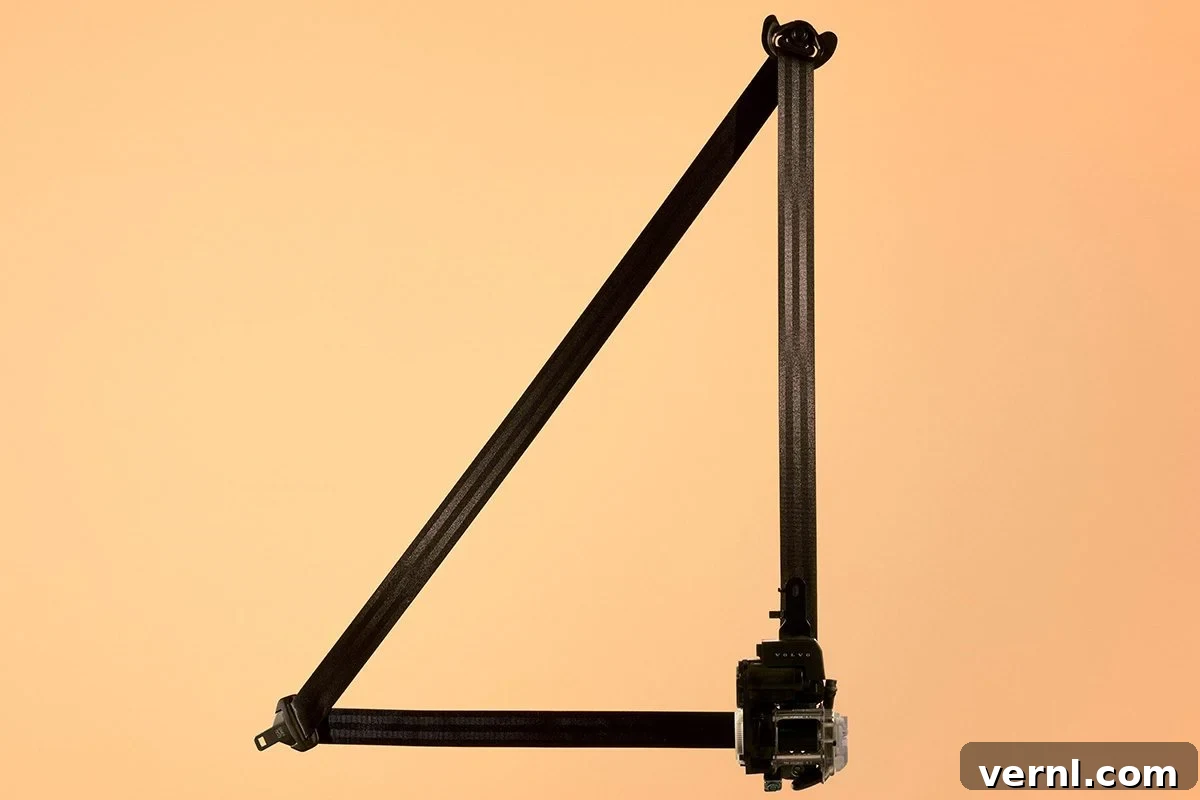
For decades, Volvo has been synonymous with pioneering advancements in automotive safety. Their relentless pursuit of protecting lives on the road has consistently pushed the boundaries of vehicle design and technology. From introducing the groundbreaking three-point seatbelt in 1959, an innovation credited with saving over a million lives globally, to developing sophisticated side impact and whiplash protection systems, Volvo’s contributions have become industry standards. Now, the Swedish automaker is once again redefining occupant protection with its revolutionary smart seatbelt design, set to debut in the 2026 Volvo EX60 Crossover. This adaptive system represents a monumental leap forward, moving beyond universal restraint to offer personalized safety tailored to each individual occupant.
The new smart seatbelt system doesn’t just offer protection; it learns, adapts, and responds with unprecedented precision. It marks a significant evolution from passive safety features to an active, intelligent network working in real-time to mitigate injury during a collision. As we delve deeper, a Volvo expert will guide us through the intricate workings of this truly amazing new seatbelt system, revealing how it promises to make every journey safer for everyone inside the vehicle.
Revolutionizing Safety: How Volvo’s Smart Seatbelt Redefines Protection
Traditional seatbelts, while incredibly effective, operate on a ‘one-size-fits-all’ principle, applying a predetermined amount of force to all occupants during a crash. This conventional approach, while life-saving, has inherent limitations when faced with the vast diversity of human body types and seating positions. Volvo’s new smart seatbelt system fundamentally alters this paradigm. According to Francois Meucci, Service Manager at Faulkner Volvo, “the new innovative smart seatbelt system uses numerous sensors to evaluate passenger and driver height, weight, body shape, and seating posture.” This foundational data is crucial for creating truly personalized protection. Meucci further elaborates, “Sensors also measure crash severity in real time to increase passenger and driver protection, making instantaneous adjustments that are impossible with static systems.”
This adaptive technology moves beyond generic settings by incorporating 11 distinct passenger profiles. These profiles are continuously refined through machine learning algorithms and real-time sensor data, allowing the system to understand and anticipate the specific needs of each occupant. For instance, in a collision, the smart seatbelt can significantly increase tension pressure for larger passengers, optimizing restraint to effectively lower the risk of severe head injuries. Conversely, for smaller occupants, the system intelligently reduces seatbelt tension, carefully calibrating the force to protect against fragile bone structures and prevent injuries like fractured ribs. This dynamic calibration ensures that the restraint force is always appropriate for the individual, minimizing the risk of both under-protection and over-protection. Furthermore, the new seatbelt system is designed for continuous improvement, featuring the ability to download over-the-air software updates. These updates will refine overall performance, enhance detection capabilities, and keep the system at the forefront of automotive safety technology throughout the vehicle’s lifespan, ensuring that the protection it offers is always up-to-date.
Advanced Detection: What Volvo’s Smart Seatbelt Can Perceive
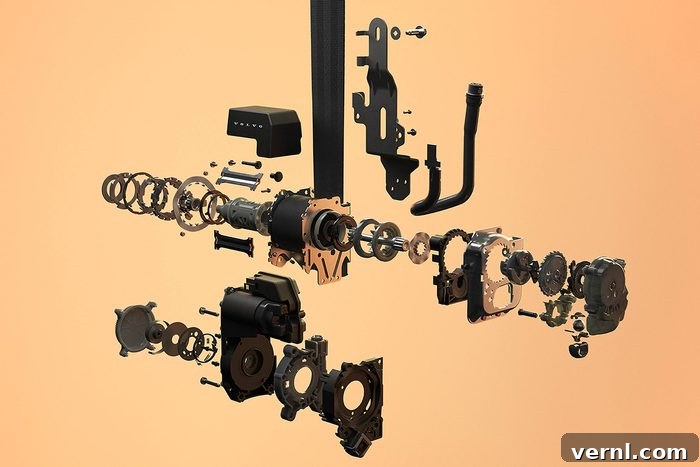
The intelligence of Volvo’s smart seatbelt system extends far beyond its immediate components. It doesn’t operate in isolation but is deeply integrated into the vehicle’s broader safety architecture. In addition to its own dedicated driver monitoring and occupant detection sensors, “smart seatbelts are linked to the Advanced Driver Assistance Systems (ADAS),” Meucci explains. This integration creates a holistic safety ecosystem. ADAS, a suite of technologies designed to prevent accidents and assist drivers, provides a continuous stream of environmental and operational data. This data, encompassing everything from GPS information and camera feeds to radar and ultrasonic sensor readings, empowers the smart seatbelt system with superior real-time crash detection capabilities. By leveraging this wealth of information, the system can identify a potential crash scenario earlier and with greater accuracy, triggering a coordinated, vehicle-wide safety response.
In the critical milliseconds leading up to and during a collision, the smart seatbelt system harnesses the power of multiple sensor types to make precise, individualized adjustments. Using ADAS data, including GPS coordinates, input from multiple cameras, radar for distance and speed detection, ultrasonic sensors for proximity, and dedicated impact, laser, deceleration, and crash sensors, the system performs a rapid, comprehensive assessment. This assessment determines the exact severity and nature of the collision, allowing for tailored deployment of passenger airbags and the precise activation of seatbelt pretensioners and tensioners for each occupant. This level of customization ensures that the restraint is perfectly matched to the specific impact and the unique characteristics of the individual. Other critical sensors providing input include:
- Pressure Sensors: These sophisticated sensors are designed to detect rapid and significant changes in the passenger compartment air pressure. Such sudden shifts often indicate a critical event, such as doors popping open in a severe side-impact crash. By detecting these changes, the system can infer the crash type and severity, informing immediate restraint adjustments.
- Accelerometer Sensors: Accelerometers play a vital role in measuring the sudden and dramatic changes in vehicle velocity. A rapid acceleration or deceleration indicates a front or rear collision, respectively. The magnitude and direction of this change provide crucial data for determining the impact force and the optimal response from the smart seatbelt system.
- Acoustic Sensors: Beyond physical impact, the smart seatbelt system also utilizes acoustic sensors. These sensors are engineered to detect the distinct sound waves generated during a collision. The unique acoustic signature of an impact can provide supplementary information about its type and intensity, further enhancing the system’s ability to react comprehensively and effectively.
Collectively, these sensors form an intelligent network, providing the smart seatbelt system with an unparalleled understanding of both the occupants and the crash environment. This allows for an adaptive and highly responsive safety strategy that far exceeds the capabilities of any static system.
Proactive Protection: How the Smart Belt Elevates Driver and Passenger Safety

Volvo’s smart belt system isn’t just a passive safety net; it’s an active, dynamic guardian constantly monitoring and preparing. It meticulously utilizes real-time interior and exterior sensor data to customize crash protection for every single occupant in the vehicle during a collision. This active nature means the system is continuously assessing risks and making micro-adjustments even before an impact is confirmed. In addition to profiling occupants, “crash sensors can determine impact direction, speed, and severity to make custom adjustments to the seatbelt tension, and airbag deployment during a collision,” emphasizes Meucci. This comprehensive understanding allows the system to differentiate between various crash types—frontal, side, rear, or rollover—and tailor its response accordingly.
The speed at which this system operates is critical and truly remarkable. Airbag deployment, a crucial component of occupant protection, typically occurs within a minuscule window of 20–50 milliseconds after a crash has been detected. What sets the smart seatbelt system apart is its ability to act even faster. It instantly adjusts and produces precisely the correct amount of restraint for each individual occupant *before* the airbag completely inflates. This pre-emptive, tailored tensioning is vital. By ensuring the occupant is held securely in the optimal position just milliseconds before the full force of the airbag, the system minimizes harmful interactions and maximizes the protective effect. This incredibly rapid and intelligent reaction significantly surpasses human capabilities, dramatically preventing injuries and fatalities. Meucci rightly concludes, “ADAS helps reduce the number of accidents from happening in the first place, while smart seatbelt technology enhances safety systems to protect occupants better if an accident does occur.” Together, these technologies create a layered defense, addressing both accident prevention and injury mitigation with unparalleled sophistication.
The Legacy of Innovation: Volvo’s Role in Future Safety Standards
Volvo’s commitment to safety has consistently driven the evolution of automotive design. The introduction of the three-point seatbelt was not just an engineering feat; it was a profound act of corporate responsibility. By freely sharing the patent for this life-saving invention in 1959, Volvo demonstrated a dedication to universal safety that transcended commercial interests, solidifying its legacy as a true pioneer. This philanthropic approach cemented the three-point seatbelt as a global standard, saving countless lives across all vehicle manufacturers.
The question of whether Volvo will extend this legacy of open innovation to its new smart seatbelt technology is a topic of considerable interest. Unlike the singular patent for the three-point seatbelt, the smart seatbelt technology is a collaborative effort, a partnership between Volvo and ZF Lifetec. This joint ownership introduces complexities that were not present in 1959. As of this writing, neither company has publicly committed to an open patent for this advanced system. The decision will undoubtedly balance the desire for widespread safety implementation with the considerable investment in research, development, and proprietary technology by both parties. Regardless of the patent decision, the introduction of this adaptive seatbelt technology sets a new benchmark for occupant protection. It challenges the industry to move towards more personalized and intelligent safety solutions, potentially influencing future regulatory standards and accelerating the adoption of similar systems across the automotive sector. Volvo continues to lead the charge, ensuring that every drive is not just a journey, but a testament to relentless innovation in the pursuit of ultimate safety.
FAQ
Will Volvo share the patent for their new smart belt?
It’s currently unclear if Volvo will share the patent for its new smart belt. In 1959, Volvo made the unprecedented decision to freely share the patent for its pioneering three-point seatbelt, an act acknowledged as profound corporate responsibility that has been credited with saving over one million lives worldwide. However, the new smart seatbelt technology is a collaborative development between Volvo and its partner, ZF Lifetec. With the patent owned jointly by both companies, as of this writing, neither has made a commitment regarding an open patent policy for this advanced safety system. The decision will likely involve complex considerations balancing innovation, investment, and widespread safety implementation.
Experts
Francois Meucci has dedicated over 40 years to the automotive repair industry, experiencing its evolution across every sector. He is a Volvo-certified body and automotive repair technician, a testament to his expertise and deep understanding of Volvo vehicles. Currently, he serves as the Service Manager at Faulkner Volvo Cars, located in Trevose, PA, where he continues to apply his extensive knowledge. (Phone interview conducted on June 16, 2025)
Resources
- Car and Driver: “2026 Volvo EX60 Debuts New Seatbelt Design That Adapts to You”
- Forbes: “Volvo’s Gift To The World, Modern Seat Belts Have Saved Millions Of Lives”
- Patent Pandas: “Open vs. Closed Patents”
- TechStory: “Volvo Reinvents the Seatbelt Again: Smart Safety Tech Debuts on EX60”
- Volvo Buses: “The three-point seat belt – an innovation that saved over 1 million lives”
- Volvo Cars: “Safety is in our DNA”
- WardsAuto: “Volvo Launches AI-Driven Seat-Belt system”
Related Articles
- Do You Know What That Little Button on Your Seat Belt Is For?
- What Those Lines on Your Backup Camera Really Tell You
- Here’s What The Small Panel On Your Car’s Front Bumper Is For