
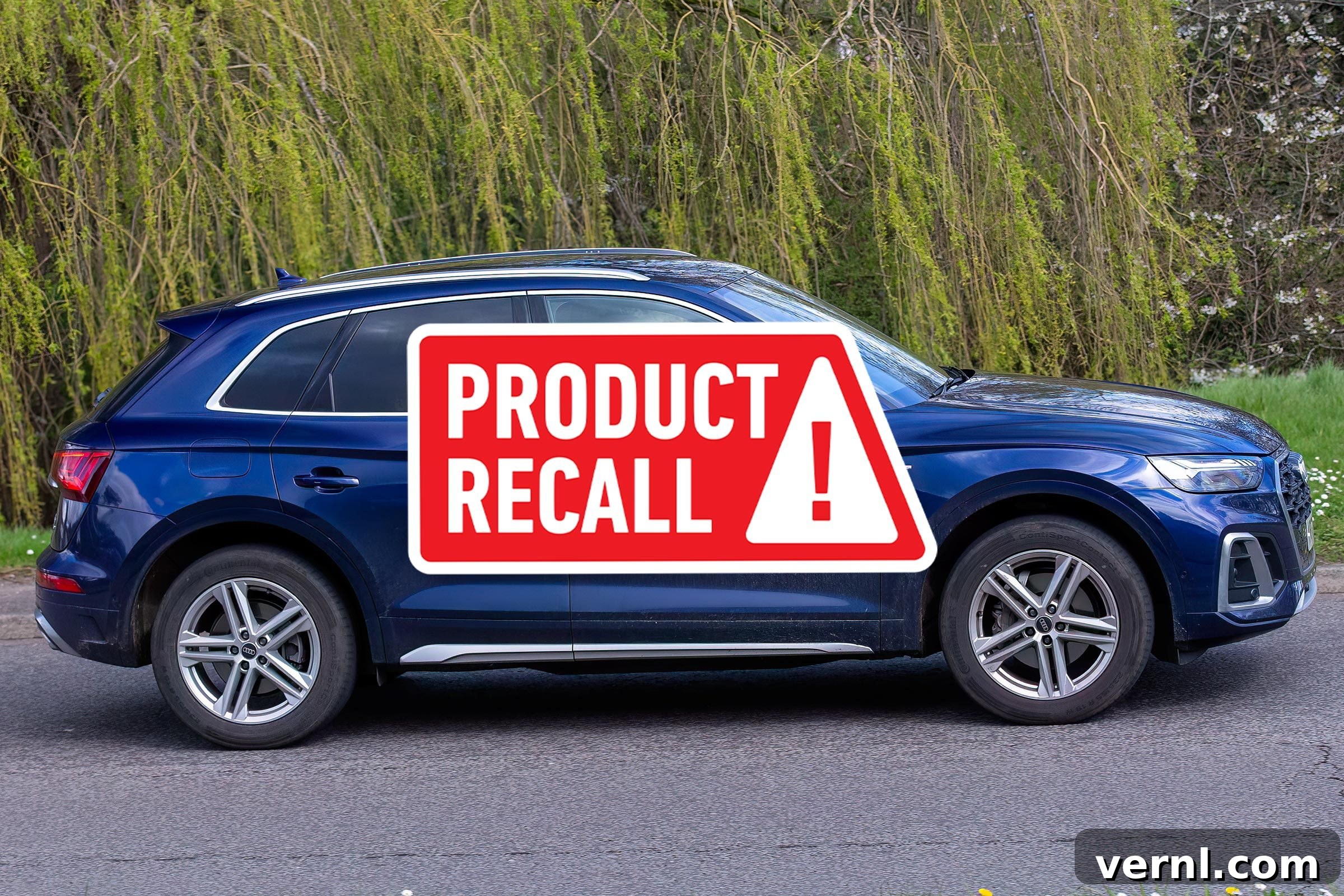
Volkswagen Recalls: Addressing Battery Fire Risks in Audi Q5 PHEVs and Airbag Concerns
Volkswagen, a global leader in automotive manufacturing, has recently initiated a significant safety recall in the United States, targeting a specific range of its plug-in hybrid electric vehicles (PHEVs). This proactive measure comes in response to serious concerns regarding potential defects in high-voltage batteries, which could lead to overheating and an elevated risk of fire. The National Highway Traffic Safety Administration (NHTSA), the U.S. government agency responsible for vehicle safety, has officially announced the details of this crucial recall, underscoring the automotive industry’s continuous commitment to consumer protection and vehicle reliability.
A total of 4,616 vehicles are affected by this battery-related recall, primarily encompassing the 2022-2023 model year Audi Q5 SUVs and certain 2022 Audi A7 vehicles. Owners of these affected models are being urged to pay close attention to official communications from Volkswagen and the NHTSA, as the safety of their vehicles is paramount. This recall highlights the evolving challenges and stringent safety standards associated with advanced electric vehicle technologies.
Understanding the High-Voltage Battery Recall: Audi Q5 & A7 PHEVs
The core of this latest Volkswagen recall centers on a potential flaw within the high-voltage battery systems of the specified Audi Q5 and A7 plug-in hybrid models. While the precise nature of the flaw is under investigation, the primary concern is the risk of these batteries overheating. Battery overheating in electric and hybrid vehicles can lead to a cascade of dangerous events, including thermal runaway, which can result in smoke, fire, and in severe cases, even explosions. Such incidents pose significant hazards to vehicle occupants and others on the road.
The NHTSA has been working closely with Volkswagen to ensure that a comprehensive and effective remedy is developed and implemented. According to the official statement, “Dealers will install advanced diagnostic software as the final remedy, anticipated to be available in the second quarter of 2025.” This solution aims to monitor battery performance more accurately and prevent potential overheating incidents before they escalate. The timeline for this software update indicates the complexity involved in developing and deploying such a critical safety patch across a fleet of vehicles.
In the interim period, before the final software remedy is available, Volkswagen is taking additional precautions. The NHTSA stated, “Volkswagen will monitor available online vehicle data and contact owners as necessary to advise them not to charge the vehicle until the battery can be replaced.” This precautionary advice underscores the seriousness of the potential defect and emphasizes the importance of owner cooperation in mitigating risks. It’s a testament to the proactive approach being taken to ensure no immediate danger goes unaddressed while a permanent fix is being prepared. All necessary repairs, including software installations or battery replacements if deemed necessary, will be made free of charge to the owners, alleviating any financial burden on the consumer.
Letters notifying impacted owners of this significant safety risk are expected to be sent out by January 2025. Vehicle owners are strongly encouraged to ensure their contact information is up-to-date with Volkswagen to receive these crucial notifications promptly. Ignoring a recall notice can have severe consequences, as these alerts are issued to prevent potential harm or injury.
The Broader Landscape of Volkswagen Recalls: Airbags and Beyond
This battery recall is not an isolated event but follows another, much larger safety campaign initiated by Volkswagen earlier this year. In early November, the NHTSA announced a recall affecting over 100,000 Volkswagen vehicles due to concerns about faulty airbag inflators. This distinct recall highlights the multifaceted nature of vehicle safety and the myriad components that must function perfectly to ensure passenger protection.
The airbag recall addressed a critical safety issue where defective airbag inflators could cause airbags to deploy improperly, potentially causing them to explode and propel shrapnel towards occupants. Such an malfunction not only negates the protective function of the airbag but actively turns it into a source of danger. This particular recall affected a wide range of Volkswagen models, specifically Beetle and Passat vehicles manufactured between 2006 and 2019, demonstrating the long-term implications that certain component defects can have across multiple production years.
The contrasting nature of these two recent Volkswagen recalls – one involving cutting-edge high-voltage battery technology in PHEVs, and the other related to a long-standing safety system like airbags – underscores the constant vigilance required in automotive manufacturing. It showcases how safety challenges can emerge from both traditional mechanical systems and sophisticated new electrical architectures. Each recall serves as a critical reminder of the complexities involved in designing, producing, and maintaining modern vehicles to the highest safety standards.
Why Vehicle Recalls Are Essential for Consumer Safety
Vehicle recalls are a fundamental mechanism in the automotive industry designed to protect consumers from potential dangers arising from manufacturing defects, design flaws, or component failures. They are not merely an inconvenience but a vital part of the safety ecosystem, ensuring that millions of vehicles on the road meet rigorous safety requirements. The NHTSA plays a pivotal role in this process, acting as a consumer advocate by investigating complaints, identifying safety defects, and overseeing recalls initiated by manufacturers.
Manufacturers, in turn, have a legal and ethical responsibility to identify and rectify defects once discovered. Failure to do so can result in severe penalties, irreparable damage to brand reputation, and most importantly, preventable injuries or fatalities. The economic impact of recalls can be substantial, involving costs for parts, labor, logistics, and often, significant public relations efforts to restore consumer confidence.
From a consumer’s perspective, understanding the importance of recalls and acting promptly when their vehicle is affected is crucial. While it may seem inconvenient to take a vehicle to a dealership for a repair, the potential risks associated with ignoring a recall notice often far outweigh any temporary disruption. These risks can range from minor operational issues to catastrophic failures that compromise vehicle control, occupant safety, or even lead to fires.
Navigating the Recall Process: What Vehicle Owners Should Do
For owners of vehicles affected by a recall, taking immediate and informed action is paramount. Here’s a general guide on what steps to take:
- Stay Informed: Pay attention to official recall notices sent via mail. Ensure your vehicle’s registration and contact information are up-to-date with the manufacturer.
- Verify Your Vehicle: Use your Vehicle Identification Number (VIN) to check for open recalls. The NHTSA provides an easy-to-use online VIN lookup tool on its website, allowing you to quickly determine if your car is affected by any active recalls.
- Contact Your Dealership: Once you’ve confirmed your vehicle is part of a recall, contact an authorized dealership for the brand. Schedule an appointment for the repair or software update.
- Follow Instructions: Adhere to any specific instructions provided in the recall notice or by the manufacturer, such as the advice not to charge certain PHEV models until a remedy is applied.
- Keep Records: Maintain records of all communications and repair documents related to the recall.
The automotive industry is continually advancing, introducing new technologies that enhance performance, efficiency, and connectivity. However, with innovation comes the responsibility to ensure these new systems are rigorously tested and proven safe. The Volkswagen recalls, particularly the one concerning high-voltage batteries in plug-in hybrids, underscore the ongoing need for robust quality control, vigilant regulatory oversight, and responsive manufacturer actions to maintain public trust and safety on our roads.
As vehicle technology evolves, so too will the nature of safety challenges. The proactive measures taken by Volkswagen and the NHTSA in these recent recalls are a testament to the industry’s commitment to adapting to these challenges, ensuring that cutting-edge vehicles remain safe and reliable for every driver and passenger.
Sources:
- NHTSA, “2022 AUDI AUDI Q5” (2024)
- Reuters, “Volkswagen recalls more than 4,600 vehicles in US over battery overheating concerns” (2024)
- Newsweek, “Volkswagen Recalls Over 114,000 Vehicles in US Over Airbag Explosion Risk” (2024)