Decoding Automotive Mysteries: The Truth Behind the Orange Tag
Embarking on the journey of car ownership is an exciting milestone. From the moment you purchase your first car, you’re introduced to a new realm of responsibilities and practical knowledge. Suddenly, you’re learning essential skills like how to accurately check your tire pressure, determining which side your gas cap is on for seamless fueling, and understanding the appropriate situations for activating your hazard lights. You even begin to intuitively calculate the precise distance needed to safely navigate a yellow light at an intersection.
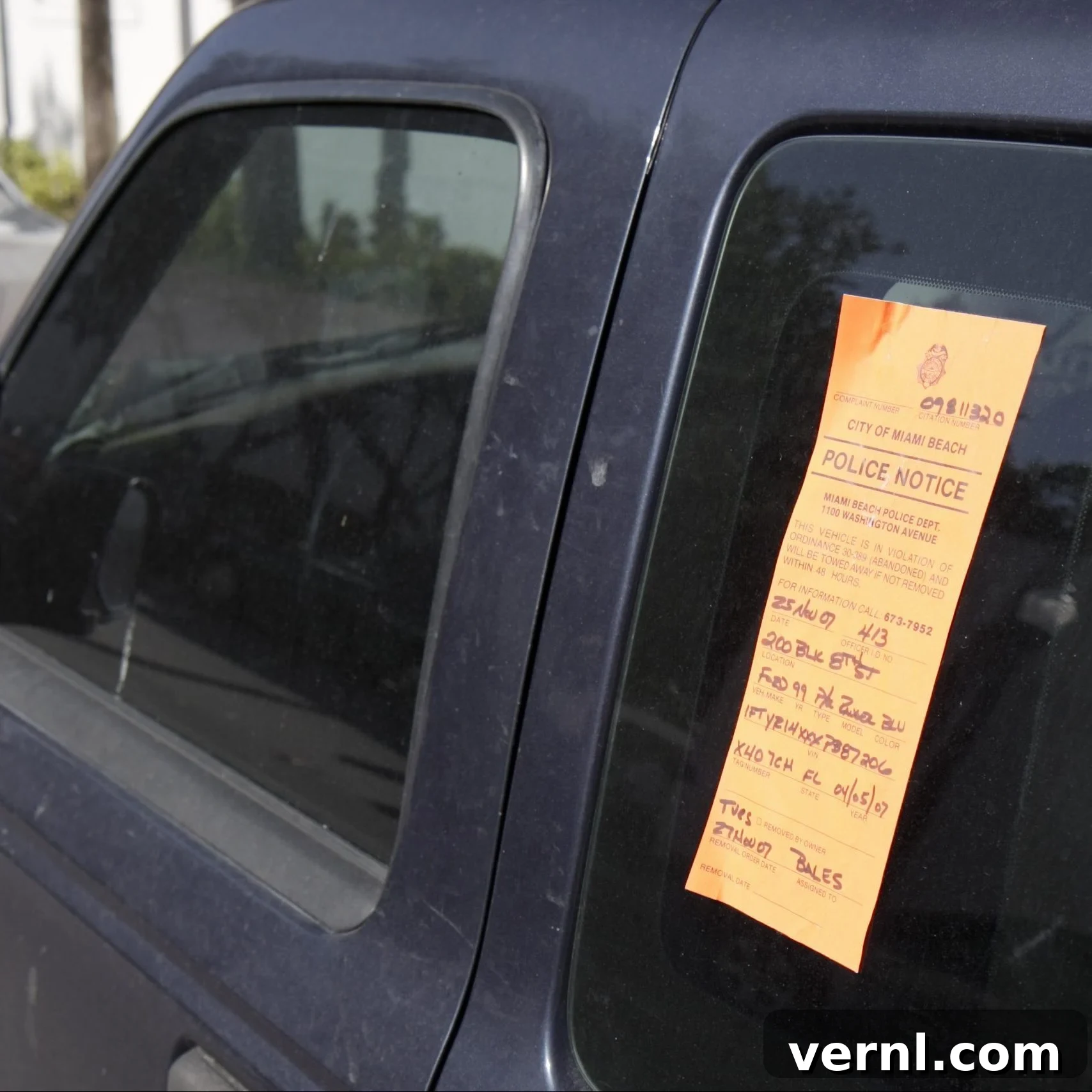
However, despite mastering these everyday driving nuances, the automotive world often presents its own set of curious puzzles. Drivers frequently encounter peculiar sights on the road or in their neighborhoods that spark questions. Among these, few are as perplexing or as commonly seen as the mysterious orange tag affixed to a vehicle. This seemingly innocuous piece of paper can signal a much larger issue, prompting many to wonder: what exactly does an orange tag on a car signify?
The Orange Tag: A Clear Signal from Local Law Enforcement
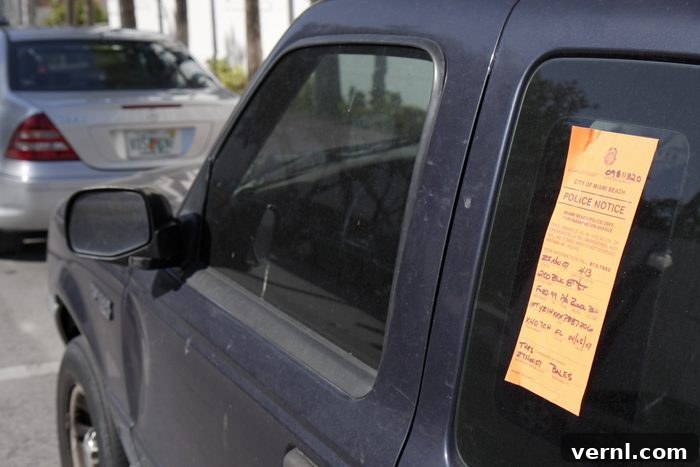
If you’re a regular driver, it’s highly probable that you’ve encountered a vehicle bearing an orange tag at some point. These vehicles are often spotted in unusual or stationary locations – perhaps parked forlornly on the shoulder of a busy highway, tucked away on a quiet residential street, or even sitting idle in a private yard or commercial lot. The distinctive orange tag is typically placed prominently on the vehicle, most commonly found on the windshield, a side window, or the rear window, making it impossible to overlook.
Far from being a random sticker, this orange tag serves as a critical communication from local law enforcement or municipal authorities. It’s a formal notice, indicating that the vehicle has been identified as abandoned, inoperable, hazardous, or in violation of local parking ordinances. The tag is the precursor to a more serious action: the vehicle’s eventual impoundment. The specific regulations governing abandoned vehicles can differ significantly from one state or even one municipality to another. Generally, once a vehicle is marked with such a tag, authorities initiate a process that could lead to its removal within a matter of days. Should the owner fail to claim their impounded vehicle within a specified period, these cars may even be processed for sale at public auction, highlighting the urgency and seriousness of receiving such a notice.
Why Do Cars Get Tagged? Understanding the Criteria
The reasons behind a vehicle receiving an orange tag are rooted in public safety, urban planning, and environmental concerns. Authorities are tasked with maintaining clear roadways, preventing visual blight, and ensuring that vehicles do not pose risks. Common criteria for tagging include:
- Long-Term Parking Violations: Vehicles left stationary for extended periods in prohibited zones, or exceeding time limits in designated parking areas.
- Apparent Abandonment: Signs like flat tires, excessive dust or rust, missing parts, expired or missing license plates, or lack of movement over a significant period.
- Inoperability: Vehicles that are clearly broken down and pose a hazard or obstruction.
- Hazardous Conditions: Cars involved in accidents, or those leaking fluids, potentially posing environmental or safety risks.
- Unregistered or Untaxed: Vehicles not compliant with current registration or taxation laws can also be flagged for removal.
It’s important for vehicle owners to be aware of their local ordinances to avoid inadvertently falling afoul of these regulations.
How Long Until a Car is Considered “Abandoned” and What Happens Next?
The definition of an “abandoned” vehicle is not universal; it’s a legal concept that varies considerably by jurisdiction. While some state laws might consider a car abandoned after as little as 72 hours of being left unattended in a public space, others may extend this period or have different criteria for private property. To ascertain the precise timeframe and conditions in your area, it’s always advisable to consult your state’s Department of Motor Vehicles (DMV) website or local municipal code enforcement agencies.
For many drivers, receiving an orange tag can be the culmination of an unfortunate series of events. Picture this common scenario: your car breaks down unexpectedly on the side of a highway or a remote road. Faced with no immediate way to move it, you’re forced to leave it temporarily, fully intending to return with assistance. However, when you do return, you might discover that your vehicle is no longer there. This often means it has been identified as abandoned and subsequently towed.
What to Do if Your Car is Towed Unexpectedly
If you find yourself in this predicament – returning to an empty spot where your car once was – the first and most crucial step is to remain calm. Do not assume theft immediately. Instead, promptly contact the nearest police department or sheriff’s office. Provide them with your vehicle’s make, model, license plate number, and the location where you last left it. They will be able to inform you if your car has been towed and, if so, which impound lot it was taken to.
Be prepared for the financial implications. Retrieving an impounded vehicle typically involves several fees, including the initial towing charge, daily storage fees at the impound lot, and potentially administrative fees from the law enforcement agency. These costs can accumulate rapidly, making swift action essential. You will likely need to arrange for your car to be towed from the impound lot either back to your home or directly to a mechanic for repairs, adding to the overall expense.
Your Car Has an Orange Tag: Immediate Steps and Owner Rights
Discovering an orange tag on your car can be alarming, but it’s important not to panic. This tag is a warning, not a final judgment. In many jurisdictions, laws mandate a notification period for the owner before irreversible action is taken. Typically, after the tag is placed, the owner is sent an official letter, often via certified mail, detailing the situation and providing a specific timeframe – commonly ten days – within which to address the issue. This notification will usually outline the reasons for the tag and the steps required to prevent impoundment.
This ten-day window is your opportunity to act. During this time, you need to make arrangements to move the vehicle or rectify the violation. This might involve:
- Hiring a tow truck: If your car is inoperable, arranging for professional towing to your residence or a repair shop.
- Making necessary repairs: If the car is simply broken down, you might be able to repair it on-site (if legally permissible and safe) or have a mobile mechanic come to you.
- Moving to private property: If the issue is related to public parking regulations, moving the vehicle onto private property you own or have permission to use.
- Contacting the issuing authority: Sometimes, there might be a misunderstanding or an error. Contacting the police department or municipal agency listed on the tag can clarify the situation and potentially offer solutions.
Ignoring the tag and the subsequent official notification is ill-advised, as it will almost certainly lead to impoundment and escalating fees. Understanding your rights and responsibilities during this period is key to a favorable outcome.
When to Consider Your Options for Problem Vehicles
For some, an orange tag might be the final straw for a vehicle that has become a persistent problem. If your car has proven to be a “lemon” – constantly breaking down, requiring expensive repairs, or simply nearing the end of its useful life – this might be the moment to critically evaluate its future. Instead of sinking more money into a vehicle that may soon be tagged again, it could be a wise investment of your time to research reliable car brands for a future auto purchase. This proactive approach can save you significant headaches and financial strain down the road.
Furthermore, if your vehicle is truly beyond repair or no longer worth the cost, explore responsible ways to dispose of it. Many salvage yards or scrap metal recyclers will pay a small sum for an old car, and they will properly process it, including handling any fluids and recoverable parts. This not only avoids potential abandonment issues but also ensures an environmentally sound disposal. Ensure you complete all necessary paperwork with your DMV to officially transfer ownership or report the vehicle as salvaged, preventing any future liabilities from falling back on you.
Preventing Abandonment and Fostering Responsible Car Ownership
The best way to avoid the stress and expense associated with an orange tag is through proactive and responsible car ownership. This includes a few key practices:
- Regular Maintenance: Keeping your vehicle in good working order significantly reduces the chances of unexpected breakdowns that force you to leave your car unattended.
- Awareness of Parking Regulations: Always be mindful of local parking signs, time limits, and permit requirements. If you’re parking in an unfamiliar area, take an extra moment to read all posted signs.
- Immediate Action During Breakdowns: If your car does break down, try to move it off public roadways as quickly as possible. If it must be left, notify local law enforcement immediately, providing your location and estimated time of return. Leaving a clear note on the dashboard with your contact information and explanation can also be helpful, though it doesn’t replace official notification.
- Current Registration and Insurance: Ensure all your vehicle’s documentation, including registration and insurance, is up to date. Expired tags are a common reason for vehicles to be flagged.
- Planning for Long-Term Storage: If you need to store a vehicle for an extended period, ensure it’s on private property with permission and that it remains compliant with local regulations (e.g., covered, not leaking fluids, etc.).
By staying informed and taking diligent care of your vehicle, you can navigate the complexities of car ownership with confidence, avoiding the unwelcome surprise of an orange tag and the subsequent hassle of impoundment. Understanding these signals from law enforcement is not just about avoiding fines; it’s about being a responsible member of your community and a savvy driver.