
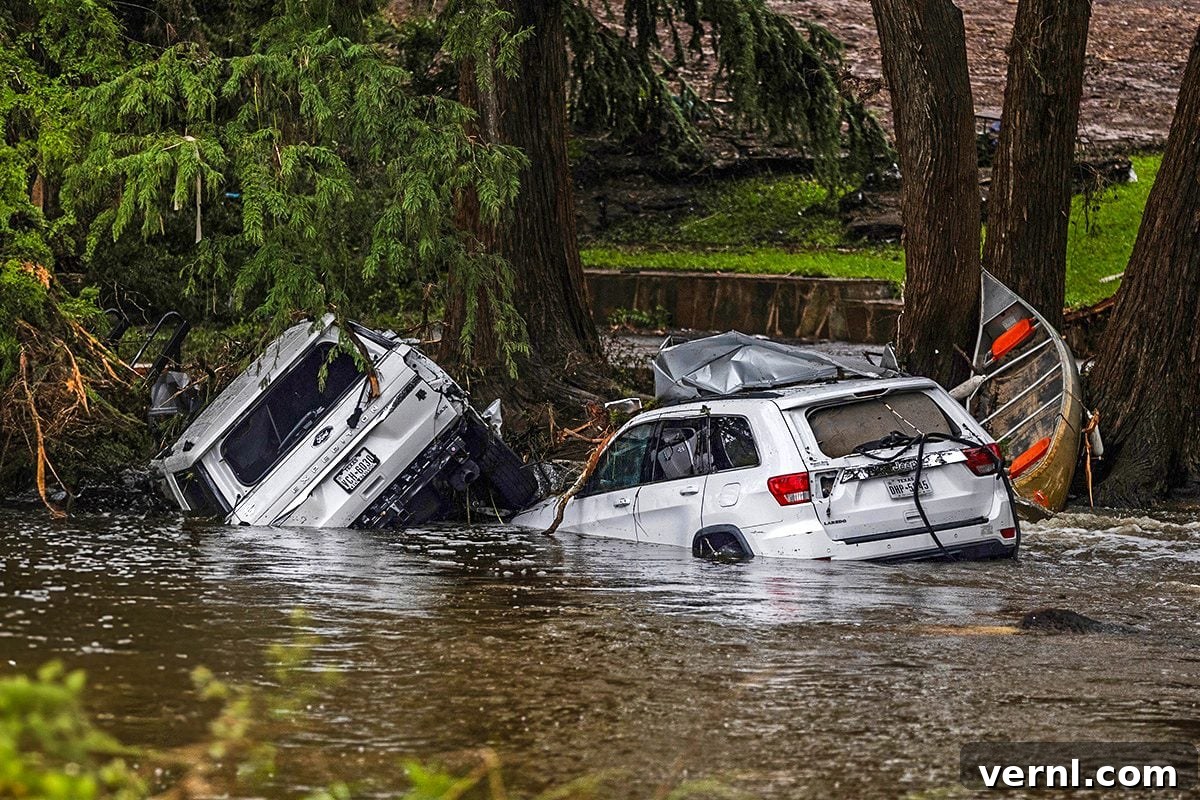
Flash floods are among nature’s most treacherous and unpredictable forces, capable of transforming tranquil landscapes into deadly torrents within minutes. While the imagery of mass tragedies, such as when the Guadalupe River tragically overtook summer camps in Texas, serves as a stark reminder of their devastating potential, the majority of flash flood fatalities occur when individuals underestimate the power of moving water. All too often, people attempt to drive or walk through floodwaters, only to be swept away with fatal consequences.
David T. Williams, a renowned flash flood expert, recounts a heartbreaking case in San Diego County where a driver and a 5-year-old boy lost their lives. “I worked as an expert witness for a case where the driver went over a flooded stream in an SUV and got swept downstream,” he states. “It was heartbreaking.” This tragic incident underscores a crucial lesson: the perceived safety of a vehicle offers little protection against the immense force of floodwaters.
To combat this perilous complacency and amplify awareness about the dangers of flowing floodwaters, the National Weather Service (NWS) launched the vital “Turn Around, Don’t Drown” campaign. This simple yet powerful mantra aims to ingrain a fundamental safety principle in the public consciousness. Alongside this educational initiative, the NWS continuously issues various flash flood warnings and advisories, acting as critical alerts to inform communities about potential dangers and guide immediate safety actions.
Understanding the underlying causes of flash floods and implementing effective safety strategies are paramount to protecting lives and property. This comprehensive guide delves into the mechanisms behind flash floods, clarifies the distinctions between different flood alerts, and provides actionable steps to keep you and your loved ones safe when these rapid, destructive events strike.
Understanding Flash Floods: A Deeper Dive
What Exactly Is a Flash Flood?
At its core, a flash flood is characterized by a rapid and significant rise or surge of water, typically occurring within a few hours (or even minutes) of an intense rainfall event, or the failure of a structure, or the sudden release of water. Unlike slower-developing river floods, flash floods are sudden and violent, often turning calm creeks, dry washes, or urban streets into raging rivers. The definition from the National Weather Service (NWS) specifies that a flash flood occurs within six hours of the causative event.
The causes of flash floods are diverse and can include several critical factors. The most common trigger is exceptionally heavy rainfall concentrated over a short period. However, other scenarios can also lead to these dangerous events. These include rapid melting of snow and sleet, significant mudslides displacing large volumes of water into a body of water, the catastrophic failure of a dam or levee, or the sudden breakup of an ice dam blocking a waterway. Regardless of the trigger, the result is the same: an immediate and perilous inundation of water that can devastate an area.
Bruce Jones, Chief Meteorologist at Midland radio, vividly describes the peril: “Flash flooding typically creates dangerous water flows that can quickly destroy property and lives, as tranquil creeks and streams rapidly turn into deadly torrents.” This swift transformation from peaceful to perilous is what makes flash floods uniquely dangerous.
How Much Water Does It Take to Create a Flash Flood?
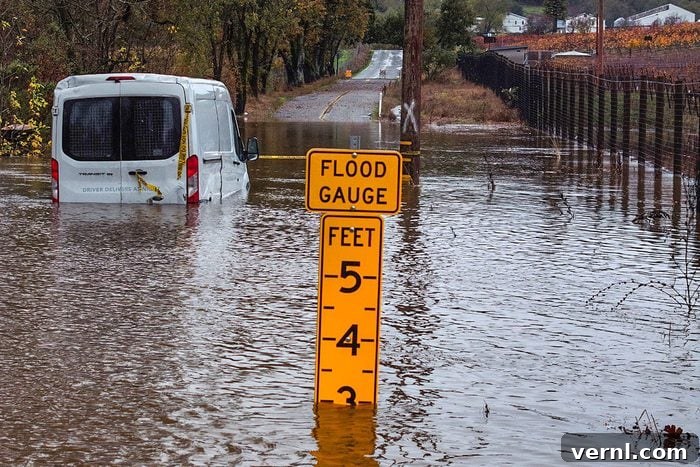
The perception that it takes a vast amount of water to cause a dangerous flash flood is a common, yet potentially fatal, misconception. The truth is, even a relatively small amount of water can become incredibly dangerous, depending on its velocity, depth, and the terrain it’s flowing over. What might seem like an insignificant puddle can quickly become a deadly trap when it’s moving.
The NWS provides critical guidelines that highlight this danger:
- Six inches (approximately 15 cm) of fast-moving water is powerful enough to knock an adult off their feet. This seemingly shallow depth can create immense pressure, making it impossible to maintain balance against the current.
- Twelve inches (approximately 30 cm) of moving water can carry away most cars. Even SUVs and pickup trucks are not immune. The buoyancy of water, combined with the force of the current, can lift a vehicle and sweep it downstream with surprising ease.
- Eighteen inches (approximately 45 cm) of moving water can carry away large vehicles, including trucks and vans. This demonstrates that even the heaviest vehicles offer little protection against the sheer power of flash floodwaters.
The specific conditions of an area play a significant role in determining how much rainfall is needed to trigger a flash flood. Bruce Jones elaborates on these environmental nuances: “In the hot desert, one inch of rain will quickly run off the baked soil, causing creek beds to flood.” This is because desert soils are often compacted and have low permeability, meaning they absorb very little water. In contrast, “In central Texas, limestone hills with shallow topsoil shed water so, there, a four-inch rain can create catastrophic flooding.” These examples illustrate that local geology and soil composition are crucial factors in flood susceptibility.
The Mechanics: How Does a Flash Flood Happen?
Flash floods are not random events; they are the result of specific hydrological and topographical conditions converging. The primary catalyst is almost always intense rainfall occurring over a brief duration – typically defined as six hours or less. However, the exact mechanism involves a complex interplay of environmental factors:
- Intense Rainfall: This is the most common and direct cause. Thunderstorms, particularly those that are slow-moving or ‘training’ (meaning new storms form and pass over the same area repeatedly), can dump enormous amounts of rain in a short period, overwhelming drainage systems and natural waterways. Tropical cyclones and their remnants, even far inland, can also produce widespread, heavy rainfall leading to flash floods.
- Topography and Land Use:
- Urban Areas: Cities are highly susceptible due to extensive impervious surfaces like roads, parking lots, and buildings. These surfaces prevent water from soaking into the ground, leading to rapid runoff that quickly overwhelms storm drains and creates urban flash flooding.
- Mountainous and Hilly Regions: Steep slopes accelerate the flow of water, channeling it into canyons and valleys where it gains tremendous speed and destructive power.
- Wildfire-Burned Areas: A particularly dangerous scenario arises in areas recently ravaged by wildfires. The intense heat of a wildfire can bake the soil, creating a hydrophobic (water-repelling) layer. With no vegetation to absorb or slow down the water, even moderate rainfall can trigger devastating flash floods and mudslides.
- Ground Saturation: If the ground is already saturated by previous rainfall, its capacity to absorb additional water is severely diminished. Any new precipitation will immediately become runoff, exacerbating flood conditions.
- Dam or Levee Failure: Although less common, the collapse of a dam or levee can release a sudden, enormous volume of water downstream, creating an instant and catastrophic flash flood.
- Ice Jams and Snowmelt: In colder climates, rapid warming can lead to quick snowmelt. If rivers are still partially frozen, ice can break up and accumulate, forming ice jams that block the flow of water. When these jams suddenly break, they release a surge of water, causing flash floods downstream.
- Rainfall Upstream: A critical, often overlooked, cause is rain that falls upstream from your location. Even if your immediate area is clear and sunny, heavy rainfall many miles away can send a surge of water rushing down a river, creek, or dry wash, leading to a flash flood without any local precipitation. David T. Williams emphasizes this hidden danger: “Even if it’s not raining in your area, rain upstream can cause a flash flood. That’s why it’s essential to carry a weather radio or other device that can alert you about flash flood conditions, especially when hiking and camping in flash flood-prone areas.” He also advises vigilance for auditory cues: “Often, flash floods make loud noises as they go downstream, due to turbulence and the movement of debris, so be alert to these noises.”
How Long Do Flash Floods Typically Last?
The duration of a flash flood is as variable as its causes, largely depending on the intensity and duration of the rainfall event, as well as the local terrain and drainage characteristics. Often, flash floods can be short-lived, lasting for just a few hours as the immediate surge of water passes through an area. In such cases, the water may recede almost as quickly as it arrived, leaving behind mud, debris, and devastation.
However, under certain conditions, flash floods can persist for much longer, sometimes extending for more than a day. This is more likely to occur with prolonged heavy rainfall, in areas with extensive flat terrain that retains water, or if the floodwaters merge with larger river systems that are also at high levels. The lingering presence of floodwaters can prolong the danger, impede rescue efforts, and increase the potential for long-term damage and health hazards.
Navigating Flood Alerts: Warnings, Watches, and Advisories
The National Weather Service (NWS) employs a tiered system of alerts to communicate the varying levels of flood threats. Understanding the distinctions between these alerts is crucial for taking appropriate and timely action.
What Is a Flash Flood Warning?
A Flash Flood Warning is the most urgent type of alert. It is issued by the National Weather Service when a flash flood is either imminent or already occurring in a specific area. This warning signifies an immediate threat to life and property. If you receive a Flash Flood Warning for your location, you must take immediate action. The primary directive is to move to higher ground without delay. Do not wait for further instructions; the danger is present and requires immediate response.
The NWS also issues a number of other flood alerts that provide advance notice or indicate conditions favorable for flooding, allowing for preparedness:
- Flood Watch: A Flood Watch is issued when conditions are favorable for flooding to occur. This means that significant rainfall is expected or ongoing, and there is a heightened risk of rivers, streams, or low-lying areas overflowing. A Flood Watch is a signal to be prepared for potential evacuation, to monitor weather conditions closely, and to have your emergency plan ready. It’s a time to review your safety measures, not to panic, but to be vigilant.
- Flood Advisory: A Flood Advisory indicates that minor flooding is possible or already occurring, posing a nuisance rather than an immediate threat to life and property. This might include overflowing ditches, ponding on roads, or minor stream rises. While less severe than a warning, a Flood Advisory still warrants caution, especially when driving, as even shallow floodwaters can hide hazards or stall vehicles.
- River Flood Warning: Distinct from flash flood warnings, a River Flood Warning is issued when a river is expected to exceed its banks at a specific location, based on current or anticipated rainfall. These floods develop more slowly than flash floods, offering more time for preparation and evacuation, but can last much longer and cover wider areas.
Depending on the resources and infrastructure of the affected area, these critical warnings are disseminated through various channels. These include emergency sirens, public service announcements on radio and television, notifications via NOAA Weather Radio, and targeted reverse 911 text messages or phone calls to residents in threatened zones. It is vital to have multiple ways to receive these alerts, especially a reliable NOAA Weather Radio, to ensure you are informed promptly.
Essential Strategies for Flash Flood Safety and Preparedness
Being prepared is your best defense against the sudden and destructive nature of flash floods. Proactive measures before a flood, informed actions during a flood, and cautious steps after a flood are all crucial for safeguarding lives and minimizing damage.
Before a Flash Flood: Preparing for the Unpredictable
- Know Your Risk: Research if your home or work is in a flood-prone area. Utilize resources like FEMA flood maps and local emergency management websites. Understanding your specific risk is the first step in effective preparation.
- Develop an Emergency Plan: Create a family emergency plan that includes designated meeting spots, primary and secondary evacuation routes, and contact information for all family members and out-of-state contacts. Practice this plan regularly.
- Assemble an Emergency Kit: Prepare a “go-bag” or emergency survival kit that is easily accessible. This should include:
- At least three days’ supply of water (one gallon per person per day) and non-perishable food.
- A battery-powered or hand-crank NOAA Weather Radio.
- Flashlights with extra batteries.
- First-aid kit and any necessary prescription medications.
- Whistle to signal for help.
- Dust mask, plastic sheeting, and duct tape for shelter-in-place scenarios.
- Wrench or pliers to turn off utilities.
- Can opener, garbage bags, moist towelettes.
- Copies of important family documents (birth certificates, insurance policies) in a waterproof container.
- Cash in small denominations.
- Warm blankets or sleeping bags.
- Protect Your Property: If you live in a flood-prone area, consider elevating critical utilities like electrical panels and furnaces. Install backflow valves in sewer lines. Clear gutters and drains of debris. If a flash flood watch is issued, use sandbags to redirect water away from your home if safe to do so.
- Stay Informed: Invest in a NOAA Weather Radio and sign up for local emergency alerts. Monitor local news and weather forecasts regularly, especially during periods of heavy rain.
During a Flash Flood: Immediate Actions for Survival
- Heed “Turn Around, Don’t Drown”: This cannot be stressed enough. Never, under any circumstances, walk, swim, or drive through floodwaters. The water may be deeper and moving faster than it appears, and hidden debris or washed-out roads pose extreme hazards. A mere six inches of moving water can knock you off your feet, and 12 inches can sweep away most vehicles.
- Move to Higher Ground Immediately: If you are in a low-lying area, near a stream, river, or dry creek bed, or receive a Flash Flood Warning, seek higher ground without delay. The safest place is usually the highest floor of your home or a designated public shelter on elevated land.
- Abandon Your Vehicle if Trapped: If your vehicle stalls in floodwaters, and it is safe to do so, abandon it immediately and move to higher ground. Do not wait for rescue while inside the car, as it could be swept away.
- Avoid Camping or Parking Along Waterways: When heavy rain is forecast or occurring, avoid setting up camp or parking your vehicle along streams, rivers, or dry washes, especially in mountainous or canyon areas. These areas are extremely vulnerable to flash floods from upstream rainfall.
- If Swept Away: If you are accidentally swept into floodwaters, try to grab onto something that floats and call for help. Do not fight the current; conserve your energy.
- Stay Out of Floodwaters: Floodwaters can be contaminated with sewage, chemicals, and other hazardous materials. They can also hide sharp objects, downed power lines, and dangerous animals. Avoid all contact with floodwater if possible.
After a Flash Flood: Safety During Recovery
- Return Home Only When Safe: Do not return to your home until authorities have declared the area safe. Roads may be damaged, and essential services might be disrupted.
- Assess for Damage and Hazards: Be extremely cautious when re-entering a flooded building. Check for structural damage, gas leaks, and electrical shorts. Use a battery-powered flashlight to inspect for damage; never use candles or an open flame.
- Beware of Contaminated Water: Assume all floodwater and anything that has touched it is contaminated. Boil water for drinking and cooking until local authorities declare it safe.
- Document Damage: Take photographs or videos of all damaged areas and items for insurance purposes. Contact your insurance provider as soon as possible.
- Clean-Up Safely: Wear protective clothing, gloves, and masks during cleanup to avoid exposure to mold, bacteria, and hazardous materials. Discard food that has come into contact with floodwater.
The Role of Technology in Modern Flood Safety
Modern technology plays an indispensable role in enhancing flash flood safety and preparedness. Beyond traditional alerts, various tools and systems provide crucial information:
- NOAA Weather Radios: These specialized radios broadcast continuous weather information directly from the nearest NWS office, including warnings, watches, and advisories, even during power outages. They are equipped with a tone alert feature that sounds an alarm for urgent messages.
- Smartphone Apps and Emergency Alert Systems (EAS): Many weather apps offer customizable alerts for specific locations. The national Emergency Alert System (EAS) and Wireless Emergency Alerts (WEA) deliver critical messages to television, radio, and mobile phones, ensuring widespread dissemination of flood warnings.
- Social Media and Official Websites: Following official NWS and local emergency management accounts on social media, and regularly checking their websites, can provide real-time updates and safety information during a flood event.
- Advanced Hydrological Monitoring: Sophisticated sensor networks monitor rainfall, river levels, and streamflow, providing data that helps meteorologists predict and warn of flash floods with greater accuracy.
Flash floods are a potent reminder of nature’s raw power. By understanding their causes, respecting their destructive potential, and diligently adhering to safety guidelines and warnings, individuals and communities can significantly mitigate the risks and protect themselves from these sudden and deadly phenomena. Remember, when faced with floodwaters, the message is clear: Turn Around, Don’t Drown.
About the Experts
- David T. Williams has more than 45 years of experience in the water resources industry and currently runs DTW and Associates Engineers, Inc. in Commerce City, Colorado. His extensive certifications and degrees include PhD, PE (Professional Engineer), PH (Professional Hydrologist), CFM (Certified Floodplain Manager), CPESC (Certified Professional in Erosion and Sediment Control), F. ASCE (Fellow, American Society of Civil Engineers), F. EWRI (Fellow, Environmental & Water Resources Institute), and BC.WRE (Board Certified Water Resources Engineer). His expertise is invaluable in understanding the complexities of water dynamics and flood mitigation.
- Bruce Jones has served as Chief Meteorologist at Midland, the leading NOAA weather radio brand, for over 17 years. His deep understanding of meteorological patterns and weather communication has been instrumental in educating the public about severe weather events, including flash floods. Prior to his role at Midland, he honed his skills as Chief Meteorologist for KSNT-TV in Topeka, Kansas, where he provided critical weather forecasts and warnings to local communities.
Related Resources for Flood Preparedness
- Emergency Survival Kit Checklist for Severe Weather
- How To Keep Your Family and Your Home Safe During High Winds
- How To Prepare an Emergency Evacuation Plan