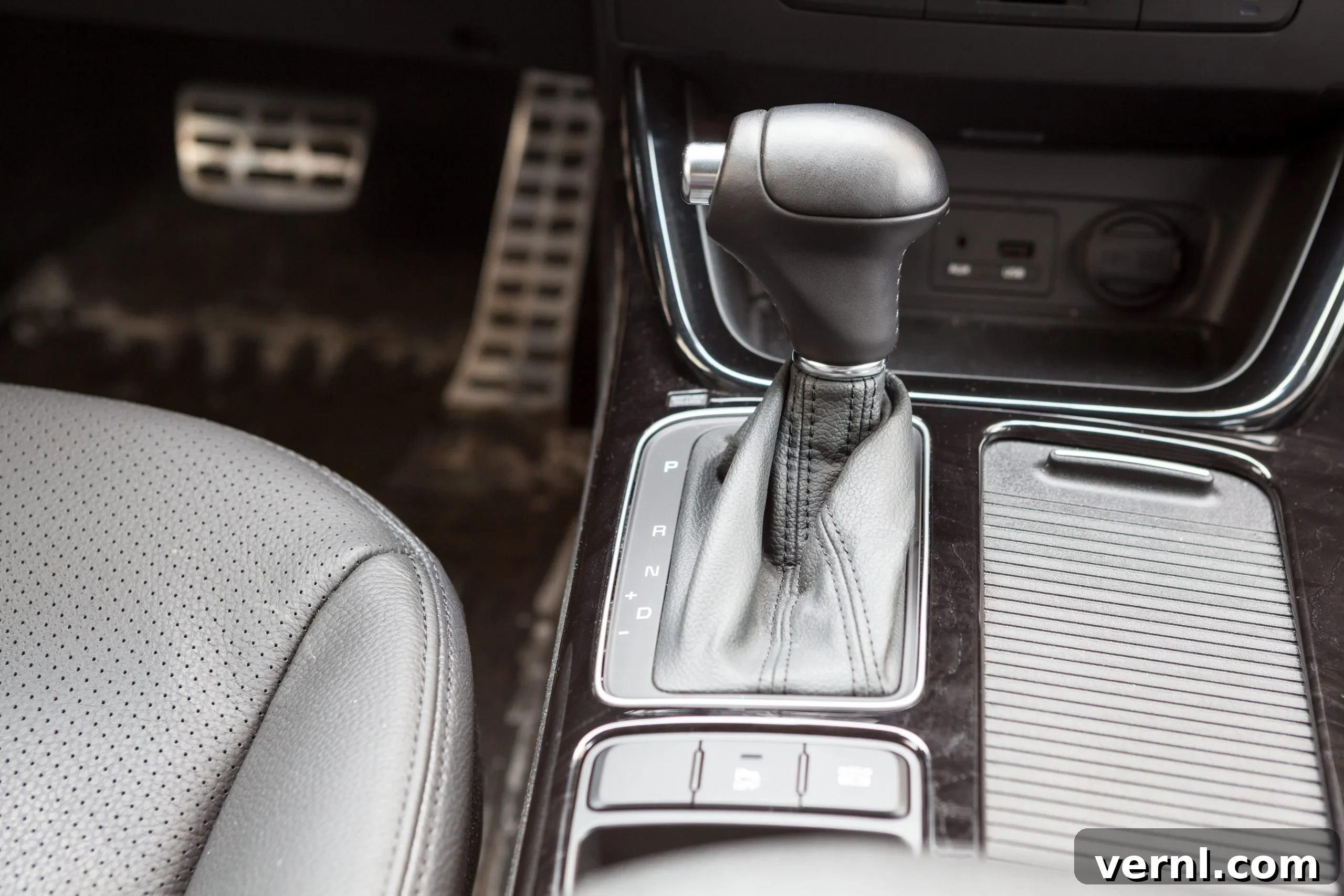
Mastering the Automatic Transmission: A Comprehensive Guide
Since their first appearance in 1948 Oldsmobiles, automatic transmissions have revolutionized the driving experience. Fast forward to today, and their dominance is undeniable; leading automotive resources, like Edmunds, reported that over 98% of all new cars sold in the U.S. in 2019 were equipped with automatic gearboxes. This widespread adoption underscores their profound impact on vehicle design and driver preference.
Modern automatic transmissions stand out for their sophisticated engineering and user-friendly operation. They are significantly quieter, offer lightning-fast shifts, and incorporate more gears—often up to 10 speeds—to provide quicker acceleration. Beyond performance, these advanced systems play a crucial role in environmental responsibility by helping to reduce tailpipe emissions and significantly improving fuel economy compared to their manual counterparts. The evolution of this technology has transformed driving from a complex task into a seamless and enjoyable journey for millions.
Automatic vs. Manual Transmission: Unpacking the Core Differences
At their core, both manual and automatic transmissions serve the same fundamental purpose: to transfer power from the engine to the wheels by efficiently meshing and releasing various interlocking gearsets. This intricate process ultimately dictates the vehicle’s speed and torque. However, the method by which they achieve this differs dramatically, defining distinct driving experiences.
With a manual transmission, the driver is an integral part of the gear-shifting process. This involves a precise sequence: the driver must depress the clutch pedal, which momentarily disconnects the engine from the transmission. Following this, the driver uses a gear shifter to physically manipulate the internal gearsets, selecting the appropriate ratio for the current speed and driving conditions. This hands-on approach offers drivers a direct connection to the vehicle’s mechanics, favored by enthusiasts seeking maximum control and engagement.
In stark contrast, an automatic transmission simplifies this interaction considerably. Once the driver selects “Drive,” the system autonomously manages all gear movements and shifts. A sophisticated network of sensors and electronic controls continuously monitors vehicle speed, engine RPM, and throttle input to determine the optimal gear ratio. This automatic operation allows drivers to maintain both hands firmly on the steering wheel, significantly enhancing driving safety, simplifying vehicle operation, and making the overall experience far more pleasurable and less demanding, especially in heavy traffic.
Delving Into the Mechanics: How Does an Automatic Transmission Operate?
For those eager to understand the intricate engineering behind this marvel of automotive technology, the inner workings of an automatic transmission are truly fascinating. At the heart of its operation lies a continuous flow of pressurized automatic transmission fluid (ATF), which acts as the lifeblood of the system, enabling precise and smooth gear changes.
The ATF is meticulously routed throughout the transmission by a complex component known as the valve body. This critical hub contains a sophisticated network of channels and passageways, directing the fluid to various internal mechanisms. These mechanisms include friction bands, pistons, and multiple disc clutch packs. Together, these components work in harmony to lock and unlock ingenious compound-planetary gearsets – the core elements responsible for creating different gear ratios.
The specific gear, and consequently the gear ratio, currently engaged is determined by which parts of these planetary gearsets are either allowed to “free-wheel” or are held stationary by the applied pressure from the bands and/or clutch packs. This dynamic interplay ensures the engine’s power is efficiently transferred to the drive wheels at the most suitable ratio for acceleration or cruising.
Automatic transmission shifts, both up and down, are not random events. They are precisely controlled by a range of real-time driving factors, including engine load, throttle position (how much you’re pressing the accelerator), and vehicle speed. Historically, older, pre-computer-controlled vehicles relied on mechanical components such as vacuum modulators, governors, and cables to manage these shift points. While effective for their time, these systems lacked the precision and adaptability of modern electronics.
Today’s vehicles represent a significant leap forward in transmission control. They utilize numerous input sensors strategically placed throughout the vehicle. These sensors constantly gather vital data—such as engine RPM, wheel speed, throttle position, and even braking force—and transmit it to the Engine Control Module (ECM), often referred to as the transmission control module (TCM) in this context. The ECM is the brain of the operation.
Based on the incoming data, the ECM intelligently manages shift points by activating or deactivating small electronic components called shift solenoids located inside the transmission. When a solenoid is energized, it directs ATF through specific pathways within the valve body. The valve body then routes this pressurized ATF to the correct passageways, where it precisely applies or releases the friction bands and/or clutch packs. This intricate, electronically controlled ballet of fluid and mechanical parts ensures seamless, optimal gear changes, maximizing both performance and fuel efficiency.
Understanding Downshifting: Control and Efficiency
Downshifting, whether initiated manually or automatically, is a crucial aspect of vehicle control and performance. Manually downshifting an automatic transmission into a lower gear effectively slows the vehicle. This is because lower gear ratios reduce the output speed of the transmission to the wheels but simultaneously increase the torque available, giving you significantly better control of your vehicle under challenging or specific driving conditions.
When you select “L” (Low) or a numerical gear like “1” or “2” on your shifter, you are instructing the transmission to prevent automatic upshifting beyond that specified gear. This provides the driver with enhanced control, particularly beneficial in situations requiring sustained power or engine braking.
Automatic downshifting, commonly known as engine braking, occurs naturally when you lift your foot from the accelerator pedal. This phenomenon is essentially “reverse acceleration,” where a slower-rotating engine begins to engage a faster-spinning transmission. The process works like this: removing your foot from the accelerator pedal causes the throttle body to close, which severely restricts the engine air flow into the cylinders. This restriction rapidly builds up a strong vacuum within the intake manifold.
As the engine’s pistons continue their cycle against this high vacuum, they encounter significant resistance, effectively losing power. This loss of power naturally lowers the engine’s RPMs, which in turn acts to slow down your vehicle without the need to press the brake pedal. A significant advantage of relying on engine braking is that it reduces the frequency and intensity of mechanical braking, potentially extending the lifespan of your brake pads and rotors by minimizing wear and tear.
Furthermore, modern automatic overdrive transmissions, or those equipped with a locking torque converter clutch, feature gear ratios greater than high gear or direct drive (which is typically a 1:1 ratio, meaning one transmission rotation for every engine rotation). This “overdrive” significantly reduces engine RPMs at highway speeds, directly contributing to improved fuel economy. It also allows the transmission to automatically downshift when you need to accelerate while cruising on the highway, ensuring responsive power delivery without excessive engine strain.
Optimal Downshifting: When and Why to Engage Lower Gears
Knowing when to manually downshift an automatic transmission is a valuable skill that can enhance safety, control, and prolong the life of your vehicle components. While automatics are designed to manage shifts autonomously, there are specific scenarios where driver intervention through downshifting is highly beneficial, even crucial.
One of the most critical situations for downshifting is in low traction environments. If your vehicle’s wheels are spinning excessively without the car moving, especially when the transmission is attempting to shift through all its gears, it’s a clear sign to downshift. Racing the engine and allowing the wheels to spin uncontrollably in these conditions will rapidly overheat the transmission fluid, potentially causing severe damage to the transmission itself. It can also quickly ruin tires and lead to premature wear of engine and differential gears.
Manually downshifting an automatic transmission effectively locks the gearsets and clutch packs into a lower gear range. This action generates more torque and provides significantly better maneuverability in several challenging conditions:
- Pulling out of a snowbank: A lower gear provides more torque and reduces wheel spin, helping the tires find grip.
- Driving on icy or slick roads: A lower gear helps prevent wheel spin and offers better engine braking, increasing control on slippery surfaces.
- Driving through mud: Similar to snow, a lower gear provides the necessary torque to power through thick mud without getting stuck.
- Towing a heavy trailer: Downshifting provides more pulling power, reduces strain on the engine and transmission, and improves stability.
- Descending a long mountain road or steep hill: Engaging a lower gear utilizes engine braking, which effectively slows the vehicle and prevents your brakes from overheating and fading due to continuous use.
In recent years, technology has further enhanced vehicle control on inclines. Features like “Grade Assist” are increasingly becoming standard on many cars and light trucks. Originally developed for heavy construction equipment, Grade Assist utilizes an array of sensors and sophisticated electronics to automatically manage transmission shifting and even apply braking when descending long, steep inclines. This innovative system helps drivers maintain a safe and controlled speed, significantly reducing driver fatigue and enhancing safety on challenging mountainous terrains.
Pro tip: While downshifting can be highly beneficial in specific scenarios, it’s important to use it judiciously. To minimize excessive wear and tear on your automatic transmission, downshift only when genuinely necessary for control or safety. It is generally not something that should be done during normal, everyday driving conditions. Modern automatics are optimized to handle most situations without manual intervention.
Deciphering Automatic Transmission Shifter Numbers and Letters
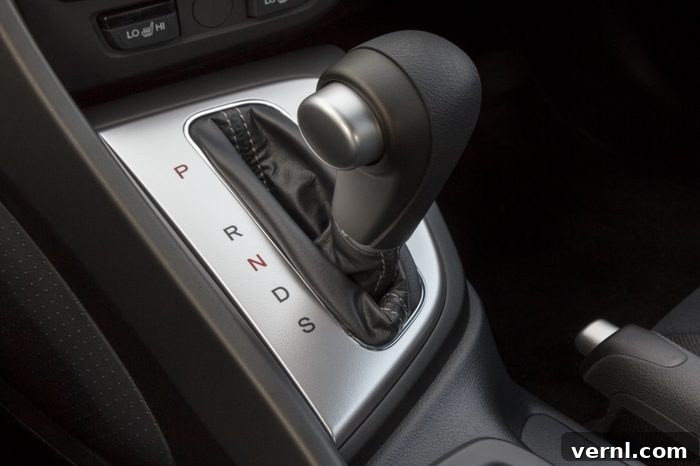
Virtually all automatic transmission shifters prominently feature the primary selections: P, R, N, D. These letters form the core of automatic transmission operation, so much so that automotive engineers affectionately refer to this standard sequence as “prindel.” Beyond these essential selections, the specific numbers and letters available can vary significantly depending on your vehicle’s make, model, and age. Older vehicles might display D, 3, 2, 1, while most contemporary models typically feature an “L” (Low) position after “D” (Drive), and some may offer specific “Sport” modes or paddle shifters.
Let’s break down the meaning of these critical shifter positions:
- P (Park): This position mechanically locks the transmission, preventing the drive wheels from rotating. It should always be engaged when the vehicle is stationary and you are exiting it, providing a secure method of parking, especially when combined with the parking brake.
- R (Reverse): As its name suggests, this position reverses the direction of power flow, allowing the vehicle to move backward. Always come to a complete stop before shifting into or out of Reverse to prevent transmission damage.
- N (Neutral): In Neutral, the transmission is disengaged from the engine, meaning no power is transmitted to the wheels. The vehicle can roll freely in this position, making it useful for short-distance towing or when idling for extended periods, though it’s generally not recommended for stopping in traffic.
- D (Drive): This is the default forward driving mode. In “Drive,” the transmission will automatically shift through all available forward gears, optimizing for a balance of performance and fuel economy under normal driving conditions.
- L (Low) or Numbers (1, 2, 3): These selections are designed to give the driver more control by limiting the transmission to a lower gear or range of gears.
- If your shifter has “1” (First Gear), engaging it means the transmission will remain solely in first gear and will not upshift automatically. This is ideal for maximum torque in extremely challenging conditions or for very steep descents.
- Selecting “2” (Second Gear) would allow the transmission to shift between first and second gears but no higher. This is useful for moderate hills, slippery conditions, or when you need more power at lower speeds than “D” would typically provide.
- In systems with “3” (Third Gear), the transmission would operate through first, second, and third gears. In older vehicles, driving in “3” would get you into the highest gear before overdrive, which would not engage until you shifted into “D” to allow access to all available gears, including the overdrive unit or locking torque converter.
Understanding these positions empowers drivers to utilize their automatic transmission more effectively, adapting its behavior to suit specific driving demands beyond mere convenience.
The Future of Driving: Concluding Thoughts on Automatic Transmissions
The journey of the automatic transmission, from its rudimentary beginnings in the mid-20th century to the sophisticated systems of today, is a testament to relentless innovation in automotive engineering. Modern sporty cars, particularly those featuring continuously variable transmissions (CVT) or dual-clutch transmissions (DCTs), often come equipped with steering wheel-mounted paddle shifters. These electronic interfaces provide drivers with a remarkable sense of control, allowing them to manually “shift” gears without the need for a clutch pedal.
Originally a staple of high-performance race cars, paddle shifters have successfully transitioned to consumer vehicles, offering enthusiasts the thrill of manual control combined with the inherent convenience of an automatic. Critically, the Engine Control Modules (ECMs) on vehicles with paddle shifters are intelligently programmed to prevent aggressive or potentially damaging shifts. This ensures that while drivers gain a feeling of engagement, the transmission’s integrity is protected from misuse, striking a perfect balance between performance and durability.
As we look ahead, the evolution of automatic transmissions continues at a rapid pace. Advancements in sensor technology, artificial intelligence, and predictive shifting algorithms are pushing the boundaries of what’s possible. These innovations promise even smoother, more efficient, and more responsive driving experiences, further solidifying the automatic transmission’s role as the cornerstone of modern automotive design. Whether for daily commutes, challenging terrain, or spirited drives, the automatic transmission continues to adapt and excel, making driving safer, simpler, and more enjoyable for everyone.