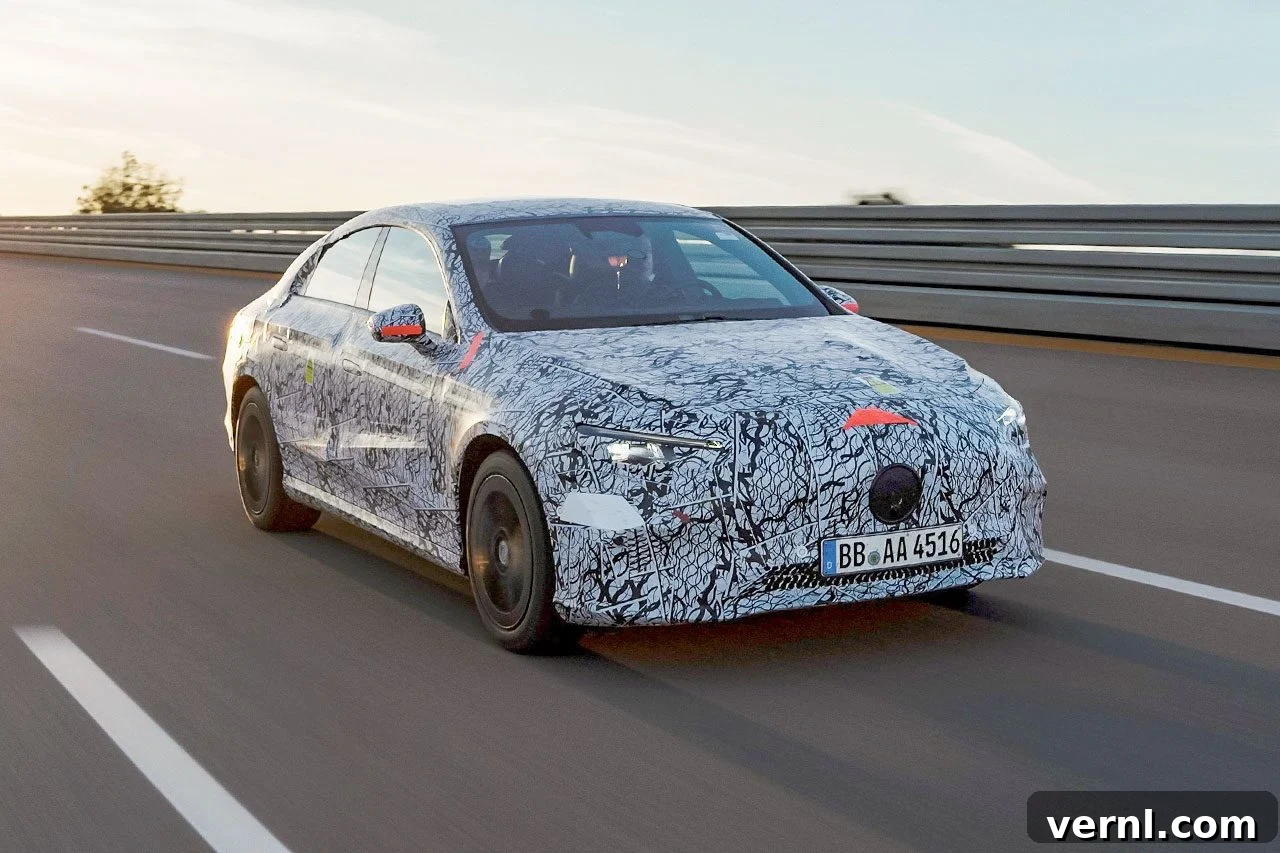
Did you know that over half of the cars on the road are white, black, silver or grey? Brighter colors may catch your eye more often, but the majority of vehicles fit into a largely monochrome palette. Those subdued paint choices mean many cars almost blend into the background, making them easy to overlook in everyday traffic.
By contrast, a car with an unusual or bold paint job is far more likely to stick in your memory. If you’ve ever spotted a vehicle cloaked in a swirling, squiggly camo pattern, it’s the kind of sight that lingers—more memorable than yet another silver hatchback. But what exactly does that distinctive spiraling camouflage signify? Let’s explore the deliberate design strategy behind these striking wraps and the practical purpose they serve.
Camouflaged Test Cars
Car enthusiasts sometimes add dramatic wraps and decals to their own vehicles to stand out and showcase personal style. Automakers, however, apply elaborate coverings for the opposite reason: they want to conceal details. When you see a car wrapped in complex, high-contrast patterns—loops, jagged lines, and geometric swirls—there’s a good chance it’s a prototype undergoing road testing.
Automakers invest heavily in research and development, creating new technologies, distinctive body styles, and updated design details. While manufacturers have private proving grounds and controlled test tracks, real-world validation on public roads is essential. Engineers need to see how prototypes perform in everyday conditions: varying speeds, traffic patterns, weather, road surfaces, and interactions with drivers and pedestrians.
That’s where camouflage comes into play. These intricate wraps act as a visual distortion, breaking up the car’s surfaces and disguising key lines and features. When photographed or sketched from the outside, the pattern obscures contours and panel seams, making it much harder for competitors—or the public—to discern precise styling cues from flat images. Small angles, crease lines, and subtle aerodynamic elements that signify a next-generation model can be hidden by cleverly designed graphics.
Essentially, the camo creates an optical illusion that interferes with the viewer’s ability to interpret three-dimensional shape from a two-dimensional photo. Distinctive character lines, new lighting signatures, and secret vents can lose clarity when wrapped in a noisy, non-repeating pattern. This reduces the risk of early leaks and imitation while allowing engineers to continue gathering valuable data on performance and drivability.
Ironically, these dramatic wraps make test cars highly conspicuous on the road. A camouflaged prototype is easily spotted by enthusiasts and casual observers alike. Still, manufacturers accept that trade-off because it thwarts corporate espionage and prevents premature exposure of design elements. The added attention from curious onlookers is a small price for maintaining competitive advantage during development.
Beyond camouflage wraps, automakers sometimes disguise new models with temporary body panels, false cladding, or modular attachments that change the car’s apparent proportions. In combination with patterned wraps, these tactics make reverse-engineering from photographs even more difficult. The end result is a practical mix of concealment and testing realism that lets designers refine their plans without revealing the final product months or even years before launch.
So next time you spot a car with a busy, squiggly exterior, know that it’s likely more than a fashion choice. It’s a deliberate tactic used by automakers to protect intellectual property, keep competitors guessing, and enable genuine on-road development of future models.
Related
- Do You Know What That Little Button on Your Seat Belt Is For?
- What Those Lines on Your Backup Camera Really Tell You
- Here’s What The Small Panel On Your Car’s Front Bumper Is For