Understanding Your Home Furnace: A Comprehensive Guide to Efficient Heating
Derived from the Latin word fornax, meaning “oven,” a furnace stands as the heart of many home heating systems. This robust heating appliance is meticulously engineered to ensure the even distribution of warmth throughout a building, creating a comfortable and inviting indoor environment regardless of the external weather. Furnaces achieve this vital task by burning various fuels internally, generating heat that warms air, water, or steam, which is then circulated to every corner of your living space.
While various types of furnaces exist, ranging from those powered by electricity, wood, coal, or oil, the most prevalent models in modern homes are often referred to as forced-air furnaces. These systems efficiently distribute heated air into different rooms using a powerful blower fan. Among forced-air furnaces, those that operate on natural gas or liquid propane gas (LPG) are particularly common due to their efficiency and widespread availability. If you own a gas-burning forced-air furnace or are contemplating investing in one, a foundational understanding of its operation is paramount for both efficient use and informed maintenance.
This guide delves into the intricate workings of a gas furnace, exploring its fundamental components, the step-by-step heating cycle, crucial maintenance practices, and indispensable safety precautions. By understanding these aspects, homeowners can optimize their heating system’s performance, extend its lifespan, and ensure a safe and cozy home environment.
How a Gas Furnace Works: The Essential Heating Cycle Explained
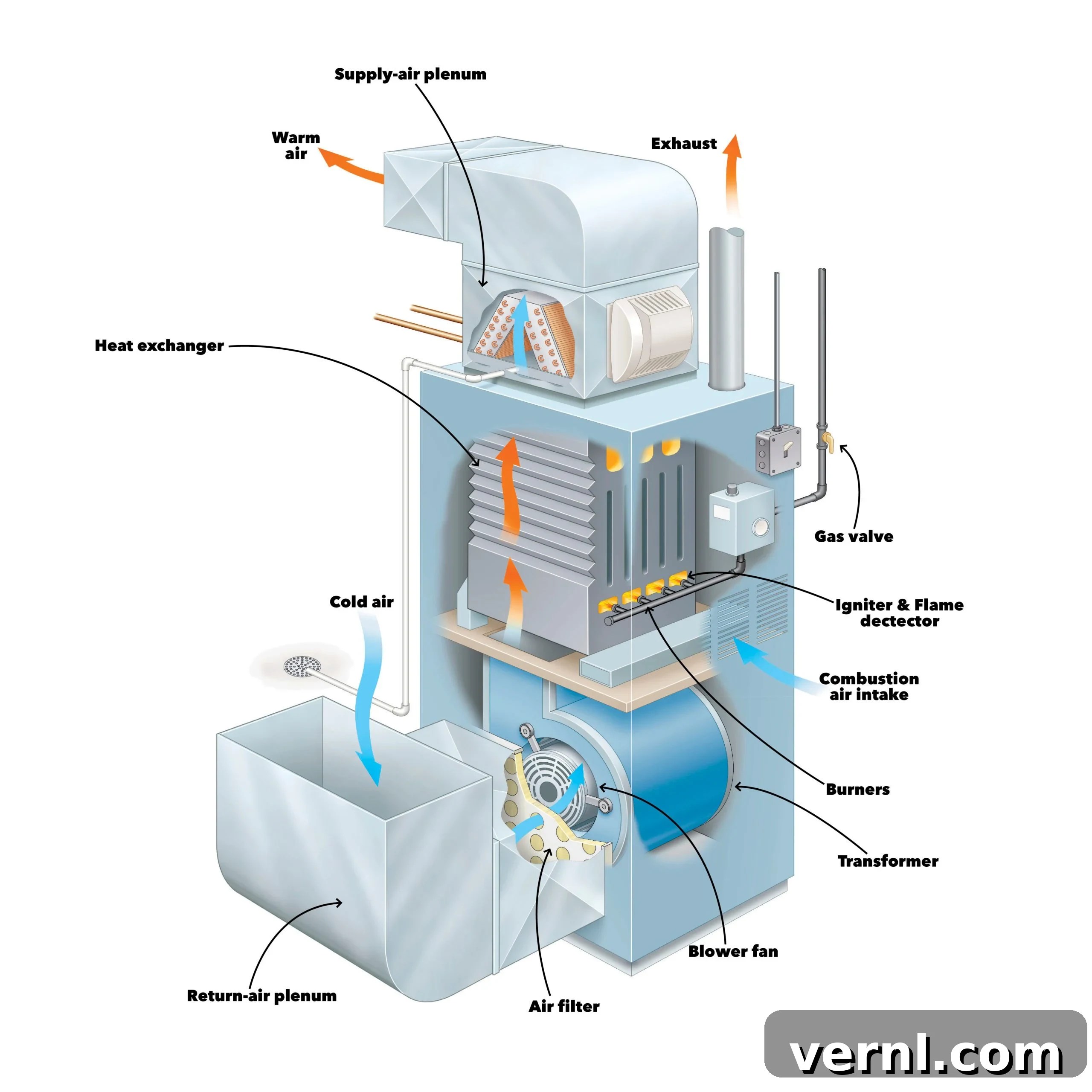
The operation of a gas furnace is a sophisticated yet understandable process, initiated by your home’s thermostat. When the thermostat detects that the indoor temperature has fallen below your desired setting, it sends a signal to the furnace, triggering the heating cycle. Here’s a detailed breakdown of how your gas furnace brings warmth into your home:
- Gas Supply and Ignition: The heating process begins with the arrival of fuel. For natural gas models, an underground pipe network supplies gas directly to your home and furnace. LPG units, on the other hand, draw fuel from an outdoor storage tank. Upon receiving the signal from the thermostat, the furnace’s control board opens the gas valve, allowing gas to flow into the burners. Simultaneously, an igniter activates, creating a spark or superheated surface to safely light the gas. This controlled combustion generates significant heat within the furnace.
- Air Intake and Heat Exchange: As the burners ignite, a separate blower motor pulls cold air from your house into the furnace through return air ducts. This cold air doesn’t mix directly with the burning gas. Instead, it flows over a critical component called the heat exchanger. The heat exchanger, a series of precisely engineered metal tubes or coils, absorbs the heat produced by the burning gas. As the cold air from your home passes over the hot surfaces of the heat exchanger, it rapidly warms up. This indirect heating process is vital for safety, ensuring that combustion gases are completely separated from the breathable air circulated throughout your home.
- Exhaust Venting: The byproducts of combustion, primarily carbon dioxide and water vapor, are safely contained within the heat exchanger. Once their heat has been transferred, these exhaust gases are expelled from the furnace through a vent or flue pipe. This piping system directs the combustion exhaust out of your home, typically through a chimney or a dedicated exhaust vent, preventing harmful gases from entering your living space. This process is crucial for maintaining indoor air quality and safety, underscoring why proper exhaust ventilation is essential.
- Warm Air Distribution: Once the air has been heated by the heat exchanger, the main blower fan activates. This powerful fan pushes the newly warmed air into the supply-air plenum, which then distributes it throughout your house via a network of ducts and registers. The warm air circulates through each room, raising the overall ambient temperature. This continuous circulation ensures that warmth reaches all necessary areas, balancing the temperature throughout your home according to the thermostat’s demands.
- Return Air and Cycle Completion: As warm air fills your home, the cooler air in various rooms is drawn back into the furnace through strategically placed return air vents and ducts. This creates a continuous loop, ensuring that air is constantly being heated and recirculated. The thermostat continuously monitors the indoor temperature. Once the desired set temperature is reached, the thermostat signals the furnace’s control board to shut off the gas valve and de-activate the burners, thereby halting the heating cycle. The blower fan may continue to run for a short period to push any remaining warm air through the ducts, maximizing efficiency before it also powers down.
This intricate dance of components ensures your home remains consistently warm and comfortable, all while prioritizing safety through the careful separation and venting of combustion byproducts. Understanding each stage empowers homeowners to better appreciate their heating system and identify potential issues early.
Key Components: Understanding the Parts of a Gas Furnace
A gas furnace is a marvel of engineering, comprising several interconnected components that work in harmony to produce and distribute heat. Familiarizing yourself with these essential parts is vital for understanding your furnace’s operation, troubleshooting minor issues, and communicating effectively with technicians.
- Thermostat: The command center of your heating system, the thermostat is an electronic device (typically located remotely on an interior wall) that measures the indoor temperature. It allows you to set your desired comfort level and regulates the furnace’s heating cycles accordingly. Modern smart thermostats offer advanced features like programming schedules, remote access, and energy usage tracking, significantly enhancing both comfort and efficiency.
- Control Board: Often referred to as the “brain” of the furnace, this small circuit board interprets signals from the thermostat and various safety sensors within the furnace. It orchestrates the sequence of operations, sending electrical signals to open the gas valve, ignite the burners, and activate the blower fan when heat is called for. It also monitors safety features, shutting down the system if a fault is detected.
- Gas Valve: This crucial component controls the flow and pressure of gas entering the furnace from the external supply line (natural gas or LPG tank). It acts as a safety device, ensuring that gas only flows to the burners when explicitly commanded by the control board and shutting off immediately if a problem or safety concern arises.
- Burners: These are specially designed outlets within the combustion chamber where gas is emitted and ignited. They are engineered to produce a consistent, even, and controlled flame, maximizing the heat output and ensuring efficient combustion of the fuel.
- Igniter/Pilot Light: The igniter is responsible for lighting the gas flowing from the burners. Older furnaces might use a continuously burning pilot light, while most modern high-efficiency furnaces employ an electronic ignition system. These electronic igniters can be either a hot surface igniter (HSI), which glows intensely to ignite the gas, or a spark igniter, which creates an electrical spark for ignition. Furnace igniters are critical for safe and efficient start-up.
- Flame Sensor: A vital safety device, the flame sensor (sometimes called a flame rod) is designed to detect the presence of a flame at the burners. If the igniter attempts to light the gas but no flame is detected within a few seconds, the flame sensor signals the control board to immediately shut off the gas valve. This prevents unburned gas from accumulating, which could lead to dangerous explosions.
- Heat Exchanger: This is a series of metal tubes or coils, usually made of steel or aluminum, where the combustion gases transfer their heat to the circulating air without direct contact. Its primary function is to keep the toxic combustion byproducts separate from the clean air that will be distributed into your home. A cracked heat exchanger is an extremely serious safety hazard as it can allow carbon monoxide to leak into your home’s air supply.
- Inducer Motor/Fan: Typically found in high-efficiency furnaces, the inducer motor (or draft inducer fan) is a small fan that draws combustion gases through the heat exchanger and expels them out of the flue pipe. It ensures proper ventilation and helps create an optimal combustion environment within the furnace.
- Blower Fan and Motor: Often the largest moving part of the furnace, the blower fan (also known as the circulator fan) is powered by an electric motor. Its role is to pull cold return air into the furnace, push it over the hot heat exchanger, and then force the newly warmed air through the supply ducts and into your living spaces. Modern furnaces may feature multi-speed or variable-speed blower motors, which enhance comfort and energy efficiency by precisely controlling airflow.
- Plenums: These are large sheet metal boxes connected to the furnace, acting as manifolds for the ductwork. The supply-air plenum collects heated air from the furnace and distributes it to the various supply ducts that carry warmth to individual rooms. The return-air plenum gathers cooler air from the return ducts and directs it back to the furnace for reheating, completing the air circulation loop.
- Air Filter: Positioned at the return air inlet, the air filter is a crucial component that traps dust, pollen, pet dander, and other airborne particulates before they enter the furnace. A clean filter protects the furnace’s internal components from debris buildup, maintains efficient airflow, and improves indoor air quality. Different filters have varying MERV ratings, indicating their effectiveness in trapping particles.
- Flue Pipe/Vent: This is the exhaust conduit that safely channels the combustion gases (containing carbon monoxide) from the heat exchanger out of your home. It must be properly installed, sealed, and free of obstructions to prevent dangerous gas buildup indoors.
- Transformer: Furnaces require various voltages for their different components. The transformer steps down the standard household electrical voltage (e.g., 120V) to the lower voltages (e.g., 24V) required by the control board, thermostat, and other low-voltage components.
- Pressure Switch: This safety device monitors the airflow created by the inducer motor. If the inducer motor fails to pull enough air or if the flue pipe is blocked, the pressure switch will detect a lack of adequate pressure and prevent the furnace from starting or cause it to shut down, thereby preventing the dangerous buildup of combustion gases.
Each of these components plays an indispensable role in the efficient and safe operation of your gas furnace. Regular inspections and timely maintenance of these parts are key to ensuring reliable heating throughout the colder months.
Furnace Maintenance and Safety: Essential Tips for Homeowners
Just like any other complex appliance in your home, a gas furnace requires regular maintenance and adherence to crucial safety precautions to operate efficiently, reliably, and safely. Neglecting maintenance can lead to reduced efficiency, costly repairs, and potentially dangerous situations. Here are essential tips for furnace maintenance and safety:
Regular Maintenance for Optimal Performance:
- Schedule Professional Inspections: The most important maintenance step is to schedule annual cleaning and tune-ups with a certified HVAC technician. A professional can identify potential issues before they become major problems, clean internal components, check electrical connections, lubricate moving parts, calibrate the thermostat, and most importantly, inspect the heat exchanger for cracks and test for carbon monoxide leaks. This preventative maintenance not only ensures safety but also prolongs the life of your furnace and maintains its energy efficiency.
- Change Air Filters Regularly: This is arguably the easiest and most impactful maintenance task a homeowner can perform. The air filter traps dust, dirt, and allergens, preventing them from entering the furnace’s internal components and recirculating throughout your home. A clogged filter restricts airflow, forcing the furnace to work harder, which increases energy consumption and can lead to premature wear and tear. During regular use, especially with pets or allergies, swap it out at least every one to three months. Check your filter monthly, and replace it when it appears dirty.
- Keep Furnace Registers Clean and Unobstructed: Furnace registers (the louvered openings in walls or floors where warm air enters the home) must remain clean and clear of furniture, rugs, or other obstructions. Blocked registers impede proper airflow, leading to uneven heating and increased pressure within the ductwork and furnace. While it might seem intuitive to close registers in unused rooms, it’s generally advised to keep at least two-thirds of them open at all times to prevent excessive heat buildup in the furnace, which can damage components and reduce efficiency.
- Inspect and Clear the Area Around the Furnace: Ensure that the area immediately surrounding your furnace is clean and clear. Remove any clutter, especially flammable items like paints, solvents, cleaning supplies, paper products, and aerosols. Maintain adequate clearance (typically at least 3 feet) around the unit to ensure proper ventilation and prevent fire hazards.
- Keep Vents and Flue Pipes Clear: Regularly check that the furnace’s exhaust vent (flue pipe) is clear of obstructions like bird nests, leaves, or snow, especially after heavy weather. A blocked flue pipe can lead to dangerous carbon monoxide buildup inside your home.
Essential Safety Precautions:
- Install Carbon Monoxide (CO) Detectors: Carbon monoxide is an odorless, colorless, and deadly gas that can result from incomplete combustion in a faulty furnace. Outfit your home with at least one CO detector on each level, particularly near sleeping areas. Test these detectors monthly and replace their batteries annually. Replace the units themselves every 5-7 years, as sensors can degrade over time.
- Know Your Gas Shut-Off Valve: In an emergency, such as a gas leak (often indicated by a “rotten egg” smell) or a fire, you may need to quickly shut off the gas supply to your furnace. Know the location of your main gas shut-off valve, usually near the gas meter, and how to operate it. Only turn off the main gas supply if you suspect a leak or are instructed to by emergency personnel. If you smell gas, evacuate your home immediately and call your gas utility company and emergency services from a safe location.
- Listen and Look for Warning Signs: Pay attention to any unusual sounds (grinding, squealing, banging), smells (burning, rotten eggs), or changes in furnace operation (frequent cycling, inability to heat, yellow or flickering pilot light instead of a strong blue flame if applicable). These are often early indicators of a problem that requires professional attention.
- Avoid DIY Repairs Beyond Simple Maintenance: While changing a filter is a simple DIY task, complex furnace repairs involving gas lines, electrical components, or internal parts should always be handled by a qualified and certified technician. Attempting such repairs yourself can be dangerous and may void your warranty.
By diligently following these maintenance and safety guidelines, you can ensure your gas furnace operates reliably, efficiently, and safely for many years, providing consistent warmth and peace of mind for your household.
Choosing the Right Furnace and Enhancing Home Comfort
Selecting the ideal furnace for your home involves several considerations, including its size (measured in BTUs), energy efficiency rating (AFUE – Annual Fuel Utilization Efficiency), and specific features. Modern furnaces offer a range of technologies designed to enhance comfort and reduce energy consumption:
- Single-Stage Furnaces: These operate at full capacity whenever they turn on, providing heat in an on-off cycle. They are generally less expensive but can result in less consistent temperatures and higher energy usage compared to more advanced models.
- Two-Stage Furnaces: These can operate at two different heating levels—a lower setting for mild days and a higher setting for colder conditions. This allows for more consistent temperatures, better humidity control, and improved energy efficiency.
- Variable-Speed Furnaces: Featuring a blower motor that can adjust its speed incrementally, variable-speed furnaces offer the highest level of comfort and efficiency. They provide a continuous, gentle flow of heated air, virtually eliminating cold spots, improving air filtration, and significantly reducing noise levels.
- Condensing Furnaces: High-efficiency furnaces (with AFUE ratings typically above 90%) are condensing furnaces. They extract additional heat from the exhaust gases by cooling them down, causing water vapor to condense and release latent heat. This makes them significantly more efficient but requires a condensate drain.
Understanding these options, coupled with proper sizing for your home’s square footage and climate, can lead to substantial long-term savings on energy bills and a significant improvement in overall home comfort. Consulting with a qualified HVAC professional can help you navigate these choices and select the best system for your specific needs.
In conclusion, a furnace is an indispensable appliance for maintaining comfort in most homes. By understanding its fundamental operation, recognizing its key components, and committing to regular maintenance and stringent safety practices, homeowners can ensure their heating system performs optimally for years to come. This knowledge not only empowers you to make informed decisions but also contributes to a safer, more energy-efficient, and ultimately more comfortable living environment.