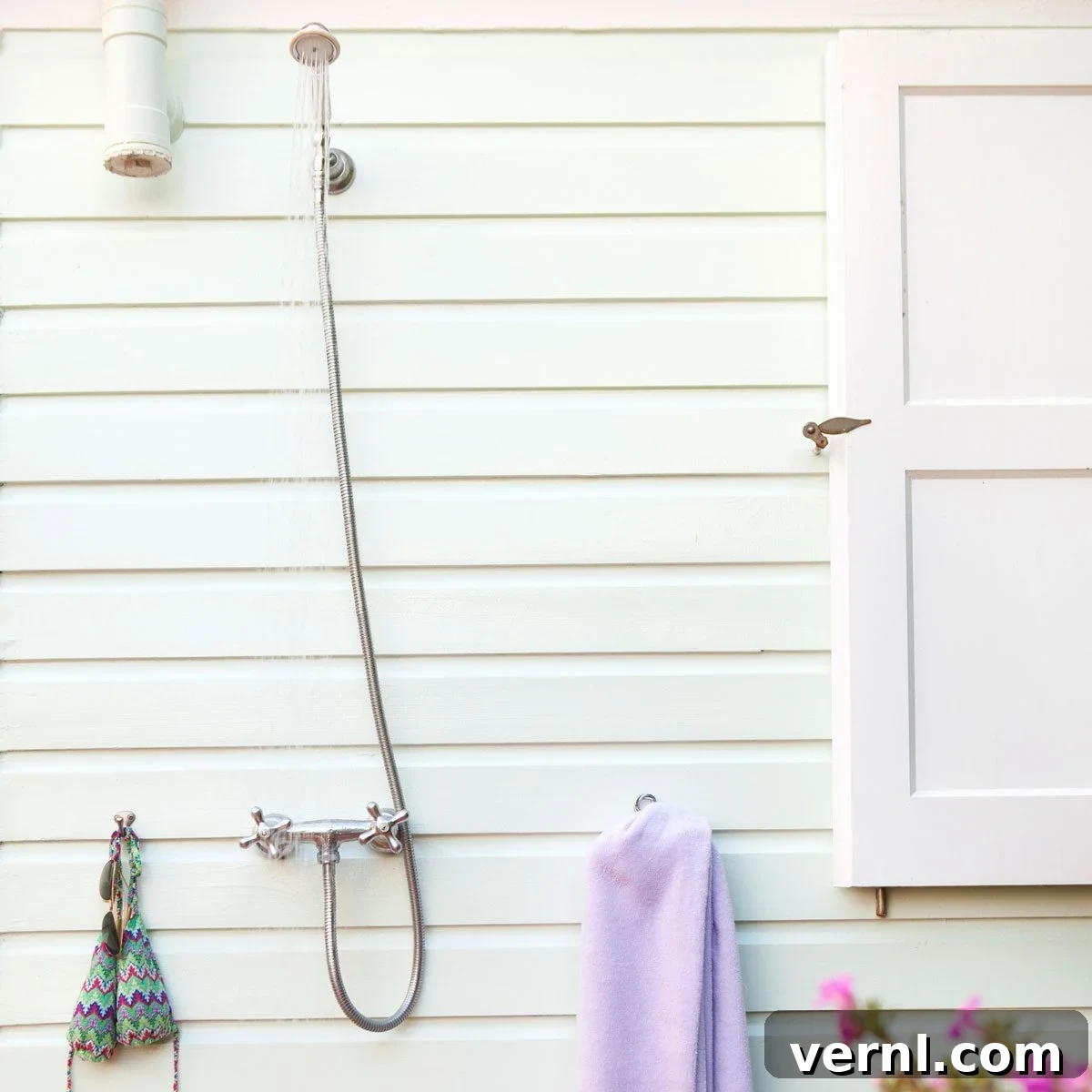
As homeowners increasingly embrace the outdoor living lifestyle, particularly in an era emphasizing social distancing and private sanctuaries, the appeal of an outdoor shower has soared. Far more than just a novelty, this simple yet transformative amenity offers a blend of practicality, luxury, and convenience that enhances any backyard space. Whether you’re looking to rinse off after a refreshing dip in the pool, wash away garden grime, cool down on a sweltering summer day, or even give your furry friend a quick wash, an outdoor shower proves to be an invaluable addition to your home.
Beyond its immediate functional benefits, installing an outdoor shower can also be a savvy investment in your property. According to a report from Realtor Magazine, properties with outdoor showers are gaining significant traction in the market. Experts suggest that for homeowners seeking the biggest return on their investment, installing an outdoor shower should be a top priority. This speaks volumes about its rising status from a desirable feature to a genuine home value enhancer.
What Exactly is an Outdoor Shower?
At its core, an outdoor shower is precisely what its name implies: a shower located outside your home. But the concept extends far beyond this basic definition. Modern outdoor showers are thoughtfully designed systems that integrate plumbing elements such as a showerhead, water pipes, and control valves, all adapted for an exterior setting. The water source can be as straightforward as a garden hose connection for simpler setups, or it can be expertly plumbed into your home’s main water supply for a more permanent and robust solution, often including hot water.
The design possibilities for outdoor showers are virtually limitless. They can be fully enclosed for maximum privacy, featuring walls made from natural wood, stone, or even modern composites. Alternatively, they can be open-air designs that embrace the natural surroundings. Many incorporate practical amenities such as a solid floor or shower base for comfort and drainage, built-in shelves for toiletries, and even small benches for convenience. The aesthetic range is vast, from sleek, minimalist designs that blend seamlessly with contemporary architecture to rustic, charming structures that evoke a natural, spa-like feel. Ultimately, an outdoor shower offers a refreshing and invigorating way to connect with nature while enjoying the comforts of home.
The Advantages and Disadvantages of an Outdoor Shower
Like any home improvement project, installing an outdoor shower comes with its own set of benefits and considerations. Understanding these can help you decide if this amenity is the right fit for your home and lifestyle.
Pros:
- Versatile Styling Options: Outdoor showers are incredibly diverse in design. You can choose from a broad spectrum of styles, from luxurious spa-like enclosures that evoke a high-end resort feel to charming, rustic designs that blend perfectly with a natural garden setting. This ensures there’s an aesthetic to match every home and personal taste.
- Budget-Friendly Solutions: Regardless of your financial constraints, there’s an outdoor shower option for you. Prices range from incredibly affordable portable units that connect to a garden hose, all the way to custom-built, fully plumbed installations that reflect a significant investment, making this amenity accessible to practically any budget.
- Significant Home Value Addition: As mentioned, an outdoor shower is more than just a convenience; it’s a desirable feature that can genuinely increase your home’s resale value. It appeals to potential buyers looking for unique outdoor living spaces and practical amenities.
- Effortless Cooling in Summer: On hot summer days, a quick rinse under an outdoor shower offers an instant and refreshing way to cool off without the need to enter your indoor bathroom. It’s an invigorating experience that helps beat the heat.
- Maintains Pool Cleanliness: If you have a pool, an outdoor shower is indispensable. It allows swimmers to rinse off dirt, sunscreen, and chlorine before and after entering the water, significantly helping to keep your pool cleaner and reduce the demand on its filtration system.
- Ideal for Cleaning Pets and Children: Muddy paws after a walk or messy playtimes for kids are no match for an outdoor shower. It provides a convenient, mess-free zone for cleaning off pets and children before they track dirt inside your home.
- Enhances Outdoor Lifestyle: An outdoor shower elevates your outdoor living experience, making it easier to transition from activities like gardening, beach trips, or yard work directly into a refreshing cleanse, all while enjoying the fresh air.
- Eco-Friendly Potential: With careful planning, especially regarding drainage, an outdoor shower can support greywater recycling, using the water to irrigate nearby plants, thereby conserving water resources.
Cons:
- Requires Regular Cleaning: Being exposed to the elements means outdoor showers are prone to collecting dust, dirt, leaves, and other debris. They will require more frequent cleaning than indoor showers to prevent mold, mildew, and grime buildup.
- Limited Year-Round Usability: In colder climates, an outdoor shower may not be usable year-round unless it’s properly winterized and equipped with a heated water supply and adequate protection from freezing temperatures.
- Potential for High Costs: While budget options exist, custom-designed, fully plumbed outdoor showers with hot water, elegant enclosures, and professional installation can become quite expensive, rivaling the cost of an indoor bathroom remodel.
- Privacy Concerns: Depending on its location and design, an outdoor shower can present challenges regarding privacy. Careful site selection and the incorporation of screens, walls, or landscaping are often necessary to ensure comfort and discretion.
- Water Source and Drainage Complexity: Permanent installations require careful consideration of water supply lines and proper drainage, which can involve significant plumbing work, excavation, and adherence to local building codes.
- Maintenance for Pipes in Cold Climates: Protecting exposed pipes from freezing in winter is crucial to prevent costly damage. This involves routine draining and potentially insulating or heating pipes.
Diverse Types of Outdoor Showers
When considering an outdoor shower, you’ll generally find two primary categories: wall-mounted and freestanding, each offering distinct advantages and installation requirements.
Wall-Mounted Outdoor Showers
Wall-mounted outdoor showers are permanent fixtures that are typically attached directly to the exterior wall of your main house, a garage, or another sturdy outdoor structure. Their primary advantage lies in their proximity to existing plumbing lines. If installed on a shared wall with an indoor bathroom or kitchen, the cost and complexity of extending water pipes can be significantly reduced, making them a more affordable installation option compared to permanent freestanding units.
These showers are excellent for saving space, making them a popular choice for smaller patios or decks. They often feature a single showerhead and can be as simple or as elaborate as desired, from a basic cold-water rinse station to a full hot and cold setup. Materials commonly used include stainless steel, brass, and weather-resistant composites, ensuring durability against the elements. While they offer a fixed location, their design can be highly customized with accompanying privacy screens or decorative elements to seamlessly integrate with your home’s exterior.
Freestanding Outdoor Showers
Freestanding outdoor showers offer greater flexibility in placement and design, further divided into stationary fixtures and portable units.
Stationary Freestanding Outdoor Showers
These are permanent installations that stand independently, not attached to a wall. They are usually more expensive to purchase and install because they typically require dedicated water lines to be run from underground pipes or connected to existing above-ground water faucets. The installation often involves excavation for plumbing and potentially a solid base for stability and drainage.
However, the investment provides unparalleled design freedom. Stationary freestanding showers can become focal points in your garden, offering a luxurious, resort-like experience. They can be placed almost anywhere in your yard, away from the house, allowing for unique privacy solutions like natural landscaping or elaborate enclosures. They come in a vast array of materials, from natural stone pillars with integrated plumbing to sleek, modern stainless steel columns, and can include multiple showerheads, foot rinsers, and even built-in benches.
Portable Freestanding Outdoor Showers
Portable outdoor showers represent the most economical and flexible option. They are often the cheapest to acquire and incur little to no installation cost. These units typically hook up to an existing outdoor water supply, such as a garden hose, and can be easily moved and placed anywhere within reach of the water source.
Options range from simple hose attachments with a showerhead to self-contained units with a small water tank, sometimes solar-heated for warm water. These are perfect for renters, those with temporary outdoor needs, or individuals who want to test the waters of outdoor showering before committing to a permanent installation. While they may lack the permanence and elaborate features of stationary options, their convenience and affordability make them an excellent entry point into the world of outdoor showering.
Outdoor Shower Costs and Installation Considerations
The investment required for an outdoor shower varies widely, primarily depending on the type, features, materials, and whether it’s a DIY project or professionally installed. Understanding these costs is crucial for planning your budget.
Understanding the Costs
The total cost for purchasing and installing an outdoor shower can range dramatically, from approximately $250 for a basic setup to several thousand dollars for a high-end, custom installation.
- Wall-Mounted Outdoor Showers: Expect to pay between $100 and $500 for the fixture itself. These are generally more budget-friendly due to simplified plumbing if located near existing lines.
- Freestanding Stationary Showers: These units typically cost between $500 and $2,000 for the fixture. The higher price reflects their robust construction and more complex plumbing requirements.
- Portable Showers: These are the most economical, usually ranging from $50 to $300. Their low cost and ease of setup make them an attractive option for many.
Beyond the initial purchase, installation costs can differ considerably, ranging from $500 to $8,000 or more. This wide range accounts for various factors:
- Plumbing Complexity: Running new water lines, especially hot water, or extending pipes a significant distance, will increase labor costs.
- Drainage System: Installing a proper drainage system, such as a French drain or connecting to a greywater system, adds to the expense.
- Enclosure and Features: Building a custom privacy enclosure (e.g., wood, stone), adding a concrete pad, benches, shelves, or specialized lighting will naturally raise the overall cost.
- Geographic Location: Labor rates can vary significantly by region.
DIY vs. Professional Installation
Fortunately, many aspects of outdoor shower installation are well within the capabilities of experienced DIY enthusiasts.
- DIY Potential: Simple wall-mounted showers that connect to an existing outdoor faucet, or portable units, are often straightforward DIY projects. Tasks like assembling the shower kit, attaching it to a wall, or connecting a garden hose require basic tools and skills. Even running simple surface-mounted cold water lines might be manageable for a skilled DIYer.
- When to Call a Professional: For more complex installations, particularly those involving new underground plumbing lines, hot water connections, extensive drainage systems, or structural enclosures, hiring a licensed plumber and potentially a contractor is highly recommended. Professionals ensure proper installation, compliance with local building codes, and prevent costly leaks or damage in the long run. They can also advise on necessary permits, which are often required for permanent outdoor plumbing.
Optimal Site Selection for Your Outdoor Shower
Choosing the right location for your outdoor shower is paramount to maximizing its utility, comfort, and aesthetic appeal. Several factors should influence your decision:
- Primary Function: Consider the main purpose of your shower. If it’s for rinsing off before and after swimming, installing it conveniently near the pool area makes perfect sense. For those using it after gardening or beach trips, a location closer to a backyard entrance might be more practical.
- Privacy: This is arguably one of the most critical considerations. To ensure a comfortable and discreet experience, select a site that is naturally out of sight from neighbors, pedestrians, and even other areas of your own home. If a perfectly secluded spot isn’t available, you’ll need to incorporate privacy solutions such as outdoor curtains, screens, wooden slat walls, tall fencing, or strategic landscaping with dense shrubs or trees.
- Sunlight Exposure: Wherever possible, select a site that receives direct sunlight for at least part of the day. This natural warmth is beneficial for several reasons: it provides a pleasant, naturally heated showering experience on cooler days, and more importantly, it helps the shower area dry quickly, which is crucial for preventing mold and mildew formation on surfaces and within the drainage area.
- Proximity to Water and Drainage: For permanent installations, consider how easily you can access existing water lines and how effectively water can drain away. A location close to a utility wall (for wall-mounted) or an area with good soil permeability (for natural drainage) can significantly simplify installation and reduce costs.
- Ground Stability: Ensure the chosen site has stable, level ground. For freestanding units, a solid base like a concrete pad or well-compacted gravel is often necessary to prevent settling and provide a stable footing.
- Aesthetics and Integration: Think about how the shower will integrate with your overall landscape design. Will it be a hidden gem or a decorative feature? Ensure the materials and design complement your home and garden’s existing style.
Managing Your Outdoor Shower’s Water Supply
The method of supplying water to your outdoor shower is a fundamental decision that impacts both complexity and cost.
For Wall-Mounted Outdoor Showers
The most efficient and cost-effective approach for a wall-mounted unit is often to utilize a shared exterior wall with an existing indoor plumbing system, such as a kitchen or bathroom. This proximity significantly reduces the effort and expense, as the main water pipes are already present. A plumber can tap into these lines to extend hot and cold water directly to your outdoor shower, providing a full-service experience. This method minimizes excavation and extensive new piping.
For Stationary Freestanding Showers
Stationary freestanding showers typically require a more intricate water supply setup.
- Underground Water Pipes: The most robust solution involves running an underground water pipe from your home’s main supply to the shower location. This requires excavation, which adds to the cost and complexity, but results in a clean, hidden plumbing system that is protected from the elements. This is the ideal choice for a permanent, high-end installation with both hot and cold water.
- Connecting to Existing Outdoor Faucets: A more affordable alternative is to connect your standalone fixture to existing outdoor water faucets. If you only have a cold water spigot, you can install an outdoor hot water faucet (connected to your home’s hot water heater) next to the existing one. A mixing valve can then be used to combine the hot and cold water lines to supply the shower with temperature-controlled hot water. While this option can be more budget-friendly, the above-ground lines and visible connections may be considered less aesthetically pleasing by some.
For Portable Freestanding Outdoor Showers
When opting for a portable freestanding outdoor shower, your plumbing considerations are incredibly simple. These units primarily rely on a standard garden hose connection. Your main concern is simply determining how far your garden hose can reach to supply the shower. Some advanced portable units may include small tanks that can be filled and pressurized, or even solar-heated tanks for warm water, eliminating the need for a direct hose connection during use.
Effective Outdoor Shower Drainage Solutions
Proper drainage is a critical, often overlooked, aspect of outdoor shower installation. Neglecting it can lead to soggy lawns, foundation issues, and even legal problems with local building codes.
In many rural or less densely populated areas, drainage for an outdoor shower simply involves allowing the water runoff to drain naturally into the ground. This is viable if your soil is highly porous and the shower is located far enough from your home’s foundation and any septic systems. However, this simplicity comes with caveats.
Building codes in some areas explicitly require a dedicated drain for greywater disposal, especially if you plan to use soaps and shampoos, which can harm plants or contaminate groundwater. Additionally, if the extra groundwater saturation from your shower might compromise your home’s foundation or create persistently muddy areas, you will definitely want to install a drain. This is also advisable if you’re concerned about shower water pooling around your house or if the ground under the shower isn’t porous enough for efficient natural drainage.
Common Drainage Options for Outdoor Showers Include:
Shower Pan
Similar in concept to a shower pan used in indoor bathrooms, an outdoor shower drain pan is specifically designed to collect all the water. This pan sits directly beneath the shower area and slopes gently towards a central drainpipe inlet. The collected water is then directed via a flexible hose or rigid pipe to an appropriate disposal point. This point could be your home’s septic or sewage drain (requiring professional plumbing), a specialized French drain system, a dry well, or simply a remote area of porous ground far from your home’s foundation and any sensitive landscaping. Shower pans are excellent for controlling water flow and are often a requirement in areas with stricter drainage regulations.
French Drain
A highly effective solution for dispersing water, a French drain consists of a perforated pipe installed in a shallow trench, which is then surrounded by gravel or other porous aggregates like crushed stone. This system can capture water in two ways: it can receive water directly from a single drainage inlet (like the outlet of a shower pan drain), or it can absorb water that naturally soaks into the ground above it through the perforations in the pipe. As the water travels through the length of the perforated pipe, it is slowly and evenly dispersed into the surrounding soil. Alternatively, the French drain can be sloped to direct the collected water to an existing drainage system, such as a dry well, or a storm drain if permissible by local codes.
Dry Well
A dry well functions as an underground “catch basin” designed for slow water absorption. It typically consists of a large hole filled with a perforated barrel, a landscape fabric-lined pit, or a specialized dry well structure, all surrounded by a porous aggregate like gravel or stone. The basin collects the shower water through a drainpipe that feeds into it, usually from a drainpipe inlet positioned underneath the shower or from a French drain. Once collected, the basin slowly and naturally disperses the shower water into the surrounding ground over time. Dry wells are particularly useful in conjunction with a French drain or a shower pan, providing an efficient way to manage a significant volume of greywater without overwhelming surface drainage.
Outdoor Shower Maintenance and Cleaning Essentials
Ensuring the longevity and hygiene of your outdoor shower requires consistent yet simple maintenance. Adhering to a regular cleaning and care routine will protect your investment and keep your shower inviting.
- Keep it Dry: Wet environments are notorious breeding grounds for mold and mildew, which can quickly turn a refreshing outdoor shower into an unappealing one. To mitigate this, strive to keep the shower area as dry as possible between uses. Installing your outdoor shower in a location that receives direct sunlight is a natural aid, as the sun’s rays help evaporate moisture. In shaded areas or on overcast days, consider wiping down the surfaces by hand with a towel after each use. Ensure good air circulation around the shower to facilitate drying.
- Keep it Clean: Given its exposure to the outdoors, your shower will inevitably collect dust, dirt, leaves, and other debris. These elements can not only make the shower unsightly but also clog drains and create slippery surfaces. Regularly sweep or use a leaf blower to clear away loose debris from the shower floor and surrounding area. For a more thorough cleaning, periodically scrub all surfaces with household cleaning products. Opt for eco-friendly, biodegradable cleaners if your drainage system involves natural ground dispersal or greywater recycling, to protect your garden and the environment. Consistent cleaning is crucial for preventing mold and mildew formation and maintaining a hygienic space.
- Protect the Pipes from Freezing: This is perhaps the most critical maintenance task for outdoor showers in climates that experience freezing temperatures. Exposed water pipes can freeze, expand, and burst, leading to expensive plumbing repairs and potentially severe water damage to your home or yard. To prevent this, annual winterization is essential. Before the first freeze, make sure to drain all water from any exposed pipes. This often involves shutting off the water supply to the outdoor shower at an indoor valve and opening the outdoor spigots to allow all water to escape. For added protection, especially in extremely cold regions, consider wrapping exposed pipes with insulation or an electric heat cable. Always follow the manufacturer’s instructions for any heating elements.
Embracing the Outdoor Shower Lifestyle
An outdoor shower is more than just a functional fixture; it’s an invitation to embrace a unique aspect of outdoor living. It allows you to connect with nature, enjoy refreshing moments under the sky, and adds a distinct charm and significant value to your home. Whether your aim is practical convenience, a touch of luxury, or a private oasis for relaxation, a well-planned and maintained outdoor shower can transform your backyard into an even more enjoyable and valuable space for years to come.