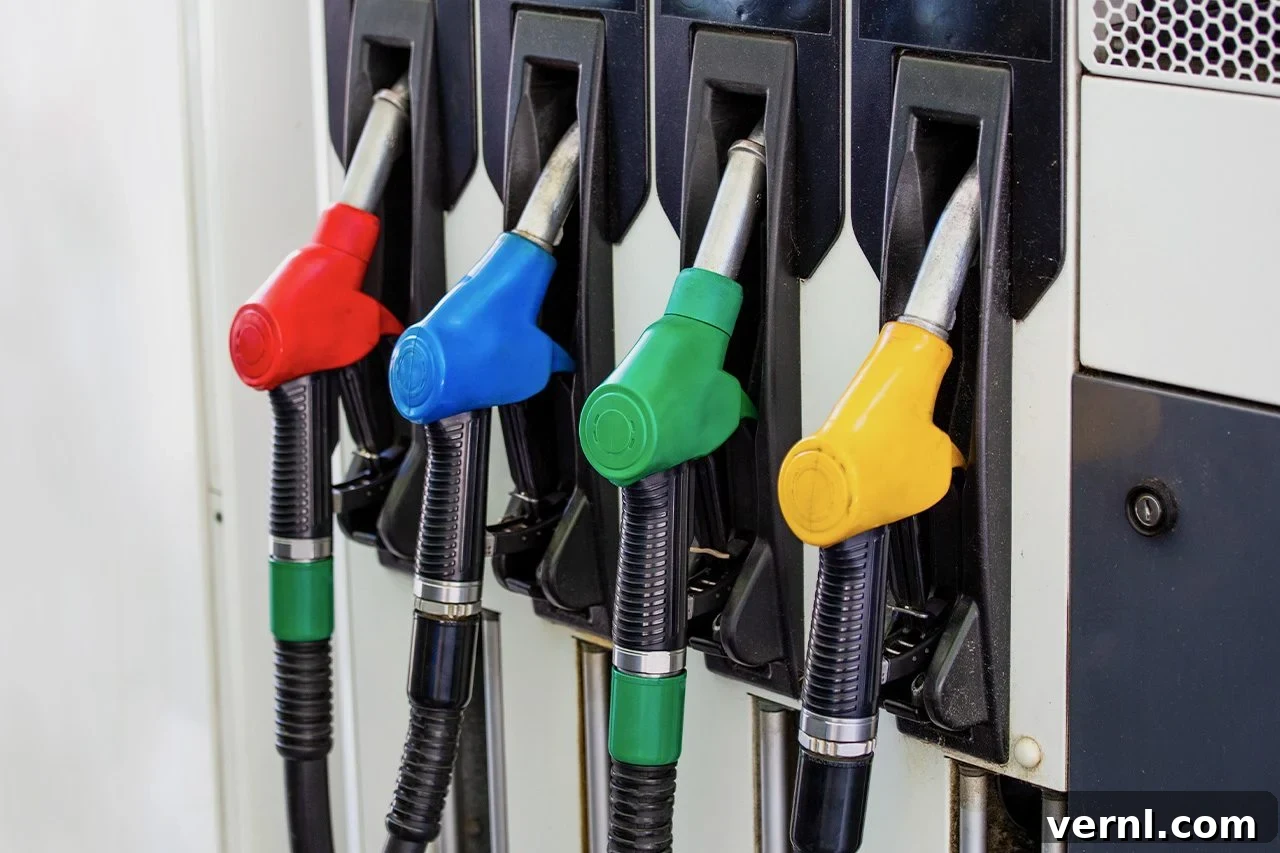
Most drivers have encountered the moment of hesitation at the gas station: you pull in, shut off your car, stare at several nozzles and handles, and wonder which one is right for your vehicle. Unless you live in New Jersey where attendants pump fuel for you, figuring out the correct nozzle is your responsibility.
Gas pump handle colors are meant to help stations distinguish between fuel choices, but there is no universal color standard across the United States. Stations offer multiple grades and fuel blends, so confirming the pump’s label and display is far more reliable than memorizing colors.
This article explains why gas pump handles use different colors, what those colors sometimes indicate, and practical steps to make sure you select the correct fuel for your car.
What Do Different Gas Pump Handle Colors Mean?
It would be convenient if every station used the same color code for fuel nozzles, but that isn’t the reality. In the U.S., many drivers associate green handles with diesel and black handles with gasoline. While that pattern can hold at some locations, it is not a consistent rule.
Across the country, diesel nozzles may be green, black, red, blue, yellow or other colors depending on the station, brand, or region. Unleaded gasoline nozzles can appear in many of the same colors as well. Color alone cannot be relied upon to identify fuel type or grade.
Because colors vary, regulators emphasize clear labeling on the pump itself. The Federal Trade Commission’s Fuel Rating Rule concentrates on the written information displayed on the dispenser: the fuel rating, certification, and any special fuel designations must be posted where the customer can read them. Alternative fuels and blends also have labeling rules that stations must follow.
How to Make Sure You’re Choosing the Right Fuel
Don’t depend solely on handle color when fueling. In some states or at full-service stations an attendant is available to assist, but at self-service pumps you’ll want to confirm the correct nozzle yourself to avoid damage.
Here are reliable steps to ensure you select the right fuel:
- Read the pump label and dispenser display. The pump will list the fuel type (regular, midgrade, premium, diesel, E85, etc.) and sometimes octane or ethanol content. Use those labels as your primary guide.
- Check the fuel door or gas cap. Many vehicles have a label inside the fuel door or near the cap indicating the recommended fuel type and minimum octane. If the label is missing, consult your owner’s manual.
- Know your engine’s requirements. Most gasoline engines require regular unleaded gasoline of a specified octane rating, while diesel engines require diesel fuel. Some high-performance engines or turbocharged units recommend higher-octane fuel.
- If you pick the wrong fuel, don’t start the engine. Filling a gasoline car with diesel or a diesel vehicle with gasoline can cause costly damage. If you realize the mistake before starting the engine, have the vehicle inspected and drained by a professional.
- Look for additional pump indicators. Many dispensers include clearly labeled buttons for fuel selection and may display certification stickers or delivery information. Those details are more trustworthy than color alone.
Being attentive to the pump label, your vehicle’s fuel specifications, and any on-screen information will keep you from costly errors. Handle colors can help at a glance, but written fuel designations and pump displays are the definitive guides.
Sources
Federal Trade Commission — Automotive Fuel Ratings, Certification and Posting
Electronic Code of Federal Regulations — 16 CFR Part 306, fuel label specifications