
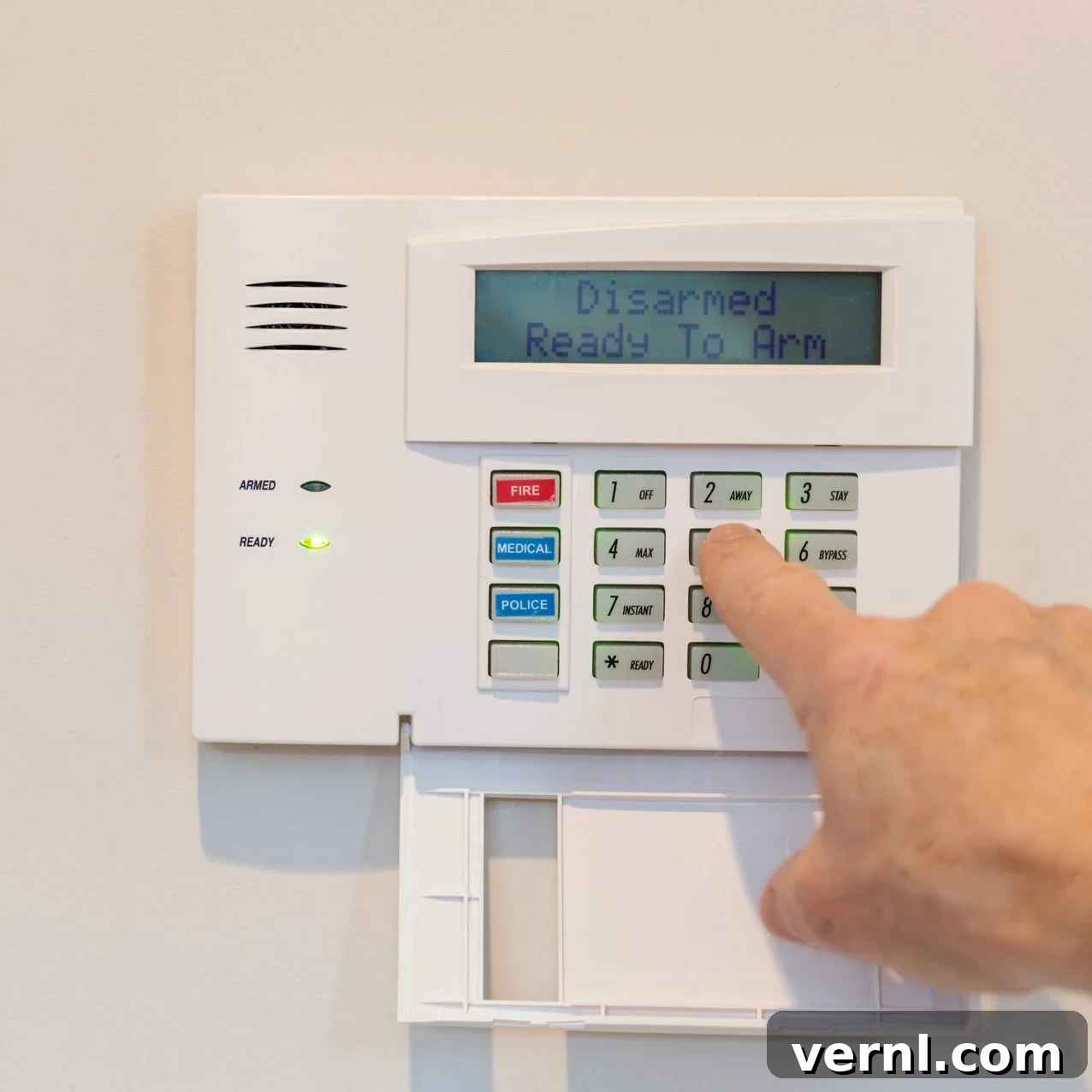
Security Camera False Alarms: Understanding and Preventing Them
Security cameras are essential for home security, but frequent false alarms can diminish their effectiveness. From mistaken motion alerts to unnecessary police responses, these false alarms are more than just irritating; they can be costly and even dangerous. When your security system cries wolf too often, you risk ignoring genuine threats, potentially compromising your property and safety. Fortunately, most security camera false alarms are preventable. The key is to understand the common culprits and implement effective solutions. This comprehensive guide, featuring expert advice from home security professionals, will help you identify and address the causes of false alarms, ensuring your security system remains a reliable safeguard.
How Home Security Systems Detect Intruders
Modern security cameras employ a combination of sensors and sophisticated software to detect motion within their field of view. When movement is detected that meets pre-defined criteria, the system springs into action, initiating recording, sending alerts to your mobile device, or triggering an audible alarm, depending on your configured settings. Many systems rely on passive infrared (PIR) sensors, which detect changes in heat signatures, or pixel-based motion detection, which analyzes changes in the visual image. Increasingly, artificial intelligence (AI) technology is integrated into these systems to classify activity more accurately, distinguishing between people, pets, vehicles, and other sources of motion. This AI-powered classification is crucial for reducing the frequency of false alarms and ensuring that you are only alerted to genuine potential threats.
The sophistication of a security system’s detection capabilities often correlates with its price and the quality of its components. Lower-end systems may rely on simpler motion detection methods, making them more susceptible to false triggers. In contrast, higher-end systems with advanced AI and multiple sensor types offer a more reliable and accurate detection process, minimizing the risk of unnecessary alarms.
Common Causes of Security Camera False Alarms
Several factors can contribute to false alarms from security cameras. Understanding these causes is the first step towards preventing them. Let’s explore some of the most common reasons:
Faulty Installation
Improper installation is a significant cause of false alarms. As Randy Atlas of Atlas Safety and Security Designs explains, “False alarms are usually caused by improper installation.” This can stem from poorly positioned sensors or overly sensitive settings. For example, a camera pointed directly at a busy street will constantly trigger alerts due to passing traffic, while excessively high sensitivity settings may cause an alarm every time your pet wanders through the yard.
The angle and placement of your security cameras are crucial. Avoid positioning cameras where they are likely to capture irrelevant motion, such as moving trees, reflections from windows, or the movement of pedestrians on a public sidewalk. Careful planning during the installation process can significantly reduce the number of false alarms you experience.
How to fix: Jimmy Lin, Vice President of Product Management at ADT, suggests: “To reduce the likelihood of this happening, you can use pet-immune motion sensors, adjust sensitivity settings to better match the environment, and avoid positioning cameras directly toward busy streets or driveways where frequent movement can set off unnecessary alarms.” Pet-immune sensors are designed to ignore smaller animals, reducing the chances of your furry friends triggering an alert. Adjusting sensitivity settings allows you to fine-tune the system to respond only to significant motion events.
Low Batteries
Wireless security systems rely on batteries for power, and their performance can suffer when batteries are low. “Low or failing batteries can cause sensors to behave inconsistently, including sending intermittent signals or losing stable communication with the system,” Lin notes. “Most systems provide low-battery alerts in advance, but ignoring those warnings can increase the likelihood of false alarms.”
When batteries are weak, the sensors may not function correctly, leading to erratic behavior and triggering false alarms. The system may struggle to differentiate between genuine threats and minor disturbances, resulting in unnecessary alerts and frustration.
How to fix: To prevent this, establish a regular schedule for checking and replacing batteries. “Set calendar reminders to check system batteries and consider switching to a hardwired system,” Lin advises. “Homeowners with wired home security systems may have an advantage since they don’t need to worry about changing batteries.” While hardwired systems require professional installation, they eliminate the hassle and potential issues associated with battery-powered devices.
Limited Sensors
Outdated or inexpensive security cameras may rely on a single sensor type to monitor changes and trigger alerts. These systems are more susceptible to detection errors because the motion detected isn’t verified by multiple sensors for accuracy. Without cross-validation, the system may misinterpret normal environmental changes as potential threats.
For instance, a camera that relies solely on motion detection might trigger an alarm when a sudden gust of wind moves a bush in your yard. A more sophisticated system with multiple sensors could differentiate between this harmless event and a genuine intrusion.
How to fix: To minimize false alarms, Atlas recommends using dual-sensor cameras: “To prevent false alarms, use dual-sensor cameras that require both to be triggered in order for an alarm condition to be activated.” Dual-sensor technology provides an extra layer of verification, reducing the likelihood of false positives.
Electromagnetic Interference
Disrupted Wi-Fi signals can trigger false alarms on wireless security cameras. “Electromagnetic interference, specifically radio frequency interference, can disrupt communication between wireless security devices, which may lead to system trouble alerts or unexpected behavior,” Lin explains, “including false alarms.”
Wi-Fi interference can arise from various sources, including other electronic devices, physical obstructions, and even neighboring networks. This interference can cause the security camera to lose connection with the central system, leading to false alarm signals or system errors.
How to fix: Consider upgrading to modern security systems with robust wireless connectivity and backup options. “Modern security systems, including those from ADT, are built with multiple layers of protection,” Lin says. “That includes having multiple radios and cellular backups, so alarms can still function even if Wi-Fi is disrupted.” Investing in a high-quality router and ensuring a strong, stable Wi-Fi signal can also help mitigate interference issues.
Outdated Firmware
Security camera manufacturers regularly release firmware updates to improve sensor detection algorithms and patch bugs in the system. Failing to keep up with these updates leaves your system operating at a less-than-optimal performance level and can contribute to false alarms. These updates often include refinements to the motion detection algorithms, enhancing their ability to distinguish between genuine threats and harmless events.
How to fix: Regularly install system updates when they become available. As Lin advises, “Regular firmware and encryption updates help guard against evolving threats.” These updates not only improve performance but also enhance the security of your system.
Dirty Lens

Dust, dirt, and insects can significantly impact the performance of security camera sensors and lenses. “Dust, insects, or debris inside detectors may further increase the chances of false alerts,” Lin warns. Dirt obstructs the view of high-resolution cameras, while insects flying near the lens or inside the camera housing can trigger motion-activated responses.
A dirty lens can distort the camera’s vision, leading to misinterpretations of the environment and triggering false alarms. Regular cleaning is essential for maintaining optimal performance.
How to fix: Clean exterior security cameras monthly. Power down the unit, then gently clean the camera lens with a lens cleaning solution and a microfiber cloth. Avoid using abrasive cleaners or materials that could scratch the lens.
Weather
Extreme weather conditions, particularly windstorms, can create excessive movement in trees and shrubs, or blow leaves and debris, triggering false alarms. “While the weather can occasionally contribute to false alerts from security cameras, these situations are relatively rare,” Lin says.
While weather-related false alarms may be infrequent, they can still be frustrating. Taking proactive measures during periods of inclement weather can help minimize these occurrences.
How to fix: Lower the camera’s sensitivity settings if you know a major weather event is approaching, or adjust the camera angle to avoid capturing nearby branches. “If a homeowner experiences repeated issues, it’s worth having the system professionally inspected to rule out environmental interference,” Lin suggests. A professional inspection can identify potential vulnerabilities and recommend solutions tailored to your specific environment.
FAQ
Is there a limit to how many false alarms I can have?
For security systems monitored by outside agencies, you may receive one false alarm without a fine, but policies vary widely by city and county. Expect to pay between $75 and $250 for false alarms that trigger a police response. Excessive false alarms can also lead to increased monitoring fees or even suspension of service.
How often should I be testing my system to prevent false alarms?
“You should test your system every time you make changes such as adding devices, updating Wi-Fi, or repositioning sensors. Routine testing helps confirm that devices are communicating properly and that alerts and monitoring are functioning as expected,” Lin says. Regular testing is a crucial part of maintaining a reliable security system.
About the Experts
- Jimmy Lin is Vice President of Product Management at ADT, a leading home security company.
- Randy Atlas is the owner of Atlas Safety and Security Designs, as well as a nationally recognized expert in security design and crime prevention. He holds a Doctorate in Criminology and is a Certified Protection Professional.