PVC Pipe Storage Solutions: Simple DIY Projects for Dowels and Fasteners
Tired of cluttered workspaces and scattered hardware? Transform scrap pieces of PVC pipe into efficient and accessible storage solutions for dowels, screws, and nails with these clever DIY projects. Inspired by a tip from Al Miller, these simple builds maximize organization and make your workshop a more productive environment. Learn how to create custom storage that’s both practical and space-saving.
Fastener Trough: Organize Your Screws and Nails
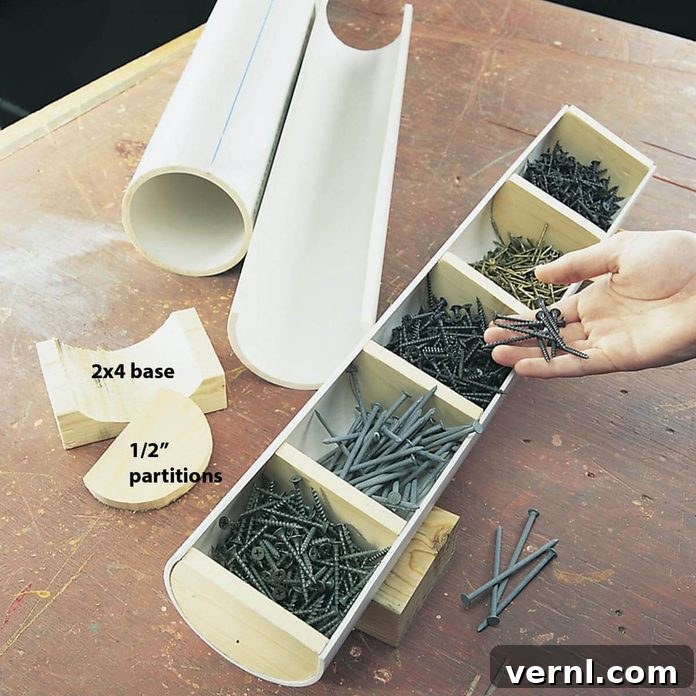
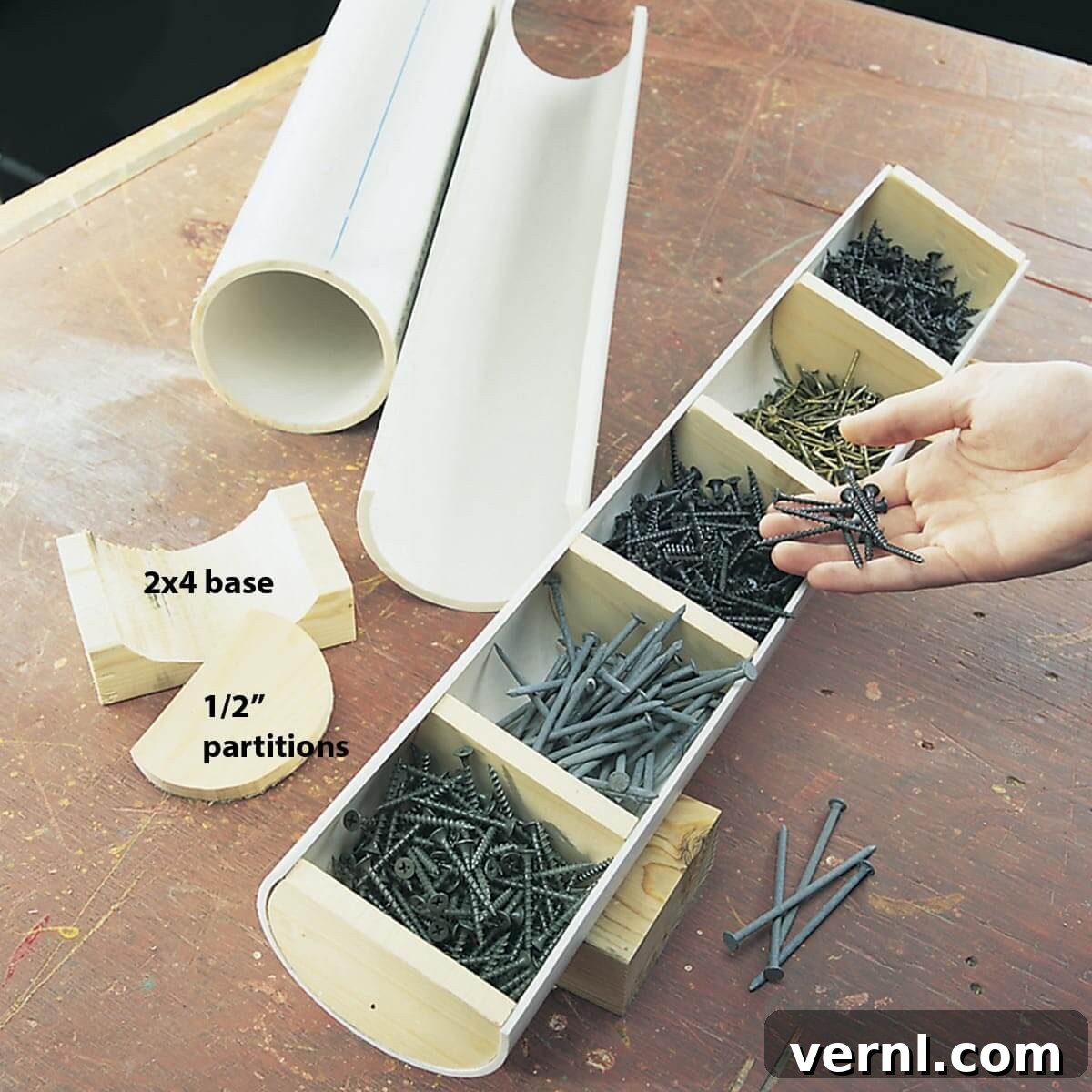
Keep your screws and nails within easy reach with this straightforward fastener trough. This project is perfect for frequently used sizes, providing a clear and organized system that saves you time and frustration. It’s a quick and effective way to declutter your workspace and improve your workflow.
Materials You’ll Need:
- 2-foot length of 4-inch PVC pipe
- Scroll saw (or other suitable saw)
- 1/2-inch thick wood (for partitions)
- Wood glue or screws
- Scrap 2×4 blocks (for base)
- Power sander or saw
- Screws
Instructions:
- Cut the Pipe: Using a scroll saw (or a similar saw appropriate for PVC), carefully cut the 4-inch PVC pipe lengthwise. Aim for a cut that creates a trough slightly more than half the pipe’s diameter. This will form the main body of your fastener organizer.
- Create Compartments: Cut 1/2-inch thick wood into pieces to act as partitions. These will define the individual compartments for different screw and nail sizes.
- Assemble the Trough: Glue or screw the wood partitions into the trough, spacing them appropriately to accommodate the common sizes of fasteners you use. Ensure the partitions are securely attached to the base of the trough.
- Build a Stable Base: To prevent the trough from tipping over, create a stable base. Trace the curved profile of the PVC pipe onto a couple of scrap 2×4 blocks.
- Shape the Base: Use a power sander or a saw to cut out the curve from the 2×4 blocks, matching the shape of the PVC pipe.
- Attach the Pipe to the Base: Securely screw the PVC pipe trough to the 2×4 block base. This will provide stability and prevent it from rolling or tipping.
Once assembled, this fastener trough provides a convenient and readily accessible storage solution. The compartmentalized design allows for quick identification and retrieval of the right screws and nails for your project.
Dowel Quiver: Keep Dowels Organized and Accessible
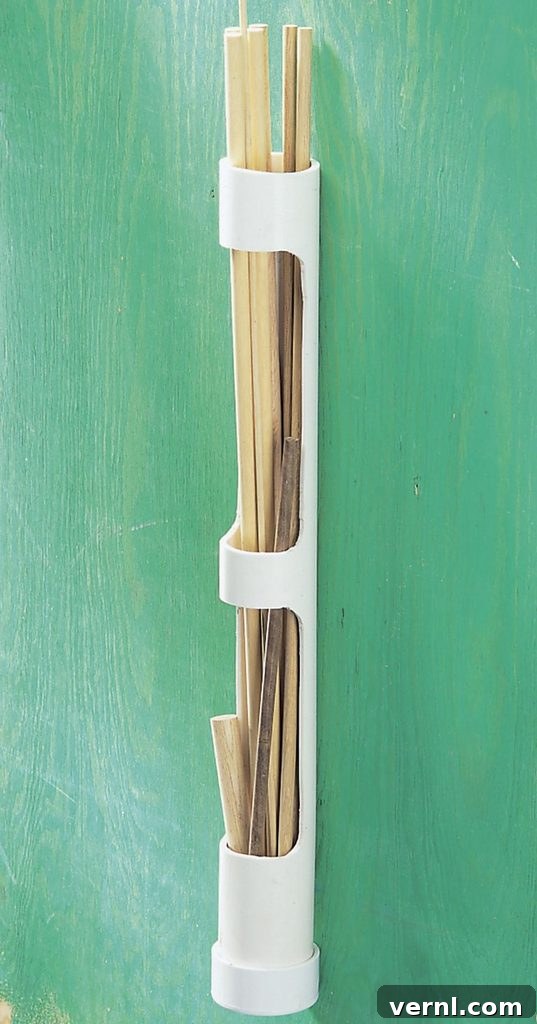
Tame the chaos of loose dowels with this simple and effective dowel quiver. This project, inspired by a tip from George Marchalk, provides an organized and accessible storage solution for dowels of various sizes and lengths. Keep your dowels neatly stored and readily available for your next woodworking project.
Materials You’ll Need:
- 30-inch long piece of 3- or 4-inch diameter PVC pipe
- Saber saw
- PVC end cap (matching the diameter of your pipe)
- Drill and drill bits
- Screws
Instructions:
- Prepare the Pipe: Using a saber saw, cut lengthwise notches along the 30-inch piece of PVC pipe. These notches will allow you to easily insert and retrieve dowels of various sizes.
- Attach the End Cap: Glue the PVC end cap onto one end of the pipe. This will create a closed bottom for the quiver, preventing dowels from falling through. Ensure the glue is fully set before proceeding.
- Drill Mounting Holes: Drill pilot holes in the pipe, opposite the notches. These holes will be used to mount the quiver to a shop wall. The number and placement of the holes will depend on the desired mounting stability.
- Mount the Quiver: Screw the dowel quiver to a shop wall at a convenient height, ensuring it is securely fastened to the wall studs or suitable backing.
This notched-out quiver is designed to accommodate a wide range of dowel sizes, from standard 36-inch lengths to shorter leftovers. The open design allows for easy identification and access to the dowels you need. This project is an excellent way to organize your dowels and keep them within easy reach, improving efficiency and reducing clutter in your workshop.
Why Use PVC for Storage?
PVC pipe is an ideal material for workshop storage solutions due to several key advantages:
- Cost-Effectiveness: PVC pipe is relatively inexpensive and readily available at most hardware stores, making these projects budget-friendly.
- Durability: PVC is durable and resistant to water, making it suitable for use in a workshop environment where exposure to moisture is possible.
- Easy to Work With: PVC is easy to cut, drill, and glue, allowing for simple and quick construction of customized storage solutions.
- Versatility: PVC can be adapted to various storage needs, allowing you to create organizers for screws, nails, dowels, and other small hardware items.
- Space Saving: These projects utilize vertical space effectively, maximizing storage capacity and minimizing the footprint on your workbench.
By repurposing readily available materials like PVC pipe, you can create practical and efficient storage solutions that enhance your workshop’s organization and productivity. These projects are a testament to the fact that effective storage doesn’t have to be expensive or complicated.
Start organizing your workshop today with these simple and effective PVC pipe storage solutions. You’ll be amazed at how much cleaner and more efficient your workspace becomes. These DIY projects are a testament to the power of creative resourcefulness and a great way to put those scrap pieces of PVC to good use.