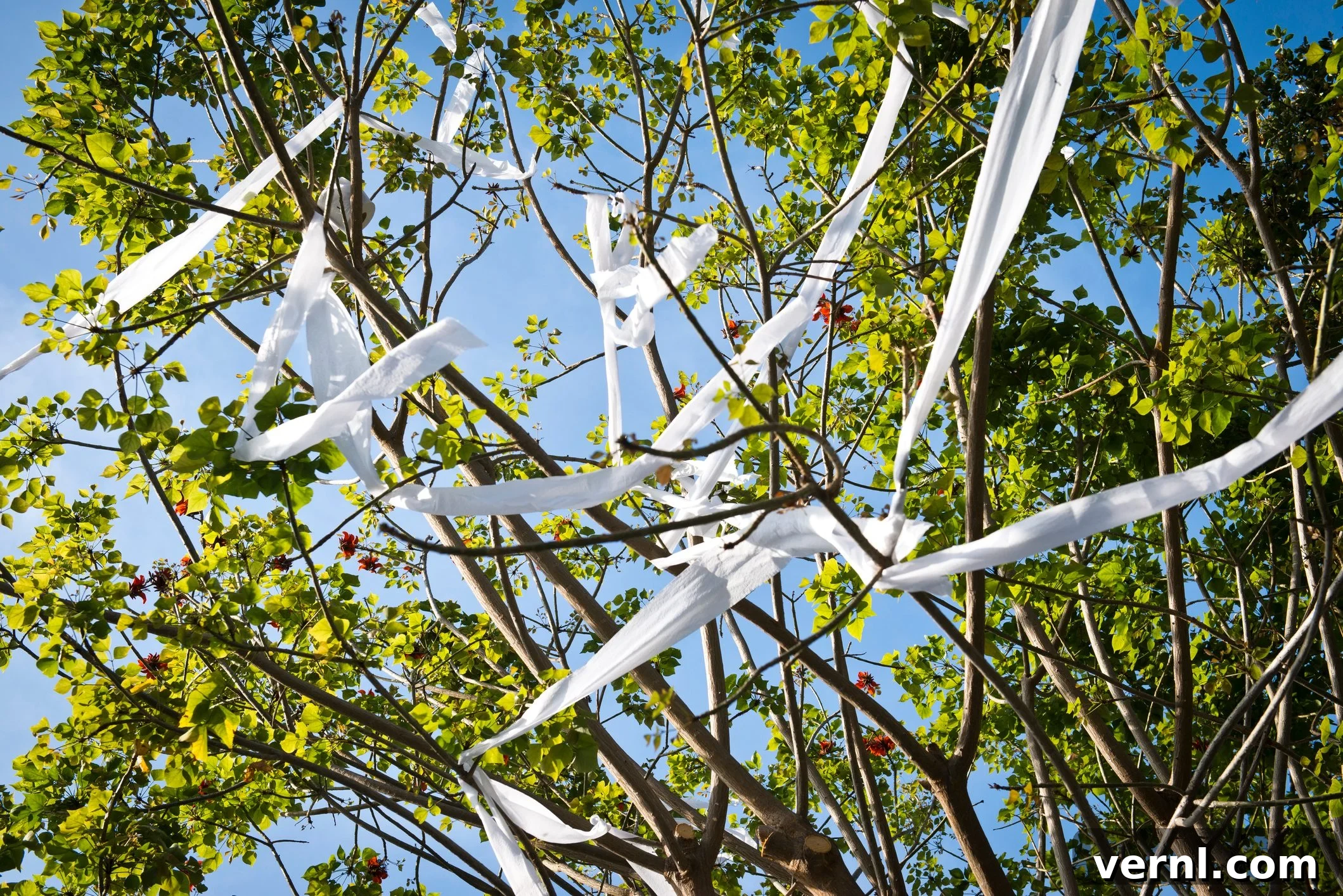
Waking up to a tree adorned with toilet paper streamers is a quintessential, albeit often unwelcome, sign of a mischievous night. While the sight of ghosts and goblins each fall can evoke nostalgic childhood memories, a tree festooned with TP is rarely a cherished seasonal decoration. For the pranksters, the spectacle of toilet paper unspooling and fluttering in the wind might be amusing, but for the homeowner left with the aftermath, it’s a frustrating and unsightly mess that demands immediate attention.
Fortunately, dealing with toilet paper in trees doesn’t have to be a monumental task. This comprehensive guide will equip you with effective, safe, and practical methods to remove toilet paper from your trees, ensuring your landscape returns to its pristine condition without causing harm to your valuable greenery or risking personal injury. From simple ground-level tools to more advanced techniques for stubborn remnants, we’ve got you covered.
Act Swiftly: The Critical Importance of Timely Removal
When confronted with toilet paper in your trees, the golden rule is to act promptly. Time is of the essence, primarily because of the weather. The biggest enemy in this cleanup operation is rain. Toilet paper, by its very nature, is designed to break down rapidly when wet. If rain soaks the streamers before you can remove them, what started as manageable strips will transform into soggy, disintegrating blobs that cling tenaciously to branches and leaves.
Attempting to remove wet, pulpy toilet paper is an exercise in futility and frustration. Instead of neat streamers, you’ll be dealing with mushy fragments that tear easily, leaving behind countless tiny pieces that are incredibly difficult to dislodge. These wet remnants can also be harder to spot, becoming almost indistinguishable from wet leaves or bark, making the cleanup process significantly longer and more tedious. Furthermore, prolonged exposure to moisture and direct contact with decaying paper can potentially foster mold or mildew growth, though this is less common with standard toilet paper and more of a concern for heavy, persistent saturation.
If, despite your best efforts, the toilet paper has already gotten wet, resist the urge to tackle it immediately. Allow the tree and the paper to dry completely. Once dry, the paper will stiffen and become more brittle, making it easier to chip off or dislodge in larger, more manageable pieces, rather than struggling with disintegrating clumps. Patience in this scenario will save you a considerable amount of effort and aggravation.
Essential Preparation for a Safe Cleanup
Before you begin any removal method, a little preparation goes a long way in ensuring safety and efficiency. First, assess the situation: How high is the toilet paper? Is it tangled? Are there any power lines nearby? Your answers will help determine the best method and the necessary precautions.
- Gather Your Tools: Depending on the chosen method, you might need a long pole, duct tape, a sturdy ladder, a leaf blower, or a pressure washer.
- Safety Gear: Always wear gloves to protect your hands. If using a ladder or power tools, consider safety glasses for eye protection.
- Secure the Area: If using a ladder or working with falling debris, ensure no one is standing directly underneath. Inform family members or neighbors if your work might affect them.
- Power Line Awareness: This is paramount. Never, under any circumstances, allow any tool or part of your body to come into contact with power lines. If toilet paper is tangled in or near power lines, do NOT attempt to remove it yourself. Contact your local utility company immediately and let professionals handle it.
Method One: The Extended Reach Pole Technique
For toilet paper that’s within a reasonable reach, even if slightly elevated, the long pole method is often the safest and most straightforward approach. It keeps you firmly on the ground, minimizing risks associated with climbing.
Start by acquiring a sufficiently long pole. Common choices include sections of 3/4-inch PVC pipe, extendable painting poles, or even broom handles with added extensions. A length of 10 to 12 feet is usually adequate for most residential trees. The key is to create a “grabber” at the end of the pole. Wrap the top 6-12 inches of the pole with strong duct tape, ensuring the sticky side faces outward. This tacky surface will be crucial for snagging the toilet paper.
With your prepared pole, begin by targeting the highest reachable streamers first. Gently maneuver the taped end of the pole to make contact with a strip of toilet paper. The sticky tape should adhere to the paper. Once attached, carefully pull or twist the pole to unravel or detach the streamer. The goal is to remove the entire strip in one go, if possible, rather than tearing it into smaller, more numerous pieces. Work methodically, branch by branch, moving around the tree as needed.
Exercise patience and precision. A swift, jerky motion can rip the paper, creating more fragments to clean up. Instead, use smooth, controlled movements. Remember to always maintain a safe distance from power lines. If any part of the toilet paper is draped over or dangerously close to electrical wires, abandon this method immediately and seek professional assistance.
Method Two: The Ladder Ascent Strategy
When toilet paper streamers cling stubbornly to higher branches, beyond the reach of your pole, a ladder becomes a necessary tool. However, ladder use always introduces an element of risk, making proper safety protocols absolutely critical. This method requires at least two helpers for maximum safety.
First, select a sturdy, appropriate ladder for the task – typically an extension ladder. Position the ladder carefully against the sturdy trunk of the tree, ensuring its feet are on stable, level ground. The ladder should be angled correctly, usually with a 4-to-1 ratio (for every four feet of ladder height, the base should be one foot away from the tree). Crucially, enlist one helper to hold and stabilize the ladder at its base throughout the entire process. This person’s sole job is to ensure the ladder remains secure and does not shift or slip.
The second helper plays an equally important role: assisting you from the ground. This person can hand you tools, direct your efforts to missed spots, and collect the removed toilet paper. As you ascend, maintain at least three points of contact with the ladder at all times – either two hands and one foot, or two feet and one hand. Climb slowly and deliberately, remembering that trees can sway and branches can bounce, affecting your balance. Do not lean the ladder against branches; it must rest against the stable trunk.
Once you’ve reached a safe working height, you have a couple of options. For easily accessible strips, you can carefully reach out, wad them up, and gently toss them down to your ground support person for collection. For slightly further reaches, have your helper hand you the taped pole from Method One. Use it as an extension of your arm. Under no circumstances should you overreach from the ladder, stretch too far to one side, or attempt to trust your weight to tree branches, which can be brittle or unstable. Always reposition the ladder if you cannot comfortably and safely reach the remaining toilet paper. Prioritize your safety over speed.
Method Three: Harnessing the Power of Air with a Leaf Blower
For those elusive strips of toilet paper that are out of arm’s reach and too high for safe ladder access, a leaf blower can be an unexpected hero. The objective here is to dislodge the clinging paper using a concentrated blast of air. This method is particularly effective for drier, loosely attached streamers.
Any standard leaf blower, whether electric, gas-powered, or even a battery-operated model, can be effective. Start by positioning yourself strategically. Instead of blindly blasting, try to work from the inside of the tree outward, or from the lower branches upwards. This targeted approach helps direct the paper’s fall and prevents it from simply tangling in other parts of the tree.
Aim the nozzle of the leaf blower at the toilet paper and unleash a steady, powerful stream of air. You may need to adjust your angle and distance to find the most effective pressure. Watch closely as the paper begins to flutter and detach. This is where your helper comes in handy again. Have them position themselves on the ground, ready to catch any strips that blow free before they can drift elsewhere or break down upon hitting the ground. This prevents the paper from becoming a new mess in a different area of your yard.
While effective for many situations, keep in mind that a leaf blower might struggle with heavily entangled or wet toilet paper, which tends to stick more stubbornly. It’s best used as a complementary tool for the more difficult-to-reach, lighter remnants after larger pieces have been removed by other means.
Method Four: The Controlled Water Jet (Pressure Washer)
When all other methods fail, and you have particularly stubborn, high-up remnants that refuse to budge, a pressure washer can be considered a last resort. We understand that this contradicts our earlier advice about avoiding water, but desperate situations sometimes call for carefully controlled measures. However, this method comes with stringent safety warnings and must be approached with extreme caution.
CRITICAL WARNINGS:
- Absolutely DO NOT attempt this method if the tree is near power lines. Water and electricity are a deadly combination.
- Always wear appropriate eye protection.
- Ensure you have a stable footing; the recoil from a pressure washer can be significant.
- Be mindful of surroundings – pressure washers can cause water to splash considerable distances.
Many people mistakenly believe that the most effective way to remove the paper with a pressure washer is to use a zero-degree (pencil-jet) nozzle at maximum pressure. This is a severe error. Such intense, focused pressure can easily damage the tree’s delicate leaves, strip its bark, and even injure the wood, creating entry points for pests and diseases. Instead, dial back the pressure significantly and opt for a wider spray pattern, ideally a 15-degree or even a 25-degree nozzle.
Begin by aiming the nozzle away from the tree and squeezing the trigger to start the water flow. This allows you to gauge the pressure and spray pattern. Then, carefully direct the water stream towards the toilet paper. Do not blast directly at the paper or the tree. Instead, use a sweeping motion, allowing the water pressure to gently but firmly dislodge the paper. Watch continuously to ensure the pressure is not harming the tree’s foliage or bark. The goal is to separate the paper, not to strip the tree. Move the stream slowly and deliberately until the paper is gone.
While the pressure washer will inevitably turn the paper into a soggy mess, the force of the water is designed to detach and wash it away rather than allowing it to cling and dissolve on the branches. You might still find small, dissolved bits of toilet paper on the ground or clinging to lower branches for a few weeks, but these will eventually break down and disappear naturally with subsequent rain and wind.
Disposal of Removed Toilet Paper
Once you’ve successfully removed the toilet paper from your trees, the next step is responsible disposal. Collect all the removed paper in a trash bag. While toilet paper is biodegradable, and untreated paper could potentially be composted in small quantities, it’s generally best to bag it and dispose of it with your regular household waste. This ensures that any chemical residues (from dyes, fragrances, or bleaches in the paper) don’t contaminate your compost, and it prevents the paper from simply becoming another form of litter in your yard.
Final Note: Fire Is an Extremely Dangerous Idea
During a quick online search for cleanup tips, you might stumble upon suggestions to light the toilet paper on fire for a quick, dramatic removal. Let us be unequivocally clear: DO NOT, under any circumstances, attempt to light toilet paper in trees on fire. This is an incredibly dangerous and irresponsible “solution” that poses severe risks.
The dangers are manifold:
- Uncontrolled Fire Spread: Dry leaves, branches, and the tree itself are highly flammable. A small flame can quickly escalate into a raging tree fire, threatening your home, your neighbor’s property, and potentially an entire neighborhood or forest.
- Personal Injury: Flames can spread rapidly and unpredictably, causing severe burns to anyone nearby.
- Property Damage: Beyond the tree itself, sparks and embers can travel, igniting roofs, dry grass, sheds, or anything else combustible in the vicinity.
- Environmental Harm: Fire causes significant damage to trees, often killing them or leaving them susceptible to disease. The smoke also contributes to air pollution.
Common sense dictates that introducing any flame near wood is a terrible idea. There is no scenario where setting toilet paper on fire in a tree is a safe or viable method for cleanup. Always opt for the safe, practical, and non-destructive methods outlined in this guide.
Cleaning toilet paper from trees might be an annoying chore, but with the right tools, techniques, and a commitment to safety, it’s a perfectly manageable task. Remember to be patient, prioritize your safety, and choose the method most appropriate for your specific situation. Your trees and your landscape will thank you.