
As someone who has spent decades immersed in the world of plumbing, and who shares a home with a wife and two daughters, all blessed with abundant long hair, I’ve become intimately familiar with one of the most common household dilemmas: the clogged bathtub drain. It’s a frequent occurrence in my household, a testament to the fact that even with modern conveniences, certain challenges persist. If you find yourself in a similar situation, constantly battling slow drains and dreading potential leaks, then you understand the value of a clear, free-flowing plumbing system.
The journey from rudimentary bathing practices to our current sophisticated plumbing systems is a fascinating one. Gone are the days when families gathered around a single washbasin, laboriously heating pots of water over a fire or stovetop for a weekly scrub. The marvels of modern plumbing have revolutionized personal hygiene, making regular bathing not just possible, but effortlessly convenient, contributing significantly to healthier, and hopefully, better-smelling communities.
While most homeowners are well-versed in the everyday use of a bathtub, the intricate mechanics and various components that make up this essential bathroom fixture often remain a mystery. For new homeowners or those embarking on their first DIY repair, understanding each part of the tub is invaluable. This knowledge empowers you to accurately diagnose problems, confidently purchase the correct replacement parts from your local home center, and ultimately, save both time and money on professional service calls. Delving into the anatomy of your bathtub isn’t just about fixing issues; it’s about gaining a deeper appreciation for the engineering that brings comfort and convenience into our daily lives.
A Journey Through Bathtub Types and Materials
Bathtubs, far from being mere utilitarian vessels, come in a remarkable array of styles and materials, each offering distinct aesthetics and functional benefits. Understanding these variations is key to appreciating both historical bathroom design and the innovations of contemporary fixtures.
The Enduring Appeal of Clawfoot Tubs
Stepping into a bathroom featuring a clawfoot tub is often like taking a step back in time. These elegant fixtures, typically found in older homes, are characterized by their distinctive freestanding design, elevated from the floor by four ornate legs, often shaped like animal claws. Historically crafted from heavy cast iron and coated in a lustrous, typically white, enamel, clawfoot tubs are renowned for their robust durability and timeless charm.
Their classic aesthetic makes them a focal point in any bathroom, evoking a sense of luxury and period authenticity. While they undeniably add character and a touch of vintage sophistication, their freestanding nature can make cleaning the surrounding floor a bit more challenging than with built-in tubs. Moreover, their substantial weight often requires reinforced flooring. Despite these considerations, the enduring appeal of clawfoot tubs, their capacity for deep soaks, and their significant heat retention properties continue to make them a sought-after choice for those looking to infuse their bathroom with unique elegance and historical flair.
Modern Bathtub Innovations
In contrast to the classic clawfoot, most contemporary homes feature bathtubs that are seamlessly integrated into the bathroom structure, appearing as if they are built into a wall, an alcove, or a corner. This built-in approach allows for a more streamlined look and maximizes space efficiency. Modern tubs are crafted from a variety of materials, each bringing its own set of advantages to the homeowner.
Acrylic Tubs
Acrylic has become one of the most popular materials for modern bathtubs due to its versatility and practical benefits. Acrylic tubs are formed by vacuum-forming sheets of solid acrylic over a mold, which are then reinforced with fiberglass. This process allows for a vast array of designs, including integrated ledges, armrests, and ergonomic shapes, providing designers with significant creative latitude. Acrylic is lightweight, warm to the touch, and non-porous, making it easy to clean and resistant to mildew. Scratches can often be buffed out, and the material retains heat reasonably well. While generally durable, it can be susceptible to scratching or cracking if heavy objects are dropped into it.
Fiberglass Tubs
Fiberglass is another common material, particularly for more budget-friendly options. Fiberglass tubs are constructed by molding fiberglass layers and then coating them with gel coat resin. They are very lightweight, making installation easier, and are also relatively inexpensive. However, fiberglass tends to be less durable than acrylic, more prone to scratching, fading, and cracking over time. Its heat retention capabilities are also generally lower than acrylic or cast iron, meaning bathwater cools down faster.
Enameled Steel Tubs
Enameled steel tubs offer a robust and cost-effective alternative. These tubs are made from a steel base covered with a porcelain enamel finish. They are incredibly durable and resistant to chipping, scratching, and staining, often outperforming acrylic in terms of longevity. Enameled steel also retains heat very well, providing a longer, warmer soak. However, like cast iron, they are heavy and can be cold to the touch initially. Installation can also be more labor-intensive due to their weight.
Composite and Stone Resin Tubs
For those seeking luxury and superior performance, composite and stone resin tubs represent a high-end option. These materials blend natural minerals with resins to create a non-porous, highly durable, and incredibly beautiful surface. They boast excellent heat retention, a smooth tactile finish, and can be molded into stunning, sculptural designs, including contemporary freestanding tubs. While their aesthetic appeal and performance are top-tier, they also come with a significantly higher price tag and substantial weight, requiring professional installation.
Many modern tubs, regardless of material, feature practical built-in elements like ledges and trays, perfect for holding soaps, shampoos, and bath accessories, enhancing convenience and reducing clutter. Some designs extend these panels upwards, creating integrated shower surrounds that fully enclose the bathing area. While a newly constructed home might feature a one-piece tub and shower enclosure for seamless installation, these units are often bulky and challenging for a do-it-yourselfer to maneuver and install in an existing home. Replacement tubs and surrounds typically involve separate panels that are screwed into place and meticulously sealed with caulk to ensure complete waterproofing and a finished appearance.
Delving into Bathtub Components: Understanding Each Part
Beyond the tub’s shell, a complex network of components works in harmony to deliver water, control temperature, and manage drainage. Knowing these parts is crucial for troubleshooting and maintenance.
The Heart of the Flow: The Tub Faucet
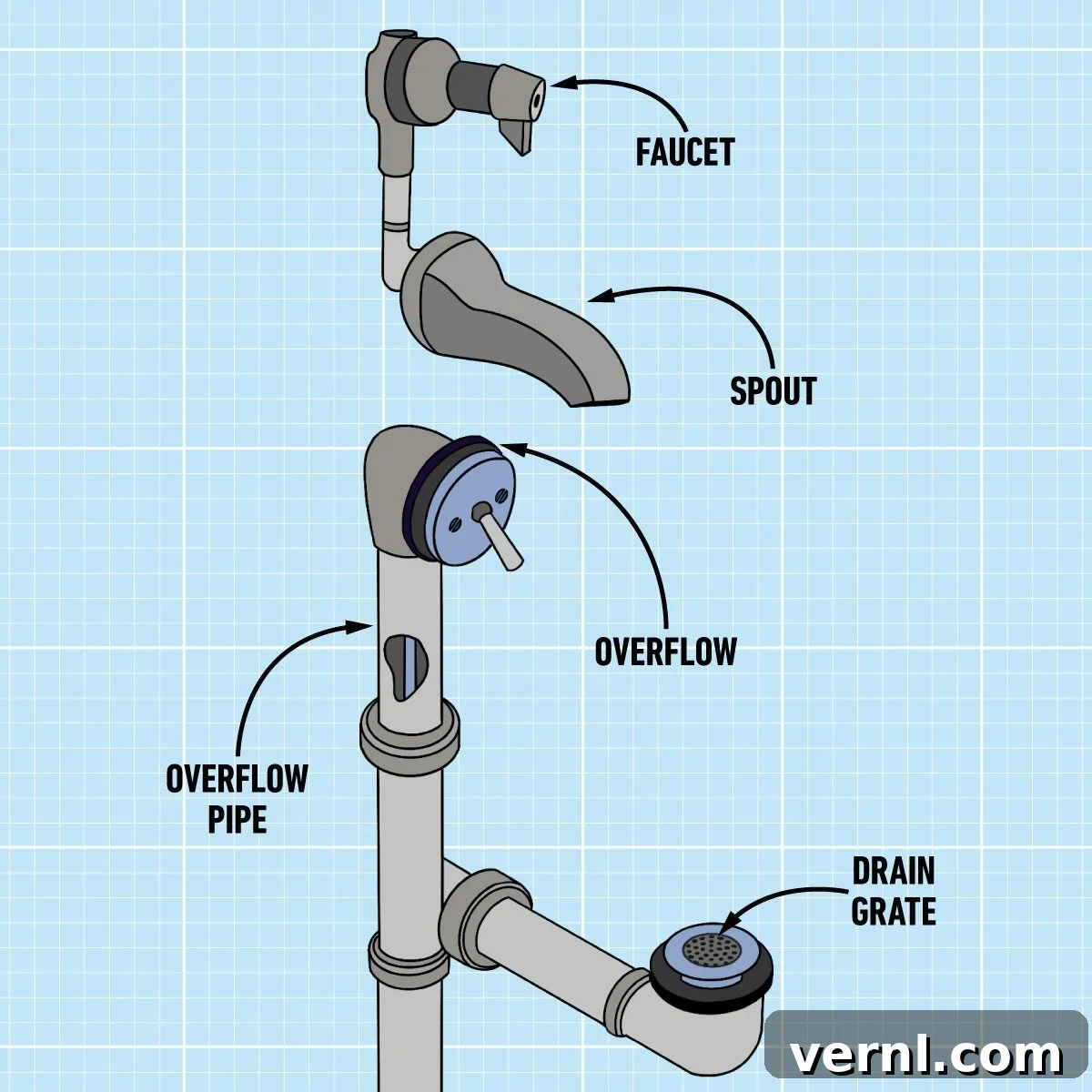
The tub faucet, often elegantly concealed behind the wall directly above the tub spout, is the central control unit for your bathing experience. This critical component typically features four pathways: two inlets for the hot and cold water lines from your home’s plumbing system, one outlet directing mixed water downwards to the tub spout, and another extending upwards to the shower head.
Within the faucet’s sturdy housing, usually made of brass, the hot and cold water are precisely mixed to achieve the desired temperature. The controls, which protrude through the wall (whether a single handle or separate hot and cold knobs), allow the bather to adjust the water temperature and divert the flow between the tub spout and the shower head. Over time, internal components like cartridges or washers can wear out, leading to common issues such as drips, leaks, or difficulty in maintaining consistent water temperature. Choosing a high-quality faucet not only enhances your bathing comfort but also ensures longevity and reliable performance.
Directing the Stream: The Tub Spout
The tub spout is the visible endpoint of the water delivery system, serving as the direct channel through which mixed bathwater enters the tub. Replacing a bathtub spout is a common DIY task, often motivated by leaks or a desire for aesthetic update.
Beyond its primary function of filling the tub, most modern tub spouts are equipped with a crucial feature: the shower diverter. This mechanism, typically a lever, pull-up knob, or push-button, allows the bather to redirect the water flow. When engaged, the diverter blocks the water’s path through the spout, forcing it upwards through the riser pipe to the shower head. A properly functioning diverter ensures a strong, consistent flow to the shower, while a faulty one can lead to frustrating dribbles from both the spout and the shower head simultaneously. Regularly checking for a tight seal where the spout connects to the wall pipe is essential to prevent leaks and maintain efficient water delivery.
The Safety Net: The Overflow Drain
Positioned typically a couple of inches below the top rim of the bathtub, often directly beneath the tub spout, the overflow drain is a vital safety feature designed to prevent bathroom flooding. Its primary purpose is to provide an escape route for excess water, ensuring that if the tub is accidentally overfilled, or if vigorous bathing causes significant splashing, water is directed safely down the drain system rather than spilling onto your bathroom floor. This simple yet effective opening protects your floors, subflooring, and ceilings from potential water damage.
The overflow opening connects via a pipe to the main drain line. As water level rises above the main drain and reaches the overflow, it flows into this secondary opening and bypasses the stopper, joining the wastewater stream. While largely maintenance-free, the overflow plate itself can sometimes loosen, leading to minor leaks behind the wall. It’s also a good practice to occasionally remove the overflow plate and clean any accumulated hair or soap scum, ensuring it remains unobstructed and fully functional.
The Exit Point: The Main Drain and Stopper
At the very lowest point of the bathtub, you’ll find the main bath drain, the crucial exit for all bathwater. This drain is designed to efficiently remove water from the tub and direct it into your home’s larger drainpipe system. Integral to its function is a built-in stopper mechanism that allows you to seal the drain pipe, enabling the tub to fill for a bath, and then open it to empty the water.
There are several common types of drain stoppers. A **lift-and-turn** stopper is operated by simply lifting and twisting the knob. A **push-pull** stopper is similar, requiring you to push down to close and pull up to open. **Toe-touch** stoppers are activated by pressing them with your toe. Another common type is the **trip lever** stopper, which has a lever on the overflow plate that controls a plunger or pop-up stopper mechanism inside the drainpipe. All these mechanisms are designed to create a watertight seal to hold water in the tub.
Once past the stopper, the water flows into the drain pipe, which often includes a P-trap. The P-trap is a U-shaped bend in the pipe that always retains a small amount of water. This water acts as a barrier, preventing noxious sewer gases from entering your home through the drain. The P-trap also plays a crucial role in catching heavier debris before it can travel deeper into your plumbing system.
Conquering Clogs: Prevention and Basic Solutions
While essential for drainage, the stopper mechanism and the P-trap are also frequently the primary points where drain clogs occur. Hair is by far the most common culprit, especially in households with long-haired individuals, as it readily catches on crossbars or other impediments within the drain or stopper assembly. Over time, hair combines with soap scum, skin cells, and other debris, forming stubborn blockages that restrict water flow and eventually lead to complete clogs.
Preventative measures are your best defense against clogs. Installing a simple drain protector or hair catcher over the drain opening can significantly reduce the amount of hair entering the pipe. Regular flushing with hot water, and occasional treatments with natural drain cleaners like baking soda and vinegar, can help break down soap scum and grease buildup. When a clog does occur, a plunger can often dislodge minor blockages by creating suction and pressure. For more stubborn clogs, a drain snake (also known as a hand auger) can be effectively used to reach and pull out obstructions. However, it’s always advisable to avoid harsh chemical drain cleaners, as they can damage pipes and pose environmental and health risks.
Maintaining Your Bathtub for Longevity
Proactive maintenance is key to ensuring your bathtub remains a source of relaxation and hygiene for years to come. Regular cleaning with non-abrasive cleaners appropriate for your tub’s material will prevent grime buildup and protect the surface finish. Always inspect the caulk lines around your tub and shower enclosure for any cracks or deterioration, re-caulking as needed to prevent water leaks behind walls. Periodically check your faucet and spout for drips or leaks, addressing them promptly to conserve water and prevent minor issues from escalating. By understanding the components of your bathtub and adhering to a routine of preventative care, you can significantly extend its lifespan and maintain a pristine, functional bathroom.
Conclusion
From the personal inconvenience of a clogged drain to the intricate engineering of modern plumbing, our bathtubs are central to daily comfort and hygiene. By understanding the various types, materials, and specific components that constitute your bathtub, you empower yourself with the knowledge to maintain, troubleshoot, and appreciate this vital fixture in your home. Proactive care and a little bit of plumbing literacy go a long way in ensuring your bathroom remains a sanctuary, free from the common headaches of a malfunctioning tub.