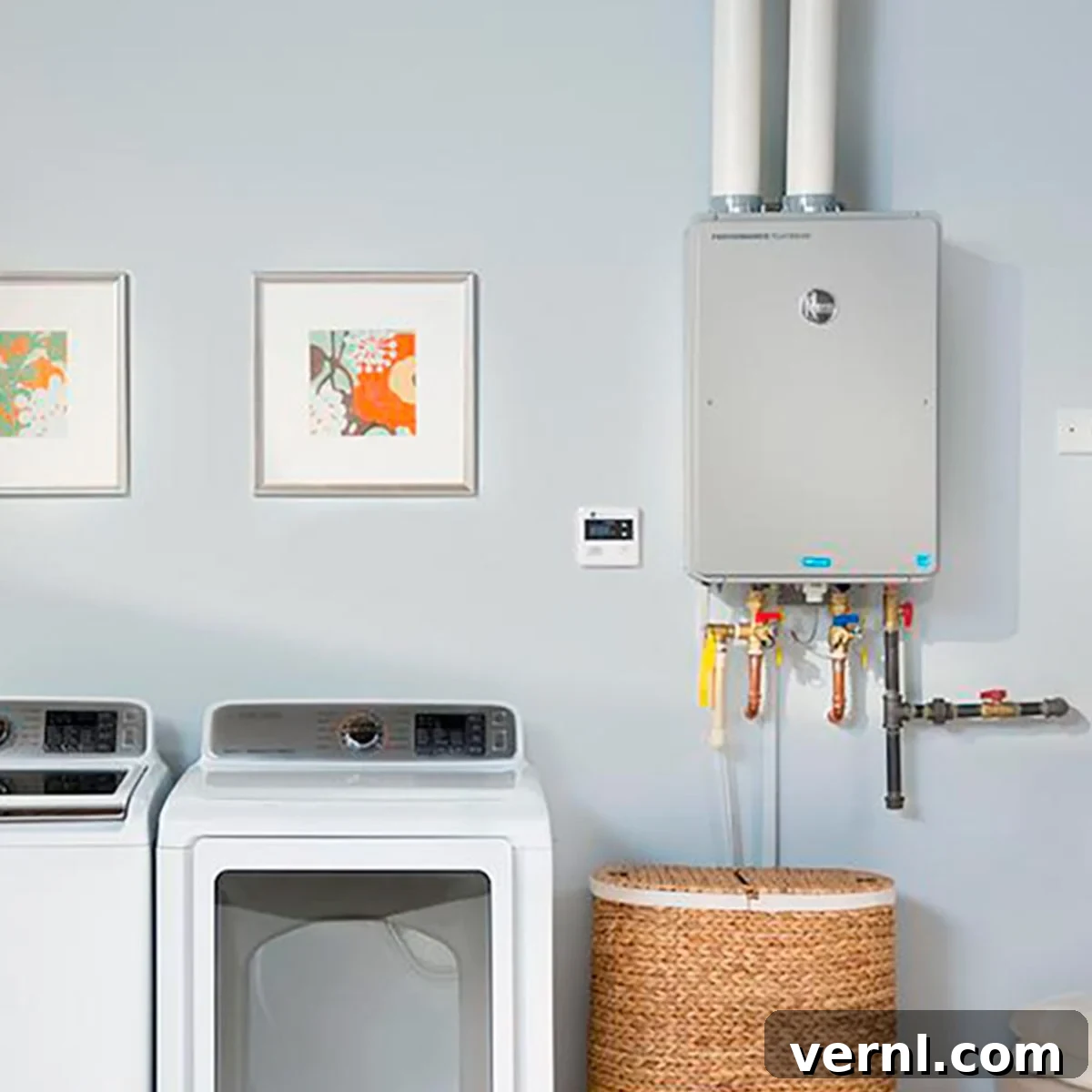
The Ultimate Guide to Tankless Water Heaters: Benefits, Costs, and Expert Insights for Your Home
In the quest for a more energy-efficient and convenient home, many homeowners are turning their attention to tankless water heaters. These innovative systems, also known as on-demand or instant water heaters, represent a significant leap from traditional tank-based models. They promise not just endless hot water but also substantial long-term savings and a reduced environmental footprint. But what exactly are they, how do they work, and are they the right choice for your household?
This comprehensive guide delves into the world of tankless water heaters, exploring their fundamental operation, the myriad of advantages they offer, and the potential drawbacks to consider. We’ll compare electric versus gas models, discuss critical installation factors, delve into essential maintenance, and provide expert insights to help you make an informed decision about upgrading your home’s hot water supply for modern living.
What Is a Tankless Water Heater? Understanding On-Demand Hot Water
Tankless water heaters are cutting-edge appliances designed to provide hot water only when you need it. Unlike conventional water heaters that store and continuously heat a large volume of water in a tank, tankless units heat water directly as it flows through them. This on-demand approach eliminates the standby energy losses associated with keeping a large tank of water constantly hot, making them a cornerstone of modern energy-efficient homes.
The operational principle is ingeniously simple yet highly effective. When you turn on any hot water faucet or appliance in your home, a flow sensor within the tankless unit detects the movement of cold water. This immediately signals the powerful internal heating elements—either a high-efficiency gas burner or robust electric coils—to activate. As the cold water travels through a pipe and into the unit’s heat exchanger, it is rapidly heated to your desired temperature before being delivered to the tap. This process is remarkably swift and continuous, ensuring a constant supply of hot water for as long as it’s needed, whether you’re enjoying a long, luxurious shower, running a heavy-duty dishwasher cycle, or filling a large bathtub.
The performance of tankless water heaters is often measured by their flow rate, typically expressed in gallons per minute (GPM). On average, these systems can deliver between 2 to 5 gallons of hot water per minute, with higher-capacity units offering even more. The exact flow rate a unit can sustain depends on its specific model, power output, and the required temperature rise (the difference between the incoming cold water temperature and the desired hot water temperature). For instance, in colder climates where incoming water is very cold, the maximum usable flow rate might be slightly lower to ensure the water reaches an adequate temperature. As a general rule, gas-fired tankless water heaters tend to offer significantly higher flow rates than their electric counterparts, a crucial factor for homes with high hot water demand, as highlighted by energy.gov, which makes them a popular choice for whole-house applications.
For larger families or households where multiple hot water appliances frequently run simultaneously (e.g., two showers, a washing machine, and a dishwasher all at once), a single tankless unit might reach its GPM limit. In such scenarios, it’s a common and effective solution to install more than one tankless water heater. These units can be configured in parallel to meet peak demand, ensuring there’s always an ample and uninterrupted supply of hot water for all household needs.
Unlocking Efficiency: Key Advantages of Tankless Water Heaters
The transition to a tankless water heater comes with a compelling list of benefits, making them an attractive and forward-thinking investment for discerning homeowners. Often referred to as “on demand” units or instant hot water heaters, their innovative design inherently offers superior efficiency, convenience, and a host of other advantages compared to traditional tank-based systems.
One of the most significant advantages is their remarkable energy efficiency. Tankless units can use 30% to 50% less energy than conventional storage tank heaters, a figure that often translates into substantial savings on your monthly utility bills. A typical family could potentially save $100 or more annually, depending on their hot water usage habits, local energy costs, and the specific efficiency rating of the chosen unit. This impressive efficiency stems from the core principle that they only heat water when you need it, completely eliminating the standby energy losses associated with constantly reheating and storing a large volume of water in a tank, a major energy drain for traditional heaters.
- On-Demand Heating for Ultimate Efficiency: The fundamental principle of tankless systems is to heat water only at the moment a faucet or appliance demands it. This intelligent, instantaneous operation completely eradicates standby heat loss, a major energy inefficiency where energy is continuously wasted by merely keeping water hot in a storage tank, even when no one is using it.
- Significant and Sustained Energy Savings: By avoiding continuous heating cycles and only operating when necessary, these units drastically reduce overall energy consumption. Over their extended lifespan, these accumulated savings on utility bills can substantially offset their initial investment, contributing to a more economical and sustainable home operation. Many models also qualify for Energy Star ratings, signifying superior efficiency.
- Continuous, Endless Hot Water Supply: A standout and often celebrated feature is the never-ending supply of hot water. Imagine the luxury of filling a large hot tub, running multiple showers simultaneously, or tackling a mountain of laundry without the dread of the hot water running out. This is a consistent reality with a properly sized tankless system, offering unparalleled comfort and convenience for even the busiest households.
- Space-Saving and Compact Design: Tankless water heaters are considerably more compact and sleek than their bulky tank counterparts. Their design typically allows them to be mounted directly onto a wall, whether in a utility closet, basement, garage, or even outdoors in suitable climates. This frees up valuable floor space, which is especially beneficial for homes with limited square footage, as highlighted by Myles Robinson, home expert at UK Composite Doors.
- Extended Lifespan and Durability: Tankless units generally boast a significantly longer operational lifespan compared to traditional tank heaters. With proper installation and routine maintenance, many tankless models can last 20 years or more, often exceeding the 10-15 year average of conventional models. This longevity means fewer replacements, less hassle, and greater long-term value.
- Reduced Risk of Leaks and Water Damage: Without a large, heavy tank holding dozens of gallons of water under pressure, the risk of a catastrophic leak, rupture, and subsequent widespread water damage is dramatically reduced. This offers homeowners enhanced peace of mind and protection for their property.
- Cleaner, Fresher Hot Water: Since water is heated on demand and doesn’t sit stagnant in a tank, it avoids collecting rust, sediment, or other contaminants that can build up in traditional tanks over time. This means you get fresher, cleaner hot water delivered directly from the source to your faucet.
- Enhanced Environmental Benefits: Beyond just saving money, lower energy consumption directly translates to a reduced carbon footprint for your home. By operating more efficiently, tankless water heaters contribute to a more sustainable and eco-friendlier lifestyle, aligning with modern environmental consciousness.
“Tankless water heaters have a lot going for them,” reiterates Myles Robinson. “They’re also a great choice for homes with limited space, plus, you never run out of hot water, which is great for larger households. This combination of efficiency, convenience, and compact design makes them a smart, forward-thinking choice for modern living and a valuable upgrade for any home.”
Ready to experience endless hot water and significant energy savings? Consider upgrading your home with a high-quality unit like the EcoSmart ECO 27 Electric Tankless Water Heater, available on Amazon today.
Navigating the Challenges: Disadvantages of Tankless Water Heaters
While the benefits of tankless water heaters are compelling and numerous, it’s equally essential for prospective buyers to consider the potential drawbacks and challenges to ensure they align with their specific needs, home infrastructure, and budget. Understanding these hurdles upfront can help mitigate surprises during the purchase and installation process.
“On the downside, tankless systems have a higher upfront cost, both for the unit itself and for professional installation,” advises Myles Robinson. “They also may not keep up with high-demand households unless you install multiple units, which can quickly get pricey. This initial investment often presents the biggest hurdle for many homeowners, despite the long-term operational savings.”
Let’s delve deeper into some of the other disadvantages and considerations:
- Higher Initial Investment: The purchase price of a tankless water heater unit is almost universally higher than that of a conventional storage tank heater. This, combined with potentially complex and specialized installation requirements, can result in a significantly greater initial outlay, making them a larger upfront financial commitment.
- Flow Rate Limitations and Critical Sizing: Smaller, less powerful tankless units often won’t produce enough hot water to adequately serve multiple fixtures running simultaneously. This can become a major inconvenience if you desire to shower while the dishwasher or washing machine is in operation. While larger, whole-house units are available that can handle higher demands, they come with a substantially higher price tag and might necessitate more extensive home modifications. Proper sizing is absolutely crucial; an undersized unit will lead to frustrating periods of insufficient hot water, while an oversized one represents an unnecessary expense.
- Specialized Venting Requirements for Gas Models: Gas tankless water heaters feature high-powered burners that produce combustion byproducts requiring safe expulsion. This necessitates a dedicated, sealed vent system, which is far more complex and costly to install than the simpler venting for traditional tank heaters. This often requires professional installation to ensure safety, efficiency, and compliance with stringent building codes. Furthermore, natural gas models may require upgrading to a larger diameter gas supply pipe to deliver sufficient fuel to the powerful burner, significantly adding to the initial installation cost.
- Potential Electrical System Upgrades: Both gas and electric tankless units require an electrical connection for their control systems, but large whole-house electric tankless heaters demand a substantial amount of amperage. This high electrical load can sometimes necessitate the installation of new dedicated, high-amperage electrical circuits or even an upgrade to your home’s main electrical panel, especially in older homes with outdated wiring, further increasing installation expenses.
- “Cold Water Sandwich” Effect: In some tankless systems, particularly older or lower-end models, there can be a momentary burst of cold water when a second hot water fixture is opened or if an existing hot water flow is briefly interrupted and then resumed. This phenomenon, known as the “cold water sandwich,” occurs as the unit recalibrates its heating process. While modern, high-quality models have significantly reduced or eliminated this issue, it’s something to be aware of.
- Hard Water Challenges and Increased Maintenance: Homes situated in areas with hard water are particularly susceptible to mineral scale buildup inside the delicate heat exchanger of tankless units. This accumulation of minerals can severely reduce efficiency, restrict water flow, and potentially cause the unit to shut down automatically as a safety measure. Regular maintenance, specifically annual descaling (flushing the unit with a vinegar or specialized cleaning solution), is absolutely crucial to prevent these issues and maintain the unit’s lifespan and optimal efficiency. This adds a maintenance task that tank-style heaters typically don’t require to the same degree, or at least not as frequently.
- Minor Delay for Hot Water: While providing instant *continuous* hot water, there can still be a short delay for hot water to travel from the unit through the pipes to your faucet, similar to a traditional tank heater. This isn’t a flaw in the tankless system itself, but rather a factor of plumbing distance.
Despite these challenges, many homeowners find that the long-term benefits of energy savings, endless hot water, and extended lifespan ultimately outweigh the initial hurdles and specialized maintenance. For high-performance and reliable hot water delivery, consider the Rheem RTEX-13 240V Heating Chamber Residential Tankless Water Heater, available for order on Amazon now.
Electric vs. Gas Tankless Water Heaters: Which One Is Right For You?
One of the most critical decisions when considering a tankless water heater is choosing between an electric or a gas-powered model. The primary difference between electric and gas tankless water heaters lies in their fundamental energy source, which profoundly impacts efficiency, installation complexity, and long-term operating costs. Understanding these distinctions is paramount for making the best choice for your home.
Generally, electric tankless water heaters boast higher thermal efficiency ratings, typically operating at around 98% or more. This impressive figure means that almost all the electricity consumed by the unit is directly converted into heat for your water, minimizing waste. Gas tankless water heaters, while still highly efficient compared to traditional gas tanks, usually hover around 80-85% efficiency. This slight difference is primarily due to some heat loss through the venting process required to expel combustion gases.
“Choosing between the two often depends on your home’s size, existing utility infrastructure, and your overall budget,” explains Myles Robinson. “Electric tankless heaters are generally cheaper upfront to purchase and can be easier to install, particularly if your home already has adequate electrical capacity without needing major panel upgrades. However, they are typically better suited for smaller homes, apartments, or as point-of-use systems designed to serve a single fixture due to the significant electrical demand required for whole-house heating. Gas models, on the other hand, are inherently more powerful and are an excellent choice for whole-house use in larger homes with higher hot water demands. The trade-off is that they require specific venting systems and a dedicated gas line, which can make their installation more complex and potentially more expensive initially.”
While gas tankless water heaters may have a slightly lower thermal efficiency rating than electric models, the cost of natural gas per therm is often considerably lower than electricity per kilowatt-hour in many regions. This can make a gas unit cheaper to run in the long term, even with its slightly lower efficiency, offering compelling operational savings. Additionally, gas tankless water heaters are renowned for their robust construction and can often last longer than electric models with proper maintenance, further enhancing their long-term value. For those weighing their new water heater options, understanding these nuances in efficiency, cost, and infrastructure requirements is key to making an informed decision.
Electric Tankless Water Heaters: Compact Power and Environmental Promise
Electric tankless water heaters are celebrated for their compact size, making them ideal for homes where space is at a premium, and their relatively straightforward installation process. “Compared with gas tankless water heaters, electric models are more compact, often require simpler plumbing, and are ideal for smaller households, apartments, or supplemental hot water needs at specific points of use,” notes Pete Duncanson, vice president of training and development at ServiceMaster Restore. Their inherent design, which involves no combustion, means there’s no need for elaborate or costly venting systems, significantly simplifying their placement and reducing installation labor.
While boasting impressive efficiency in terms of converting electricity to heat (often near 99%), electric tankless water heaters require a significant amount of electrical power to operate effectively, especially for whole-house applications. A whole-house electric tankless water heater, for example, can demand upwards of 25,000 watts (25 kW) of electricity, a stark contrast to the typical 5,000 watts used by a conventional electric tank heater. This high power draw often necessitates dedicated, heavy-gauge electrical circuits and potentially an upgrade to your home’s main electrical panel, particularly in older homes with outdated electrical infrastructure. These electrical modifications can add substantially to the overall installation cost.
Despite the high electrical demand, electric tankless heaters present a compelling choice for homeowners focused on reducing their reliance on fossil fuels and minimizing their environmental footprint. As electrical grids increasingly integrate renewable energy sources like solar, wind, and hydropower, an electric tankless hot water heater aligns perfectly with the long-term goal of an eco-friendlier home. They offer a direct path to a fossil-fuel-free hot water system, contributing to a greener future and potentially opening doors to various green energy incentives.
Gas Tankless Water Heaters: High Performance and Long-Term Value
Gas tankless water heaters are renowned for their superior heating capacity and ability to handle high hot water demand, making them particularly suitable for larger homes with multiple occupants. “Compared with electric tankless water heaters, gas heaters tend to have significantly higher flow rates, meaning they can supply more hot water simultaneously, making them better for larger homes with multiple occupants or high-usage appliances,” states Shaylin King, owner of Mr. Rooter Plumbing of Tri-Cities. “They do require proper ventilation and may have a higher installation cost due to gas line and venting work, but they offer robust and consistent performance.”
These units typically run on natural gas or propane and excel at quickly heating large volumes of water, a critical factor for homes where simultaneous hot water use is common. While their thermal efficiency (80-85%) is slightly lower than electric models due to heat losses through the venting system, the often lower cost of natural gas per therm can result in lower operating costs over time, making them a very economical choice in many regions. Gas tankless water heaters are also known for their durability and can last significantly longer than traditional tank water heaters, offering a reliable hot water solution for many years with proper care.
However, the installation of gas tankless heaters is generally more complex. They require a dedicated venting system to safely expel combustion gases, which must be installed by a qualified professional according to strict safety codes. Furthermore, older homes may need an upgrade to their existing gas line to ensure sufficient fuel delivery to the high-powered burner, adding to the installation expense. One potential disadvantage specific to gas models is their susceptibility to mineral scale build-up, especially in hard water areas. If not properly maintained with regular descaling, these mineral deposits can accumulate in the intricate heat exchanger, leading to reduced efficiency, restricted water flow, and potentially causing the unit to automatically shut off as a safety measure. Despite these considerations, their higher flow rates and often lower operating costs make them a popular and powerful choice for many households.
The Bottom Line: Tankless Water Heater Pricing, Installation, and Maintenance
Understanding the true costs associated with tankless water heaters goes far beyond the unit’s purchase price. Installation is a critical factor that can significantly impact your overall investment. When you’re pricing a unit, it is absolutely essential to obtain a detailed estimate or a firm bid on the installation costs from several qualified professionals. This is unequivocally not a do-it-yourself project unless you possess professional-level plumbing and electrical skills and have a thorough understanding of local building codes, gas regulations, and safety requirements. Attempting a DIY installation without the necessary expertise can lead to serious safety hazards and void warranties.
Installation costs can vary widely depending on several crucial factors:
- Type of Unit (Gas vs. Electric): Gas units typically require more extensive work, including new or upgraded gas lines, and specialized venting (direct-vent or power-vent systems), which can be more complex and expensive to install than electric units.
- Location of Installation: The placement of the new unit relative to existing water lines, gas lines, and electrical panels can greatly affect labor time and material costs. Moving the unit significantly from the old water heater’s spot will increase costs.
- Venting Requirements: For gas models, installing or upgrading a safe and compliant direct-vent or power-vent system adds considerable complexity and cost due to specialized piping and through-wall penetrations.
- Electrical Upgrades: Large electric units might necessitate the installation of new dedicated, high-amperage circuits or even an upgrade to your home’s main electrical panel, especially in older homes with limited capacity, which can be a significant expense.
- Permits: Most tankless water heater installations require permits from local authorities. These permits add to the cost but ensure the work meets safety standards and building codes.
- Plumbing Modifications: Adapting existing hot and cold water lines, and potentially adding a new drain line for condensate (especially with high-efficiency gas models), will be part of the plumbing work.
- Removal of Old Unit: Disposal fees for your old tank water heater should also be factored in.
You can find the best tankless water heaters at many reputable home centers, dedicated plumbing supply stores, and various online retailers. It’s highly advisable to consult with a professional plumber who specializes in tankless systems. They can assess your home’s unique infrastructure, hot water demand, and specific requirements to recommend the appropriate size and type of unit, and provide an accurate, transparent installation quote.
Beyond initial costs, factor in ongoing maintenance. To ensure your tankless water heater operates efficiently, delivers consistent hot water, and lasts its full advertised lifespan, annual maintenance is crucial. This typically involves flushing the unit to remove mineral scale buildup, especially vital in areas with hard water. While some technically inclined homeowners might attempt this as a DIY task, many prefer to have a professional plumber perform this service. This adds a small annual cost but is a preventive measure that can avoid costly repairs, maintain efficiency, and extend the unit’s life significantly, protecting your investment.
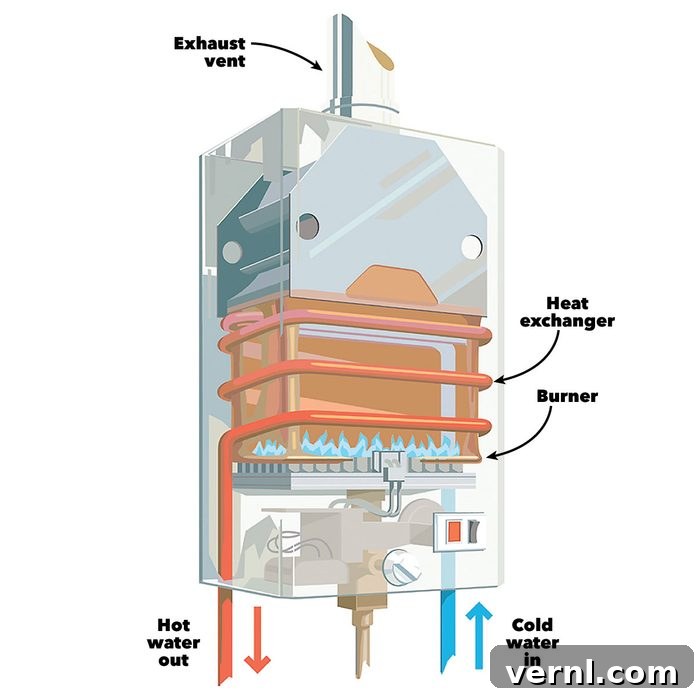
Figure A: Tankless Water Heater Operation Details
The accompanying diagram visually illustrates the internal workings of a modern on-demand water heating system. When a hot water tap is opened anywhere in the home, a sophisticated flow sensor detects the sudden demand for hot water, instantaneously triggering the activation of the powerful heating elements. Depending on the model, these are either high-efficiency gas burners or robust electric coils. Cold water then rapidly flows through a precision-engineered heat exchanger, where it is heated instantaneously to the preset temperature. This perfectly tempered hot water is then delivered directly to the faucet or appliance, ensuring a continuous and uninterrupted supply without the need for any storage capacity.
Is a Tankless Water Heater for You? Making an Informed Decision
Deciding whether a tankless water heater is the right choice for your home involves carefully weighing the upfront investment against the long-term savings, enhanced comfort, and environmental benefits. While not every home is an ideal candidate for a tankless system, they are particularly well-suited for:
- Homeowners seeking significant reductions in their energy bills and a lower carbon footprint.
- Families who frequently experience the frustration of running out of hot water with a traditional tank system.
- Those looking to free up valuable floor space in their utility areas, basements, or garages.
- Environmentally conscious individuals aiming to reduce their reliance on fossil fuels and promote sustainability.
- New home constructions or major renovations where installation considerations can be seamlessly integrated into the design from the start.
- Households with a consistent demand for hot water, but not necessarily a simultaneous high peak demand that could overwhelm smaller units.
For those living in smaller dwellings, apartments, or needing hot water at a single point of use (like a specific sink or bathroom), an electric point-of-use tankless heater might be an ideal, cost-effective, and easy-to-install solution. Larger homes with multiple bathrooms, occupants, and high-usage appliances will likely benefit most from a powerful whole-house gas tankless system, or even multiple units strategically placed, always carefully sized and installed by a professional to ensure optimal performance.
While the initial cost and installation complexity can be significant hurdles, the promise of endless hot water, lower utility bills, a longer lifespan, improved water quality, and a smaller environmental impact makes tankless water heaters a compelling and increasingly popular option for many modern households. Thorough research, careful budgeting, and consultation with experienced plumbing professionals are key to ensuring a successful transition to on-demand hot water and years of reliable service.
How to Choose the Perfect Water Heater for Your Home
Finding the ideal water heating solution for your home involves considering a wide array of factors, from your household’s unique hot water demand and available fuel sources to your budget and long-term environmental priorities. Whether you’re exploring advanced tankless systems, reliable traditional tank models, or innovative hybrid options, our expert tips and comprehensive resources are designed to guide you through every step of the selection process, ensuring you find the right fit for your specific needs and maximize your home’s efficiency.
- How to Choose a New Water Heater: A Comprehensive Guide for Homeowners
- New Homeowner’s Guide to Water Heaters: Essential Information for First-Time Buyers
- Top Gas, Electric, and Tankless Water Heaters: Expert Recommendations for Every Home
- Best Under-Sink Water Heaters: Efficient Solutions for Instant Point-of-Use Hot Water
- Best Tankless Water Heaters: Our Top Picks for On-Demand Performance and Reliability
- Why You Should Invest in a Tankless Water Heater: Unveiling Long-Term Benefits and Value
- Top Water Heater Brands: Discovering Reliability and Innovation You Can Trust
About the Experts Featured in This Guide
Our comprehensive insights are significantly enriched by the knowledge, practical experience, and professional perspectives of leading experts in the home improvement and plumbing industries. Their contributions ensure the accuracy and practical relevance of the information provided:
- Myles Robinson is a distinguished home expert and the visionary founder of UK Composite Doors. With a robust background that includes successfully owning and operating Boiler Central, a multi-million dollar boiler repair business, Myles brings extensive practical and industry knowledge to the critical discussion of home heating solutions and energy efficiency.
- Pete Duncanson serves as the accomplished vice president of training and development at ServiceMaster Restore, a pivotal role he has held with unwavering dedication since 1995. His long-standing expertise provides invaluable perspectives on the intricate workings of home systems, disaster restoration, and maintenance best practices.
- Shaylin King is the proud owner and operator of Mr. Rooter Plumbing of Tri-Cities, Yakima. With a career spanning since 1995, Shaylin is a seasoned professional in all aspects of plumbing and drain cleaning, offering deep, hands-on insights into water heater performance, common issues, and complex installation challenges.