
While the prospect of heat pumps becoming the dominant heating and cooling solution for U.S. homes is growing, conventional furnaces remain the backbone of residential climate control for millions. The shift towards newer, often more efficient technologies is gradual, and for the foreseeable future, understanding your home’s furnace remains paramount for comfort and safety.
Recent data underscores this reality. According to Elements, over half of U.S. households relied on forced-air furnaces in 2020. This trend continued strongly in new constructions, with an impressive 83% of homes built that year equipped with a furnace. Given these statistics, there’s a significant likelihood that your home utilizes a furnace for its heating needs. As such, gaining a comprehensive understanding of this critical piece of equipment is not just beneficial, but essential for every homeowner.
Like any complex mechanical system, a furnace has a finite lifespan. It’s not designed to operate indefinitely without eventually showing signs of wear and tear. Tim David, owner of Airlucent, a respected HVAC consultation service, offers clear guidance on when replacement should be considered: “If your system is nearing 15 years old or older, and you have had to call out an HVAC tech at least once a year for three years in a row, it’s time to replace your system.” This advice highlights that age combined with increasing frequency of repairs are key indicators that your furnace is nearing the end of its reliable service life.
However, you can significantly extend your furnace’s operational life through diligent and regular maintenance. A well-maintained furnace can defy expectations, as evidenced by many homeowners whose units continue to perform efficiently well past the typical replacement age. Our own gas furnace, for instance, is in its 20th year and recently received a clean bill of health after its annual service. This longevity is directly attributable to consistent care. John Gabrielli, owner of Delaware-based Air Temp Solutions, emphasizes the crucial role of professional upkeep: “Yearly furnace tune-ups are so important to ensure you have a warm, safe and energy-efficient home during the winter.” These routine checks identify potential issues before they escalate, optimize performance, and ensure your system operates safely.
Beyond professional tune-ups, knowing how to identify and address minor issues yourself can save you time and money. While not every problem requires an expert, understanding the basic functions and layout of your furnace empowers you to perform simple troubleshooting steps or make temporary furnace fixes between scheduled maintenance visits. This foundational knowledge begins with identifying the various components within your furnace and understanding their respective roles in heating your home.
Understanding the Core: What Are the Components of a Furnace, and What Do They Do?
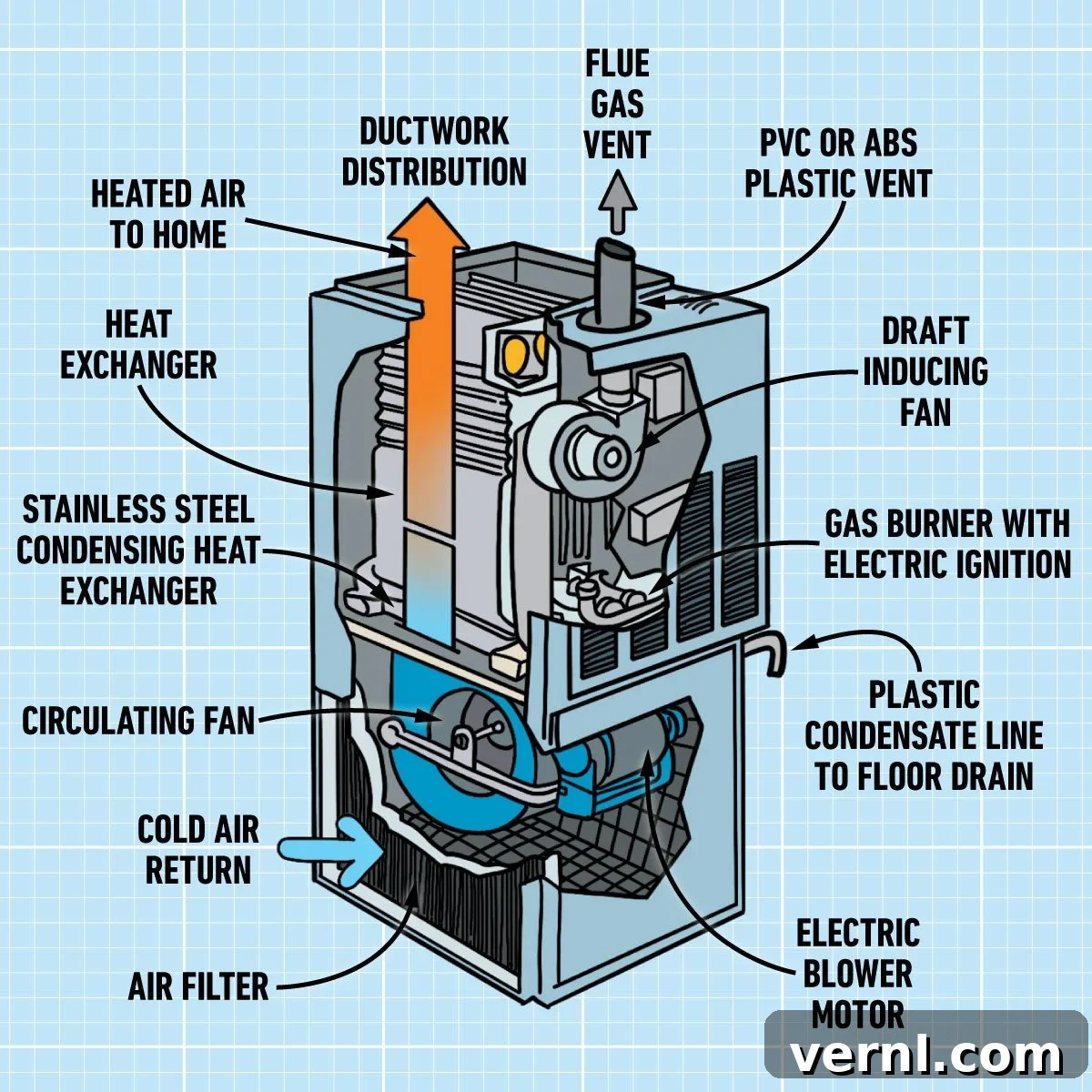
At its core, a furnace is an integrated system where all the necessary heating and air circulation equipment is housed within a single, sturdy structure. Familiarizing yourself with these vital parts will not only help you better understand its operation but also assist in diagnosing potential issues. Here’s a breakdown of the key elements you’ll find when you look inside your furnace:
Heating Unit
This is arguably the most critical component, responsible for generating the heat that will warm your home. Depending on your furnace type, the heating unit varies significantly in design and operation. In electric furnaces, you’ll typically see large, exposed electric heating elements that resemble oversized versions of those found in space heaters. These elements generate heat through electrical resistance and are often visible because they do not produce combustion byproducts or emissions.
For gas and oil furnaces, the heating unit is more complex. Burners are carefully enclosed within sealed combustion chambers. This enclosure is crucial for safety and efficiency, as it contains the combustion process and vents exhaust gases safely to the outdoors. Oil-burning furnaces commonly feature a single, robust burner designed to atomize and ignite fuel oil. Gas-powered furnaces, on the other hand, usually incorporate multiple burners—typically two, three, or four—arranged in a linear fashion to ensure even heat distribution and efficient combustion of natural gas or propane.
Fuel Delivery System
The heating unit cannot function without a precise and reliable fuel delivery system. For oil furnaces, this system includes a specialized nozzle that is responsible for spraying oil into the combustion chamber in a fine mist, allowing for efficient ignition and burning. Gas furnaces utilize a more sophisticated mechanism involving a gas valve. This valve is electronically controlled, opening and closing in response to specific signals from the furnace’s control board. This ensures that gas is only supplied when needed and in the correct quantities, providing both safety and efficiency in operation.
Heat Exchanger
Considered the veritable “heart” of your heating system, the heat exchanger is where the magic of heat transfer truly happens. Tim David describes it as typically a robust steel or cast iron box designed to prevent the combustion gases from mixing with the breathable air circulating throughout your home. Its primary function is to transfer the heat generated by the burning fuel to the air that will be distributed. The design of the heat exchanger can vary considerably depending on the furnace model and efficiency rating. David notes that depending on the furnace’s style, it “could take on one of a number of shapes, transferring heat in its own unique way.” Regardless of its shape, its integrity is paramount, as cracks or damage can lead to dangerous carbon monoxide leaks into your living space.
Plenum
Once the air is heated by the heat exchanger, it needs to be effectively distributed throughout your home. This is the role of the plenum. Situated directly above or to the side of the heat exchanger, the plenum is essentially a large, enclosed chamber where all the supply ducts connect. These ducts then carry the warmed air to various heat outlets, commonly known as registers, located in each room. Many plenums are equipped with internal dampers, which are adjustable gates that allow you to regulate and balance the airflow to different parts of your house. These can often be controlled via external handles, giving homeowners some control over zone heating.
Blower
Located typically just below the heat exchanger, the blower is a critical component responsible for air circulation. This powerful finned cylinder rotates on a horizontal axis, drawing in cool air from your home and pushing heated air back out. It not only circulates the warmed air that collects in the plenum but also plays a vital role in drawing fresh, return air into the furnace through an air filter located on the side of the housing. A malfunctioning blower can lead to insufficient heating, poor air circulation, and increased energy consumption.
Draft Inducer
This component is a distinguishing feature, particularly in high-efficiency gas furnaces. The draft inducer is a small but powerful fan that actively pulls air into the combustion chamber, ensuring a consistent and optimal air-to-fuel mixture for efficient burning. More importantly, it forces the exhaust gases, which contain byproducts of combustion, safely out through the vents to the exterior of your home. This active venting system is a key reason high-efficiency furnaces operate so cleanly and safely.
Igniter
For any furnace that burns fuel, an igniter is indispensable for initiating the combustion process. Older oil furnaces and some gas models utilize a spark igniter, which generates an electronic spark to ignite the fuel. You can often hear a distinct clicking sound when these furnaces start up, indicating the igniter is at work. Newer gas furnaces, aiming for greater reliability and efficiency, typically employ a hot surface igniter. Instead of a spark, this component glows red-hot to ignite the gas, and thus does not produce a clicking sound. It’s a more durable and less prone to failure option. Very old gas furnaces might still feature a standing pilot light, a small flame that burns continuously. While simple, these constantly consume fuel, making them less efficient and largely obsolete by modern standards.
Safety Sensors and Switches
Safety is paramount in furnace design, and a range of sensors and switches are integrated to prevent dangerous operating conditions. Every furnace is equipped with a high-limit cutoff switch. This essential safety device monitors the internal temperature of the unit and will automatically shut off the furnace if it detects that the temperature has risen to an unsafe level, preventing overheating and potential damage. Furthermore, gas furnaces feature a crucial flame sensor. This sensor detects whether the burners have successfully ignited when the gas valve opens. If it doesn’t detect a flame, it immediately shuts off the gas supply, preventing the accumulation of unburnt gas, which could be extremely dangerous.
Control Board
Often found at the bottom of the furnace housing, typically near the blower, the control board acts as the brain of your furnace. This sensitive electronic component is responsible for orchestrating the entire heating cycle. It receives signals from the thermostat in your living space and, in turn, sends precise electronic signals to various furnace components, such as the igniter, gas valve, and blower motor, to turn them on or off at the appropriate times. Its proper functioning is vital for the coordinated operation of the entire system.
Exhaust Vent and Drainage Pipe
For oil and conventional gas furnaces, an exhaust vent is essential to safely dissipate the combustion gases outdoors. This vent is typically constructed from galvanized steel or other heat-resistant metals and extends through the roof or an exterior wall of the home. These gases are hot and contain various byproducts that must not enter the living space.
High-efficiency furnaces, also known as condenser furnaces, incorporate a secondary heat exchanger. This additional component extracts even more heat from the exhaust gases, causing them to cool significantly and condense into acidic water. While they still require an exhaust vent, it’s typically made from PVC material, which is resistant to corrosion from these acidic gases. These advanced furnaces also feature a drainage pipe. This pipe is specifically designed to transfer the resulting condensate (the acidic water) safely outdoors or into an appropriate drain, preventing internal water accumulation and potential damage.
Addressing Common Breakdowns: What Parts Most Frequently Go Out on a Furnace?
Even with regular maintenance, certain furnace components are more prone to wear and tear or malfunction due to their operational demands or sensitivity. Understanding these common failure points can help you quickly identify issues and facilitate timely repairs.
Thermostat
Surprisingly, many perceived furnace problems can often be traced back to the humble thermostat. A thermostat that is improperly set, poorly calibrated, or simply malfunctioning can lead to a myriad of issues. “A poorly calibrated thermostat can lead to inefficient heating,” notes Gabrielli. “Our team checks and recalibrates the thermostat if necessary, so it communicates with the furnace correctly.” Incorrect settings can mean your furnace isn’t turning on when it should, turning off too soon, or running unnecessarily, all leading to discomfort and wasted energy.
Air Filters
Perhaps the easiest and most frequently overlooked maintenance item is the air filter. If the air filters become clogged with dust, pet dander, and other debris, they severely restrict airflow. This impedance means air cannot circulate efficiently within the furnace housing or through the ductwork. The consequences are significant: reduced system performance, strain on the blower motor, increased energy bills, and ultimately, a higher risk of system breakdowns. Filters are remarkably easy and inexpensive to replace. Making it a monthly habit to check and replace your filters is one of the most impactful things you can do to keep your furnace in peak condition and extend its lifespan.
Control Board
As the “brain” of the furnace, the control board is a complex electronic component filled with sensitive switches, relays, and circuits. These can sometimes stick or fail due to a variety of factors, including faulty electrical connections, wear and tear, or more commonly, power surges. When the control board malfunctions, it can lead to a host of electrical problems, preventing various furnace components from receiving their necessary commands. Before suspecting an internal furnace problem related to the control board, always remember to first check the circuit breaker in your main electrical service panel to see if it has tripped. This simple step can often resolve issues without the need for a service call.
Flame Sensor and Igniter
Especially in gas furnaces, the flame sensor and hot surface igniter are critical for safe and efficient operation. Over time, these components can become coated with black carbon deposits from the combustion process. This carbon buildup acts as an insulator, preventing the flame sensor from accurately detecting a flame or hindering the hot surface igniter from reaching its necessary temperature to ignite the gas. When this happens, the furnace’s safety protocols will prevent it from heating. Fortunately, these are relatively easy parts to clean or, if necessary, replace by a homeowner comfortable with basic DIY tasks, though caution and proper safety procedures should always be followed.
Furnace FAQs: Common Questions and Parts Explained
Whether you’re embarking on understanding the intricate workings of your home’s heating system for the first time or looking to troubleshoot a specific issue, having access to clear answers for common questions is invaluable. Here are some of the most frequently asked questions about furnaces, providing insight into their operation, efficiency, and maintenance:
- What Is a Furnace? Learn about the fundamental definition and purpose of this essential home appliance.
- How Does a Gas Furnace Work? Dive into the specific mechanics of gas combustion, heat transfer, and air distribution unique to gas-powered units.
- What Are Furnace Energy Efficiency Ratings? Understand AFUE (Annual Fuel Utilization Efficiency) and other ratings to gauge your furnace’s operating costs and environmental impact.
- What That Furnace Switch Is For Demystify the purpose of various switches on and around your furnace, including emergency shut-offs.
- What Is a Furnace Heat Exchanger? Get a deeper look into this critical component responsible for safe heat transfer and its vital role in preventing carbon monoxide leaks.
- What Is a Furnace Inducer Motor? Explore the function of this fan that ensures proper combustion and safe venting of exhaust gases, especially in modern high-efficiency furnaces.
- What Does a Furnace Pressure Switch Do? Learn about this essential safety device that monitors airflow and prevents the furnace from operating under unsafe conditions.
- How Much Will It Cost to Replace a Furnace Blower Motor? Understand the factors influencing the cost of repairing or replacing this crucial air-moving component.
- Boilers vs. Furnaces: What’s the Difference? Compare these two common heating systems to understand their distinct operating principles and applications.
- How to Choose Between a Heat Pump vs. a Furnace Gain insights into the pros and cons of each system to help inform your heating and cooling decisions.
About the Experts
The insights shared in this guide are drawn from the extensive experience of leading professionals in the HVAC industry, ensuring accuracy and reliability in the advice provided:
- Tim David is the esteemed owner of Alabama-based Airlucent, a company renowned for its expert HVAC consultation services. With over 30 years of hands-on experience in the complex world of heating, ventilation, and air conditioning, Tim offers invaluable perspectives on system performance, maintenance, and longevity.
- John Gabrielli is the dedicated owner of Delaware-based Air Temp Solutions. John’s passion for HVAC began at a young age, having been involved in the trades since his boyhood. His deep understanding and practical knowledge make him a trusted authority on furnace operation and residential heating solutions.