Mastering the Strap Wrench: Your Ultimate Guide to Versatile Grip
While a common wrench excels at loosening standard nuts and bolts, its rigid jaws are ineffective when faced with round, smooth, or irregularly shaped objects. For these unique challenges, you need a specialized tool that provides unparalleled grip without causing damage. Enter the strap wrench – a versatile and often overlooked secret weapon in the arsenals of mechanics and plumbers, now ready to become an indispensable addition to every DIYer’s toolbox.
This comprehensive guide will demystify the strap wrench, exploring its core functionality, detailing its diverse types, and providing step-by-step instructions on how to use it effectively. By the end, you’ll understand what makes a strap wrench so valuable and how to select the perfect style for your next project, ensuring a secure grip and a job well done.
What Exactly Is a Strap Wrench?
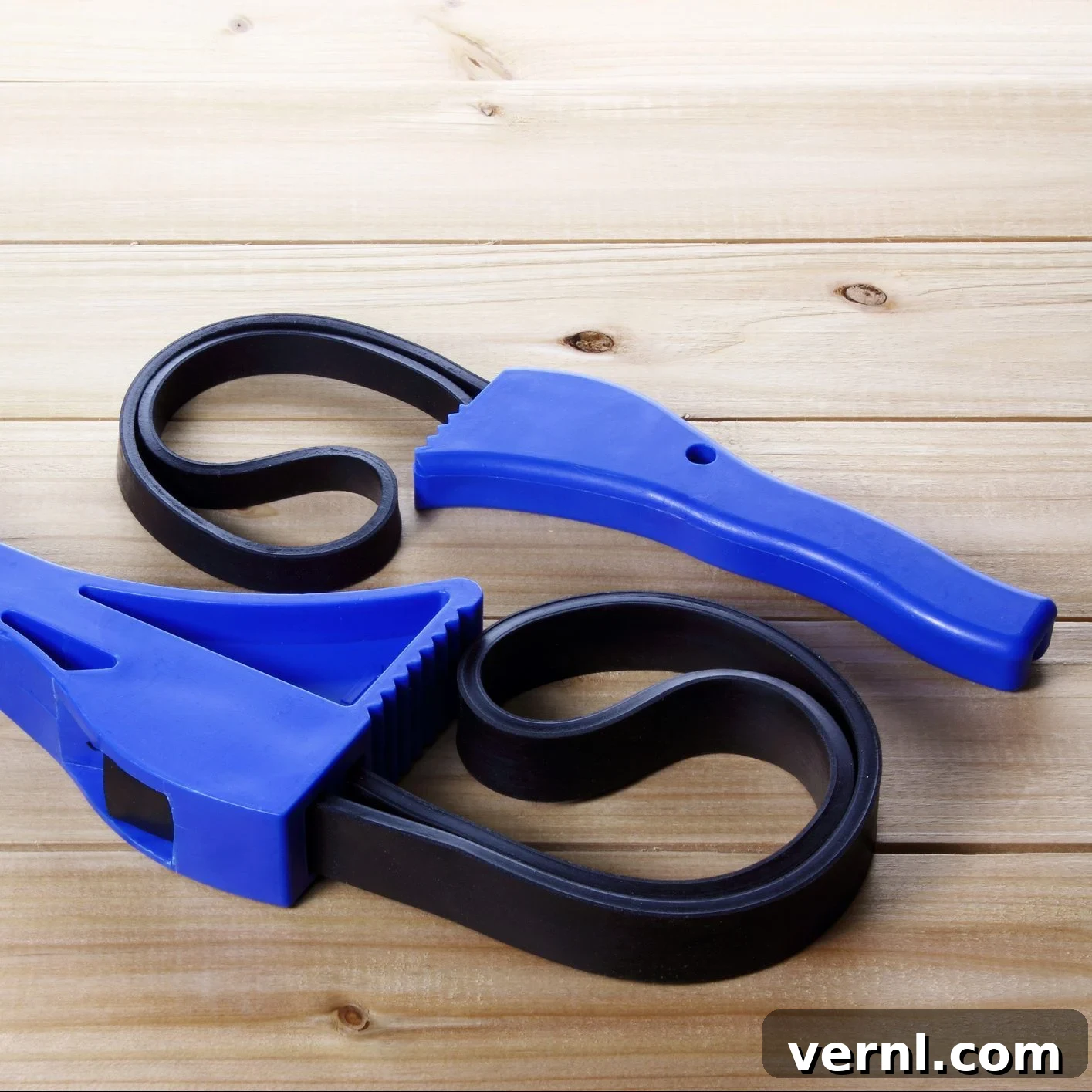
A strap wrench is a distinctive hand tool designed to grip and turn objects that traditional wrenches cannot. Unlike standard wrenches that rely on hexagonal or square flats, a strap wrench employs a flexible strap or chain that wraps around the object. This strap, once tightened, creates immense friction and uniform pressure around the workpiece, allowing you to achieve a firm grip to tighten or loosen it without crushing or deforming the object itself.
The ingenuity of the strap wrench lies in its ability to adapt to a wide array of shapes and sizes. From delicate chrome plumbing fixtures to stubborn jar lids, large PVC pipes, or even slick automotive oil filters, this tool provides the leverage needed to tackle challenging tasks. They come in various sizes, materials, and styles, making them incredibly versatile for a range of household, automotive, and industrial jobs. Common applications include:
- Household Tasks: Effortlessly opening tightly sealed jars, adjusting or tightening plumbing fixtures without marring their finished surfaces (e.g., faucets, showerheads, PVC couplings), or even removing stuck light bulbs.
- Plumbing Work: Securing or loosening plastic pipes, chrome-plated fittings, water filters, and drain lines, where traditional pipe wrenches would cause damage.
- Automotive Maintenance: A go-to tool for automotive work, especially for changing oil filters, fuel filters, or other canister-style components that are often slippery or in tight spaces.
- General Purpose: Useful for bundling items like pipes or lumber, or even for temporarily securing objects as a makeshift clamp in certain situations.
The Anatomy of a Strap Wrench
To fully appreciate the functionality of a strap wrench, it helps to understand its basic components:
- The Handle: Provides leverage and a grip point for the user. Handles can be integrated into the tool or absent in compact designs. They are typically made from sturdy materials like steel, aluminum, or reinforced plastic, often with ergonomic grips for comfort and control.
- The Strap: The core element that wraps around the workpiece. Straps vary significantly in material, width, and length, directly impacting the wrench’s gripping power and suitability for different tasks. Common materials include nylon, rubber, and metal chain.
- The Head/Mechanism: This is where the strap threads through and is tightened. Depending on the design, it might feature a cam-locking mechanism, a simple pull-through slot, or a socket-drive interface that allows for the attachment of a ratchet or breaker bar. This mechanism converts the pulling force on the strap into rotational torque on the workpiece.
Types of Strap Wrenches: Choosing the Right Tool for the Job
Despite their widespread utility, there’s no single industry standard for describing strap wrenches, which can sometimes lead to confusion. Manufacturers often differentiate wrenches by strap length and material, though some list the overall strap length while others specify the maximum diameter the strap can encircle. For example, what one company calls an “8-inch nylon strap wrench” might refer to its strap’s usage diameter, while another’s “24-inch nylon strap wrench” could describe the total length of the strap. Always double-check specifications to ensure you’re getting the right size for your needs.
Generally, strap wrenches can be categorized by their strap material, whether they feature an integrated handle or a compact design, and their primary application (e.g., oil filter specific vs. general use).
Strap Material: Grip Without Damage (or with maximum bite)
The strap material is perhaps the most critical factor, dictating the wrench’s gripping power and whether it will mar the workpiece. Common materials include:
- Nylon (or other Fabric):
- Pros: Excellent for applications where surface protection is paramount. Nylon straps are strong, flexible, and non-marring, making them ideal for delicate finishes like chrome, polished brass, plastic pipes, and painted surfaces. They distribute pressure evenly, reducing the risk of crushing thin-walled objects. They also tend to have a broader working diameter range compared to fixed-band wrenches.
- Cons: While strong, nylon straps might slip on extremely greasy or wet surfaces if not tightened sufficiently, or on very smooth, low-friction materials. They offer a less aggressive bite than rubber or chain.
- Ideal Uses: Plumbing fixtures, plastic pipe fittings, delicate instrument adjustments, large diameter conduits, and situations requiring high torque without surface damage.
- Rubber (or Polyurethane):
- Pros: Rubber straps provide superior grip due to their high friction coefficient, even on very smooth or slightly oily surfaces. They are generally non-marring, making them excellent for jar lids, PVC pipes, smaller automotive filters, and anything requiring maximum friction without damage. Their elasticity can also contribute to a tighter initial fit.
- Cons: Rubber can be less durable than nylon for heavy industrial use and may degrade over time with exposure to certain chemicals or extreme temperatures. They can sometimes leave a slight residue on very light-colored surfaces, though usually easily wiped off.
- Ideal Uses: Jar opening, water filters, PVC pipe assembly, small engine oil filters, and generally where a strong, slip-resistant, non-damaging grip is needed.
- Metal Chain:
- Pros: Metal chain strap wrenches offer the most aggressive and powerful grip. They are designed for extremely seized, stubborn, or heavy-duty objects where marring the surface is not a concern. The chain’s links dig into the material, providing uncompromising torque. They are exceptionally durable and built for industrial applications.
- Cons: They will almost always leave marks, scratches, or even indentations on the workpiece. They are heavier and less flexible for conforming to irregular shapes compared to fabric or rubber straps.
- Ideal Uses: Cast iron pipes, heavy machinery components, large industrial filters, seizing rusted metal pipes, or any application where maximum breaking torque is required and surface finish is irrelevant.
Important Note: Do not confuse a metal chain strap wrench with a soil stack cutter! While they might share a superficial resemblance with a chain wrapping around a pipe, a soil stack cutter (also known as a pipe cracker) is a specialized tool designed to snap cast iron or ceramic soil stack pipes into manageable lengths for removal, using specific cutting wheels and a powerful tightening mechanism, not for turning or tightening.
Handle vs. Compact (Socket Drive) Design
- Integrated Handle:
- Pros: These are the most common and user-friendly type. They come as a self-contained unit with a handle, allowing you to tighten the strap and apply torque directly. They offer convenience and often feature ergonomic designs for comfortable operation. Ideal for general-purpose tasks where space is not a major constraint.
- Cons: The fixed handle can make them cumbersome or impossible to use in very tight or confined spaces. The leverage is fixed by the handle length.
- Compact / Socket Drive:
- Pros: Designed for situations where space is at a premium. These strap wrenches typically lack an integrated handle and instead feature a square drive opening, allowing you to attach a standard socket tool like a driver, ratchet, or extension. This versatility means you can use the appropriate drive tool for the specific space and leverage requirements, making them invaluable for awkward angles or extremely restricted access.
- Cons: Requires additional tools (ratchets, extensions, etc.) to operate, making them less “grab-and-go” than their handled counterparts.
Application-Specific vs. General Use
- Oil Filter Wrenches: Many strap wrenches are specifically marketed for oil filters due to the common need to remove these often-stubborn and slippery components. These can vary significantly; some are solid metal bands of a specific diameter, while others utilize flexible nylon or rubber straps for a wider range of filter sizes. Always verify the strap’s maximum and minimum diameter range to ensure it fits the filters you intend to work on.
- General Use Wrenches: These are designed with versatility in mind, offering a broad range of applications for both household and professional tasks. Often featuring long, adjustable straps (typically nylon or rubber), they can accommodate various object sizes and materials.
Choosing the Right Strap Wrench for Your Project
Selecting the ideal strap wrench boils down to a few key considerations:
- Workpiece Material: For delicate, polished, or easily damaged surfaces (chrome, plastic, painted items), opt for a non-marring nylon or rubber strap. For robust metal objects where surface damage is acceptable for maximum grip, a metal chain strap wrench is the best choice.
- Workpiece Size and Shape: Consider the maximum and minimum diameter the strap needs to encircle. For very large or irregularly shaped objects, a longer, more flexible strap (like nylon or rubber) will be more suitable.
- Access to the Workpiece: If you’re working in a confined space (e.g., an engine bay), a compact or socket-drive strap wrench will offer superior maneuverability. For open areas, an integrated handle wrench provides convenience and immediate leverage.
- Required Torque: For light-duty tasks like jar opening, a simple rubber strap wrench suffices. For heavily seized pipes or components, a robust chain wrench or a high-leverage integrated handle model (or socket-drive with a breaker bar) will be necessary.
For many DIY enthusiasts, having at least one versatile nylon or rubber strap wrench with an integrated handle is an excellent starting point, supplemented by a compact, socket-drive version for automotive or tight-space jobs if needed.
How To Use a Strap Wrench Effectively: A Step-by-Step Guide
Regardless of the specific type of strap wrench you choose, the fundamental principles of operation remain consistent. Following these steps will ensure safe and effective use:
1. Preparation and Safety First
Before beginning, ensure your workspace is clear and well-lit. Wear appropriate personal protective equipment (PPE) such as work gloves to improve grip and protect your hands, and safety glasses to shield your eyes from any debris or sudden releases. Inspect your strap wrench for any signs of damage or wear to the strap or mechanism.
2. Select the Proper Size and Material
As discussed, the size and material of your strap wrench are crucial. Choose a wrench with a strap material that matches your workpiece’s delicacy – soft materials like nylon or rubber to prevent scuff marks, and metal chain for industrial tasks where marring is acceptable but maximum grip is essential. Ensure the strap’s length and width are appropriate for the object’s diameter to provide even pressure distribution and secure contact.
3. Position the Strap Around the Workpiece
This step is critical for effective grip. It’s typically easiest to feed one end of the strap through the wrench’s head mechanism, creating a loop, then slip this entire loop over the workpiece. For situations where you cannot access the end of the workpiece (e.g., loosening a drain line deep within a cabinet), you’ll need to reach the strap around the workpiece and then feed its free end back into the wrench mechanism.
Ensure the strap lies flat against the workpiece surface without any twists or overlaps. If using an integrated handle strap wrench, orient the tool so that the grip mechanism (often with small teeth or a textured surface) will pull back on the strap in the direction you intend to turn the object. For example, if you’re loosening an object counter-clockwise, the pulling force of the strap should be in that direction.
4. Hand-Tighten the Strap for a Snug Fit
Once the strap is positioned, pull the loose end through the wrench mechanism by hand until it’s snug against the workpiece. This initial hand-tightening is vital; the strap should be firm against the object, eliminating any slack, but not excessively tight to the point of deforming the object before leverage is applied. A snug fit ensures maximum surface contact and minimizes the chance of slipping once torque is applied.
5. Engage the Wrench Mechanism and Apply Torque
With the strap snugly in place, it’s time to apply the necessary force.
- For Integrated Handle Wrenches: Grip the handle firmly and apply steady, consistent pressure in the desired direction (tighten or loosen). The wrench’s mechanism will grip the strap, and the leverage from the handle will translate into rotational force on the workpiece.
- For Compact / Socket Drive Wrenches: Attach your chosen drive tool (ratchet, breaker bar, or driver) to the square drive opening. Apply smooth, controlled pressure with the drive tool. The benefit here is that you can use extensions or different length handles to achieve optimal leverage and reach in tight spots.
The strap will uniformly apply pressure around the workpiece, causing it to turn. Avoid sudden jerking motions, which can cause the strap to slip or potentially damage the workpiece or the wrench. If the object is extremely stuck, consider applying a penetrating oil beforehand and allowing it to soak, or carefully re-positioning the strap for a fresh grip.
6. Release and Clean
Once the task is complete, release the strap by disengaging the wrench mechanism and carefully remove the wrench from the workpiece. Clean any dirt, grease, or residue from the strap and the wrench components before storing it. Proper cleaning and storage will prolong the life of your strap wrench and ensure it’s ready for its next challenge.
Maintenance and Care for Your Strap Wrench
To ensure your strap wrench remains a reliable tool, a little maintenance goes a long way:
- Clean After Use: Especially for rubber or nylon straps, clean off any grease, oil, or grime immediately after use. A damp cloth with mild soap can often suffice. Keeping the strap clean prevents slippage and preserves its material integrity.
- Inspect for Wear: Regularly check the strap for fraying, cuts, cracks, or excessive stretching. For chain wrenches, inspect for bent or damaged links. Also, check the handle and mechanism for any signs of damage or bending. Replace worn straps or damaged wrenches to maintain safety and effectiveness.
- Proper Storage: Store your strap wrench in a clean, dry place, away from direct sunlight or extreme temperatures. Avoid coiling straps too tightly or storing them under heavy objects that could cause deformation.
Conclusion: The Indispensable Strap Wrench
The strap wrench is far more than a niche tool; it’s a versatile and indispensable asset for anyone who encounters round, smooth, or oddly shaped objects that require turning. From simplifying everyday household chores to tackling complex plumbing and automotive repairs, its ability to provide a powerful, non-marring, or aggressively strong grip makes it uniquely effective where traditional wrenches fail.
By understanding the different types of strap wrenches available, their unique advantages, and how to use them correctly, you can confidently select the perfect tool for any task. Add a quality strap wrench to your toolkit today, and discover a new level of control and efficiency in your projects.