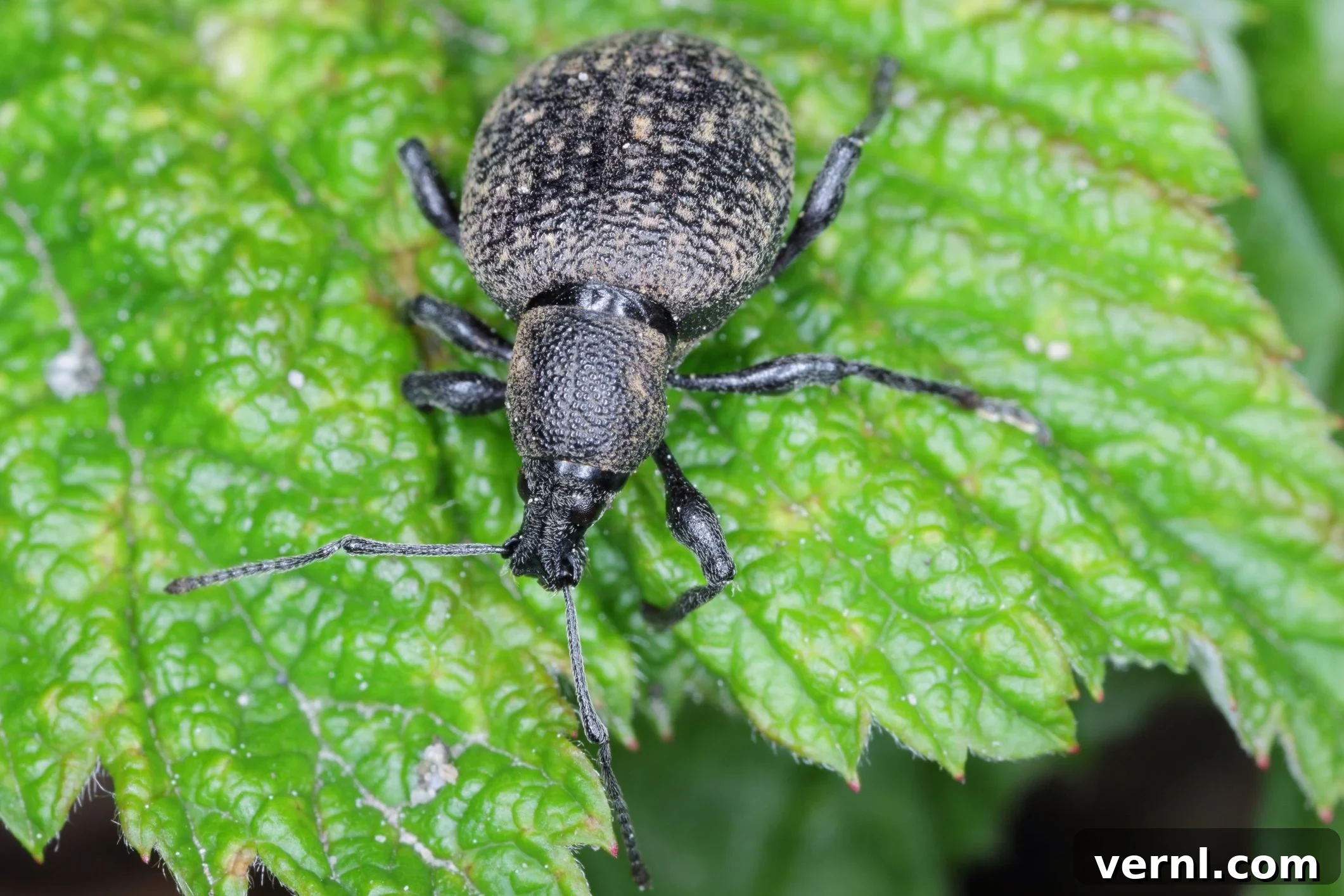
The presence of the strawberry root weevil (Otiorhynchus ovatus) often tests the patience of gardeners and homeowners more than it inflicts severe agricultural devastation. This particular type of beetle, a fascinating member of the snout beetle family, primarily dines on a variety of plants, with a distinct preference for strawberry plants and their delicate root systems. Beyond strawberries, they are also known to occasionally feed on other small fruits and various mint species. While their impact on mature, healthy crops is typically minor, their uncanny ability to invade homes in significant numbers during warmer months can turn them into a considerable nuisance, prompting many to seek effective identification and management strategies.
Understanding the Strawberry Root Weevil: A Common Garden Intruder
Belonging to the vast Curculionidae superfamily of beetles, the strawberry root weevil is known by several common names, including strawberry weevil, root weevil, or simply “weevil.” While they are generally considered relatively harmless in terms of transmitting diseases or causing extensive crop loss in residential settings, these tiny creatures can become an undeniable annoyance for homeowners. During the peak of warm summer months, these pests are infamous for invading neighborhoods and residential dwellings in large numbers, often catching residents off guard.
Unlike many other beetles, adult strawberry root weevils are wingless, which means they cannot fly. Instead, they gain entry into homes and other structures by crawling. They exploit even the smallest vulnerabilities in a building’s exterior, slipping through minute gaps and cracks in foundations, around windows and doors, and various other unsealed openings. Once inside, their presence can be pervasive; you might discover them almost anywhere, from scurrying across kitchen floors and inside cupboards and cabinets, to crawling unexpectedly on bathroom floors, walls, and even ceilings. Understanding their entry points is key to preventing these unwanted indoor encounters.
How to Accurately Identify a Strawberry Root Weevil
Correct identification is the first step in effective pest management. The strawberry root weevil is frequently mistaken for a tick, a common misidentification largely due to its minute size and its dark, often shiny reddish-brown to black coloration. However, a crucial distinction lies in their anatomy: ticks possess eight legs, classifying them as arachnids, whereas strawberry root weevils, being insects, have only six legs. Observing this difference is usually enough to differentiate between the two.
Beyond leg count, several other distinctive features help in identifying the strawberry root weevil. Their bodies are characterized by a notably rounded, somewhat squat abdomen encased in a shell that often appears bumpy or textured. Perhaps their most unique and defining characteristic is the presence of a short, trunk-like snout or rostrum. This “elephant-like” snout is where their specialized plant-eating mouthparts are located, designed specifically for chewing and puncturing plant tissues. This prominent snout is a hallmark of the weevil family and is rarely seen in other common household insects, making it an excellent identifier. Furthermore, adult weevils typically measure between 5 to 7 millimeters in length, making them noticeable but still small enough to be easily overlooked or misidentified without close inspection.
Origin and Preferred Habitats of Strawberry Root Weevils
The strawberry root weevil, scientifically known as Otiorhynchus ovatus, is indigenous to North America, making it a natural part of the continent’s ecosystem. Its distribution is quite widespread, being found in most regions of the United States, as well as across eastern and southern Canada. This broad geographical presence means that gardeners and homeowners in many areas are likely to encounter them at some point.
In their natural outdoor environment, these weevils thrive in areas where their host plants are abundant. Their preferred habitats include strawberry fields, fruit nurseries, home gardens, and wooded areas, particularly under leaf litter, mulch, or other plant debris where they can find shelter and access to roots. They are particularly drawn to areas with established strawberry patches, cane fruits, and certain ornamental plants. The close proximity of these outdoor habitats to human dwellings is precisely why they so frequently become indoor invaders. As temperatures rise during summer, adults, having spent the cooler parts of the year in the soil or under debris, become more active and seek out new food sources and shelter, often leading them directly towards the warmth and protection offered by homes.
Are Strawberry Root Weevils a Threat? Addressing Common Concerns
One of the most reassuring facts about the strawberry root weevil is that it poses no direct threat to humans or pets. Fortunately, strawberry root weevils do not bite, sting, or transmit any known diseases. Despite possessing visible chomping mouthparts located at the end of their snouts, these are exclusively adapted for feeding on plant material, specifically for creating small holes and notches in leaves. Their “teeth” are far too tiny and specialized to break human or animal skin, so there’s no need to worry about painful bites.
Furthermore, these weevils are not interested in your stored food products. Unlike pantry weevils that infest grains and cereals, strawberry root weevils do not consume human foodstuffs, nor do they infest pets or other animals. Their primary focus remains plant material. While their presence indoors can be unsettling due to their sheer numbers and tendency to crawl on surfaces, their “dangerous” aspect is limited purely to being a nuisance. They do not cause structural damage to homes, nor do they pose health risks, which should bring considerable peace of mind to those who discover them in their living spaces.
Understanding the Strawberry Root Weevil Life Cycle
The life cycle of the strawberry root weevil is crucial for understanding its behavior and developing effective control strategies. As detailed in the Small Fruit Fact Sheet by Cornell Cooperative Extension, it involves distinct stages, each with its own characteristics and impact.
Adults: The Crawling Invaders
Adult strawberry root weevils typically emerge from their pupal stage in the soil during late May to June, coinciding with the warming weather. These adults are nocturnal feeders, meaning they are most active at night when they consume plant foliage, creating characteristic notches or serrations along the edges of leaves. During the day, they prefer to hide in sheltered, dark locations such as under debris, mulch, or clods of soil. It is these adult weevils that, seeking warmth or escape from harsh outdoor conditions, are most likely to migrate indoors through cracks and openings in foundations and around windows and doors. Adult weevils can live for several months, often overwintering in protected outdoor spots.
Eggs: The Start of a New Generation
Approximately 10 to 14 days after emerging, adult female weevils begin laying their eggs. These tiny, pearly white eggs are deposited directly into the soil, usually near the base of host plants. Over time, the eggs’ color may change to a light amber. Most eggs hatch relatively quickly, typically within about 10 days, initiating the next phase of the weevil’s development. A single female can lay a considerable number of eggs throughout her lifespan, contributing to rapid population growth if conditions are favorable.
Larva (Grubs): The Root Destroyers
The larval stage, commonly referred to as grubs, represents the most destructive phase of the strawberry root weevil’s life cycle. These larvae are creamy white, legless, and typically assume a distinctive “C” shape while curled in the soil, usually found close to the roots of strawberry and other host plants. Emerging in mid-summer, these immature larvae are voracious feeders. They primarily target the delicate fine roots and outer bark of wild and cultivated strawberry plants, as well as other compatible host vegetation. Their feeding can lead to significant root damage, including girdling (removing bark in a ring around the root) and outright destruction of smaller roots. This root damage often manifests above ground as stunted plant growth, wilting, yellowing, and an overall darkening of the foliage, ultimately impacting the plant’s vigor and fruit production. For those wondering about different strawberry types, it’s worth noting the distinction between mock and wild strawberry plants, as both can be affected by these grubs.
Overwintering: Survival Through Winter
A crucial aspect of the strawberry root weevil’s life cycle is its ability to overwinter. Both the adult weevils and the larval grubs can survive the colder months outdoors. Adults typically seek shelter in plant debris, under bark, or in protected crevices, while larvae simply remain in the soil, continuing their slow development or entering a state of dormancy until conditions improve. This overwintering capacity means that populations can persist year after year if not managed, with adults resuming activity and larvae continuing to feed once the soil warms up in spring.
The Actual Impact of Strawberry Root Weevils on Crops and Gardens
In most residential garden settings, the strawberry root weevil is not considered an invasive species, nor is it particularly destructive. The injuries they inflict on plants are generally minor and rarely lead to the complete loss of a healthy, established plant. Adult feeding causes cosmetic notching on leaves, which seldom affects photosynthesis significantly. Larval feeding on roots, while more impactful, is usually tolerated by mature plants with extensive root systems, unless populations are exceptionally high or the plants are already stressed.
However, it is absolutely crucial to clarify that the common strawberry root weevil (Otiorhynchus ovatus) should never be confused with the much more menacing strawberry bud weevil, also known as the strawberry clipper weevil (Anthonomus signatus). These are entirely different species with vastly different destructive capabilities. The strawberry clipper weevil is a serious agricultural pest that causes significant crop losses by severing the flower buds of strawberry plants, leading to a direct reduction in fruit yield. The root weevil, conversely, focuses on roots and leaves, with much less economic impact in most cases. While the root weevil can also affect other plants like raspberries, blueberries, grapes, mint, and even some ornamental shrubs and conifers by feeding on their roots, the damage is typically manageable.
Effective Strategies to Get Rid of Strawberry Root Weevils
If you’re dealing with a strawberry root weevil infestation, a multi-faceted approach combining cultural, biological, and, if necessary, chemical methods is often the most effective. Here’s how to tackle them both in the garden and inside your home.
In the Garden: Protecting Your Plants
- Hand-Pick the Pests: For smaller infestations, manually removing adult weevils is a simple yet effective method. Since adults are nocturnal, head out to your garden at night with a flashlight. They are often found feeding on leaves. Simply pick them off the plants and drop them into a bucket of soapy water, which will drown them.
- Utilize Sticky Traps: Sticky barrier products, often in the form of Tanglefoot or sticky bands, can be placed around the base of strawberry plants or along the perimeter of raised beds. These traps prevent wingless adult weevils from crawling up the stems to reach the foliage for feeding and egg-laying, effectively disrupting their lifecycle.
- Introduce Beneficial Nematodes: This is an excellent biological control method for targeting the destructive larval stage. Parasitic nematodes, such as Steinernema carpocapsae or Heterorhabditis bacteriophora, are microscopic roundworms that naturally occur in soil. When applied to the soil, they actively seek out and parasitize weevil larvae, releasing bacteria that quickly kill the grubs. Apply nematodes when soil temperatures are appropriate (typically 55-85°F) and the larvae are active, usually in late summer to early fall.
- Consider Chemical Insecticides (Last Resort): For very large or persistent garden infestations that cannot be controlled by other methods, chemical insecticides may be necessary. Look for products containing active ingredients such as cyfluthrin, permethrin, or bifenthrin. Always read and follow product labels carefully, paying close attention to application rates, safety precautions, and pre-harvest intervals for edible crops. Applying these treatments in the evening can be more effective as weevils are nocturnal.
Inside the House: Dealing with Indoor Invaders
- Vacuum Them Up: The quickest and most immediate way to remove strawberry root weevils from inside your home is to vacuum them. Use a hose attachment to reach cracks, corners, and along baseboards where they tend to gather. After vacuuming, immediately seal the vacuum bag in a plastic bag and dispose of it in an outdoor garbage bin to prevent them from crawling back out. For bagless vacuums, empty the canister into a sealed bag outdoors.
- Sprinkle Diatomaceous Earth: Diatomaceous earth (DE) is a natural, non-toxic powder made from the fossilized remains of diatoms. It works by physically abrading the insect’s exoskeleton, causing them to dehydrate and die. Spread a fine layer of food-grade diatomaceous earth around potential entry points, such as along baseboards, under sinks, on windowsills, and under stoves and cabinets. Food-grade DE is considered safe for use around children and pets, making it an excellent chemical-free solution for indoor pest control. Reapply after cleaning or if it gets wet.
Preventing Future Strawberry Root Weevil Infestations
Preventative measures are often the most effective long-term solution for managing strawberry root weevil populations, both in your garden and home.
- Seal Entry Points Thoroughly: The most critical step to prevent indoor invasions is to eliminate entry points. Inspect your home’s foundation, exterior walls, and around all windows and doors for any cracks, gaps, or unsealed openings. Use high-quality caulk or expanding foam to seal these vulnerabilities. Ensure weatherstripping on doors and windows is intact and functioning properly. Pay attention to utility entry points where pipes and wires enter the house.
- Practice Good Garden Sanitation: Remove leaf litter, mulch, weeds, and other plant debris from around the perimeter of your home and garden beds, especially near foundation walls. These materials provide ideal hiding and overwintering spots for adult weevils, allowing them easy access to your home. Keeping the area clean reduces their preferred habitat.
- Consider Hydroponic Cultivation: For growing strawberries, hydroponic gardening systems offer an excellent way to bypass soil-borne pests like root weevil larvae. Since plants are grown in a soilless medium (like coco coir, rockwool, or directly in water), there is no soil for the grubs to feed in, effectively eliminating the most destructive stage of their life cycle.
- Grow Strawberries as Annuals or Rotate Crops: To disrupt the weevil’s life cycle and reduce recurring populations, consider treating strawberry plants as annuals in areas with heavy weevil pressure, removing and replacing them each year. Alternatively, practice crop rotation by planting strawberries in a different location every other year, or rotate them with non-host plants. This deprives the weevil larvae of their primary food source, causing their numbers to dwindle.
- Cover the Soil with Physical Barriers: During the hottest months of summer, when adults are active and laying eggs, you can mitigate larval infestations by placing a plastic tarp, weed fabric, or heavy mulch over the soil surface around your strawberry plants. This physical barrier can prevent adults from laying eggs directly into the soil, or it can make it difficult for emerging larvae to reach the roots. Ensure the cover is well-secured to prevent weevils from crawling underneath.
By implementing these comprehensive prevention and control strategies, you can significantly reduce the presence of strawberry root weevils, protecting your plants and ensuring your home remains free from these bothersome, albeit harmless, intruders.