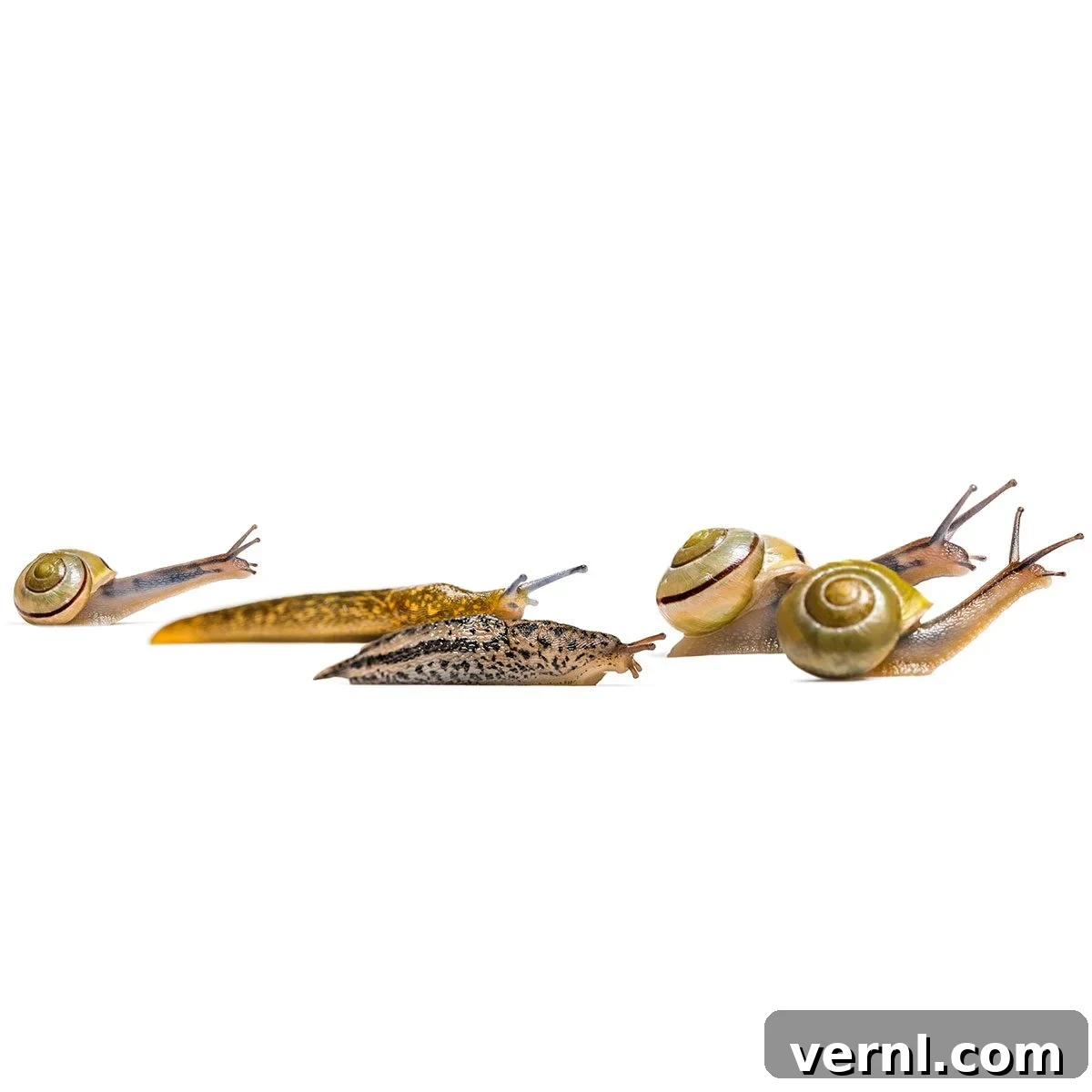
Gardeners often face myriad challenges, and among the most persistent and frustrating are the stealthy assaults by slugs and snails. Though small and unassuming, these mollusks are voracious eaters, capable of consuming plant material equivalent to six times their own body weight in a single night. This insatiable appetite can quickly transform vibrant foliage, such as the beloved hostas and other tender garden plants, into a Swiss cheese-like spectacle, appearing as if ravaged by an unseen force.
Their nocturnal nature makes them elusive, yet their damage is undeniable. While these slimy pests are most active under the cloak of darkness, effective strategies exist to combat them at any time of day. Some approaches are gentle, merely deterring slugs and snails from feasting on your precious plants. Others, while appearing more drastic, are readily embraced by dedicated gardeners who prioritize the health and beauty of their botanical treasures.
Understanding the enemy is the first step toward victory. Slugs and snails thrive in moist, cool conditions, making damp soil, lush vegetation, and shady spots their preferred habitats. They navigate by secreting a slimy mucus trail, which not only aids their movement but also leaves a tell-tale sign of their destructive path. Effective pest management requires a multi-faceted approach, combining prevention with targeted interventions. Let’s explore a range of proven methods to reclaim your garden from these persistent invaders.
The Allure of the Beer Trap: A Classic Solution for Slug and Snail Control
One of the oldest and most widely acclaimed methods for controlling slugs and snails involves a simple, yet surprisingly effective, beer trap. These creatures possess an uncanny attraction to the yeasty aroma of fermented beverages, making beer an irresistible lure. To set up this trap, you’ll need shallow containers such as empty tuna fish cans or plastic yogurt cups.
Begin by burying these containers into the soil so their rims are flush with the ground level. This creates an accessible entry point for the slugs and snails while preventing beneficial insects or small garden creatures from accidentally falling in. Once the containers are in place, pour in some beer, filling the cups about halfway. Interestingly, the older and more stale the beer, the more potent its aroma, thus increasing its attractiveness to these garden pests.
The mechanism is straightforward: slugs and snails, drawn by the compelling scent, will venture into the cups, fall into the liquid, and ultimately drown. This method is particularly effective for reducing localized populations. For continuous control, remember to check and replace the beer regularly, especially after rain or once it becomes diluted. While beer traps are excellent for targeted removal, they work best as part of a broader pest management strategy, particularly in areas where slug and snail activity is high. This natural and non-toxic approach minimizes harm to the environment and other garden inhabitants, making it a favorite among organic gardeners.
Creating Impassable Barriers: Edges That Deter Slugs and Snails
Slugs and snails are soft-bodied creatures that prefer smooth surfaces for movement. This physiological characteristic can be exploited by creating abrasive barriers around your plants, making it uncomfortable or even impossible for them to cross. These physical deterrents act as a protective perimeter, safeguarding your vulnerable flora.
Diatomaceous Earth (DE): Nature’s Tiny Blades
One of the most effective and eco-friendly barrier materials is diatomaceous earth (DE). This fine, powdery substance is derived from the fossilized remains of ancient aquatic organisms called diatoms. Under a microscope, DE particles resemble microscopic shards of glass. When slugs and snails attempt to glide over this material, the sharp edges of the DE pierce their soft bodies, causing dehydration and eventual demise. It’s a purely mechanical action, meaning pests cannot develop resistance to it.
To use diatomaceous earth, simply sprinkle a generous, continuous band around the base of the plants you wish to protect. Ensure the barrier is thick enough that the mollusks cannot easily bypass it. A significant advantage of food-grade diatomaceous earth is its safety profile; it is harmless to humans, pets, birds, and beneficial insects like bees, as it only affects creatures with exoskeletons or soft bodies that come into direct contact with it. As an added bonus, DE also provides trace elements to the soil, subtly enriching its composition.
Crushed Eggshells: A Sustainable and Sharp Defense
Another excellent and easily accessible barrier material comes from your kitchen waste: crushed eggshells. Just like diatomaceous earth, the sharp edges of broken eggshells are unpleasant and potentially damaging for slugs and snails to crawl over. To prepare eggshells for your garden, rinse them thoroughly to remove any egg residue, allow them to dry completely, and then crush them into small, sharp fragments. The finer the pieces, the more effective the barrier.
Distribute the crushed eggshells generously around the perimeter of susceptible plants. Beyond their role as a physical barrier, eggshells slowly decompose in the soil, releasing calcium, which is beneficial for plant health. This makes them a sustainable and dual-purpose addition to your pest control arsenal. Find more ways you can use eggshells in your garden.
Sharp Sand and Grit: Simple Yet Effective
Similar to eggshells and DE, sharp sand or coarse grit can also create an effective barrier. The abrasive texture of these materials irritates the soft undersides of slugs and snails, discouraging them from attempting to cross. Apply a thick, continuous band around the plants, ensuring there are no gaps for the pests to exploit. While not as deadly as diatomaceous earth, these materials provide a significant deterrent, forcing the mollusks to seek easier routes or different food sources.
Wood Ashes: Leveraging Alkalinity to Repel Pests
Slugs and snails are sensitive to changes in pH, particularly highly alkaline conditions. This sensitivity makes wood ashes a natural deterrent. Wood ashes, derived from burning natural, untreated wood, are highly alkaline and contain salts that can dehydrate and repel these slimy garden invaders. As such, distributing wood ashes around your plants can create an unwelcome environment for them.
To implement this method, collect wood ashes from your fireplace or wood-burning stove. It is crucial to use only ashes from natural wood and absolutely avoid ashes from charcoal or treated wood, as these can contain harmful chemicals that may damage your plants or pollute your soil. Create a barrier by sprinkling a continuous ring of wood ashes around the base of the plants you wish to protect.
The alkalinity of the ashes acts as a chemical deterrent, and its drying properties can also irritate and dehydrate the slugs and snails. However, exercise caution and use this method sparingly. Over time, a heavy application of wood ashes can significantly increase the pH of your soil, making it too alkaline for many plants that prefer neutral or slightly acidic conditions. Monitor your soil’s pH if you frequently use wood ashes, and consider combining this method with others to prevent excessive alkalinity.
Copper Bands: An Electric Shock for Slimy Invaders
For gardeners looking to protect individual, highly prized plants, copper bands offer an ingenious and long-lasting solution. This method capitalizes on a unique physiological reaction that slugs and snails experience when they come into contact with copper. Copper bands can be purchased as adhesive strips or solid rings designed to be placed around the base of vulnerable plants or containers.
The magic happens when a slug or snail attempts to slither across the copper. The moisture in their slimy trail, combined with the copper, creates a mild electrical charge. This charge, similar to a small electric shock, is highly unpleasant for the mollusk, effectively deterring it from continuing its journey past the copper barrier. It doesn’t kill them instantly but sends a clear message to turn back, protecting your plant from further damage.
While highly effective, copper banding may not be the most cost-effective solution for protecting a large number of plants due to the material cost. However, for special specimens, delicate seedlings, or plants particularly susceptible to slug and snail damage, copper bands are an invaluable investment. Ensure the band forms a complete, unbroken circle around the plant or pot to prevent any access points for the pests. This method is non-toxic and provides continuous protection without the need for frequent reapplication.
Iron-Phosphate Baits: A Safe and Effective Eradication
For those seeking a more direct approach to eliminate slugs and snails, iron-phosphate baits offer a highly effective and environmentally responsible solution. Unlike older, more toxic molluscicides, iron-phosphate baits are considered safe for wildlife, pets, and beneficial garden organisms while being deadly to slugs and snails.
According to research from Oregon State University Extension, iron-phosphate baits are just as effective as the more hazardous metaldehyde baits, but without the associated risks to non-target species. The active ingredient, iron phosphate, is a naturally occurring compound. When slugs and snails ingest these baits, it disrupts their digestive system, causing them to cease feeding almost immediately. The mollusks then retreat to their hiding places and die within a few days, often unseen.
These baits are typically granular and can be sprinkled around plants and garden beds where slug and snail activity is observed. Common brand names include Sluggo and Garden Safe Slug & Snail Bait. Always follow the manufacturer’s instructions for application rates and frequency to ensure optimal effectiveness and safety. Because they pose minimal risk to the wider ecosystem, iron-phosphate baits are an excellent choice for integrated pest management programs, offering a targeted solution that protects both your plants and the environment.
The Manual Approach: Search and Destroy Missions
Sometimes, the most direct method is the simplest: physically removing the pests from your garden. This “search and destroy” technique is particularly effective for immediate population reduction and offers a satisfying hands-on solution, especially for smaller garden areas or when targeting specific plants.
Slugs and snails are creatures of habit, largely active during the cooler, damper parts of the day. The prime time for a successful hunt is in the evening, approximately two hours after sunset, when they emerge from their daytime hiding spots to feed. Arm yourself with a flashlight and methodically inspect your plants, especially the undersides of leaves, and the surrounding soil. If you choose to hunt during the day, focus on shady, damp areas, under leaves, rocks, mulch, and other garden debris, as these are their preferred daytime shelters.
When you spot a slug or snail, you have several options for disposal. One common, though somewhat harsh, method is to sprinkle a small amount of salt directly on them. Salt rapidly dehydrates these mollusks, leading to their demise. However, be cautious with this method as excessive salt can harm your soil and plants. A more humane and environmentally friendly approach is to pick them up (wearing gloves is advisable) and place them into a jar or bucket filled with soapy water. The soap breaks down their protective slime layer, causing them to drown quickly and effectively. Regularly emptying and refilling your soapy water container will ensure a continuous means of disposal.
Attract and Trap: Setting Decoys for Easy Removal
Another excellent manual control method involves setting traps that exploit the slugs’ and snails’ natural inclination to seek out dark, damp, and cool hiding places during the day. By providing these ideal shelters, you can concentrate the pests into easily managed locations for removal.
One simple trap involves placing flat boards or pieces of cardboard in various shady areas of the garden, particularly in known problem spots. As daylight approaches, slugs and snails will crawl beneath these boards to escape the sun and heat, seeking refuge in the cool, moist underside. The next morning, simply lift the boards, and you’ll often find a collection of pests gathered there. Scrape them off and dispose of them using your preferred method, such as a bucket of soapy water.
An alternative, food-based trap utilizes the discarded rinds of citrus fruits, especially grapefruit. After enjoying the fruit, place the inverted grapefruit rinds (cut side down) in areas where slug and snail activity is prevalent. The remaining fruit pulp, moisture, and shaded interior create an irresistible haven for the mollusks. In the morning, turn over the rinds, scrape out the accumulated pests, and dispose of them. This method not only repurposes food waste but also provides an effective, organic trapping mechanism. Regularly checking and clearing these traps will significantly reduce the slug and snail population in your garden.
Holistic Garden Management: Beyond Immediate Control
While the methods above offer excellent ways to reduce and control existing slug and snail populations, a truly resilient garden incorporates practices that prevent infestations in the first place. Integrated pest management (IPM) focuses on understanding the ecosystem and making environmental adjustments to deter pests naturally.
One key aspect is **garden hygiene**. Remove garden debris, leaf litter, and weeds, which provide perfect hiding spots and breeding grounds for slugs and snails. Keep compost piles away from susceptible plants. Improve soil drainage where possible, as excessively wet conditions are highly attractive to these mollusks.
Consider your **watering practices**. Since slugs and snails thrive in moisture, watering in the morning rather than the evening allows foliage and soil surfaces to dry out before nightfall, making the environment less hospitable. Drip irrigation, which delivers water directly to the plant roots, is also preferable to overhead sprinklers, as it keeps foliage dry.
**Plant selection** can also play a crucial role. Some plants are naturally more resistant to slug and snail damage due to their strong scents, hairy leaves, or tough textures. Examples include many herbs (rosemary, thyme, sage), ferns, and certain ornamental grasses. Conversely, plants like hostas, basil, and marigolds are particularly vulnerable and may require extra protection.
Finally, encourage **natural predators**. Birds, frogs, toads, ground beetles, and even certain snake species are natural enemies of slugs and snails. Creating a wildlife-friendly garden by providing shelter, water, and diverse planting can attract these beneficial organisms, turning them into your garden’s natural pest control team.
Conclusion: Cultivating a Pest-Resilient Garden
Dealing with slugs and snails in the garden can be an ongoing battle, but with a strategic and comprehensive approach, you can protect your plants and maintain a thriving landscape. No single method offers a complete solution; the most effective strategy often involves combining several techniques to create multiple layers of defense.
From enticing beer traps and abrasive barriers like diatomaceous earth and crushed eggshells, to the electrical deterrence of copper bands and the targeted efficacy of iron-phosphate baits, gardeners have a diverse toolkit at their disposal. Supplementing these with manual removal and proactive garden hygiene, such as appropriate watering and debris management, will further strengthen your defenses.
Patience and consistent monitoring are key. Regularly inspect your plants for signs of damage and adjust your control methods as needed. By understanding the behavior of these mollusks and employing a thoughtful combination of preventative measures and targeted interventions, you can cultivate a garden that is not only beautiful but also resilient against the persistent threat of slugs and snails. Reclaim your garden and let your plants flourish, unblemished by these persistent, slimy adversaries.