
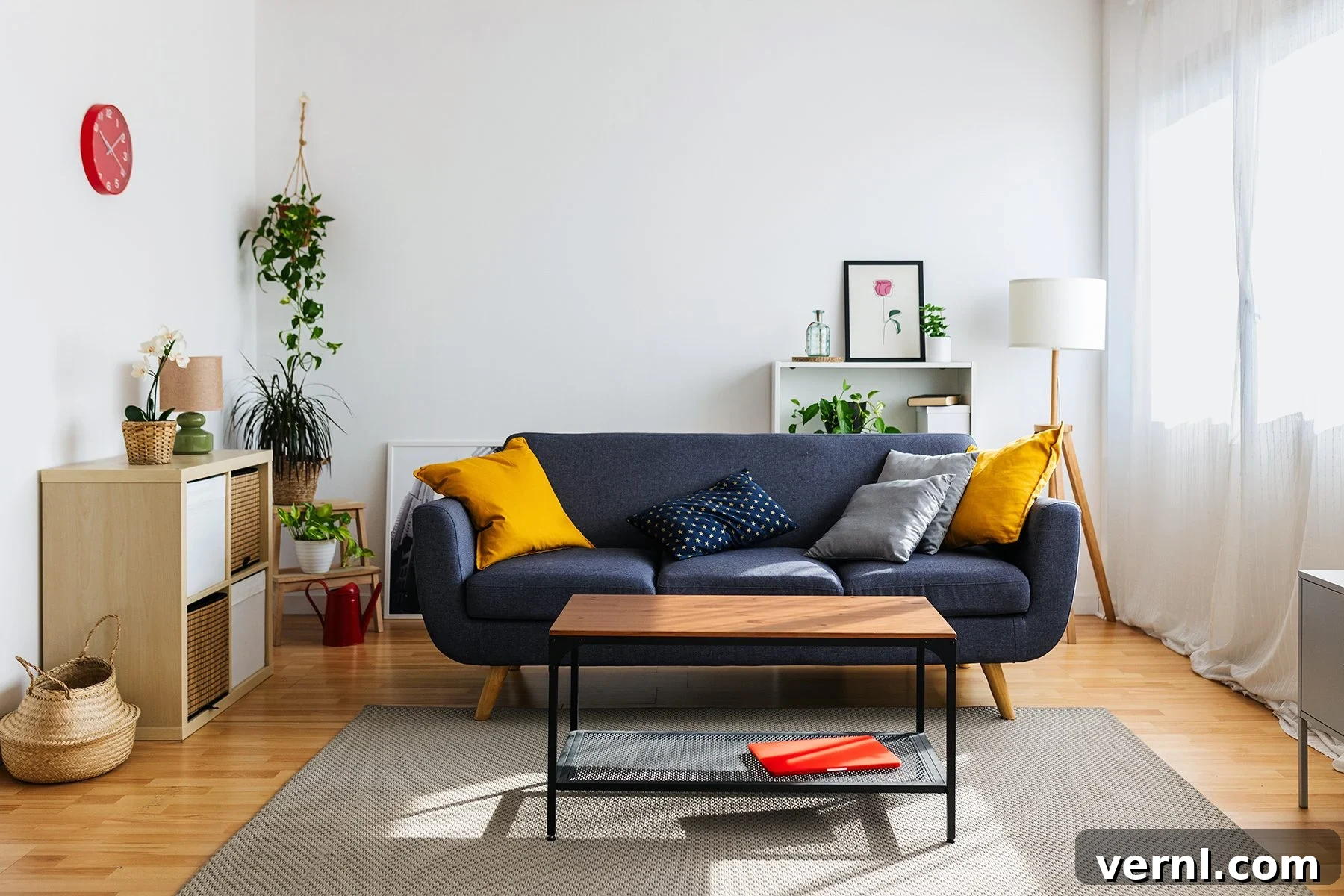
Transforming a compact living room into a spacious, inviting, and stylish sanctuary might seem like a daunting challenge. The fear of clutter, feeling closed-in, or sacrificing personal character can often deter homeowners from embracing their creative vision. However, with the right strategies and a touch of design ingenuity, even the most petite living spaces can be elevated to new heights of functionality and aesthetic appeal. The key lies in understanding how to visually expand the room, enhance its natural light, and choose furnishings that serve both purpose and style without overwhelming the area. This comprehensive guide will equip you with expert-approved tips and clever tricks to refresh and revitalize your small living room, making it feel significantly larger and more cohesive.
From strategic color choices to innovative furniture selections and thoughtful lighting arrangements, each piece of advice is crafted to help you unlock the full potential of your limited square footage. We’ll explore how professional interior designers approach these spaces, offering insights that blend practical solutions with sophisticated style. Prepare to discover how to create an environment that feels open, airy, and deeply personal, proving that small spaces don’t have to compromise on grandeur or comfort. Let’s delve into these transformative design secrets to make your small living room not just bigger in feel, but also richer in character and charm. Embrace the journey of design and watch your compact area blossom into a delightful living experience.
Embrace the Power of Neutral Colors
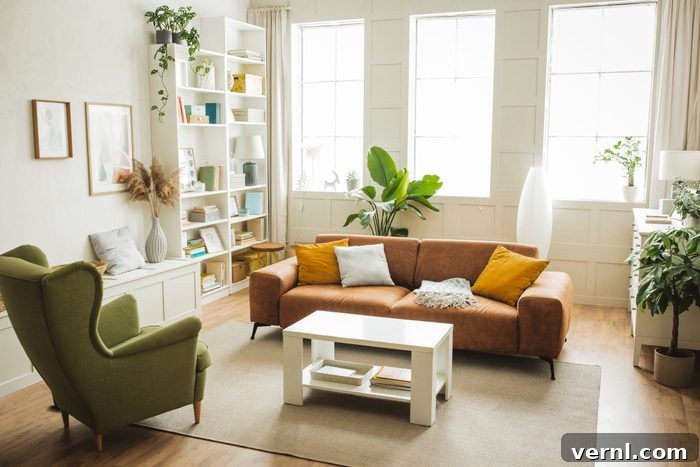
One of the most foundational and universally acclaimed design tricks for small spaces is the strategic use of light and neutral colors. These shades inherently create an illusion of expansive space, making walls appear to recede and the overall room feel more open and breathable. Interior designer Natanya-Joy Gidoomal emphasizes the power of a palette featuring whites, light woods, and natural fabrics. According to Gidoomal, “They all trick the eye into thinking of nature and outside,” suggesting a visual connection to the boundless outdoors, which inherently expands the perceived boundaries of the room.
However, adopting a neutral base doesn’t mean sacrificing personality or visual interest. Far from it, a well-executed neutral scheme provides a sophisticated canvas upon which to build character. Interior designer Ariana Lovato highlights this balance, stating, “Keep the majority of the space neutral and then add pops of color with upholstery or an accent wall.” This approach allows for vibrant bursts of personality without overwhelming the room. Consider incorporating bold throw pillows, a statement piece of artwork, or a single accent chair in a rich hue. These focal points draw the eye and add depth, preventing the space from feeling bland or sterile.
When selecting your neutral tones, think beyond stark white. Creams, soft grays, warm beiges, and even very pale blues or greens can all contribute to an airy atmosphere. Textural variety is also crucial; combine smooth walls with chunky knit throws, linen curtains, and natural wood furniture to add richness and warmth. These subtle differences in texture catch the light differently, adding dimension without requiring additional visual clutter. By employing a thoughtful neutral palette, you can lay the groundwork for a living room that feels both serene and stylish, proving that simplicity can indeed be luxurious and endlessly versatile.
Go Bold and Cozy With Dark Shades
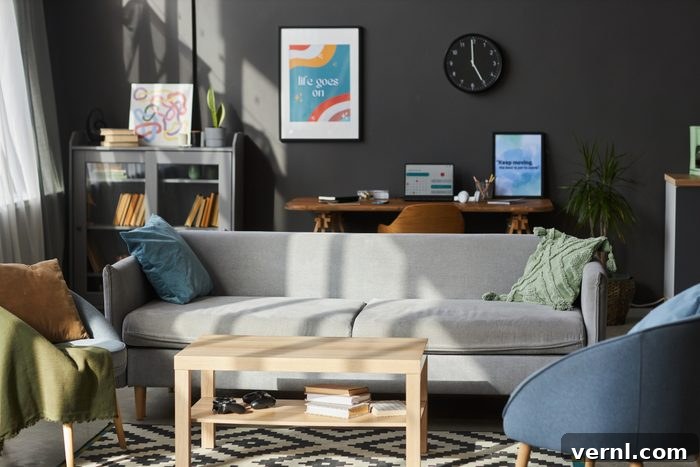
While neutral colors are a well-trodden path for small spaces, there’s a powerful, often overlooked alternative: embracing dark, dramatic shades. Many homeowners instinctively shy away from deep colors, fearing they will make a small living room feel even more constricted. Yet, as Natanya-Joy Gidoomal suggests, a bold approach with darker hues can paradoxically create a wonderfully welcoming and intimate atmosphere. Rather than expanding the room visually, dark colors can make the boundaries recede, enveloping the space in a sophisticated and cozy embrace.
The secret lies in the way dark colors absorb light, blurring the edges of the room and creating a sense of infinite depth. To amplify this cozy effect, layer the space with an abundance of soft textiles. Plush throws, velvet cushions, and heavy draperies in complementary or contrasting textures add warmth, comfort, and an inviting tactile dimension. These layers soften the starkness of dark walls, transforming the room into a luxurious haven perfect for relaxation and intimate gatherings. The visual weight of these elements contributes to the perceived richness of the space, shifting focus from its physical dimensions.
Gidoomal further explains how dark shades can “distract the eye from the proportions of the room — like where walls end or ceilings start — it can make it feel larger, much more fun and full of character.” To achieve this clever illusion, consider painting your trim and molding the exact same dark shade as your walls. This continuous color scheme blurs the room’s architectural edges, preventing the eye from being drawn to distinct lines that emphasize limitations. Instead, the entire space feels like a seamless, enveloping canvas.
Adding another layer of drama and visual intrigue, Ariana Lovato recommends painting the ceiling darker than the walls. “It can be a fun way to add drama,” she notes. This unexpected pop of color or deep tone on the ceiling draws the eyes upward, creating an illusion of greater height and shifting the focus from the horizontal expanse of the room. This bold statement diverts attention from the overall size, instilling a sense of grandeur and unique character. When combined with rich textures and thoughtful lighting, dark shades can transform a petite living room into a sophisticated, cocoon-like retreat that feels both expansive in spirit and deeply personal.
Pick Slimline, Multi-Functional Furniture
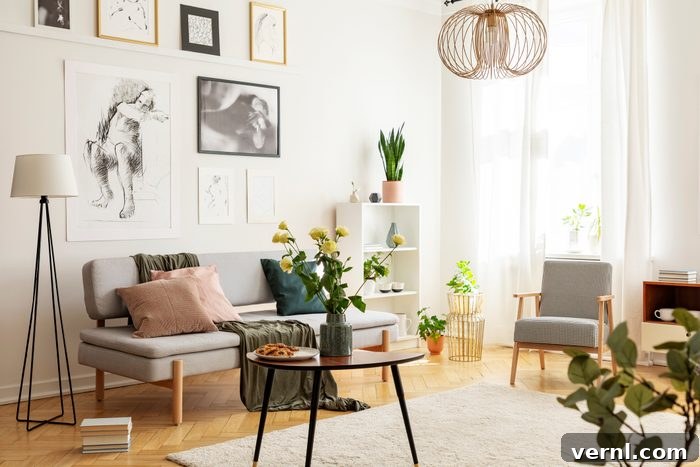
When every square inch counts, the furniture you choose for your small living room can either make or break the space. The conventional wisdom of “bigger is better” simply doesn’t apply here. Instead, focus on pieces that boast a slim profile and, whenever possible, offer multi-functional capabilities. Natanya-Joy Gidoomal strongly advises against bulky items like oversized sectional sofas or massive centerpiece coffee tables that can visually consume the entire room. Her recommendation is to opt for slimline pieces that are not overly imposing, allowing for visual lightness and improved flow.
Consider the design of your sofa: “Rather than opting for a sofa with wide arms, go for skinny or low arms or even something without arms,” Gidoomal suggests. Sofas with thinner profiles occupy less visual and physical space, contributing to an open aesthetic. Furthermore, selecting a sofa on thin, raised legs instead of one that sits directly on the ground creates a crucial feeling of space and airiness. By allowing light to pass underneath the furniture and revealing more of the floor, you visually expand the room’s footprint, making it appear less cluttered and more spacious.
Ariana Lovato champions space-saving and multi-functional items. An ottoman with a removable tray, for instance, can brilliantly double as both extra seating and a coffee table, making it an indispensable piece in a compact area. She also highlights the advantages of a round coffee table: “A round coffee table is also a great idea because it allows for easy flow and access around a room.” Its lack of sharp corners minimizes bumping in tight spaces and encourages smoother movement through the living area.
The world of double-duty furnishings extends far beyond ottomans. Think about seating options with integrated storage, offering a discreet place to tuck away blankets, magazines, or remote controls. Wall-mounted desks that fold away when not in use are perfect for creating a temporary workspace without sacrificing permanent floor space. Bookshelves can be designed with integrated flat-screen TV mounts, consolidating entertainment and storage. Small stools can easily function as versatile side tables, plant stands, or extra seating when guests arrive. These smart solutions ensure that every piece of furniture earns its place.
Finally, a common misconception is to push all furniture against the walls to maximize floor space. Counterintuitively, this can make a small room feel less inviting and more rigid. Instead, try “floating” some pieces slightly away from the walls. This subtle shift creates a more cohesive illusion of space and depth, making the room feel thoughtfully arranged rather than simply crammed. By strategically selecting slim, multi-functional furniture and arranging it with intention, your small living room can be both highly functional and aesthetically pleasing, never feeling limited by its size.
Maximize Your Windows for an Expansive Feel
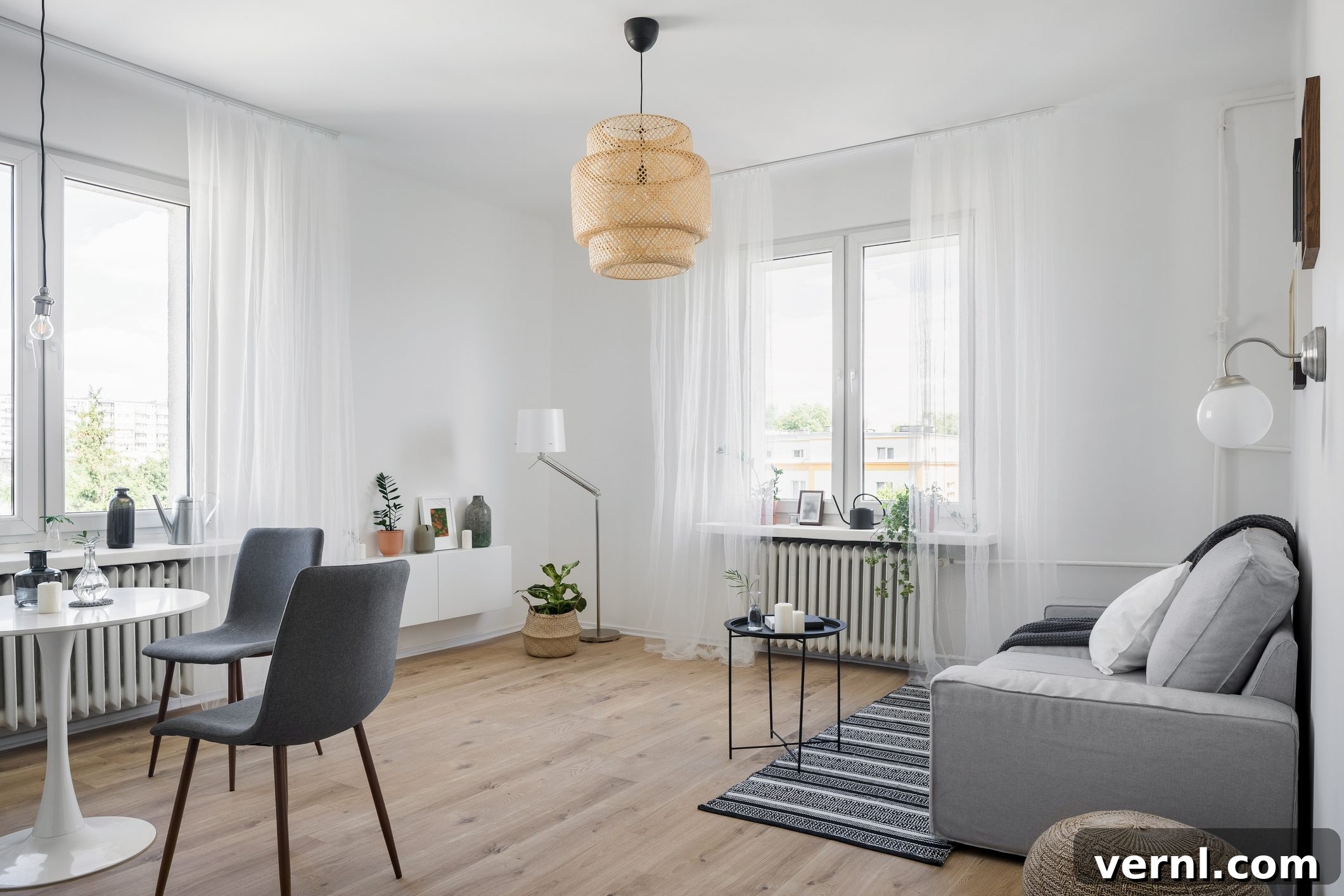
Windows are natural sources of light and views, and leveraging them strategically can dramatically alter the perception of space in a small living room. As Natanya-Joy Gidoomal astutely observes, “Maximize the size of the windows, even if it’s by trickery, and the room will always feel bigger.” The goal is to amplify the light and the visual connection to the outdoors, thereby expanding the room’s perceived boundaries beyond its physical walls.
One of the most effective tricks involves the careful placement of your curtain rods and draperies. Instead of hanging curtain rods just to the width of the window frame, extend them several inches beyond on both sides. This simple adjustment allows the curtains to be pulled back further, revealing the entire window pane and maximizing the amount of natural light that streams in. Similarly, hanging the rods higher, closer to the ceiling rather than just above the window frame, draws the eye upward and creates an illusion of greater window height, which in turn makes the room feel taller and more grand. Layering window shades just below the rods can add another dimension of depth and functionality, offering privacy while still allowing light filtration.
The choice of window coverings also plays a crucial role. Opt for sheer curtains or light-filtering blinds that allow ample natural light to penetrate the room. Natural light is a powerful tool for making any space feel more open, airy, and inviting. Heavier, opaque curtains can make a small window feel smaller and the room darker, so choose fabrics that are light in weight and color to enhance brightness. When drawn back, sheer curtains fold away neatly, taking up minimal space and keeping the window unencumbered.
Interestingly, this is another instance where dark colors can work to your advantage in a small space. While typically avoided, painting the walls immediately surrounding your window in a dramatic, dark shade can make the bright window “pop” even more. The stark contrast between the deep wall color and the brilliant light pouring through the window enhances the perceived brightness and size of the window opening. This bold framing draws attention to the natural light source, creating a focal point that distracts from the room’s overall dimensions and emphasizes the expansive view beyond. By mastering these window-enhancing techniques, you can effectively make your small living room feel significantly larger, brighter, and more connected to the world outside.
Mirrors Create the Illusion of Space
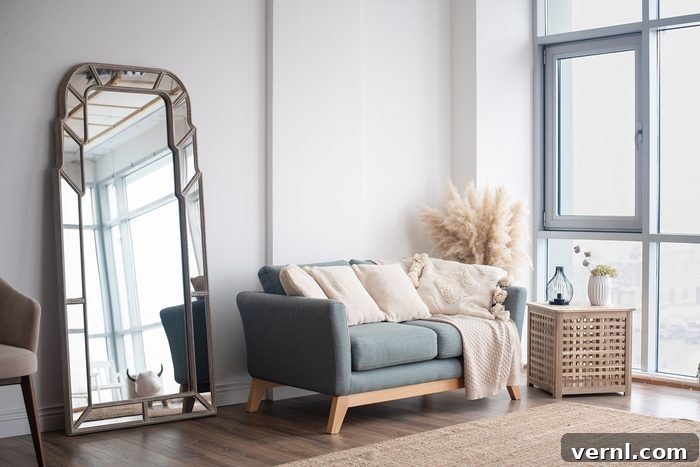
Mirrors are not merely functional items for checking your reflection; they are one of the most potent tools in a designer’s arsenal for transforming small spaces. While commonly found in bathrooms and bedrooms, their strategic placement in a living room can work wonders. Natanya-Joy Gidoomal emphasizes that mirrors effectively “bounce light around,” instantly making a small living room seem brighter, more open, and significantly more expansive. They cleverly trick the eye into perceiving more space than actually exists, adding depth and dimension without any physical expansion.
The size and placement of the mirror are paramount to its effectiveness. A large, full-length mirror resting on the floor, leaning against a wall, can have a particularly dramatic impact. This setup creates a grand visual statement, almost acting as a second window or doorway, thereby visually extending the room’s footprint. The reflection appears to be a continuation of the space, making the room feel double its actual size. This technique is particularly effective in narrow living rooms, as a well-placed mirror can visually widen the area.
Beyond merely reflecting light, mirrors can also bring the outside in. Consider positioning a large mirror on a wall directly opposite a window, or strategically angled to reflect an open, green garden, a charming patio, or even just the sky. This positioning creates a stunning illusion of an additional outdoor vista within your living room. The reflected view not only enhances the sense of openness and connection to nature but also introduces natural light and dynamic scenery into the interior, making the room feel exponentially larger and more vibrant. This thoughtful placement can transform an otherwise confined space into a harmonious blend of indoor comfort and outdoor tranquility.
When selecting a mirror, consider its frame. A simple, minimalist frame will blend seamlessly and maintain an airy feel, while a decorative, ornate frame can add character and serve as an artistic focal point without overwhelming the space. Whether you choose a single large mirror or an arrangement of smaller ones, integrating these reflective surfaces is a clever and stylish way to visually expand your small living room, making it feel bright, airy, and inviting.
Layer Your Lighting for Depth and Ambiance
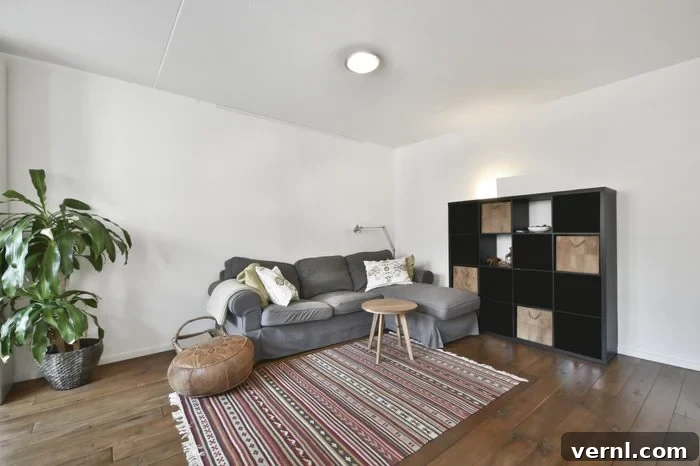
Effective lighting is one of the most powerful and often underestimated tools in small space design. Simply relying on a single overhead light can flatten a room and make it feel uninviting. Instead, the key to transforming a compact living room lies in layering your lighting. As Natanya-Joy Gidoomal explains, “A mixture of lighting is best in smaller spaces so the eye is drawn to different places.” This strategic variation in light sources creates visual depth, highlights different areas, and prevents the room from feeling one-dimensional.
Ariana Lovato suggests a dynamic combination of floor lamps, ambient table lamps, and recessed accent lights to achieve a visually and functionally balanced space. This trifecta allows you to control the mood and highlight specific features. For ultimate flexibility, Lovato advises, “We like to keep all of these on dimmers so you can set the ambience.” Dimmers enable you to seamlessly transition from bright, functional lighting for daily tasks to soft, intimate illumination for evening relaxation or entertaining, making your small living room adaptable to any occasion.
Strategic placement of certain light fixtures can also contribute to the illusion of space. Tall floor lamps, for instance, naturally draw the eye upward, emphasizing the vertical dimensions of the room and making the ceiling appear higher. Similarly, statement pendant light fixtures, when chosen carefully, can act as artistic focal points overhead, directing attention upwards. When selecting floor or table lamps, consider options with an exposed bulb or a small, simple shade. This slimline design prevents the light fixture itself from becoming a bulky element that visually clutters the room, maintaining an airy feel while providing ample light.
Beyond ambient and task lighting, incorporating specific types of fixtures can further enhance the room’s spaciousness and comfort. Gidoomal notes, “Up lighters are always good for creating height with light, while table lamps are great for making a more intimate space that feels cozier.” Uplighters, which cast light upwards onto the ceiling, effectively bounce light around and make the room feel taller. Table lamps, positioned on side tables or consoles, create pools of warm, localized light that define zones within the living room, contributing to a sense of intimacy and coziness without shrinking the overall space. By meticulously layering various lighting types, you can sculpt light and shadow to create a small living room that feels expansive, inviting, and perfectly adaptable to your lifestyle.
Don’t Underestimate the Impact of Flooring
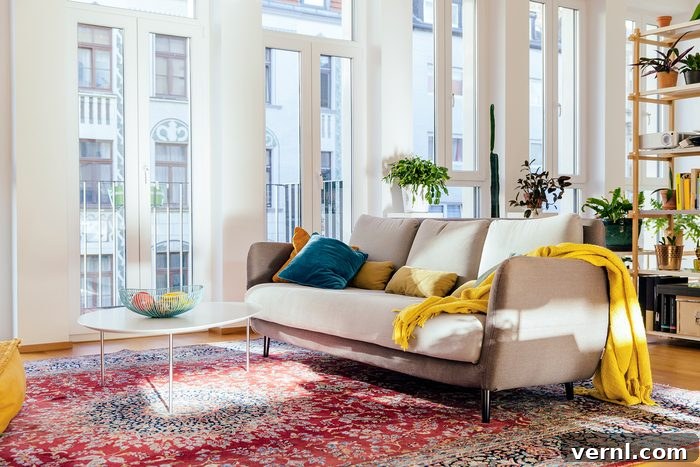
The flooring in a small living room often goes unnoticed, yet it plays a significant role in influencing the perceived size and overall aesthetic of the space. It acts as the foundation upon which all other design elements rest, and clever choices here can dramatically enhance the feeling of spaciousness. Area rugs, for instance, are not just decorative accents; they are practical and stylish additions that can cleverly define zones and expand the visual footprint of a room. The key is to choose the right size: a large area rug in a small living room actually opens up the space, whereas a rug that is too small can inadvertently make the room feel disjointed and even smaller, as if the space terminates at the rug’s edge.
To maximize the illusion of size and cohesion, ensure that all four legs of your major furniture pieces, such as the sofa and armchairs, rest within the borders of the rug. If this isn’t possible, at least the front two legs of these pieces should be on the rug. This anchoring effect creates a unified seating area, making the entire arrangement feel larger and more intentional. A generously sized rug connects all elements, suggesting a continuous, expansive zone rather than fragmented pieces of furniture floating in a small room.
Beyond rugs, the actual pattern and color of your permanent flooring can also make a profound difference. Natanya-Joy Gidoomal highlights how even the grain of wooden floors can influence perception, particularly herringbone patterns. “That’s because their diagonal lines draw the eyes outward,” she explains. The dynamic V-shape of a herringbone pattern creates a sense of movement and direction, guiding the eye across the room and making it appear longer or wider than it is. For maximum impact, install the herringbone pattern running perpendicular to the longest wall in your living room. This orientation will visually stretch the space, enhancing the feeling of breadth.
Gidoomal also strongly recommends opting for light-colored tiles or carpets. Much like light-colored walls, pale flooring choices reflect more light, instantly brightening the room and lifting the space. This reflection contributes to a heightened illusion of size, making the entire living area feel more open, airy, and expansive. Whether you choose the elegant lines of light wood, the softness of a pale carpet, or the subtle texture of light-toned tiles, thoughtful flooring selections are fundamental to creating a small living room that truly feels grander than its dimensions.
By implementing these expert-approved strategies, you can transform your small living room from a challenging constraint into a charming and highly functional space. Embrace the power of optical illusions, thoughtful furniture choices, and strategic lighting to create a living area that feels not just bigger, but also deeply reflective of your personal style and comfort needs. Every detail, from the color on the walls to the pattern on the floor, contributes to the overall perception of space. Remember, a small living room isn’t a limitation; it’s an opportunity for clever and creative design that maximizes every inch.