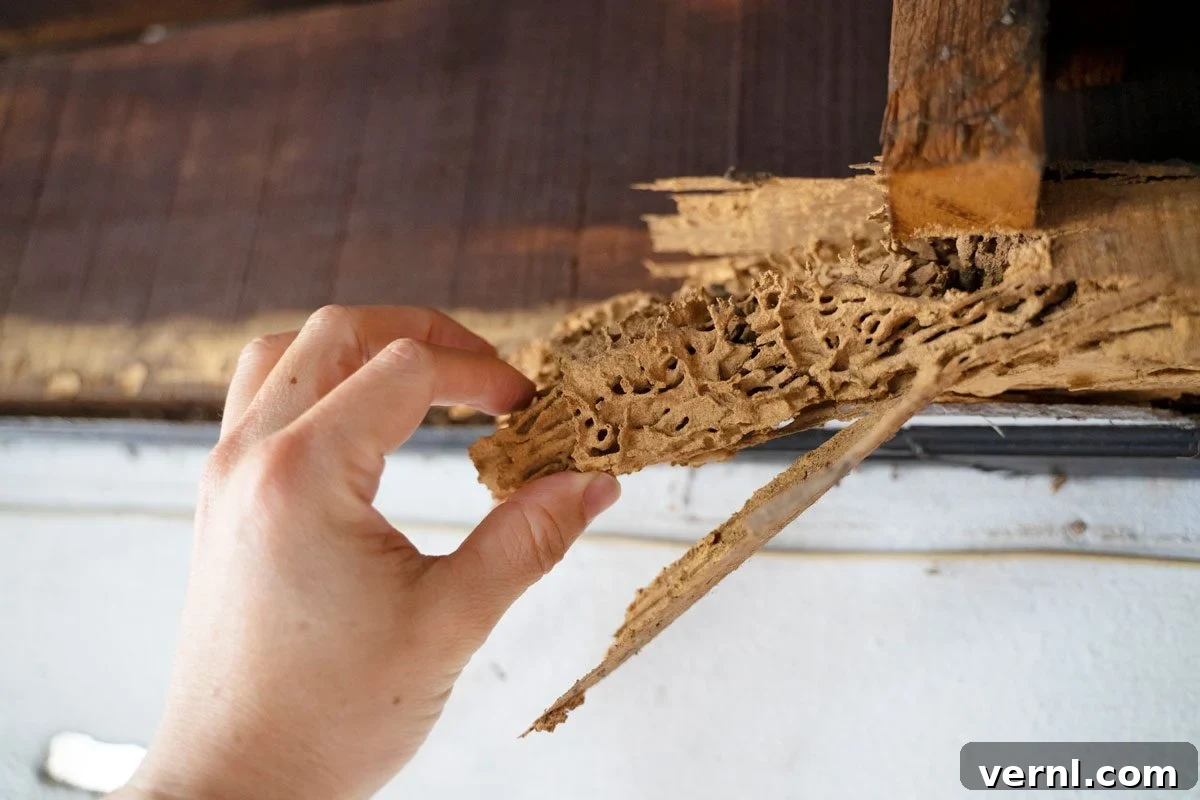
Imagine a million small, metal BBs scattered across the floor of your living room. You wouldn’t be able to take a single step without encountering them. Now, amplify that unsettling image and consider this: a single termite colony can house one to two million members, silently working beneath the very foundation of your home. This vivid comparison, offered by entomologist Doug Webb, paints a chilling picture of the potential threat these tiny insects pose.
While an individual termite is incapable of significant destruction, as Webb, an expert with pest-control giant Terminix International, points out, “But thousands can.” The cumulative damage inflicted by a large, undetected colony can be catastrophic. Termite damage repair costs homeowners thousands of dollars on average, according to Terminix. In extreme cases, Webb recounts seeing homes so thoroughly ravaged by these minuscule pests that they required complete demolition and reconstruction. While such scenarios are rare, they underscore the critical importance of vigilance.
Even if you’ve never personally witnessed a termite, understanding their behaviors and the subtle indicators of their presence is paramount for protecting your most valuable asset: your home. This comprehensive guide will equip you with the knowledge to identify potential termite threats, understand their impact, and take decisive action to safeguard your property.
Understanding Termite Infestations: The Silent Destroyer
Termites are small, often pale-colored insects, typically measuring about a quarter of an inch long. In North America, the Eastern subterranean termite is the most prevalent species, known for its destructive tunneling habits. While termite activity is particularly pronounced in warmer Southern states, Webb confirms their presence across the entire U.S., with the sole exception of Alaska. These resilient pests have adapted to colder climates by burrowing deeper into the ground, beneath the freeze line, to survive harsh northern winters. This widespread distribution means no homeowner should consider themselves entirely immune to the threat.
Like ants, termites are social insects, living in highly organized colonies with distinct castes: workers, soldiers, and reproductives (including the queen and king). The vast majority of a colony consists of workers – blind, tirelessly foraging insects whose sole purpose is to gather food for the colony and feed the queen, who is solely responsible for laying eggs. Termites have a specific dietary preference: cellulose. Wood, being primarily composed of cellulose, makes your home an irresistible and abundant food source for an entire colony. To a termite, your house isn’t just a structure; it’s an expansive, all-you-can-eat buffet that can sustain them for years.
The longevity of a termite queen adds another layer of concern. Webb reveals that a queen can live for up to 30 years, continuously producing eggs throughout her lifespan. This extraordinary reproductive capacity allows colonies to grow to astounding sizes, escalating the potential for damage over time. Humans and termites often coexist without incident in natural environments. In forests, termites play a vital ecological role, breaking down dead trees and returning valuable nutrients to the soil. However, when a termite colony shifts its focus from the forest floor to the structural timbers of your home, it transforms from an ecological asset into a destructive infestation that demands immediate and effective intervention.
Recognizing the Unseen Enemy: Key Signs of a Termite Infestation
Termites are masters of stealth. Despite being blind, they are incredibly efficient at locating food sources. As Webb explains, “They just bump into things.” If a termite happens to encounter your home, finds a tiny crack, and samples the delectable wood, it may recruit other colony members, leaving behind a subtle chemical trail for them to follow. Their innate ability to remain hidden often means homeowners are unaware of their presence until significant damage has occurred. However, knowing what subtle signs to look for can be crucial for early detection.
Mud Tubes: The Termites’ Highway System
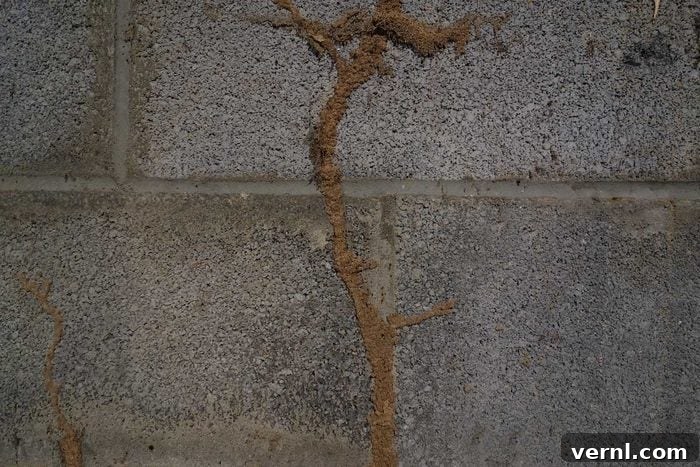
One of the most common and tell-tale indicators of subterranean termites is the presence of mud tubes. These pencil-width tunnels are constructed by worker termites using a mixture of soil, wood particles, and their saliva. Termites are soft-bodied insects that require high humidity and protection from predators and light. Mud tubes serve as their sheltered highways, providing a moist environment and a safe passage between their underground nests and the wood in your home. Homeowners frequently spot these vein-like structures spreading across their home’s foundation, interior basement walls, crawl spaces, or even emerging from expansion joints in concrete slabs. Regularly inspecting these areas, especially where the foundation meets the ground, is vital.
Swarmers: The Reproductive Flight
Another significant indicator of a termite infestation is the sighting of swarmers. These are winged, adult termites whose primary purpose is to leave the existing colony, find a mate, and establish a new colony. Swarming usually occurs during warm, humid weather, typically in spring or early summer, but can vary by region and species. If you observe a swarm of winged insects emerging from or near your home, particularly around windows, doors, or light fixtures, Webb emphasizes, “that’s a big indicator” of an active infestation. It’s crucial to differentiate swarmers from flying ants, as they often look similar. Termite swarmers typically have straight antennae, a uniform waist, and two pairs of wings of equal length, whereas flying ants have elbowed antennae, a constricted waist, and two pairs of wings of unequal length.
Discarded Termite Wings: Evidence of a New Threat
Termite swarmers are not strong flyers. After their short reproductive flight, they shed their wings, often near the point of emergence, and then crawl away to find a mate and a suitable location to start a new colony. A small pile of translucent, discarded wings on windowsills, near spiderwebs, or in light fixtures is a definitive clue that termites are present, or at least were present very recently. These wings look like tiny fish scales and can often be the first physical evidence homeowners encounter.
Termite Droppings (Frass) and Damaged Wood
While termites do produce droppings, their visibility depends on the species. Subterranean termites, the most common type, consume wood from the inside out and typically leave their sawdust-like droppings, known as frass, within the wood galleries. This means you are unlikely to see their frass in exposed areas. However, drywood termites, which do not require soil contact, push their distinctive, six-sided fecal pellets out of tiny kick-out holes in infested wood. These pellets resemble small grains of sand or sawdust and can accumulate in small piles below the damaged wood, serving as a clear sign of a drywood termite infestation.
Beyond droppings, other signs of termites directly relate to their destructive feeding habits:
- Hollow-Sounding Wood: Tap on suspect wood with a screwdriver handle. If it sounds hollow or papery, it may indicate internal termite damage.
- Soft or Compromised Wood: Wood that feels soft, can be easily probed with a knife or screwdriver, or splinters easily is often a victim of termites. They consume the internal structure, leaving a thin veneer of wood or paint.
- Blistering or Darkened Wood: Termites create tunnels just beneath the surface of the wood. This can cause the wood surface to appear blistered, warped, or stained, similar to water damage.
- “A thin gritty gray-brown film on the surface of damaged material”: This description, provided by the North Carolina State Extension Service, refers to the mixture of soil and wood used by subterranean termites to line their tunnels within the wood, which can become visible if the surface layer is breached.
- Sagging Floors or Ceilings: In advanced infestations, the structural integrity of your home can be compromised, leading to noticeable sagging of floors, ceilings, or even walls.
- Unexplained Cracks: Termite damage can also manifest as unexplained cracks in plaster or drywall as structural components weaken and shift.
- Stuck Windows or Doors: Warped door or window frames can also be a sign of termite activity, as they tunnel through the wood, compromising its shape and stability.
Responding to the Threat: What to Do If Termites Are Damaging Your Home
Discovering termite damage can be unsettling, but it’s essential to remain calm. The most crucial first step is to contact a qualified pest control professional as soon as possible for a thorough inspection and assessment. They can accurately identify the type of termite, the extent of the infestation, and recommend the most effective treatment plan.
While the idea of a do-it-yourself solution might seem appealing to some, Webb cautions against it for established termite colonies. “I’m not saying a do-it-yourself (person) couldn’t do it,” he admits, but immediately follows up by stressing the immense challenges involved. Termite extermination is complex, expensive, and often requires specialized, heavy-duty equipment, such as sprayers capable of handling hundreds of gallons of liquid termiticide.
The success of termite treatment hinges on absolute precision. Termites only need one tiny, overlooked crack or entry point to persist, allowing the colony to recover and continue its destructive work. A professional pest control company possesses the expertise to identify all potential entry points, apply treatments effectively, and ensure complete eradication. When hiring a professional, inquire about their guarantees. Different companies offer varying warranties, often including re-treatment if termites reappear within a specified period. Furthermore, understand that treating only one localized area is usually insufficient; for subterranean termites, the entire home, including the surrounding soil, typically requires treatment to prevent them from simply relocating to another untreated section.
The Inescapable Truth: Termites Do Not Go Away on Their Own
In a single, emphatic word: no. Termites will not simply pack up and leave your home. Consider the analogy Webb offers: if you were a termite, would you abandon a free, all-you-can-eat buffet? Once these persistent insects have found a reliable food source within your home, “they’re going to keep feeding,” Webb states. A standard home can provide enough sustenance to keep a large termite colony thriving for as long as four years, continuously inflicting damage throughout that period.
Their clandestine nature further compounds the problem. Termites are instinctively programmed to hide from predators like birds and other insects. They prefer dark, moist, secluded environments and will go to great lengths to avoid detection, even from other insect species. This means that an infestation can progress for months or even years without any obvious outward signs, allowing the damage to accumulate silently until it becomes structurally significant or visibly apparent.
Proactive Protection: Making Your Home Unattractive to Termites
The best defense against termites is a strong offense. Proactive measures can significantly reduce your home’s appeal to these pests, preventing an infestation before it ever begins. Webb offers several key strategies for prevention:
Eliminate Wood-to-Ground Contact
This is perhaps the most critical preventive measure. Termites typically travel from the soil to find food. Any wood directly touching the ground provides an easy bridge for them to enter your home. This includes firewood stacked against the foundation, wooden landscaping timbers, trellises, fences, and even wooden steps. If you have wood steps leading to your home, placing a concrete block at the bottom can create a barrier that might “confuse” termites enough to deter them from climbing further. Ensure that no wooden elements of your house, deck, or porch are in direct contact with the soil. Maintain at least a 6-inch gap between soil and any wooden structural components.
Manage Moisture Effectively
Moisture is a huge attractant for termites, particularly subterranean species. Water-damaged or rotting wood is exceptionally appealing to them. Therefore, vigilance in controlling moisture around and within your home is paramount:
- Gutters and Downspouts: Ensure your gutters are clean, functional, and divert rainwater away from your foundation. Leaky gutters can saturate the soil directly beside your house, creating ideal termite conditions.
- Drainage: Maintain proper grading around your home so that water flows away from the foundation, rather than pooling against it. This might involve adding soil to create a slight slope.
- Leaky Pipes and Fixtures: Promptly repair any leaky plumbing inside or outside your home, including outdoor faucets, air conditioning units, and sprinkler systems.
- Ventilation: Ensure crawl spaces are well-ventilated to reduce humidity levels. Consider installing a vapor barrier in crawl spaces to minimize soil moisture evaporation.
Smart Landscaping Choices
Your landscaping can inadvertently create termite-friendly conditions. Keep mulch, especially wood-based mulch, at least 6 to 12 inches away from your home’s foundation. While mulch is beneficial for plants, it can retain moisture and provide cover for termites. Trim shrubs, trees, and vines so they are not touching the side of your house. This prevents termites from using them as a bridge to bypass treated foundations and reach higher entry points. Remove tree stumps and other wood debris from your yard, as these can harbor existing colonies or attract new ones.
Utilize Termite-Resistant Building Materials
When undertaking new construction or renovations, especially for outdoor structures like decks, consider using termite-resistant materials. If you’re building a deck, Webb strongly recommends pressure-treated wood. While not entirely termite-proof, pressure-treated lumber contains chemicals that make it significantly less palatable and more resistant to termite attack. Other options include composite decking materials or naturally resistant wood species like redwood or cedar, though these are more expensive.
Seal Entry Points
Conduct a thorough inspection of your home’s exterior and seal any cracks in the foundation, gaps around utility entry points (pipes, wires), and openings around windows and doors. While termites can find incredibly tiny entryways, minimizing visible access points can make your home less inviting and disrupt their potential routes.
Regular Inspections
Even with preventive measures, regular inspections are crucial. Periodically check your home’s foundation, crawl space, attic, and any wooden structures for the signs discussed earlier. Consider scheduling an annual professional termite inspection, especially if you live in a high-risk area. A professional can identify subtle signs that an untrained eye might miss and provide valuable recommendations for maintaining your home’s defenses.
By understanding the nature of termites, recognizing their tell-tale signs, and implementing these proactive measures, you can significantly reduce the risk of a termite infestation and protect your home from these silent, destructive invaders.