Ultimate Guide to Preventing License Plate Theft and Securing Your Vehicle
In an era where gas prices fluctuate unpredictably, opportunistic criminals are increasingly resorting to cunning tactics to avoid payment, with license plate theft emerging as a significant concern for vehicle owners. This often involves thieves stealing someone else’s license plates, using them to fill their own tanks, and then driving off, leaving innocent individuals to face the consequences caught on surveillance cameras. This practice, while seemingly brazen, is far more prevalent than many might imagine, as noted by Alex Black, Chief Marketing Officer at EpicVIN.
“I’ve heard many clients express their frustrations about this issue,” Black explains. “Thieves often switch license plates not only to evade gas station cameras but also to bypass tolls and parking fines. In more serious instances, they may utilize stolen plates to carry out more significant crimes, creating a complex challenge for law enforcement agencies trying to trace their activities.”
The good news is that vehicle owners are not helpless against this rising tide of auto-related crime. There are effective, straightforward methods to keep your license plates secure from sticky fingers. This comprehensive guide will equip you with essential strategies, from preventative measures to crucial steps you need to take if your vehicle’s tags do get stolen.
The Growing Threat of License Plate Theft: Understanding the Motives
License plate theft is more than just an inconvenience; it can be a gateway to various other crimes, imposing significant burdens on victims. Understanding the primary motivations behind these thefts is the first step in effective prevention.
Fueling Fraud: The Gas Station Drive-Off
One of the most common reasons for stealing license plates is to commit fuel theft. Thieves attach stolen plates to their vehicles, fill up their tanks, and drive away without paying. The stolen plate provides a layer of anonymity, as any camera footage will capture the stolen number, redirecting investigative efforts to an unsuspecting victim. This not only costs gas stations substantial amounts but also places the burden of proof and potential legal hassle on the innocent plate owner.
Evading Fines and Fees
Another prevalent motive is to evade financial penalties. Stolen plates are frequently used by drivers to avoid paying tolls on highways, skip parking fines, or escape speed camera tickets. When the fines and notices are sent out, they go to the registered owner of the stolen plate, creating a bureaucratic nightmare for the victim who must prove their innocence.
Shielding Serious Criminal Activity
More alarmingly, stolen license plates can be employed to mask serious criminal acts. From robberies and burglaries to more violent offenses, using a stolen plate offers criminals a temporary shield against immediate identification. This makes tracking and apprehension significantly more challenging for law enforcement, further underscoring the importance of protecting your plates.
Vehicle Identity Theft and Its Implications
While not direct identity theft in the traditional sense, a stolen license plate can be a component in broader schemes that impact a victim’s personal or financial identity. It can lead to false accusations, unwarranted legal attention, and a convoluted process of clearing one’s name. The stress and time involved in resolving such issues can be substantial, making preventative measures invaluable.
Proactive Measures: Safeguarding Your License Plates
Taking a few simple, cost-effective steps can significantly reduce your risk of becoming a victim of license plate theft. Prevention is always better than dealing with the aftermath.
Install License Plate Security Screws: Your First Line of Defense
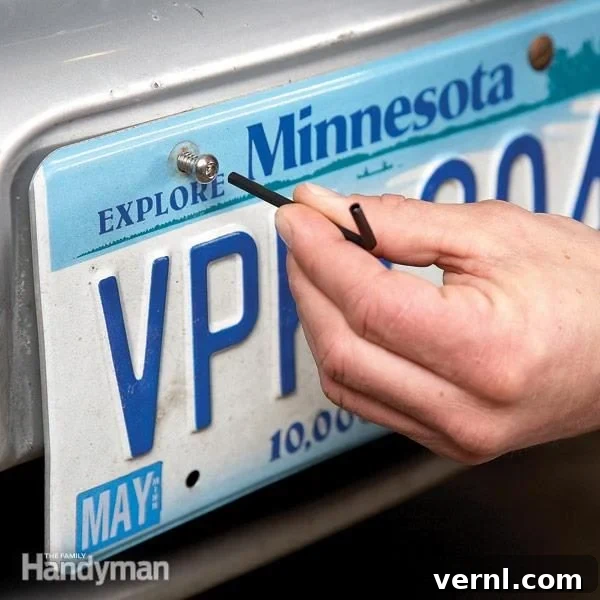
One of the most effective and affordable deterrents is installing a set of license plate security screws. These specialized fasteners are designed to make plate removal difficult for thieves who typically rely on quick, easy access. The screws are inexpensive, straightforward to install, and come in various styles to match your vehicle’s aesthetics.
- Types of Security Screws: Many kits include unique head designs (e.g., star, hex, or proprietary patterns) that require a specific security wrench, which is provided with the kit. Others may feature free-spinning caps that prevent gripping with standard tools.
- Installation Process: Typically, these screws replace your existing license plate fasteners. Ensure you choose a kit that is compatible with your vehicle’s make and model. Security screw kits often come with the necessary security wrench; remember to store it in a safe, memorable place, as you’ll need it when it’s time to change your plates upon expiration or sale.
- Benefits: Beyond the obvious deterrent, these screws offer peace of mind, knowing you’ve taken a tangible step to protect your vehicle. They are a small investment for significant protection.
Beyond Screws: Additional Prevention Tips
While security screws are paramount, combining them with other preventative habits can further fortify your vehicle’s defenses.
- Strategic Parking: Always park your vehicle in well-lit, visible areas, preferably under surveillance cameras if available. Parking in a garage or a busy public space can deter thieves who prefer to operate in isolation and darkness.
- Regular Inspections: Make it a habit to quickly check your license plates whenever you approach your vehicle. A quick glance can help you spot any signs of tampering or loosening before it’s too late.
- Vehicle Security Systems: While primarily designed to prevent whole-vehicle theft or break-ins, a robust alarm system can indirectly deter thieves attempting to steal components, including license plates, as the alarm draws attention.
- Community Awareness: Be an active participant in your community. Report any suspicious activity, such as individuals loitering around vehicles or attempting to tamper with license plates, to local law enforcement.
Immediate Actions: What to Do If Your License Plate is Stolen
Despite your best efforts, license plate theft can still occur. Knowing the immediate and crucial steps to take can mitigate potential damages and expedite the resolution process. Swift action is vital to protect yourself from legal and financial ramifications.
1. Contact Law Enforcement Agency
As soon as you discover your license plate missing, contact your local police department or sheriff’s office to report the theft. This is the most critical first step.
- Provide Details: Be prepared to provide your vehicle’s make, model, year, VIN (Vehicle Identification Number), and the last known location of your license plate.
- Request a Police Report Copy: Always request a copy of the official police report and its case number. This document is invaluable. It serves as official proof of theft, which you will need for your insurance company, the Department of Motor Vehicles (DMV), and any potential legal issues that may arise if your stolen plate is used in criminal activity.
2. Inform Your Auto Insurer
After filing a police report, notify your auto insurance provider. While a stolen license plate itself might not always be covered for direct replacement costs, your insurer can offer guidance on specific actions you need to take.
- Policy Coverage: Inquire if your policy covers the cost of a replacement plate or any associated fees. Even if it doesn’t, informing them creates a record that could be helpful if the plate is linked to an accident or other insured event.
- Expert Advice: Your insurer may also offer advice on monitoring for potential identity theft or fraudulent activities linked to your vehicle.
3. Engage with the Department of Motor Vehicles (DMV) or Equivalent Agency
You will need to apply for a replacement license plate through your state’s Department of Motor Vehicles or its equivalent agency. This process ensures your vehicle remains legally registered and that you receive new, legitimate tags.
- Application Process: Be ready to present your police report, proof of vehicle ownership, and identification.
- New Plate Number: The DMV will typically issue you a new license plate with a different number. This is crucial for preventing further misuse of your old, stolen plate and significantly reduces the risk of identity theft associated with the original number.
- Temporary Tags: In some cases, the DMV may issue temporary tags to allow you to legally operate your vehicle while awaiting your new plates.
4. Monitor Your Financial Accounts and Personal Information
A stolen license plate, while not direct identity theft, can be a precursor or component of broader fraudulent activities. Vigilance is key to protecting your financial and personal well-being.
- Credit Reports: Regularly check your credit reports for any suspicious activity or new accounts opened in your name. You can obtain free copies of your credit report from the three major credit bureaus annually.
- Bank and Credit Card Statements: Scrutinize your bank and credit card statements for unauthorized transactions.
- Mail and Online Accounts: Be alert to any unusual mail (e.g., traffic tickets or collection notices for fines you didn’t incur) or suspicious online activity related to your personal information.
- Consider Fraud Alerts: You might consider placing a fraud alert on your credit files to make it more difficult for identity thieves to open new accounts in your name.
5. Document Everything
Maintain a thorough record of all communications, police reports, DMV paperwork, and insurance claims. This documentation will be invaluable if you need to contest fines, clear your name, or deal with any prolonged legal issues.
Addressing Broader Auto Theft Concerns: Beyond License Plates
License plates are not the only target for opportunistic thieves. Car components, particularly those that are valuable, easy to remove, and in high demand on the black market, are frequently stolen. Understanding these targets can help you implement broader vehicle security measures.
High-Value Components: What Thieves Crave
- Catalytic Converters: These exhaust system components are highly prized for the precious metals they contain (platinum, palladium, rhodium). Their theft is rampant because they can be removed quickly with simple tools, leading to significant repair costs for victims. Consider catalytic converter shields or etching your VIN onto the converter.
- Airbags: Airbags, especially those for the driver’s side, are surprisingly easy to steal and fetch a good price on the black market due to their high replacement cost and demand from repair shops that source illicit parts.
- Luxury Car Parts: Expensive emblems (Mercedes, BMW, Lexus), high-end navigation systems, infotainment units, and even side mirrors on luxury vehicles are often targeted. These items have a high resale value and are relatively easy for experienced thieves to strip.
- Third-Row Seats: Often found in SUVs and minivans, third-row seats can be removed surprisingly quickly, especially those designed for easy folding or removal by owners. They are in demand for those seeking replacement parts or additional seating without the cost of a new car purchase.
Quick-Grab Items and External Components
- Spare Tires: Particularly those mounted externally on SUVs or trucks, spare tires are a quick and easy target. Secure them with a lock.
- Exterior Lamps: Headlights and taillights, especially modern LED units, can be surprisingly expensive to replace and are sometimes stolen for resale or to repair damaged vehicles.
- Registration Stickers: Similar to license plates, these small but important identifiers are peeled off for fraudulent use, making it harder for law enforcement to identify stolen vehicles or those with expired registrations.
- Truck Tailgates: Melanie Musson, an auto industry expert with CarInsurance.org, points out, “They also steal tailgates from trucks because they’re easy to remove. Since tailgates are frequently damaged, there’s a higher demand for tailgates in good condition.” Truck owners should consider tailgate locks.
Securing Your License Plate Tags and Stickers
Beyond the physical license plate, the small registration tags or stickers affixed to them are also targets for thieves who wish to avoid paying registration fees or to falsely legitimize stolen plates. Protecting these tiny but important items is another layer of vehicle security.
Physical Deterrents for Stickers
- Score the Sticker with a Razor Blade: A clever technique is to score the sticker after application using a razor blade. Make several cuts across the sticker, essentially slicing it into multiple pieces. This makes it impossible for a thief to peel off the sticker in one clean piece, effectively rendering it useless for transfer.
- Adhesive Reinforcement: Chris “Moose” Pyle, an automotive expert with JustAnswer, recommends cleaning the area thoroughly where the sticker will be applied and then adding a dab of strong adhesive like Krazy Glue or super glue underneath before pressing the sticker down. This makes it incredibly difficult to peel off without tearing it apart.
Environmental Deterrents
- Strategic Parking: Just as with preventing full plate theft, parking in secure, well-lit, and high-traffic areas can discourage thieves who rely on stealth and darkness to operate unnoticed.
- Regular Checks: Periodically inspect your registration sticker to ensure it’s still securely attached and hasn’t been tampered with.
By implementing these multi-faceted strategies, from securing your entire license plate to safeguarding the small registration sticker, you can significantly bolster your vehicle’s protection against common auto crimes. Staying informed and proactive is your best defense.
About the Experts
This comprehensive guide incorporates insights from leading experts in the automotive and insurance industries, providing you with reliable and actionable advice.
- Melanie Musson is a recognized authority in the auto industry, serving as an expert with CarInsurance.org for nearly a decade. Her deep understanding of vehicle trends and insurance implications offers invaluable perspective.
- Chris “Moose” Pyle brings a wealth of hands-on experience, being a master-certified technician with over 20 years of automotive expertise. Since 2006, he has also been a trusted expert for JustAnswer, a premier expert on-demand platform.
- Alex Black is the Chief Marketing Officer at EpicVIN. With more than 15 years as a car expert, having worked across various sectors including car auctions and vehicle history providers, he possesses extensive knowledge of vehicle-related issues and consumer concerns.