Understanding and Managing Vermiculite Insulation: A Comprehensive Guide to Asbestos Risks and Safe Removal
If your home was constructed before 1990, there’s a significant possibility it contains vermiculite insulation, a material once widely utilized in attics, walls, and other structural elements. It is crucial to understand that most vermiculite insulation contains asbestos, a naturally occurring fibrous mineral known to pose severe health risks. Exposure to asbestos fibers can lead to debilitating and often fatal diseases such as lung cancer, mesothelioma, and asbestosis. This comprehensive guide will equip you with essential knowledge regarding vermiculite insulation, its inherent dangers, identification, safe handling protocols, and available solutions to protect your home and family.
What Is Vermiculite Insulation? Unpacking the Mineral and Its History
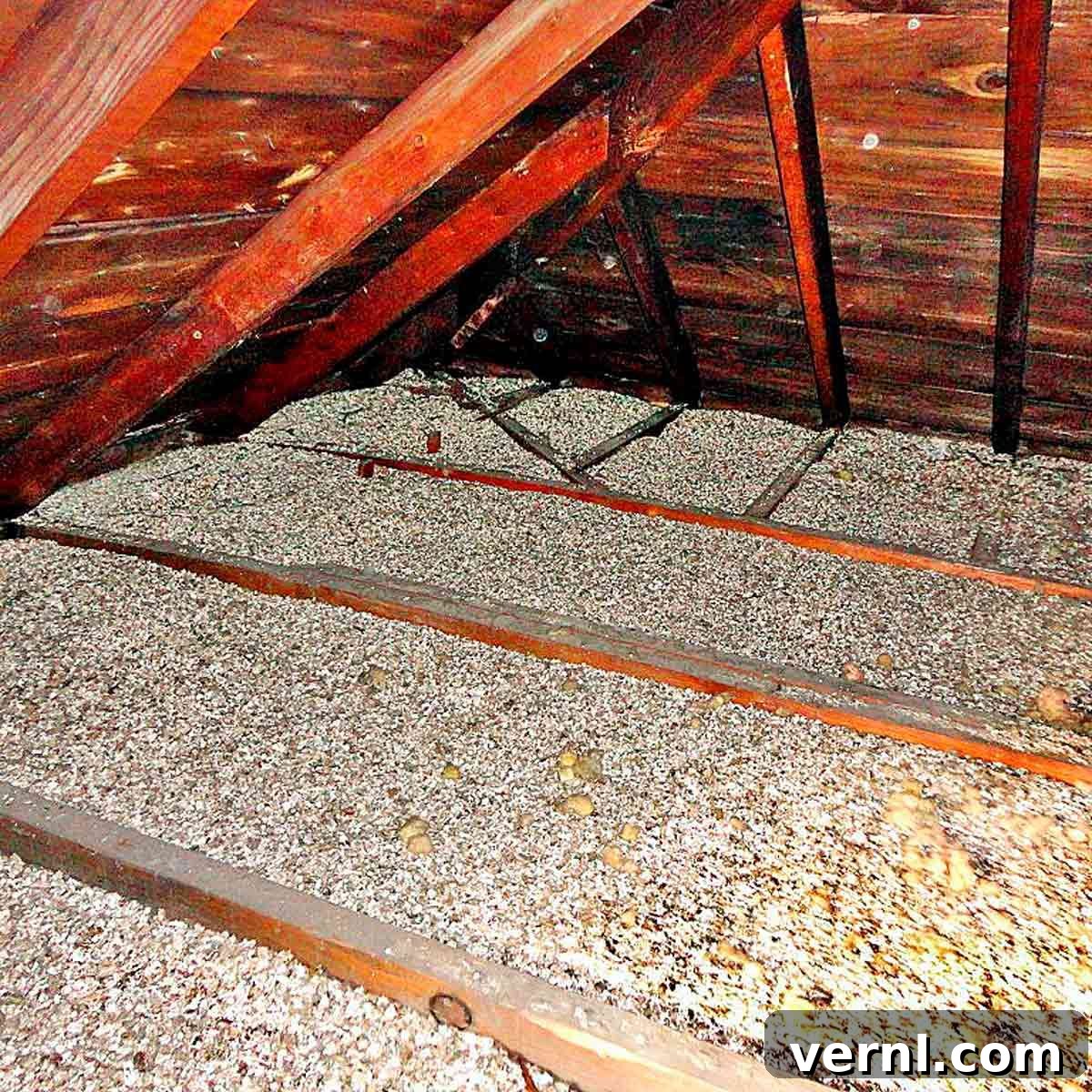
Vermiculite is a naturally occurring, hydrous phyllosilicate mineral that possesses a unique layered structure, similar to mica. When subjected to high temperatures, these layers expand dramatically, a process known as exfoliation. This expansion creates lightweight, fire-resistant, and highly insulative particles. The resulting material has a distinctive pebble-like, accordion-shaped texture and typically presents in colors ranging from silver-gold to light brown or grayish-brown.
Its exceptional thermal and fire-resistant properties made vermiculite an attractive and seemingly ideal material for insulation purposes. During the mid-20th century, it was extensively adopted in both residential and commercial construction across North America, becoming a common sight in attics, wall cavities, and even some concrete mixtures due to its insulating capabilities and ease of installation as a loose-fill product.
A staggering statistic reveals the root of the widespread contamination: an estimated 85% of all vermiculite insulation sold in the United States originated from a single mine in Libby, Montana. This mine, operated by W.R. Grace and Company, produced vermiculite under the brand name Zonolite. Tragically, the vermiculite extracted from Libby was heavily contaminated with naturally occurring amphibole asbestos, a particularly hazardous form of asbestos. Consequently, if your home contains vermiculite insulation, it is paramount to operate under the assumption that it is likely contaminated with asbestos and to adhere to strict safety precautions.
Homeowners should familiarize themselves with the appearance of insulation in their attics and other accessible areas. Vermiculite typically exhibits a “pebbly” or “granular” appearance, often with a silvery-gold or grayish-brown hue. Unlike some other insulation types, it does not typically appear fibrous or fluffy. When disturbed, it can look like small, shiny, expanded pebbles. If you observe insulation matching this description, or if there is any uncertainty, prioritizing professional testing by a qualified asbestos professional is the safest course of action.
Where Was Vermiculite Insulation Commonly Used? Identifying Its Presence in Your Home
The ubiquity of vermiculite insulation in older homes stems from its widespread adoption during a period when energy efficiency became a growing concern. Primarily, vermiculite was installed as loose-fill insulation in attics, where it could be easily poured or blown into place, conforming to irregular spaces and providing a cost-effective thermal barrier. However, its application extended beyond just attics.
- Attics: This is the most common location. Vermiculite would be spread loosely across the attic floor, between joists, or over existing insulation.
- Wall Cavities: It was also commonly poured into hollow spaces within walls to provide additional insulation.
- Crawl Spaces: In some homes, vermiculite was used to insulate crawl spaces, offering a barrier against moisture and temperature fluctuations from the ground.
- Concrete Block Fills: Vermiculite was sometimes used to fill the hollow cores of concrete blocks in masonry construction, enhancing their insulating properties.
- Soundproofing: Due to its granular nature, it was occasionally integrated into building materials for sound attenuation.
- Fireproofing: Its inherent fire-resistant qualities also led to its use in certain fireproofing applications around structural steel beams or in fire doors.
The peak period for vermiculite insulation installation spanned from the 1940s through the late 1980s, gradually tapering off as concerns about asbestos contamination grew. Many older homes across North America, especially those in regions experiencing colder climates where robust insulation was a high priority, are still likely to contain this material. Identifying its presence is the first critical step in managing the potential risks it poses.
Why Is Vermiculite Insulation a Major Health Hazard? The Perils of Asbestos Exposure
The primary reason vermiculite insulation is considered a significant health hazard is its almost certain contamination with asbestos, particularly from the Libby mine. Unlike other forms of asbestos sometimes found in building materials that may be encapsulated or bound within a matrix (like certain floor tiles or siding), the asbestos fibers within loose-fill vermiculite insulation are not encapsulated. This means they are extremely friable – easily crumbled or reduced to powder – and highly susceptible to becoming airborne if the insulation is disturbed.
Once asbestos fibers become airborne, they can be inhaled, where their microscopic, durable nature allows them to penetrate deep into lung tissue. These fibers can remain embedded in the body for decades, leading to severe and often fatal illnesses. What makes the situation with vermiculite particularly concerning is the type of asbestos predominantly found within it: amphibole asbestos. This category includes tremolite, actinolite, and richterite, which are recognized as significantly more hazardous than chrysotile asbestos, the most common type historically used in the U.S. and often referred to as “white asbestos.”
Amphibole asbestos fibers are typically longer, thinner, and more needle-like than chrysotile fibers. Their physical characteristics make them more likely to be inhaled deeply and more difficult for the body to expel. Once lodged in the delicate tissues of the lungs and pleura (the lining of the lungs), these fibers can cause chronic inflammation, scarring, and genetic damage, leading to a range of devastating asbestos-related diseases:
- Mesothelioma: A rare and aggressive cancer that affects the lining of the lungs, abdomen, or heart. It is almost exclusively caused by asbestos exposure and has a very poor prognosis.
- Lung Cancer: Asbestos exposure significantly increases the risk of developing several types of lung cancer, often in conjunction with other risk factors like smoking.
- Asbestosis: A chronic, non-cancerous respiratory disease characterized by scarring of the lung tissue, leading to shortness of breath, coughing, and permanent lung damage.
- Pleural Plaques and Thickening: Non-malignant conditions where the lining of the lungs thickens and hardens, which can impair lung function.
- Other Cancers: Some studies suggest a link between asbestos exposure and an increased risk of cancers of the larynx, pharynx, stomach, colon, and rectum.
The latency period for these diseases can be incredibly long, often 20 to 50 years after the initial exposure, meaning individuals exposed decades ago may only now be experiencing symptoms. This makes understanding and mitigating the risks of vermiculite insulation an urgent matter for anyone living in an older home.
Navigating Weak Federal Guidelines on Vermiculite Asbestos Risk
The potential dangers of vermiculite insulation are further complicated by the current regulatory framework in the United States. While the Environmental Protection Agency (EPA) advises homeowners to assume vermiculite contains asbestos and to leave it undisturbed, there’s a critical caveat in testing and classification that can create a false sense of security.
Under current federal guidelines, a material is legally classified as “asbestos-containing material” (ACM) only if laboratory analysis reveals an asbestos content greater than 1% by weight. If the asbestos concentration falls below this 1% threshold, it is not officially considered an ACM, and specific asbestos abatement regulations may not apply. This classification, however, is deeply misleading and potentially dangerous when it comes to vermiculite.
The problem arises because even minute quantities of asbestos fibers can pose a serious health hazard. A major class-action lawsuit specifically concerning Zonolite vermiculite insulation brought to light scientific studies demonstrating that vermiculite samples with less than 1% asbestos content can still release significant amounts of airborne asbestos fibers when disturbed. These studies concluded that, from a health risk perspective, such products should unequivocally be considered ACMs, regardless of the numerical threshold.
Public health authorities, such as the Minnesota Department of Health, unequivocally state that there is no known safe threshold for asbestos exposure. Even low levels of exposure can initiate the cellular changes that may lead to serious health problems decades later. This scientific consensus starkly contrasts with the federal 1% guideline, leaving homeowners in a precarious position. The guideline might mistakenly imply that vermiculite testing below 1% asbestos makes it safe for standard removal or renovation, which is far from the truth. This discrepancy underscores the critical importance of a precautionary approach to all vermiculite insulation.
What To Do If You Have Vermiculite in Your Home: Prioritizing Safety
Discovering vermiculite insulation in your home can be unsettling, but knowing the right steps to take is crucial for protecting your family’s health. The paramount rule is simple: **Do not disturb it.** Any activity that agitates the vermiculite—such as sweeping, vacuuming, remodeling, or even storing items on top of it—can release harmful asbestos fibers into the air, increasing the risk of exposure.
The first recommended step is to have the material professionally tested for asbestos. While testing can confirm the presence of asbestos, it’s essential to understand its limitations. A certified asbestos inspector will collect samples in a controlled manner, minimizing disturbance. These samples are then sent to an accredited laboratory for analysis. In many regions, like Minnesota, insulation contractors routinely test vermiculite before proceeding with removal projects. It is common for these tests to indicate an asbestos content of less than 1%.
This “less than 1%” result often means that, according to legal definitions, asbestos abatement contractors are not *legally required* to follow stringent asbestos removal protocols. However, this legal technicality does not negate the health risk. The Zonolite Attic Insulation Trust, a key authority on this issue, emphatically states that “the presence of vermiculite is tantamount to the presence of asbestos.” They emphasize that even if tests show minimal asbestos content by weight, the loose, friable nature of vermiculite means that standard vacuuming methods or even careful general contractor removal can still release dangerous concentrations of airborne asbestos fibers.
For maximum safety and peace of mind, homeowners should always prioritize hiring certified asbestos abatement professionals to handle any vermiculite insulation removal. These specialists are trained, equipped, and legally mandated to follow strict containment and removal procedures designed to minimize fiber release and protect occupants. Attempting a do-it-yourself removal or entrusting it to a non-certified general contractor, even with a “clean” test result, is a significant gamble with long-term health consequences.
Professional Removal Options: A Step-by-Step Guide to Safe Asbestos Abatement
Given the severe health risks associated with asbestos exposure, professional vermiculite insulation removal is not just recommended, but highly advised over any do-it-yourself (DIY) attempt. Certified asbestos abatement contractors adhere to stringent protocols to ensure the safe and complete removal of hazardous materials. Here’s a detailed breakdown of what homeowners can expect during this critical process:
- Initial Assessment and Planning: The process begins with a comprehensive inspection of your property by a certified asbestos abatement contractor. They will confirm the presence and extent of vermiculite insulation, assess potential contamination areas, and develop a detailed removal plan. This plan includes evaluating access points, determining necessary containment zones, and outlining specific safety procedures. They will also discuss local regulations and disposal requirements specific to your area.
- Containment Setup: Before any removal work commences, the work area must be meticulously sealed off from the rest of your home. This is achieved using heavy-duty plastic sheeting, creating airtight barriers around doors, windows, and ventilation systems. Specialized negative air pressure machines equipped with High-Efficiency Particulate Air (HEPA) filters are then deployed. These units create a pressure differential that ensures any airborne fibers within the contained area are captured and prevented from escaping into other parts of the house, effectively preventing cross-contamination. Workers will establish decontamination zones for entry and exit.
- Proper Removal Techniques: Trained and certified workers, fully equipped with specialized personal protective equipment (PPE), including full-face respirators, disposable coveralls, and gloves, will carefully remove the vermiculite. Instead of standard vacuums, which can aerosolize fibers, they use HEPA-filtered vacuum systems specifically designed to trap microscopic asbestos particles. In some cases, wetting agents may be applied to the insulation to suppress dust and reduce fiber release during removal. The material is meticulously shoveled, scraped, or vacuumed into heavy-duty, sealed asbestos waste bags.
- Hazardous Waste Disposal: Once collected, the removed vermiculite and asbestos-contaminated debris must be properly double-bagged, sealed, and clearly labeled according to strict local, state, and federal hazardous waste regulations. These sealed bags are then transported by licensed hazardous waste carriers to approved disposal sites that are equipped to handle asbestos-containing materials safely and legally. Proper documentation, including waste manifests, is maintained throughout this process.
- Post-Removal Cleaning and Testing: After all visible vermiculite has been removed, the entire work area undergoes a thorough cleaning, often involving HEPA vacuuming and wet wiping of all surfaces. This is followed by a critical step: post-removal air quality testing. An independent, accredited laboratory collects air samples to ensure that airborne asbestos fiber concentrations have fallen below acceptable clearance levels. Only after these tests confirm the area is safe for re-occupancy will the containment barriers be removed, and the property deemed clear.
Investing in professional removal safeguards your family’s health and prevents future liabilities associated with improper asbestos handling.
Financial Assistance for Vermiculite Insulation Removal: Easing the Burden
The cost associated with professional asbestos abatement and re-insulation can be a significant concern for homeowners. Fortunately, financial assistance programs exist to help alleviate this burden, particularly for those affected by Zonolite Attic Insulation.
The **Zonolite Attic Insulation Trust (ZAIT)**, established in 2014, is a vital resource for homeowners grappling with the presence of Zonolite in their properties. This trust was created to provide financial relief for a portion of the costs incurred during the removal and re-insulation of homes containing Zonolite Attic Insulation (ZAI). The establishment of the trust followed years of litigation and recognition of the widespread health risks posed by the contaminated vermiculite from the Libby mine.
Eligible homeowners can apply for reimbursement for a significant portion of their expenses. Specifically, the Trust typically offers reimbursement for 55% of documented removal and re-insulation costs, up to a maximum payout of $4,125. While this amount may not cover the entirety of the project, it represents substantial financial aid that can make professional abatement more accessible for many families.
To qualify for assistance, homeowners must demonstrate that their insulation is Zonolite Attic Insulation (ZAI) through professional testing or historical documentation, and that it has been professionally removed. The claims process typically involves submitting an application, providing proof of residency, detailed contractor invoices for removal and replacement, and laboratory test results confirming ZAI. It’s highly recommended that any homeowner with suspected vermiculite insulation investigates their eligibility for this program. Even if your insulation tests below the 1% asbestos threshold, it’s still advisable to treat it as hazardous and explore abatement options, and the Trust’s assistance can be invaluable.
For more detailed information on eligibility, the claims process, and to access application forms, homeowners are encouraged to visit zonoliteatticinsulation.com. This resource is dedicated to helping homeowners safely address the legacy of Zonolite insulation.
Safe Insulation Alternatives: Upgrading Your Home for Health and Efficiency
Once vermiculite insulation has been safely and professionally removed, homeowners have the opportunity to replace it with modern, safe, and highly efficient insulation alternatives. Selecting the right replacement not only eliminates a health hazard but also significantly improves your home’s energy performance, comfort, and indoor air quality. Here are several popular and effective options:
-
Fiberglass Batts or Blown-in Fiberglass:
This is arguably the most common and cost-effective replacement option. Fiberglass insulation comes in two primary forms: pre-cut batts (blankets) or loose-fill (blown-in). It provides excellent thermal resistance (R-value) at a reasonable cost and is widely available. Fiberglass is non-combustible and resistant to moisture and mold growth when properly installed. The blown-in variant is particularly effective for filling irregular spaces and cavities, creating a seamless thermal barrier.
-
Cellulose Insulation:
Made primarily from recycled paper products, such as newspapers, treated with fire retardants, cellulose insulation is an environmentally friendly choice. It offers strong thermal performance, often boasting an R-value comparable to or higher than fiberglass, and is excellent at air sealing due to its dense packing. It is particularly effective in existing wall cavities and attics. Its dense nature also contributes to good soundproofing qualities.
-
Mineral Wool (Rock Wool or Slag Wool):
Composed of molten rock or industrial slag spun into fine fibers, mineral wool is renowned for its outstanding fire resistance and superior soundproofing capabilities, making it a robust and safe choice. It maintains its insulating properties even when damp, making it suitable for various climates. Mineral wool is available in both batt and loose-fill forms and is a durable, long-lasting insulation material.
-
Spray Foam Insulation (Open-cell and Closed-cell):
Though generally more expensive upfront, spray foam insulation delivers superior air sealing and a very high R-value per inch, making it one of the most energy-efficient options. It expands upon application, filling every crevice and gap, thereby drastically reducing drafts and moisture infiltration. Open-cell foam is lighter and more flexible, while closed-cell foam is denser, offers higher R-value, and provides structural rigidity. It’s an excellent choice for achieving optimal thermal envelopes and reducing heating/cooling costs significantly.
-
Natural Fiber Insulations (Hemp, Cotton, Sheep’s Wool, Denim):
These eco-friendly and sustainable options are gaining popularity, especially among homeowners seeking non-toxic and renewable building materials. Hemp, cotton (often recycled denim), and sheep’s wool provide good thermal performance and contribute to healthier indoor air quality due to their natural composition and lack of harmful chemicals. While typically more expensive than conventional options, they offer excellent breathability and moisture management properties.
When selecting a replacement insulation, it’s crucial to look beyond just the R-value, which measures thermal resistance. Factors such as moisture resistance, environmental impact of production, overall cost (including installation), and suitability for your specific climate and home structure should all play a role in making the best choice. Consulting with a qualified insulation professional is highly recommended; they can assess your home’s unique needs, provide expert recommendations, and ensure proper installation for maximum effectiveness and safety.
About the Author
Reuben Saltzman has been a highly respected home inspector since 1997 and currently serves as the president of Structure Tech, a leading home inspection company based in St. Louis Park, MN. With decades of hands-on experience in the field, Reuben has encountered countless instances of vermiculite insulation in older homes across the region. This extensive practical knowledge affords him unique insights into the inherent risks associated with vermiculite and the most effective mitigation strategies, making him a trusted authority on the subject.
Frequently Asked Questions (FAQs) About Vermiculite Insulation
How do I know if I have vermiculite insulation in my home?
Identifying vermiculite insulation typically involves observing its unique appearance. It looks like loose, pebble-like granules that are distinctly greyish-brown or silvery-grey, often with a subtle shimmer. The individual particles usually range from 1/4 to 1/2 inch in size and have a characteristic accordion-like or layered structure. Unlike fibrous cellulose or fluffy fiberglass insulation, vermiculite is shiny and reflective when illuminated and pours much like small pebbles. It is most commonly found in attics as loose-fill, but can also be present in wall cavities and crawl spaces.
If your home was constructed between the 1940s and 1990s, the likelihood of it containing vermiculite insulation is significantly higher. However, visual identification alone is not sufficient for definitive confirmation or to rule out asbestos contamination. If you suspect its presence, or are undertaking renovations in an older home, the safest and most responsible course of action is to consult a licensed home inspector or a certified asbestos abatement contractor for a professional assessment and testing. They can confirm its identity and whether it contains asbestos safely.
Does all vermiculite contain asbestos?
While not every single particle of vermiculite ever mined or used contains asbestos, the vast majority of vermiculite insulation installed in residential and commercial buildings in North America is contaminated. It is estimated that 70% to 80% of all vermiculite insulation used in the U.S. originated from the now-infamous W.R. Grace mine in Libby, Montana. This particular mine was a significant source of amphibole asbestos, which co-occurred naturally with the vermiculite.
Due to the severe and irreversible health risks associated with asbestos exposure, coupled with the potential unreliability of testing (e.g., sampling errors, localized asbestos concentrations), regulatory bodies and health authorities, including the Environmental Protection Agency (EPA), strongly recommend a precautionary approach. The consensus is to **assume all vermiculite insulation contains asbestos** and treat it as such. This means taking proper precautions to avoid disturbance and seeking professional help for any assessment or removal, regardless of preliminary visual inspections or even initial test results that might show low levels.
How can I safely live with vermiculite insulation if immediate removal is not an option?
If immediate professional removal of vermiculite insulation is not feasible, or if you choose to defer it, stringent safety precautions are absolutely essential to minimize the risk of asbestos exposure. Remember, the key is to prevent any disturbance of the material. Here are critical guidelines to follow:
- Avoid disturbing the insulation at all costs: This is the most crucial rule. Never sweep, vacuum, or move vermiculite. Do not allow children or pets into areas where vermiculite is exposed. Avoid any activities that might agitate the insulation, such as DIY repairs or renovations that could cause vibrations or direct contact.
- Seal cracks and openings: Ensure that all cracks, gaps, and openings between the attic (or walls/crawl spaces) and your living areas are meticulously sealed. This includes sealing around light fixtures, plumbing pipes, electrical outlets, and ventilation ducts. Use caulk, expanding foam, or other appropriate sealing materials to create a barrier that prevents asbestos fibers from migrating into occupied spaces.
- Do not store items in attic spaces containing vermiculite: Using an attic with vermiculite insulation for storage significantly increases the likelihood of disturbing the material as you move items around. Keep these spaces clear and inaccessible.
- Keep children and pets away from exposed vermiculite: Children and pets are particularly vulnerable due to their smaller lungs and tendency to explore. Ensure strict boundaries are maintained for any areas containing vermiculite.
- Avoid DIY renovations or major projects: Any renovation that involves opening up walls, ceilings, or disturbing the attic floor can inadvertently agitate vermiculite. Always consult professionals who are trained in asbestos handling before commencing any work that might impact areas with suspected vermiculite.
- Consider professional encapsulation (as a temporary measure): In some cases, a certified asbestos professional might be able to encapsulate the vermiculite insulation using specialized sealants or barriers. This method aims to “seal in” the fibers and prevent their release. However, encapsulation is generally considered a temporary or interim solution, not a permanent one, and should only be performed by experts.
- Improve indoor air quality: While not a direct solution, using HEPA-filtered air purifiers in living spaces and ensuring proper ventilation can help capture some airborne particulates, though it won’t eliminate the source of contamination.
- Schedule regular inspections: Periodically, or if you notice any changes in the insulation, have a professional inspect the area to ensure the vermiculite remains undisturbed and that your protective measures are intact.
It is crucial to emphasize that these precautions are risk reduction strategies, not elimination. For maximum safety and a permanent solution, consulting with a certified asbestos professional remains the top recommendation for comprehensive assessment and eventual removal of vermiculite insulation.
Sources
EPA: United States Environmental Protection Agency (https://www.epa.gov/)
Minnesota Department of Health: (https://www.health.state.mn.us/)
Zonolite Attic Insulation Trust: (https://www.zonoliteatticinsulation.com/)