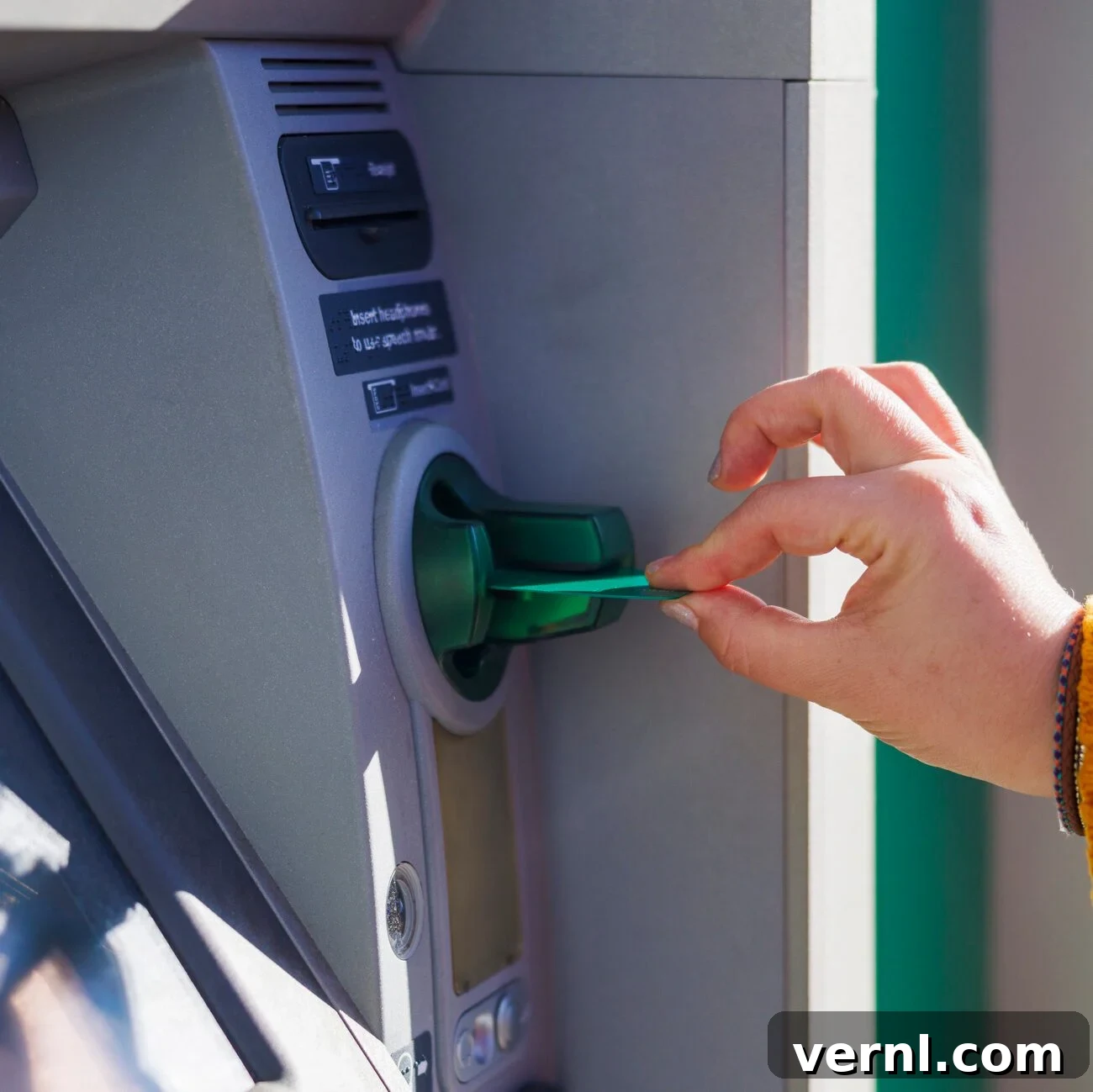
In an increasingly digital world, the convenience of credit and debit cards has become indispensable for daily transactions. Yet, this convenience comes with inherent risks, one of the most insidious and rapidly growing being credit card skimming. Many consumers, myself included, may not fully grasp the threat until a close encounter or a cautionary tale brings it to light. My initial awareness stemmed from a simple, yet profoundly impactful, piece of advice from my sister: “Avoid self-checkout registers that don’t accept mobile payments like Apple Pay.” This seemingly small tip unveiled a widespread problem that has impacted a significant and growing number of Americans.
Credit card skimming is a sophisticated form of financial fraud where criminals surreptitiously steal your card information from compromised payment terminals. These devices can be found virtually anywhere you swipe or insert a card: automated teller machines (ATMs), point-of-sale (POS) systems at retail outlets, and even fuel pumps at gas stations. The scale of this problem is not only substantial but also escalating at an alarming rate. According to recent data from FICO, debit card compromises due to skimming surged by a staggering 96 percent year-over-year in 2023, resulting in the identification of over 315,000 compromised cards. This stark statistic underscores the critical need for consumers to understand and actively protect themselves against this pervasive threat.
Given the ubiquity of card usage, nearly every consumer is a potential target for skimmers. However, knowledge and vigilance are powerful tools in mitigating this risk. This comprehensive guide aims to arm you with essential information, providing a clear understanding of what credit card skimmers are, how to identify and avoid them, and the crucial steps to take if you suspect your card has been compromised. By understanding these mechanisms and adopting proactive habits, you can significantly enhance your financial security and protect yourself from becoming another statistic in the rising tide of skimming fraud.
Understanding Credit Card Skimmers: The Invisible Threat
At its core, a credit card skimmer is an illicit device designed to steal your credit or debit card data during a legitimate transaction. These devices are masterfully crafted to be discreet, often blending seamlessly with the original payment terminal components, making them incredibly difficult for the average user to detect. Paige Hanson, a distinguished consumer and digital safety expert and co-founder of SecureLabs, defines them succinctly: “Skimmers are devices that fraudsters attach to payment terminals to steal credit and debit card data. You generally cannot see them. They usually are installed in high-traffic and unmonitored areas like ATMs and gas station pumps. There are cases where criminals also install tiny cameras or fake keypads to capture your PIN number, too.” This definition highlights the deceptive nature of skimmers and the common locations where they are deployed.
Criminals meticulously choose locations for skimmer installation that offer both high transaction volume and minimal oversight. ATMs, particularly those in freestanding kiosks or less supervised areas, are prime targets. Gas pumps, especially those at unattended stations or during off-peak hours, also present ample opportunities for fraudsters. Similarly, POS systems in busy retail environments, where employees may be distracted or terminals are easily accessible, are vulnerable. Once installed, these devices capture sensitive information, primarily from the magnetic stripe on the back of your card, which includes your card number, expiration date, and cardholder name. To complete their illicit data haul, criminals frequently pair skimmers with additional mechanisms to capture your Personal Identification Number (PIN), such as tiny pinhole cameras hidden above the keypad or sophisticated fake keypad overlays that record your keystrokes.
The methods of skimmer deployment vary based on the target terminal. For instance, the FBI reports that skimmers at fuel pumps are often integrated into the internal wiring of the dispenser, making them virtually invisible from the outside. These internal skimmers require more technical skill to install but are exceptionally effective due to their stealth. ATM skimming devices, on the other hand, frequently manifest as external overlays that fit directly over the card reader slot, or as thin, undetectable films over the keypad. Pinhole cameras are strategically placed to record users entering their PINs, often disguised as part of the ATM’s facade. Even freestanding ATMs, common in convenience stores, are susceptible, with skimmers sometimes fitted along exposed wires. POS skimmers, including those targeting electronic benefits transfer (EBT) systems, are typically devices that snugly fit over the terminal’s card reader, capturing data before it’s processed by the legitimate system. While many skimmers require criminals to physically retrieve the device to download the stolen data, more advanced versions can transmit information wirelessly, allowing fraudsters to collect data remotely and reducing their risk of detection.
The stolen data is then used to create cloned cards, which can be used for fraudulent purchases, or to directly access funds from linked bank accounts in the case of debit card skimming. The consequences for victims can range from minor inconveniences to significant financial losses and the arduous process of identity theft recovery. Understanding these intricate methods of operation is the first crucial step in developing effective defense strategies.
How to Spot a Credit Card Skimmer: Vigilance is Your Best Defense
Detecting a credit card skimmer requires a keen eye and a proactive approach, as these devices are meticulously engineered to remain inconspicuous. They are designed to blend seamlessly with the original equipment, making them incredibly easy to overlook if you’re not actively searching for anomalies. However, by knowing what to look for, you can significantly increase your chances of identifying a compromised terminal before it’s too late.
When approaching any payment terminal—be it an ATM, gas pump, or POS machine—make it a habit to perform a quick visual and physical inspection. Start by looking for anything that appears out of place or loosely attached. Examine the card reader slot itself: does it look unusually bulky, slightly misaligned, or different from other similar terminals nearby? Check for any suspicious cameras, especially small pinhole cameras positioned near the keypad, which might be recording your PIN. Fraudsters are adept at disguising these, so look for tiny, unfamiliar holes or bumps on the terminal’s housing.
Beyond visual inspection, a physical check is paramount. Gently tug and wiggle parts of the machine that typically shouldn’t move. This includes the card reader slot, the keypad, and any covers or panels around them. If any component, such as a keypad overlay or an external card reader attachment, feels loose, flimsy, or easily detachable, it’s a major red flag. Paige Hanson emphasizes this challenge: “Depending on the skill set of the fraudster and the skimmer they are using, it’s very hard to tell if the machine you’re using is compromised because the skimmer is installed inside the machine. There are still ‘overlay skimmers,’ so you’d be able to tell the place you put your card into is loose. Also, the keypad may feel off; if it feels or looks raised, then likely there’s a fake overlay on the keypad.”
Special attention should be paid to the keypad. A genuine keypad should feel solid and integrated into the machine. If it feels spongy, unresponsive, or appears to be sitting unnaturally high above the console, it could be a fake overlay designed to capture your PIN. Compare the keypad’s color, texture, and font with the rest of the machine; any inconsistencies could indicate a skimmer. At gas pumps, check the seal on the dispenser cabinet. Many modern pumps have security seals or tamper-evident tape that, if broken or missing, suggest the pump has been illegally accessed. Always trust your gut feeling: if something feels “off” about a terminal, it’s always safer to choose another one or use a different payment method.
How to Prevent Credit Card Skimming: Proactive Measures for Enhanced Security
Preventing credit card skimming is a multi-faceted approach that combines environmental awareness, smart payment choices, and diligent account monitoring. While completely eliminating the risk is challenging, adopting these proactive measures can significantly reduce your vulnerability.
Be Mindful of Your Surroundings: When choosing an ATM or gas pump, prioritize locations that are well-lit, have high foot traffic, and are in clear view of attendants or security cameras. Criminals prefer installing skimmers in isolated or unmonitored areas where they can operate without detection. For gas stations, paying inside the convenience store rather than directly at the pump can be a safer option, as indoor POS systems are generally more closely monitored. Similarly, using ATMs located inside bank branches during business hours offers a higher level of security than standalone ATMs in less supervised locations.
Protect Your PIN: When entering your PIN at any terminal, always cover the keypad with your other hand. This simple action can thwart pinhole cameras or any onlookers attempting to capture your number. Even if a skimmer has compromised the card reader, a protected PIN makes it much harder for fraudsters to access your account.
Leverage EMV Chip Technology: Whenever possible, use your card’s EMV chip rather than swiping the magnetic stripe. EMV (Europay, MasterCard, and Visa) chips generate a unique, one-time encrypted code for each transaction, making it extremely difficult for fraudsters to clone your card or use stolen data. The magnetic stripe, by contrast, contains static data that is easily copied. Therefore, if a terminal offers chip reading, always opt to insert your card. If given the choice at a POS terminal, choose “credit” even when using a debit card, as this often processes the transaction through the credit card network, providing enhanced fraud protection and avoiding PIN entry.
Embrace Mobile Payments: The safest payment method currently available is often mobile payment solutions like Apple Pay, Google Pay, or Samsung Pay. These systems utilize tokenization, meaning your actual card number is never transmitted during the transaction. Instead, a unique, encrypted “token” is sent, making it virtually impossible for skimmers to capture usable card data. Paige Hanson strongly advocates for their use, stating that “they offer the best security.”
Prioritize Credit Cards Over Debit Cards: In the event of fraudulent activity, credit cards generally offer a superior layer of consumer protection compared to debit cards. Credit card companies often have zero-liability policies, meaning you won’t be held responsible for unauthorized charges, and the dispute resolution process is typically more streamlined. With a debit card, fraudulent transactions can directly drain funds from your checking account, potentially leading to bounced payments and more immediate financial distress while the fraud investigation is underway.
Monitor Your Accounts Regularly: This is perhaps one of the most critical preventative measures. Regularly check your bank and credit card statements for any suspicious or unauthorized transactions. Don’t wait for your monthly statement; use online banking or mobile apps to review your activity daily or every few days. Many financial institutions offer customizable transaction alerts via text message or email, notifying you immediately of any activity on your card. Paige Hanson highly recommends this practice: “Real-time updates on your card usage are super helpful!” Setting up these alerts ensures you’re aware of any questionable activity almost as soon as it happens, allowing for swift action to minimize potential damage.
By integrating these practices into your routine, you create a robust defense against credit card skimming, safeguarding your financial information in an increasingly complex digital landscape.
What To Do If You Suspect Your Card Was Skimmed: Immediate Steps to Mitigate Damage
Despite your best efforts, there may come a time when you suspect your credit or debit card information has been compromised by a skimmer. Immediate and decisive action is crucial to minimize potential financial damage and protect yourself from further fraud. The moment you notice anything unusual—whether it’s a suspicious-looking terminal or an unfamiliar transaction on your account—take the following steps:
- Report the Incident Immediately: If you identify a suspicious device on a payment terminal, do not use that terminal. Inform the establishment (e.g., gas station attendant, bank manager, store clerk) about your discovery immediately. This allows them to inspect the machine and potentially prevent other customers from falling victim.
- Contact Your Financial Institution: The very next step is to call your credit card company or bank. Explain that you believe your card may have been skimmed. They will likely deactivate your current card and issue you a new one. Even if no fraudulent charges have appeared yet, reporting the potential compromise is vital for proactive protection. Many institutions also offer a temporary “freeze” option on your card, which can be useful if you’re unsure but want to halt all transactions immediately.
- Review Your Account Statements: Scrutinize your online banking and credit card statements for any unauthorized or unfamiliar transactions. Skimmers might make small test purchases first, so even minor discrepancies should be investigated. Gather details of any suspicious activity, including dates, amounts, and merchant names.
- File a Fraudulent Activity Report: If you identify any fraudulent charges, formally report them to your financial institution. According to Paige Hanson, consumers generally have “60 days to report fraudulent activity to your financial institution” to be eligible for certain protections, though it’s always best to report as soon as possible. Your bank or credit card company will initiate a fraud investigation and guide you through the process of disputing the charges.
- Monitor Your Credit Report: Skimming can sometimes be a precursor to broader identity theft. Consider placing a fraud alert on your credit report with one of the three major credit bureaus (Equifax, Experian, or TransUnion). The bureau you contact is required to notify the other two. This alert makes it harder for criminals to open new accounts in your name. You can also obtain free copies of your credit report annually to check for any unauthorized activity.
- File a Police Report: While not always mandatory for credit card fraud, filing a police report can be beneficial, especially if the fraud is significant or if you have specific details about the location of the skimmer. This creates an official record of the crime and can be helpful for your bank’s fraud investigation or if you need to file an insurance claim.
- Change Online Passwords: If you’ve used the compromised card for online purchases, it’s a good practice to change passwords for any online accounts where the card information was stored, especially if you suspect your computer or device might also be compromised.
Acting quickly in the aftermath of a suspected skimming incident can significantly limit your liability and ease the recovery process. Financial institutions are generally well-equipped to handle these situations, but your prompt communication is key to their effectiveness.
About the Experts
- Paige Hanson is a highly respected expert in consumer and digital safety, bringing nearly two decades of invaluable experience in identity management to the forefront. She is the accomplished co-founder of SecureLabs, a testament to her commitment to enhancing digital security. Ms. Hanson holds a prestigious certificate in Identity Leadership from the University of Texas at Austin’s Center for Identity and is recognized as a Certified Identity Theft Risk Management Specialist™. Furthermore, she contributes her expertise as a dedicated board member of the Women in Cybersecurity—Phoenix Affiliate Chapter, championing cybersecurity education and empowerment.
Sources
- FICO: “Debit Card Compromises Nearly Doubled in 2023 – FICO Data” (2024)
- FBI: “Skimming”