When I first started in the trades, I quickly found myself at ease with water heaters. Their operational principles are remarkably straightforward – if you’ve ever observed a pot of water boiling on a stovetop, you grasp the fundamental concept. This simplicity, combined with their frequent replacement cycles, meant I rapidly gained extensive practical experience, completing numerous change-outs early in my career.
To ensure this guide provides the most current and comprehensive information on available water heater options, I consulted with master plumber Beau Means of Benjamin Franklin Plumbing. Together, we’ll delve into the various types of water heating systems – exploring the distinct advantages and disadvantages of tanked, tankless, gas, electric, and hybrid heat pump models. Our goal is to equip you with the knowledge needed to make an informed decision for your home’s hot water needs.
About Our Expert
Beau Means is a distinguished master plumber with an impressive career spanning nearly 35 years. His extensive experience includes serving as the chief plumbing inspector for Wichita/Sedgwick County. Currently, Means holds the position of general manager at Benjamin Franklin Plumbing in Wichita, Kansas, and also chairs the local plumbing board, underscoring his deep expertise and commitment to the industry.
Exploring the Main Types of Water Heaters
Selecting the right water heater is a critical decision for any homeowner, impacting both daily comfort and long-term utility costs. Modern technology offers a diverse range of options, each with specific benefits and considerations. Understanding these differences is key to making the best choice for your household.
Conventional Gas Tank Water Heaters
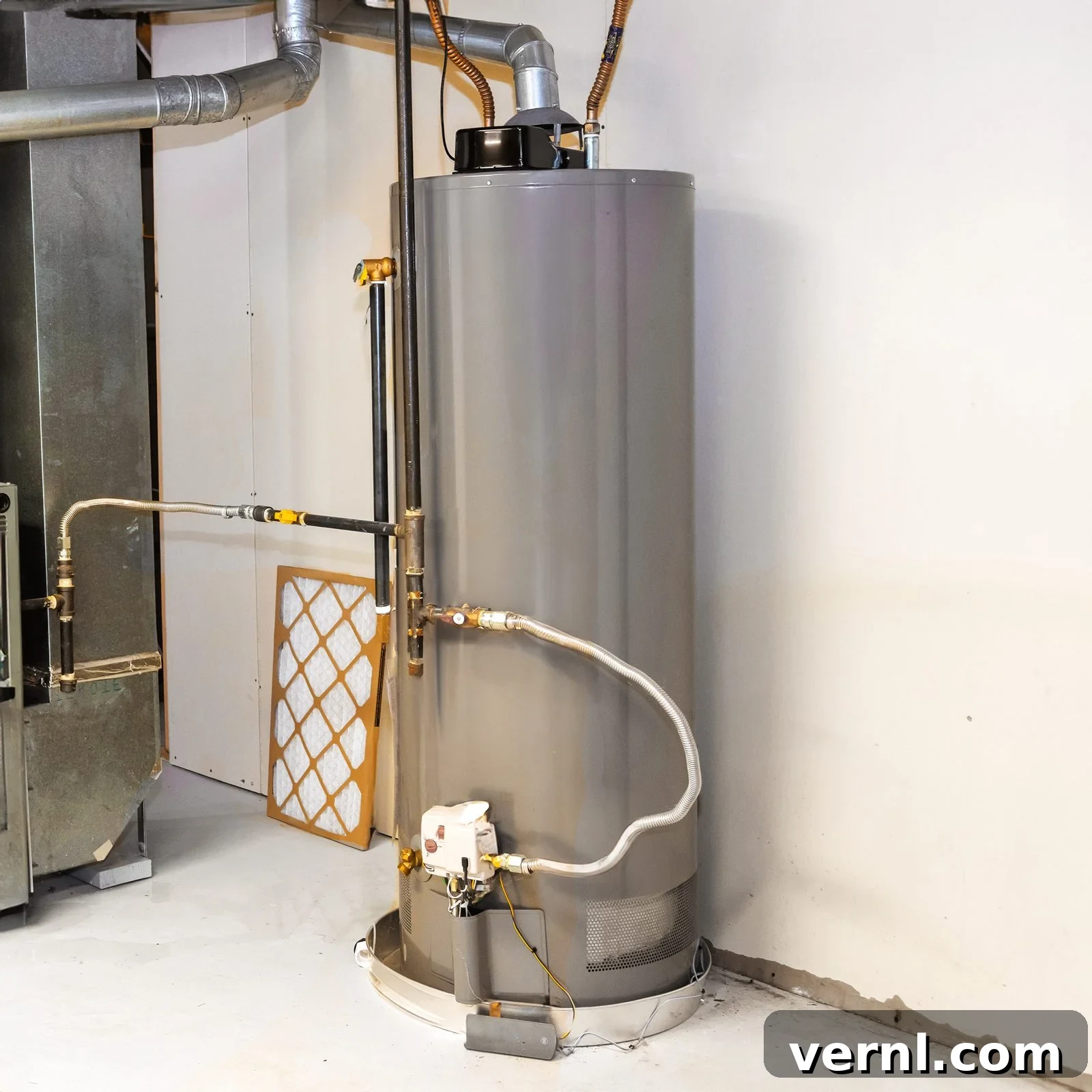
Often perceived as the traditional “default” choice, conventional gas water heaters have seen significant advancements in the past decade. While their foundational design remains, contemporary models boast greatly improved energy efficiency compared to their predecessors, all while maintaining a relatively accessible initial purchase price.
These units typically use a gas burner at the bottom of the tank to heat water, which then rises, ensuring a supply of hot water is always ready. They rely on a pilot light or electronic ignition system to start the burner and vent exhaust gases through a flue, usually directed out of the roof.
A conventional gas water heater is often the most cost-effective solution if you require an immediate replacement, do not intend to reside in your current home for an extended period, or simply have modest hot water consumption habits. Their reliability and proven technology make them a straightforward choice for many.
Estimated Cost: $550 to $1,200 (excluding professional installation labor)
Advantages and Disadvantages:
- Pro: Lower Upfront Investment: These units typically have the lowest purchase price compared to many other types, making them an attractive option for budget-conscious homeowners.
- Pro: Time-Tested Reliability: With decades of use and refinement, conventional gas water heaters are known for their robust design and fewer complex components like fans or pumps that could wear out.
- Pro: Operation During Power Outages: Many models, especially those with pilot lights, can continue to provide hot water even during electricity blackouts, a significant advantage in areas prone to power interruptions.
- Con: Energy Inefficiency: Compared to newer, more advanced options, conventional gas units are less energy-efficient. They continuously heat and reheat water, leading to standby heat loss even when hot water isn’t being used.
- Con: Limited Hot Water Supply: Once the tank’s hot water supply is depleted, you must wait for the tank to refill and reheat, which can take a significant amount of time, especially after multiple users or large hot water demands.
- Con: Space Requirement: These units require dedicated floor space for the tank itself, which can be a concern in smaller homes or utility areas.
Electric Tank Water Heaters
Electric tank water heaters represent the second most prevalent type of water heating system. Their operation is straightforward and highly similar to an electric stovetop: they utilize submerged electric heating coils to maintain the water inside the tank at a set temperature. When the thermostat detects a drop in temperature, the heating elements activate to bring the water back up to the desired setting.
These units are generally simpler to install than gas models since they don’t require gas lines or venting, making them a popular choice in homes where natural gas is not available or preferred. However, their operational cost can vary significantly depending on local electricity rates.
Estimated Cost: $500 to $1,200 (excluding professional installation labor)
Advantages and Disadvantages:
- Pro: Wide Availability and Proven Technology: Electric tank heaters are ubiquitous, with parts and service readily accessible. Their technology is mature and well-understood.
- Pro: Low Initial Installation Cost: Without the need for gas lines, flues, or complex venting, the labor and material costs for installing an electric tank water heater are often lower than gas alternatives.
- Pro: Simpler Installation: Generally, the installation process is less complex, requiring only an electrical connection and plumbing hookups.
- Con: Higher Operating Costs in Many Regions: If the cost of electricity in your area is high, operating an electric tank water heater can prove significantly more expensive over time compared to gas models or more efficient electric alternatives.
- Con: Slower Recovery Time: Electric elements can take longer to reheat a full tank of water once it has been depleted, potentially leading to cold showers during peak demand.
- Con: Not Functional During Power Outages: Unlike pilot-light gas models, electric water heaters will not operate during a power outage, leaving you without hot water.
Tankless (On-Demand) Water Heaters: Gas or Electric
Tankless water heaters, whether powered by gas or electricity, operate on an “on-demand” principle, heating water only when it’s needed. Master plumber Beau Means highlights two paramount advantages of these systems over traditional tank-style heaters: “You only heat water when you need it, and you have unlimited hot water.” This means no standby heat loss and no running out of hot water, even with multiple simultaneous demands.
For gas tankless units, Means points out a crucial consideration: “One downside to gas tankless is that they require a lot of gas when they are heating the water, so you will need to be sure your gas line is adequately sized.” This often necessitates an upgrade to existing gas lines, which adds to the installation complexity and cost. Similarly, for electric tankless models, he notes: “We’ve found [electric tankless] to not be as efficient as the gas tankless and often require an upgrade of the electric service to the home as they require a lot of power.” This can involve significant electrical panel upgrades to accommodate the high amperage draw of electric tankless units.
Beyond whole-house systems, tankless technology also extends to point-of-use gas or electric heaters. These smaller units are specifically designed to serve a single fixture, such as a sink or a shower, providing instant hot water exactly where and when it’s needed, eliminating waiting times and further reducing energy waste from long pipe runs. Even portable camp showers powered by liquid propane fall into this category, showcasing the versatility of on-demand heating.
Estimated Cost:
- $1,000 to $1,500 for whole-house tankless water heaters (excluding professional installation labor)
- $300 to $500 for point-of-use tankless models (excluding professional installation labor)
Advantages and Disadvantages:
- Pro: Endless Hot Water Supply: The most compelling advantage is the continuous, on-demand supply of hot water, meaning you’ll never have to worry about running out, even during peak usage times.
- Pro: Significant Space Savings: These compact units typically mount on a wall, freeing up valuable floor space that a traditional tank would occupy.
- Pro: Energy Efficiency: By only heating water when it’s required, tankless systems eliminate standby heat loss, potentially leading to lower energy bills over time.
- Pro: Extended Lifespan: Tankless units generally last longer than conventional tank models, often 20 years or more, further enhancing their long-term value.
- Con: Complex and Costly Installation: Installation can be a major project. It often involves upgrades to existing gas lines, electrical service, and new venting systems, making the initial setup significantly more expensive than a traditional tank replacement.
- Con: High Upfront Cost: The purchase price of a tankless unit is considerably higher than conventional tank models.
- Con: Flow Rate Limitations: While providing endless hot water, tankless units have a maximum flow rate. If too many hot water fixtures are used simultaneously, the temperature may drop, or the flow may be reduced.
Condensing Gas Tank Water Heaters
Both conventional tanked and tankless gas heaters typically expel hot exhaust gases directly out of a flue, representing a significant loss of energy. High-efficiency condensing gas water heaters innovatively address this inefficiency by redirecting and utilizing this exhaust heat. Instead of simply venting hot gases, these units extract additional heat from the exhaust, passing it through a secondary heat exchanger to further pre-heat the incoming cold water. This process significantly improves efficiency, often achieving a Uniform Energy Factor (UEF) higher than standard models.
If you’re acquainted with high-efficiency furnaces, you’ll recognize the underlying technology and the characteristic use of PVC pipe for venting. This allows for more flexible and less expensive venting options compared to traditional metal flues, though proper drainage for the condensate produced during the process is essential.
While the initial purchase price for a condensing gas water heater is higher than that of a standard efficiency model, their substantial energy savings over the lifespan of the unit can result in a favorable return on investment, particularly in homes with high hot water demand.
Estimated Cost: $1,200 to $3,600 (excluding professional installation labor)
Advantages and Disadvantages:
- Pro: Outstanding Energy Efficiency: These units are exceptionally energy-efficient due to their ability to capture and reuse exhaust heat, leading to lower operating costs and a reduced carbon footprint.
- Pro: Potential for Rebates and Tax Incentives: Their high efficiency often qualifies them for various government or utility company rebates and tax credits, which can help offset the initial purchase price.
- Con: Higher Initial Investment: The advanced technology involved means a higher upfront cost compared to conventional gas or electric tank heaters.
- Con: Complex Installation Requirements: Installation typically involves specific venting (PVC) and a drain for the condensate, which may require gas line and venting reconfiguration, adding to labor costs and complexity.
- Con: Larger Footprint: Some condensing models can be larger than conventional tanks due to the additional heat exchange components.
Heat Pump Water Heaters (Hybrids)
Heat pump water heaters, often referred to as hybrids due to their combined heating methods, operate on a principle similar to a whole-house heat pump or hybrid HVAC system. Rather than generating heat directly through open flames or resistive coils, they efficiently transfer heat energy from the surrounding air into the water within the tank. They achieve this by using a refrigeration cycle in reverse: a fan draws in ambient air, a compressor raises the temperature of a refrigerant, and this heat is then transferred to the water.
Beau Means emphasizes their performance characteristics: “They work best in warmer climates.” This is because their efficiency is directly tied to the temperature of the air they draw from. “The efficiency drops if you must heat the air around the water heater to keep it from freezing,” he explains. Furthermore, regions with colder groundwater demand more energy from the water heater, and a heat pump may struggle to keep up with high hot water demands in such conditions without assistance.
In colder climates or homes with inconsistent ambient temperatures, a hybrid model is often the superior choice. These units come equipped with a conventional electric heating coil installed as a backup. This coil intelligently activates only when needed to supplement the heat pump, ensuring your home’s hot water demand is consistently met, even during periods of high usage or colder ambient conditions.
Heat pump water heaters are typically installed in areas with ample ambient air, such as basements, garages, or utility rooms, where they can draw heat from the air without significantly impacting the living space’s temperature. They also require proper clearance around them to ensure adequate airflow.
Estimated Cost: $2,000 to $4,000 (excluding professional installation labor)
Advantages and Disadvantages:
- Pro: Lowest Operating Cost: Heat pump water heaters boast the lowest operating costs of any water heater type, especially in warm climates or areas with consistently mild temperatures, due to their highly efficient heat transfer process.
- Pro: Significant Energy Savings: They are incredibly energy-efficient, often using 2-3 times less electricity than conventional electric water heaters, leading to substantial long-term savings on utility bills.
- Pro: Eligibility for Incentives: Like condensing gas models, these units frequently qualify for various energy efficiency rebates and tax incentives, making the initial investment more manageable.
- Con: Higher Initial Installation Cost: The advanced technology and often larger size contribute to a higher upfront purchase and installation cost.
- Con: Larger Footprint and Specific Location Needs: They are often larger than traditional electric heaters and require sufficient unconditioned space (e.g., a basement or garage) with adequate ambient air temperature and clearance around the unit for optimal operation.
- Con: Cooler Ambient Air: As they draw heat from the surrounding air, they will slightly cool the space they are in, which can be a minor drawback in already cool utility areas.
- Con: Noise Level: The fan and compressor can generate some noise during operation, which might be a consideration if installed near living spaces.
Key Features to Consider When Choosing a Water Heater
Selecting the ideal water heater involves more than just picking a type. Several crucial factors should influence your decision to ensure the unit meets your specific household needs and budget. Here’s a detailed look at what to consider:
Balancing Initial Cost vs. Long-Term Efficiency
When investing in a new water heater, it’s essential to look beyond just the purchase price. A lower upfront cost might seem appealing, but a less efficient unit could cost you significantly more in utility bills over its lifespan. Conversely, a higher-efficiency model, while more expensive initially, can lead to substantial long-term savings.
As Beau Means notes, “The Department of Energy continues to raise the efficiency standards for water heaters,” meaning almost any new model you purchase will offer better energy performance than an older, outdated unit. Always consider the Uniform Energy Factor (UEF) rating, which indicates a water heater’s overall energy efficiency. A higher UEF means greater efficiency and lower operating costs.
Think about your projected residency in the home. If you plan to stay for many years, investing in a high-efficiency model with a higher initial cost will likely pay for itself through energy savings. For shorter-term occupancy, a conventional, less expensive unit might be more financially prudent.
Space and Installation Requirements
The physical space available in your home is a significant determinant when choosing a water heater. Traditional tank models require dedicated floor space, and their size can vary. A larger tank, for instance, naturally demands more room.
Tankless gas heaters, while wall-mounted and space-saving, require a robust vent line to exhaust combustion gases, which might necessitate structural modifications. Heat pump water heaters, often bulkier than conventional electric tanks, need adequate open space around them to draw in ambient air efficiently. Without proper clearance, their efficiency will be compromised.
As Beau Means wisely points out, “if your old heater is in a tight space, the newer heater may be an inch or two larger in diameter and may not fit.” Always measure your existing space meticulously, even if you are planning a like-for-like replacement, as manufacturers frequently update dimensions and designs.
Fuel Type Availability and Cost
The type of fuel available in your home (natural gas, propane, electricity) will largely dictate your water heater options. If natural gas is not available, your choices will naturally lean towards electric or propane models. Evaluate the current and projected costs of these fuels in your region. High electricity prices might make a gas or heat pump model more economical, while homes without natural gas may find electric or propane tankless units suitable, provided the electrical service or propane tank is adequately sized.
Warranty and Professional Support
Always review the warranty terms for both the unit itself and its components. Higher-quality water heaters often come with longer warranties, signaling manufacturer confidence in their durability. Equally important is the availability of qualified plumbers and technicians in your area who are experienced in installing and servicing your chosen water heater type. Specialized units, like heat pumps or tankless systems, may require technicians with specific training.
Maintenance Requirements and Lifespan
Consider the long-term maintenance needs of each water heater type. Tanked heaters generally require annual flushing to remove sediment and periodic anode rod replacement to prevent corrosion. Tankless units benefit from regular descaling to maintain efficiency. Heat pump models have air filters that need cleaning. Understanding these requirements will help you factor in the true cost of ownership and ensure your unit lasts its expected lifespan.
Determining the Right Water Heater Size for Your Home
Choosing the correct size for your water heater is paramount to ensuring a comfortable and consistent supply of hot water without unnecessary energy waste. For tanked models, most households typically choose between a 40- or 50-gallon tank. However, Beau Means stresses the importance of considering your family’s unique hot water usage patterns to pinpoint the ideal size. He poses key questions:
- “How many people are in the house?”
- “Do they typically bathe in the same time frame, creating peak demand?”
- “Do you have a large tub such as a jacuzzi tub that takes a lot of water?”
- “Do you use hot water to launder your clothes frequently, especially with hot cycles?”
These lifestyle factors significantly impact the “first-hour rating” (FHR) – the number of gallons of hot water the heater can produce in an hour when full of hot water – which is a critical metric for tanked heaters. For tankless units, sizing revolves around the required “flow rate” (gallons per minute, GPM) at a specific temperature rise, ensuring enough hot water can be produced simultaneously for multiple fixtures.
If calculating these specifics seems daunting, Means offers a practical rule of thumb for tanked units: “The cost and efficiency differences between a 40-gallon and a 50-gallon water heater are usually minimal. So I suggest if you have the room, go bigger. I have never heard any complaints about having too much hot water.” Opting for a slightly larger tank than you think you need can provide a buffer for unexpected demands and prevent future regrets.
Frequently Asked Questions About Water Heaters
What is the average cost to install a new water heater?
The total cost for a new water heater, including both the unit and professional installation labor, can range widely from $800 to $6,400. This broad price spectrum reflects significant variations in several key factors: the type of water heater chosen (conventional tank vs. tankless vs. heat pump), the complexity of the installation (e.g., gas line upgrades, electrical panel modifications, new venting systems), regional labor rates, and the need for permits or adherence to updated local building codes. Conversions from one fuel type to another (e.g., electric to gas) or from a tanked to a tankless system will typically incur higher installation costs due to the extensive modifications required.
Can I install a water heater myself?
While some homeowners with advanced DIY skills might consider installing a water heater, it’s crucial to check with your local building department first. As Means advises, “I have found that most jurisdictions will allow homeowners to install a water heater in their own home if the authority having jurisdiction can inspect it.” However, he strongly cautions: “Any time you’re dealing with gas or electricity, you should have a professional look over your work.” Improper installation can lead to dangerous gas leaks, electrical hazards, water damage, or even voided manufacturer warranties. For safety, compliance with codes, and peace of mind, professional installation is almost always recommended, especially for gas or complex electric systems.
How long do water heaters typically last?
According to Beau Means, “6-10 years” is the typical lifespan for most conventional water heaters. However, this lifespan can be significantly extended with proper maintenance. He recommends: “Annual flushing of the heater to remove the built-up sediment will prolong the life of the heater and increase its efficiency.” Sediment accumulation at the bottom of the tank can reduce heating efficiency and accelerate corrosion. Additionally, Means emphasizes, “Also, be sure to replace your anode rod to get the most out of the heater.” The anode rod, often called the “sacrificial rod,” protects the steel tank from rust and corrosion; replacing it periodically is vital for tank longevity. Tankless and heat pump water heaters often boast longer lifespans, sometimes exceeding 20 years, with proper care.
What are the common signs that your water heater is failing?
The most unambiguous sign of a failing water heater, as Means states, is a leak: “If it is leaking, it needs to be replaced.” This is particularly true if water is leaking from the bottom of the tank, which almost always indicates internal rust and structural compromise beyond repair. Other warning signs include:
- Insufficient Hot Water: You suddenly aren’t getting hot water, or not as much as usual, or it’s not as hot as it once was.
- Rusty or Discolored Water: If the hot water from your tap appears rusty, it could signal internal tank corrosion.
- Strange Noises: Banging, rumbling, popping, or whistling sounds from the tank often indicate sediment buildup, which reduces efficiency and stresses the tank.
- Unpleasant Odors: A “rotten egg” smell from your hot water can indicate a bacterial presence in the tank, often addressable but sometimes a sign of other issues.
- Increased Energy Bills: A sudden unexplained spike in your energy bills might mean your water heater is working harder and less efficiently to heat water.
While a leak necessitates immediate replacement, other issues might have simpler, more affordable fixes, such as a faulty gas valve, a burned-out electric element, or a damaged dip tube. Means advises: “Consult a professional to get a clearer idea of what’s wrong with your heater” before assuming a complete replacement is necessary.
Your Ultimate Guide to Choosing the Perfect Water Heater
Navigating the wide array of water heater options, from energy-efficient tankless models to reliable traditional tanks, can seem daunting. However, armed with the expert insights and comprehensive information provided, you are now better equipped to make a choice that perfectly aligns with your home’s unique needs, your budget, and your long-term energy goals. Consider all factors—cost, efficiency, space, fuel type, and maintenance—and don’t hesitate to consult a qualified plumbing professional for personalized recommendations and installation.
For more detailed guidance and specific product recommendations, explore these related resources:
- New Homeowner’s Guide to Water Heaters
- Most Recommended Electric, Gas, and Tankless Water Heaters, According to Experts
- Best Under-Sink Water Heaters
- Best Tankless Water Heaters
- Why You Should Invest in a Tankless Water Heater
- The Pros and Cons of Tankless Water Heaters
- Brands of Water Heaters