
Lump Charcoal vs. Briquettes: The Ultimate Grilling Fuel Showdown
For over five years, my journey has taken me across the country, competing in more than 60 grilling and smoking competitions. This intense pursuit of culinary perfection has exposed me to virtually every method and ingredient the grilling world has to offer, all in the quest for the ultimate taste, the perfectly cooked cut of meat, and the coveted Grand Championship title. Through countless hours of cooking, experimentation, and observation, one truth has become undeniably clear to me and all my fellow competitors: achieving exceptional results on the grill begins with selecting the right heat source.
Trust me, as someone who has witnessed and tasted it all – the choice of charcoal profoundly impacts your grilling experience and the final flavor of your food. It truly matters.
The art of grilling is a rich tapestry of personal preferences, intricate variables, and countless options, making clear-cut “best choices” a rarity. However, the age-old debate between briquettes and lump charcoal stands as a notable exception. Among seasoned grill masters and competition pros, the preference for lump charcoal over briquettes is almost universal. While lump charcoal often emerges as the clear favorite in the competitive grilling scene, it’s crucial to understand what distinguishes these two popular fuel types before you decide which is best suited for your backyard adventures.
Understanding Your Fuel: What Are Charcoal Briquettes?
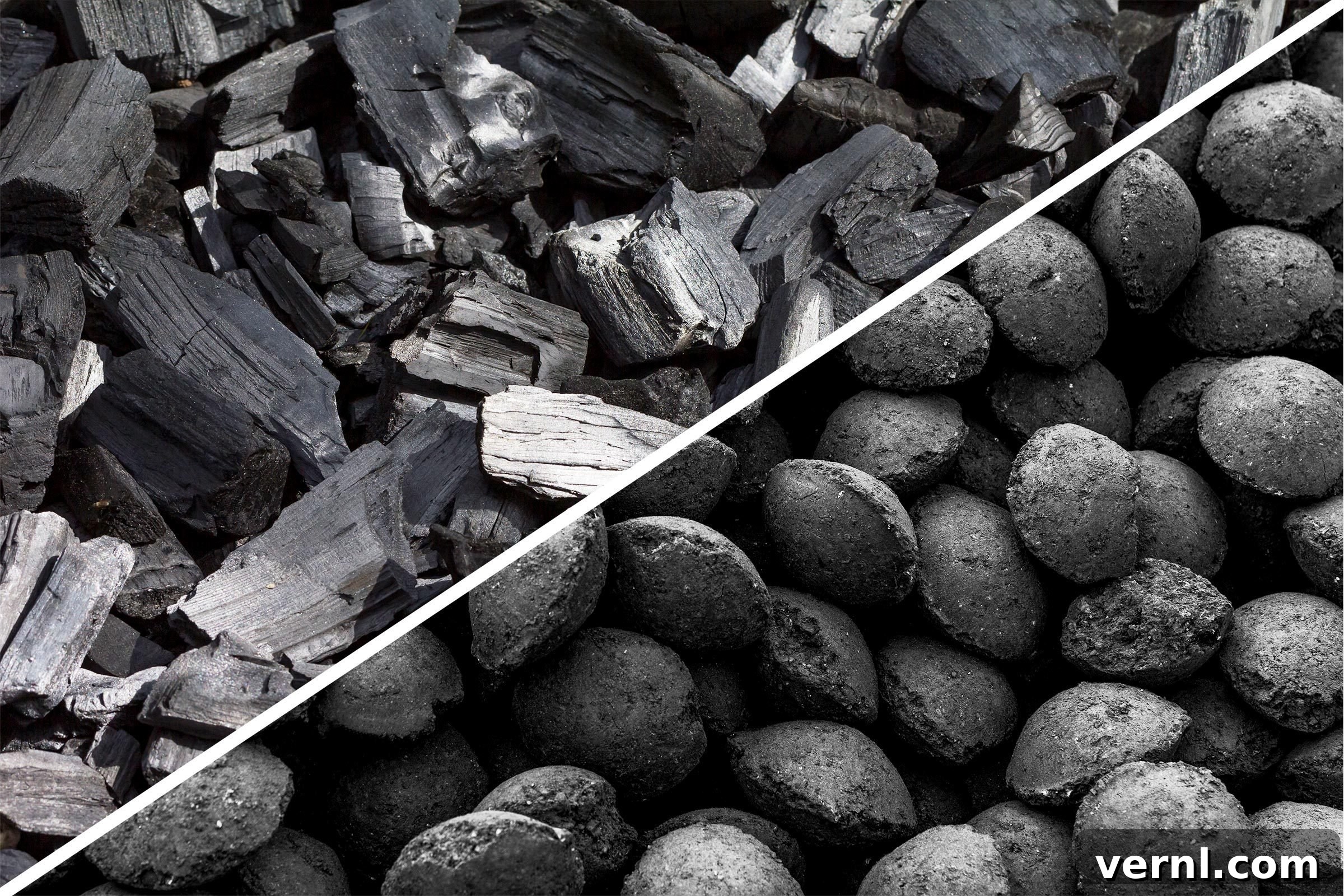
Charcoal briquettes represent the most common and widely recognized fuel source for grilling. They are likely what many of us grew up using, readily available in almost every store stocking grilling supplies, and often serve as the comfortable go-to for casual grillers. Briquettes are a manufactured product, meticulously crafted by combining various materials: typically sawdust, coal dust, and a binding agent. This binder is essential, helping to form and maintain their signature, consistent pillow-like shape. In recent years, some manufacturers have innovated by adding flavor options to their briquettes, infusing them with essences of mesquite, applewood, cherry, or hickory wood splinters to impart subtle smoky notes. For the casual backyard griller, briquettes offer significant advantages, particularly their widespread availability and cost-effectiveness, and can certainly help you cook delicious food.
The Manufacturing Process and Consistency of Briquettes
The creation of charcoal briquettes is a process designed for uniformity and efficiency. It begins with grinding wood waste (like sawdust) and coal dust into fine powders. These powders are then mixed with a binder, often a starch-based product like cornstarch, and sometimes other additives such as borax, limestone, or sodium nitrate (a common igniter). This mixture is then compressed under high pressure into its distinctive, consistent shapes. This industrial process ensures that each briquette burns predictably, making temperature management straightforward, especially for those new to charcoal grilling. The consistency in size and density means less variation in how heat is distributed across your grill grate, offering a reliable and familiar experience.
Pure Heat: What is Lump Charcoal?
Lump charcoal, while also a charcoal product, stands apart from briquettes due to its fundamentally different composition and production method. Unlike briquettes, lump charcoal is comprised of actual pieces of wood – it’s not a molded product of dust and binders. Its creation involves charring real wood in a low-oxygen kiln, a specialized oven designed to heat the wood to extremely high temperatures in a controlled environment. This process, known as pyrolysis, slowly bakes off all the moisture and volatile compounds from the wood without allowing it to combust fully and turn to ash. The result is pure carbon in the original shape of the wood pieces, completely black, yet retaining their original form and size, unlike wood that has been burned in an open fire.
The Natural Appeal and Variability of Lump Charcoal
Because lump charcoal is made from real wood, each piece is unique in size and shape. You might find anything from small chips to large, fist-sized chunks within a single bag. This natural variability can take a little getting used to for those accustomed to the uniformity of briquettes. However, with a bit of practice, understanding how to utilize different sized lumps for various cooking needs becomes second nature. Many grillers appreciate this natural origin, valuing the pure, additive-free smoke and intense heat that lump charcoal provides. The specific type of wood used – be it oak, hickory, mesquite, or fruitwoods like apple or cherry – can subtly influence the flavor profile of your smoked and grilled foods, offering a more authentic wood-fired taste.
Briquettes vs. Lump Charcoal: A Detailed Comparison for Grillers
Now that we’ve explored the fundamental characteristics of both charcoal types, let’s delve deeper into what each offers and how their differences can influence your grilling strategy and the flavor of your culinary creations. Choosing between them often comes down to balancing convenience, cost, performance, and desired results for your specific grilling style.
Briquette Advantages (Pros)
- Unmatched Availability: Briquettes are incredibly easy to find. You can purchase them at virtually any grocery store, hardware store, major retailers like Target and Walmart, and even many gas stations. This widespread availability makes them a convenient choice for spontaneous grilling sessions or when you’re on the go.
- Cost-Effectiveness: Generally, briquettes are a more budget-friendly option compared to lump charcoal, especially for those who grill frequently or need large quantities of fuel. This makes them an economical choice for everyday use and large gatherings.
- Consistent Shape and Burn: Their uniform size and density ensure a predictable and consistent burn. This makes temperature control easier, particularly for beginners, as you can more accurately estimate the heat output and duration. Stacking them for even heat distribution is also very straightforward.
- Longer Burn Time at Moderate Temperatures: While not reaching extreme highs, briquettes tend to maintain a consistent moderate temperature for a longer period. This characteristic is beneficial for longer cooks that don’t require searing heat, such as slow roasting or indirect grilling.
- Ease of Use: Their consistent nature simplifies the learning curve for temperature management, making briquettes an excellent starting point for new charcoal grillers.
Briquette Disadvantages (Cons)
- Presence of Additives: To achieve their consistent shape and density, briquettes contain binders and fillers (like coal dust, starch, and sometimes other chemicals) that are not pure wood. These additives can sometimes produce a slightly chemical odor or taste, particularly during the initial lighting phase, which some purists find undesirable and believe can impact food flavor.
- Lower Peak Temperatures: While they burn consistently, briquettes typically do not reach the extremely high temperatures that lump charcoal can achieve. This can limit their effectiveness for searing meats to create a perfect crust or for other high-heat cooking techniques like searing a reverse-seared steak.
- Higher Ash Production: Briquettes leave behind a significant amount of ash. This not only requires more frequent cleaning of your grill but can also hinder airflow if allowed to build up, potentially stifling your fire during a long cook and making temperature control more difficult.
- Slightly Longer to Ignite: Due to their density and composition, briquettes can sometimes take a bit longer to fully ignite and reach optimal cooking temperature compared to lump charcoal.
Lump Charcoal Advantages (Pros)
- Pure Wood Composition: Lump charcoal is made from 100% charred wood, free from binders, fillers, or chemical additives. This purity contributes to a cleaner burn and imparts a more authentic, natural wood-fired flavor to your food, which is highly valued in BBQ circles.
- Extremely High Temperatures: Lump charcoal can achieve significantly higher temperatures much faster than briquettes. This intense heat is ideal for searing steaks, achieving crispy skins on poultry, wok cooking, or other high-heat applications where a powerful, quick burst of heat is desired.
- Minimal Ash Production: Due to its pure wood composition, lump charcoal produces considerably less ash than briquettes. This translates to easier cleanup after grilling and better airflow throughout longer cooking sessions, reducing the risk of your fire dying out and maintaining consistent heat.
- Faster Ignition: Lump charcoal tends to light more quickly and comes up to temperature faster than briquettes, getting you ready to cook in less time – a great advantage for spontaneous grilling.
- Longer Burn at Lower Temperatures: Counterintuitively, at lower smoking temperatures, quality lump charcoal can often burn longer than briquettes. This makes it an excellent choice for low-and-slow BBQ and smoking.
- Enhanced Flavor Profile: Depending on the type of wood used (e.g., oak, mesquite, fruitwood), lump charcoal can infuse your food with subtle, complex smoky notes that are unique to natural wood, elevating the overall taste experience.
Lump Charcoal Disadvantages (Cons)
- Variable Size and Shape: The inherent naturalness of lump charcoal means that every bag contains a variety of sizes and shapes, from small shards to large chunks. This inconsistency can sometimes make temperature management a bit more challenging, as different sized pieces burn differently. Sorting through a bag to find suitable pieces for your cook can be an initial hurdle.
- Higher Cost: Lump charcoal is typically more expensive per pound than briquettes. This higher price point can be a factor for grillers who use large quantities of fuel frequently, impacting their overall BBQ budget.
- Less Widespread Availability: While becoming more common, lump charcoal may not be as readily available as briquettes in all general stores. You might need to seek out specialty BBQ stores, larger hardware chains, or online retailers, which requires a bit more planning.
- Shorter Burn Time at High Temperatures: While it gets hotter faster, lump charcoal can burn out more quickly at very high temperatures compared to briquettes maintaining a consistent medium heat, requiring more frequent refueling during intense cooks.
Choosing Your Champion: Which Fuel is Better for You?
The “best” charcoal isn’t about one being universally superior, but rather about aligning the fuel’s characteristics with your specific grilling needs, experience level, and desired outcomes. Both briquettes and lump charcoal are excellent sources of heat for your grill, and both have a well-deserved place in the BBQ world. Your ideal choice depends on your priorities and the type of grilling you do most often.
Opt for charcoal briquettes if:
- You’re looking for a familiar and easy-to-use fuel source with predictable performance.
- Convenience, widespread availability, and budget-friendliness are top priorities for your grilling habits.
- You appreciate consistent and predictable heat for straightforward cooking, making temperature control easier.
- You are new to charcoal grilling and want an easier learning curve for mastering basic temperature management.
- Your primary grilling style involves moderate-heat cooking like grilling burgers, hot dogs, chicken pieces, or sausages.
Choose lump charcoal if:
- You prioritize a pure, additive-free burn and an authentic, natural wood-fired flavor for your food.
- You frequently engage in high-heat searing for steaks, smash burgers, or achieving crispy skins on poultry.
- You desire faster ignition and quicker temperature recovery times, especially for quick cooks or adjustments.
- You prefer minimal ash cleanup after your grilling sessions, leading to less maintenance.
- You are a seasoned griller looking to experiment with different wood flavors or achieve precise low-and-slow smoking temperatures with less ash interference.
- You value longer burn times when cooking at lower, consistent temperatures for extended periods, such as smoking brisket or pork shoulder.
Tips for Maximizing Your Charcoal Choice
Regardless of your preference, understanding how to best use your chosen fuel will significantly elevate your grilling game. For briquette users, proper stacking techniques like the “snake method” or “minion method” can maximize burn time and consistency for low-and-slow cooks. For lump charcoal enthusiasts, sorting through the bag to use larger pieces for longer, hotter burns and smaller pieces for quick, high-heat searing can optimize its natural variability. Always ensure proper airflow for a clean burn, whether you’re using a simple kettle grill or a sophisticated kamado smoker, as this is crucial for maintaining desired temperatures and preventing acrid smoke.
Beyond the Basics: Blending and Experimentation
Some experienced grillers even combine both types of charcoal for specific results, leveraging the strengths of each. A base layer of briquettes can provide a stable, long-lasting heat, while adding a few chunks of lump charcoal (especially flavored varieties) can introduce a purer wood smoke profile and a burst of higher heat when needed. The world of grilling is about exploration, innovation, and personal preference, and there’s no single right way to achieve deliciousness. The most important thing is to understand your tools and fuels, and then let your creativity guide you.
At the end of the day, if you share my passion for cooking over an open flame, I wholeheartedly encourage you to try something new! Experiment with both briquettes and lump charcoal, observe their unique characteristics, and discover which one truly ignites your grilling passion and elevates your culinary creations. Don’t be afraid to mix and match or switch based on the recipe and your desired outcome. Happy grilling!