
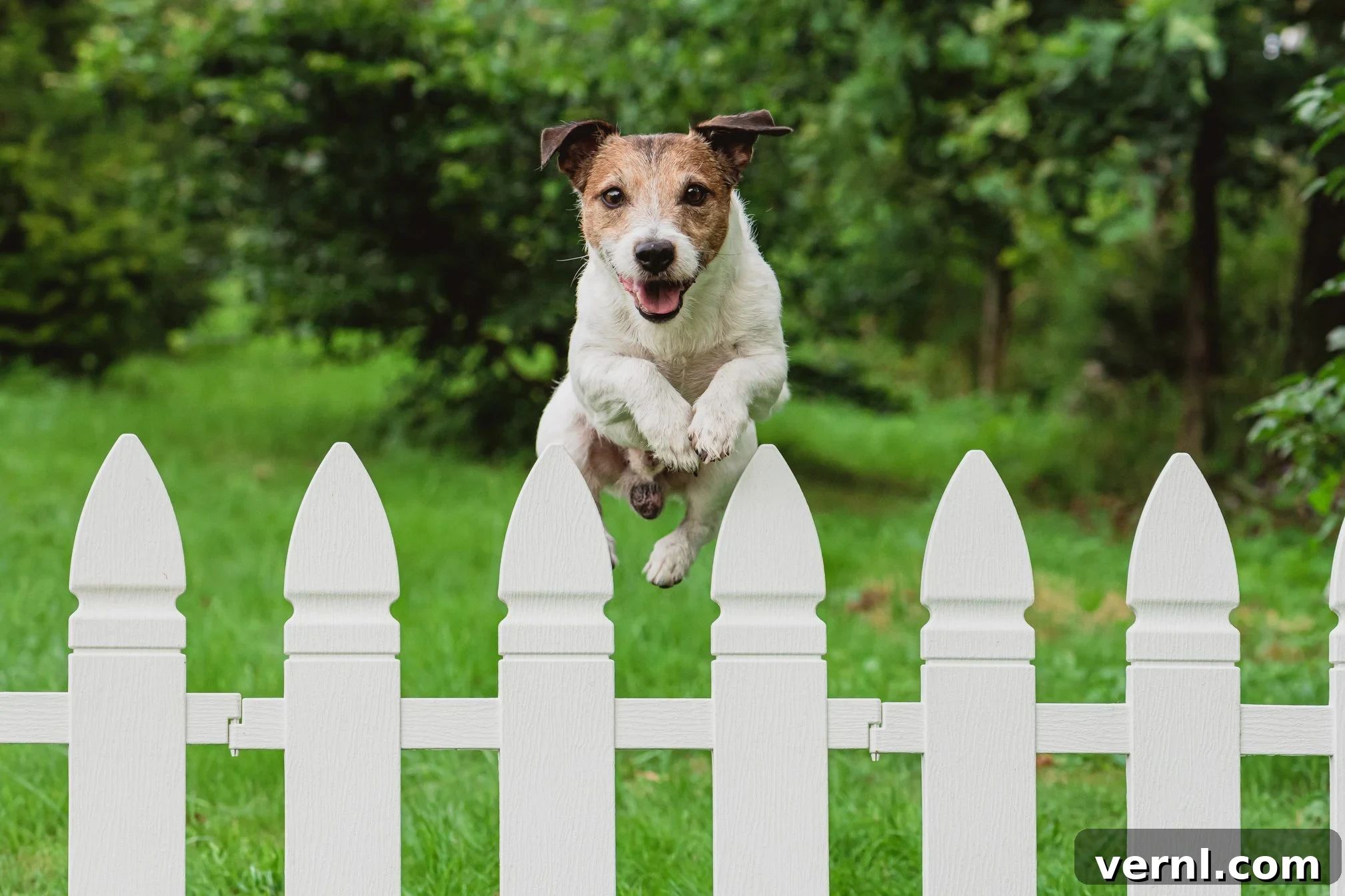
Stopping Your Dog From Jumping the Fence: Expert Strategies for a Secure Yard
Your canine companion’s ability to clear your backyard fence might seem impressive, but these unexpected escapes can lead to serious trouble. Ensuring your dog’s safety and preventing them from running off is paramount.
According to certified professional dog trainer Lauren Wozniacki, “Dogs can get into dangerous situations when they escape, such as being hit by a car, encountering other animals or people, or simply getting lost or injured.” You’re also responsible for any harm or damage your dog causes while they are away from your property.
To avoid these worries, we’ve compiled expert-backed strategies to prevent your dog from jumping the fence. We’ll also explore ways to keep other dogs from entering your yard.
Why Do Dogs Jump Fences? Understanding the Root Causes
Understanding the reasons behind your dog’s fence-jumping behavior is key to finding the right solution. Wozniacki notes that her own dog jumped the fence to chase wildlife. Identifying the underlying motivation allows you to address the problem effectively.
Here are some common reasons why dogs jump fences:
- Boredom
- Separation Anxiety
- Sexual Roaming
- Prey Drive (chasing other animals)
- Territorial Guarding
- Social Interactions (wanting to play with other dogs or people)
- Seeking Rewards (new places, different food)
- Fear (avoiding something in the yard)
With these motivations in mind, here are several proven strategies to prevent your dog from jumping your fence and to keep other dogs out.
Fence Adaptations: Making Your Yard Escape-Proof
“I work with a Husky rescue, and Huskies are known for escaping the yard,” Wozniacki says. “The most success people have is making their yard escape-proof.” Modifying your fence is often the most effective solution.
Install a Taller Fence or Heighten Your Existing One
If you’re installing a new fence, make it at least six feet high to ensure maximum security. A five-foot fence may not contain large, athletic breeds. Smaller dogs might be able to climb it. This is how Wozniacki solved her dog-escaping problem. Consider the size and agility of your dog when selecting the appropriate fence height.
Try Coyote Rollers for Added Security
If your dog or a neighbor’s dog is able to scale your fence, adding coyote rollers could be the solution. These are typically bars or rollers installed at the top of the fence that prevent dogs from getting a secure pawhold to pull themselves over. You can save money by creating rollers from PVC pipe with wire or rope running through them, creating an unstable surface that dogs can’t easily grip.
Angled Fence Extensions: A Simple Deterrent
If you’re not a fan of metal bars or plastic pipes, angled fence extensions can work well. Install fence extensions at a 45-degree angle, covered with chain-link fencing. Even simple netting on the angled section can be enough of a deterrent to make jumping difficult. This redirects the dog’s path, making jumping less appealing.
Solid Fencing: Blocking the View
For dogs who jump the fence because of sights, sounds or smells on the other side, installing a privacy screen can be very effective. This blocks the view and reduces the temptation to escape. Privacy screens can also prevent other unwanted behaviors, such as alert barking at passersby or territorial fence running.
Remodel Your Landscape: Making the Yard Less Appealing to Escape
Even with a tall fence, your dog might use items in your yard as a launching pad. Improve your landscaping and rearrange elements in the yard.
Move items like wood piles, climbing frames, trash cans, benches, or large rocks away from the fence to eliminate potential climbing aids. Planting thick evergreen shrubs, like boxwoods, in front of the fence can also make it harder for your dog to jump over.
Supervise Yard Time: Proactive Prevention
Supervising your dog in the yard can set them up for success. They are less likely to get bored and try to escape. You can also quickly redirect them or bring them inside if they show interest in squirrels or barking dogs.
If they do escape, you can take immediate action to find them, rather than learning hours later.
Offer Enrichment: Keeping Your Dog Entertained
Providing your dog with more fun can be a simple fix for fence jumping. Increase exercise; trick training can offer good mental stimulation. In the yard, keep your dog occupied with interactive treat toys like the Classic Kong. Consider building your furry friend a dog fence window to allow them to view the world from a safe spot.
Help Your Dog Feel Relaxed in the Yard: Addressing Anxiety
Loud noises in and around the yard can cause your dog to be fearful of spending time out there. Maybe your dog tries to escape when the neighbor’s kids play exuberantly. Watch your dog’s body language. If you see signs of anxiety or fear, such as cowering, trembling, lip licking, tail tucking, or excessive panting when it isn’t hot, they may feel uncomfortable.
Wozniacki recommends keeping your dog indoors if the stress triggers happen at certain times of the day. For extreme anxiety or sound sensitivity, working with a certified behaviorist can help your dog feel more relaxed.
Consider Neutering Your Dog: Addressing Roaming Behavior
Does your male dog always jump the fence to visit a favorite four-legged lady friend? “Neutering male dogs can absolutely help with roaming and escaping the yard,” Wozniacki says. However, be aware that once the habit is established, neutering may not fully resolve the problem.
Provide Training: Solidifying Good Behavior
Training can reduce your dog’s desire to escape. Reward your dog when they don’t react to triggers and teach them to reliably return to you when you call, no matter the distractions. Consistency is key. Use positive reinforcement to build a strong recall.
What Not to Do to Keep a Dog From Jumping the Fence
The methods above are dog-friendly and focus on positive reinforcement and environmental modifications. Other methods can be harmful to your dog.
Invisible electric fences are common. However, studies show that dogs are more likely to escape yards with invisible fencing than those with physical fencing.
Wozniacki doesn’t recommend yelling or using devices that scare dogs, such as electric collars or fences. Punishment and aversive tools can damage the bond you have with your dog and increase the likelihood of anxiety and aggression. By the time you find your wayward dog, they won’t associate your yelling with their fence jumping anyway.