
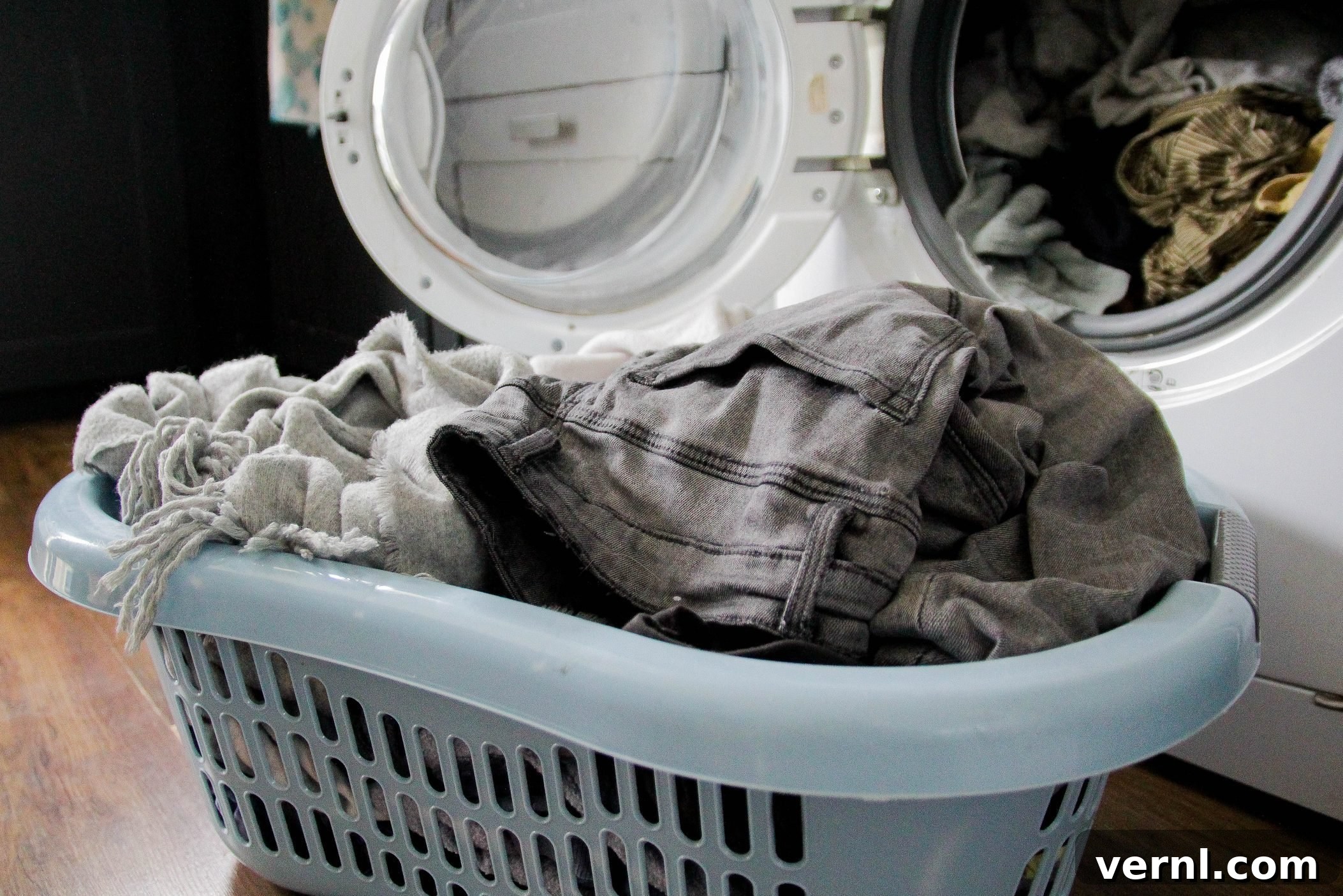
Do you often find yourself tossing freshly-laundered jeans into the hamper after just a single day’s wear? It’s a common habit, but often an unnecessary one. The truth is, most clothing items, including your favorite pair of jeans, don’t require washing after every single use. Over-laundering is not only detrimental to your garments but also to your wallet and the environment.
“Washing our clothes too often is the number one reason they lose color and shape,” explains Frej Lewenhaupt, co-founder and CEO of Steamery, a brand dedicated to smart clothes care. This simple act of excessive washing can prematurely age your wardrobe, leading to faded colors, stretched fabrics, and a quicker deterioration of quality.
Beyond garment longevity, the environmental impact of frequent laundry cycles is substantial. Consider the resources involved: the average washing machine consumes approximately 23 gallons of water per load. Older models can use even more, while energy-efficient machines, marked with an Energy Star rating, can bring this down to about 13 gallons. Moreover, Energy Star reports that a staggering 90% of the energy consumed during each wash cycle is dedicated solely to heating the water. This means that every extra load you run contributes significantly to your household’s energy footprint and monthly utility bills.
The consequences extend beyond water and energy waste. When you wash synthetic fabrics, such as polyester or nylon, hundreds of thousands of microscopic plastic fibers are released into wastewater with every load. These tiny fibers, known as microplastics, eventually make their way into our oceans. Research indicates that laundry is the largest source of primary microplastic pollution in marine environments. These microplastics pose a severe threat to aquatic life and can even enter the human food chain, highlighting the far-reaching impact of our laundry habits.
So, what practical steps can you take to contribute to a healthier planet and a longer-lasting wardrobe? The most impactful change begins with re-evaluating how often you wash your clothes. Many garments simply need to be aired out or spot-treated rather than undergoing a full wash. “Steaming is another gentle yet highly effective way to quickly freshen up your clothes,” Lewenhaupt suggests. The heat from steam not only helps to smooth wrinkles but also effectively kills bacteria and neutralizes unpleasant odors, leaving your clothes feeling clean and revitalized without the need for water and detergent.
For those times when a full wash is unavoidable, optimizing your loads is key. Do you often accumulate a large amount of laundry before tackling it? You’ll be impressed by the incredible amount of drying space the Songmics clothes-drying rack offers, providing an eco-friendly alternative to energy-intensive machine dryers.
Adopting these practices is just the beginning. There are numerous other ways to make your laundry routine more sustainable and less impactful on the environment. Embracing mindful clothing care not only benefits the planet but also saves you money and preserves the quality of your cherished garments for years to come.
How Often To Wash Clothes: Your Ultimate Guide to Sustainable Laundry Frequency
Determining the ideal washing frequency for your clothes isn’t a one-size-fits-all answer, but rather depends on several factors, including how close the item is worn to your body and the material it’s made from. “The first rule is to check how close to the body you wear the item,” advises Frej Lewenhaupt. This fundamental principle guides much of our laundry decisions. For instance, items like socks and undershirts that are in direct contact with your skin and absorb sweat will typically need washing after every use. In contrast, outerwear such as coats and jackets may go weeks, or even months, between laundry days, provided they are properly cared for.
Common sense plays a crucial role: if an item smells distinctly “funky,” has visible dirt, or is clearly stained, it’s time for a wash. However, for everything else, a deliberate and thoughtful approach can make a significant difference. By washing clothes less frequently and only when truly necessary, you not only extend the lifespan of your garments by preserving their fabric integrity and color, but you also contribute positively to environmental conservation by reducing water and energy consumption. An added bonus is a noticeable reduction in your energy bill, especially if you embrace cold water washing whenever possible – a simple change that can have a big impact on energy usage, as cold water washing can help significantly.
Here are some basic guidelines to help you navigate your laundry routine with greater efficiency and sustainability:
Jeans: The Less Washed, The Better
“Denim garments should be washed as little as possible,” stresses Lewenhaupt, a sentiment echoed by denim enthusiasts worldwide. The fibers in denim are designed to mold to your body over time, creating a unique fit and character. Frequent washing can disrupt this process, leading to premature fading, loss of shape, and a stiff texture. Once a month is generally plenty for jeans, and many denim purists advocate for even longer intervals, some going several months or even a year without a full wash. Between washings, proper care is crucial: air them outside to refresh the fabric and use targeted spot treatments for any minor stains or spills. For lingering odors, steaming your jeans is an excellent solution, as it effectively kills bacteria and neutralizes smells without the harshness of a full wash. Fabric sprays specifically designed for odor elimination can also be effective refreshers.
When the time does come to launder your denim, take extra precautions to protect the fabric. Always turn your jeans inside out before washing to prevent abrasion and preserve the indigo dye. Opt for a gentle, cold water cycle, as cold water helps prevent shrinking and fading. Harsh detergents should be avoided in favor of mild, denim-specific cleaners. After washing, avoid the dryer at all costs, as the high heat can damage the fibers and cause significant shrinkage. Instead, hang your jeans to dry or lay them flat, shaping them as they dry to maintain their original form.
Dress Shirts: A Balance of Formality and Freshness
Dress shirts, especially those worn in professional settings, often require a more frequent washing schedule than casual items. Lewenhaupt generally recommends washing dress shirts after a couple of uses, but ultimately, your senses are your best guide. “If it has a stain, or it smells, it’s time to wash it,” he advises. Shirts made from natural materials like cotton or linen tend to breathe better and don’t trap odors as readily as synthetic blends. For these natural fiber shirts, airing them out properly after each wear can significantly extend their use between washes. Hang them in a well-ventilated area, away from direct sunlight, to allow air to circulate and dissipate any mild odors. For minor wrinkles, a quick steam can refresh the fabric without a full wash. Always check the care label for specific instructions, as different fabrics and weaves may require unique attention.
Skirts and Slacks: Versatile Wear, Thoughtful Care
The washing frequency for skirts and slacks largely depends on their material composition and how often they are worn. According to Lewenhaupt, these items can often be worn for a week or two, possibly even longer, before needing a wash. “A good start is to air them outside and steam them between washes,” he suggests. This simple habit can dramatically reduce the need for frequent laundering. Fabrics like wool or sturdy cotton blends are quite resilient and can often go a month or more with proper care between washes. However, materials like polyester and nylon, while durable, may tend to absorb odors more quickly or show visible signs of wear sooner, potentially requiring more frequent washing than natural cottons or linens. Regular brushing to remove dust or lint, and immediate spot treatment of spills, will also help extend their wear time. When washing, opt for gentle cycles and appropriate water temperatures to maintain fabric integrity and shape.
Athletic Wear: When Performance Meets Perspiration
Workout clothes are a category unto themselves, given their direct exposure to sweat and intense physical activity. They get smelly fast, and there are two primary reasons for this. Firstly, most athletic gear is crafted from synthetic materials like polyester or nylon, which are known for their odor-absorbing properties. These fabrics are designed to wick away moisture, but they can also trap bacteria that cause odors. Secondly, they are worn directly next to the skin during physical exertion, leading to significant sweat accumulation. For these reasons, you will likely need to wash your athletic wear after every single use to maintain hygiene and freshness. However, Lewenhaupt suggests a quick sniff test and visual once-over: “If it wasn’t worn next to the skin, it might not need to be washed every time.” For example, an outer layer that didn’t directly touch sweaty skin might be aired out instead. When washing, use a sports-specific detergent if possible, and avoid fabric softeners, which can build up on synthetic fibers and trap odors.
Sweaters: Gentle Care for Cozy Comfort
Sweaters, particularly those made from luxurious natural fibers like cashmere, wool, or silk, are generally quite robust and do not require frequent washing. In fact, over-washing can damage their delicate fibers, leading to pilling, shrinking, or loss of shape. Lewenhaupt emphasizes that these natural fiber sweaters can often be aired out as an effective alternative to washing. Hanging them outdoors in fresh air or in a well-ventilated room for a few hours can work wonders in refreshing the fabric and dispelling any minor odors. For wool, in particular, its natural lanolin acts as a self-cleaning agent, meaning it needs very infrequent washing. For synthetic sweaters, less frequent washing not only extends their life but also significantly reduces the release of microfibers into the environment, aligning with sustainable laundry practices. Spot-treating minor spills immediately and using a fabric shaver for pilling can also help maintain their appearance between washes.
Pajamas: Your Nightly Companions
Pajamas are worn close to the body for extended periods, typically throughout the night. During sleep, our bodies shed dead skin cells, produce sweat, and accumulate bacteria on the fabric. For these reasons, a good starting point for washing pajamas is once a week, according to Lewenhaupt. This frequency helps maintain hygiene and comfort. However, this is a guideline, not a strict rule. You should modify this as needed based on your individual sleep habits and personal preferences. If you tend to sweat more during the night, feel unwell, or live in a particularly warm climate, you might consider washing them more frequently. Conversely, if you shower right before bed and have a cool sleeping environment, you might be able to stretch it to every 10 days.
Outerwear: The Last Line of Defense
Coats and jackets, serving as the outermost layer of your clothing, typically come into contact with less direct body oils and sweat compared to other garments. Consequently, they can be washed quite infrequently. Instead of regular machine washing, focus on airing them out thoroughly after each wear, especially if they’ve been exposed to smoky environments or damp weather. Use a soft brush to remove any visible dirt, lint, or pet hair that accumulates on the surface. If you get caught in rain or snow, it’s crucial to allow your outerwear to dry completely and thoroughly before storing it, to prevent mildew and unpleasant odors. For stubborn stains, spot cleaning is usually the best approach, targeting only the affected area rather than subjecting the entire garment to a wash cycle. Always refer to the care label, especially for specialized materials like down, Gore-Tex, or wool coats, as they may require specific cleaning methods or professional dry cleaning.
How Often to Wash Bedding: Ensuring a Clean Sleep Environment
Maintaining a clean sleep environment is vital for health and comfort, and the frequency of washing your bedding plays a significant role. Lewenhaupt notes that this depends largely on use and personal preferences, but a standard recommendation for bed linens is every one to two weeks. The American Cleaning Institute (ACI) specifically recommends washing bedsheets every two weeks, citing the accumulation of dead skin cells, body oils, sweat, and dust mites that occurs during sleep. For larger items like comforters and blankets, which do not directly contact your skin every night, a frequency of once a month is generally sufficient. However, if you have allergies, pets that sleep in your bed, or tend to sweat a lot, you might consider washing sheets weekly and comforters/blankets more often. Regular washing not only removes allergens and bacteria but also helps to keep your bedding fresh, promoting better sleep hygiene and extending the life of your linens. Using hot water (if suitable for the fabric) can help to kill dust mites and bacteria effectively.
How Often to Wash Towels: Maximizing Freshness and Longevity
Like bedding, the washing frequency for towels depends heavily on how much they are used. Lewenhaupt explains that towels can last three to five uses per wash, provided they are allowed to dry completely after each shower or bath. This is a key recommendation from the ACI as well. The critical factor here is proper drying: a damp towel left crumpled or in a poorly ventilated space becomes a breeding ground for bacteria and mildew, leading to unpleasant odors and necessitating quicker washing. Therefore, the simple act of hanging up those towels to air dry thoroughly after every use is paramount. This practice not only prolongs the time between washes but also helps maintain the freshness and absorbency of the towel. When it’s time to wash, use hot water for bath towels to sanitize them effectively, and consider adding white vinegar to the wash cycle occasionally to remove any lingering musty smells and soften the fabric naturally.